Pet Care Buddy System: How to Set One Up When You Live Alone

A pet care buddy system is a standing agreement with a neighbor, friend, or relative: if you can’t care for your pets, they will check on them, feed them, or get them out safely. It works only if your buddy can get in, knows what your pets need, and finds out quickly that something is wrong. This guide covers all three, step by step, with a calm plan you can finish in an afternoon.
TL;DR
- A buddy system means someone you trust agrees ahead of time to care for or evacuate your pets when you can’t. Ready.gov describes it as part of every household emergency plan.
- Pick a primary buddy who lives close, plus a backup. Confirm every so often that both are still willing and able.
- Give your buddy a key, your pets’ routines, medication details, and your vet’s information, all in writing.
- The weak spot for people who live alone is notification: nobody may know you’re in trouble. An automated check-in closes that gap.
- Review the plan regularly, and any time your pets, health, or neighbors change.
Table of Contents
- What a pet care buddy system is
- Why it matters more when you live alone
- Step 1: Choose a primary buddy and a backup
- Step 2: Make sure your buddy can get in and find your pets
- Step 3: Give your buddy the information they need
- Step 4: Stock supplies where your buddy can find them
- Step 5: Plan for medications, vet care, and a longer stay
- Fit the plan to your own needs
- Step 6: Close the gap: how your buddy finds out
- Our perspective
- Add automatic check-ins to your buddy system
- A review routine that keeps the plan alive
- FAQ
- Sources
What a pet care buddy system is
In plain terms, it’s a promise between two households. Ready.gov says to arrange with neighbors, friends, or relatives so someone can care for or evacuate your pets when you can’t. Ready NC describes a neighborhood version in which each person agrees to check on the other’s animals. It also suggests keeping at least a week of food and water, backing up medications, and identifying boarding kennels, veterinary clinics, hotels, motels, or friends’ homes for emergencies.
The idea is simple. The details decide whether it holds up on a bad day.
If you live alone, nobody is in the house to notice that something has happened to you. A hospital stay, a fall, or a sudden illness can leave pets without food, water, or a bathroom break for much longer than they should wait. A buddy system gives your pets a person to turn to. It also helps to have a way for that person to find out they’re needed.

Why it matters more when you live alone
Emergency planning guidance assumes there’s another adult to step in. When you’re the only adult in the home, you are the single point of failure for every animal in it. That’s not a reason for alarm. It’s a reason to plan, and planning helps: Ready.gov notes that including pets in your emergency plan reduces difficulty, stress, and worry when something happens.
Three situations come up most often for solo owners:
- A sudden hospital stay. You may be admitted with no chance to call anyone about the cat at home.
- A medical event at home. If you can’t call for help, days could pass before someone notices.
- An evacuation or disaster. You may be away from home, or unable to move your animals yourself.
Each one needs the same three things: a person, access, and information. The rest of this guide builds those.
Step 1: Choose a primary buddy and a backup
Pick people, not just names. The ideal buddy:
- Lives close enough to reach your home within minutes. Best Friends Animal Society recommends local contacts, ideally nearby neighbors, who can quickly access the home and your pets.
- Is already comfortable with your pets, and your pets with them.
- Is physically able to do what your animals need. A person who can’t lift a 70-pound dog is the wrong buddy for that dog.
- Is reachable at different hours, and ideally isn’t on the same work schedule as your other contacts.
If your favorite person lives far away, you can still use them. Best Friends suggests connecting a distant decision-maker with someone local who can get a key or deliver supplies.
Temporary help is not permanent guardianship
The ASPCA draws a useful line. A neighbor or friend can check on your pet during a hospitalization even if someone else would provide long-term care. That makes the ask smaller and easier to say yes to. You’re not asking anyone to adopt your cat. You’re asking for a few days of feeding and a phone call.
When you ask, be specific: what you’d need, how long it might last, and what you’d cover. Then ask for a backup from a different household, so one vacation or one flu doesn’t leave a gap.
Keep checking that they’re still willing
The ASPCA advises confirming periodically that your chosen caregivers remain willing and able to help, rather than assuming they will. People move, change jobs, and have health changes of their own. A short text twice a year is enough.
If you have more than one helper, decide who takes the lead. Our guide to naming one decision maker for multiple caregivers shows how to avoid two kind people each assuming the other has it covered. For the different jobs people can take on, see pet caregiver roles for your emergency packet.
Step 2: Make sure your buddy can get in and find your pets
A willing buddy locked out of your home can’t help. The Virginia Department of Agriculture and Consumer Services recommends exchanging keys with a trusted neighbor, friend, or family member who can care for or evacuate animals when you’re away. It also advises showing them where the food is and where you normally feed your pets, and telling them about any medication needs.
A short access checklist:
- Give your primary buddy and your backup a working key, or a lockbox code if you use one.
- Walk them through the home once: pet food, bowls, litter, leashes, carriers, medications.
- Show them where your pets tend to hide. Many cats do, and a stressed one may take a while to appear.
- Tell them about alarm codes, building entry systems, or doormen so nothing stops them at the door.
- Introduce them to your pets in person, more than once if you can.
Apartment living adds its own hurdles, such as buzzers, elevators, and building rules. Our apartment emergency plan for pets covers those.
Tell responders your pets are home
People who come into your home in an emergency may not know animals are inside. The ASPCA recommends a wallet-sized pet alert card stating that pets are at home and listing two emergency contacts. It also recommends a clearly visible emergency contact sheet for responders or anyone entering the home. Best Friends adds that contact information should be in your wallet as well as at home, so someone can find it quickly.
Read more on microchips too. Ready.gov recommends microchipping your pets, keeping the address and phone number current, and including an emergency contact outside the immediate area.
Step 3: Give your buddy the information they need
Good intentions fall apart without details. Your buddy shouldn’t have to guess which medication your dog takes, or how much your cat eats. The ASPCA suggests a pet portfolio covering:
- Habits and food preferences
- Medical conditions and medications
- Veterinary information and records
- Behavior around other pets, people, and children
Share copies with everyone in your pet’s care circle, as the ASPCA advises.
The FDA adds a point many people miss: give the caretaker your phone numbers and instructions, including a signed authorization for veterinary care and any financial limits. Without it, a vet may hesitate to treat your pet when you can’t be reached.
A one-page handoff
Keep it to one page so it gets read. Include:
- Your name and phone, and the buddy’s name and phone
- Each pet’s name, species, breed, age, and a recent photo
- Feeding amounts and times
- Medications, doses, and how your pet takes them
- Your veterinarian’s name, address, and phone
- Quirks that matter: door-darters, pets that bite when scared, hiding spots
- Vet authorization and spending limit
We built a printable version in our pet care handoff checklist. If you have several animals, the multi-pet care plan helps you cover each one.
Step 4: Stock supplies where your buddy can find them
Guidance on how much to keep varies by agency, so pick the more generous end. Ready.gov suggests several days of pet food and water, an extra supply of regular medicine in a waterproof container, a first-aid kit, identification and restraint equipment, and copies of registration and other documents both in a waterproof container and electronically. Virginia’s guidance calls for a minimum three-day kit that includes food and water with bowls, a can opener if needed, sturdy leashes or harnesses, carriers, medications, a pet first-aid kit, waterproof copies of vaccination and medical records, identification photos, sanitation supplies, and familiar toys or treats.
If you want a bigger cushion, Best Friends recommends two weeks of food, medications, and care supplies such as litter, carriers, and toys. It also says your contacts should know where the supplies are stored. For a person living alone, a larger supply means your buddy has more time to arrange longer-term care.
Review the kit regularly so food and medicine stay fresh, as Ready.gov advises. Pair it with a calendar reminder to replace anything expiring.
Step 5: Plan for medications, vet care, and a longer stay
Some emergencies last longer than a day or two. The FDA suggests keeping medications and medical records with your pet’s emergency supplies and identifying pet-friendly motels or hotels, or a friend or relative who will take your pets. The Salt Lake City Emergency Management guidance adds boarding facilities or animal hospitals, an out-of-town friend or relative, and a veterinarian near any temporary shelter.
Write these down before you need them:
- A boarding option your pet already knows
- A second option in case the first is full
- Which pets can stay together and which can’t
- Who pays, and how
For a dog that needs more than a neighbor’s visit, structured dog daycare and boarding can cover the gap while you recover. Choose a place that already has your dog’s vaccination records and care notes on file.
If your hospital stay will be planned or lengthy, our guide on who takes care of your pets if you are hospitalized goes deeper. Pets feel the separation too, so see how to help a pet who is anxious while you’re in the hospital.
Fit the plan to your own needs
Older adults and people with disabilities should match the helper’s practical ability to the animal’s needs. Reporting from UC Berkeley Journalism on a Connecticut senior-support project describes food delivery, respite care, and mobile veterinary visits for people who can’t drive, lift a dog, or get a cat into a carrier. Services like these exist in some communities, so ask your local senior center or area agency on aging what’s available.
A few questions to ask yourself:
- Who can carry a large bag of food or litter up the stairs?
- Who can get a cat into a carrier if a vet visit is needed?
- Who can walk a strong dog?
- Do you rely on a service animal? Use our service animal emergency plan.
Also think about privacy and technology. Many buddy systems quietly assume everyone has a smartphone. If you don’t, read about emergency contact privacy for owners without a smartphone.
Step 6: Close the gap: how your buddy finds out
This is the part most plans leave out. A buddy can only help if they know. When you live alone, there may be no one to tell them. You can set up a routine, such as a daily call with a friend, or add an automated check-in that does the noticing for you.
Our perspective
We built MyPetsSafetyNet around one question: what happens to your pets if something happens to you and you live alone? A buddy system answers who and how. It doesn’t always answer when, because your buddy has to learn that you need help.
That’s why we focus on the missed signal. You choose a schedule, and we reach out by SMS, phone call, or email. You don’t need a smartphone, since any phone that can take a call or text works. If you don’t respond, our escalation workflow moves on to your emergency contacts, and they receive your pet care details, not just an alert.
We also think the message should go to a named person who knows your animals. Our service is designed to send care instructions straight to the caregivers you chose, not to emergency services. You decide the countdown intervals, you list up to three emergency contacts, and you can add up to five pets with their care instructions.
Setup is designed to take less than 10 minutes. We think that matters: a plan that’s easy to finish is a plan that gets finished.
MyPetsSafetyNet
Add automatic check-ins to your buddy system
MyPetsSafetyNet is an automated wellness check-in for pet owners. You set the schedule and the way we contact you. If you don’t respond, we notify your emergency contacts with your pets’ care details. You can also generate a pet care instruction card.
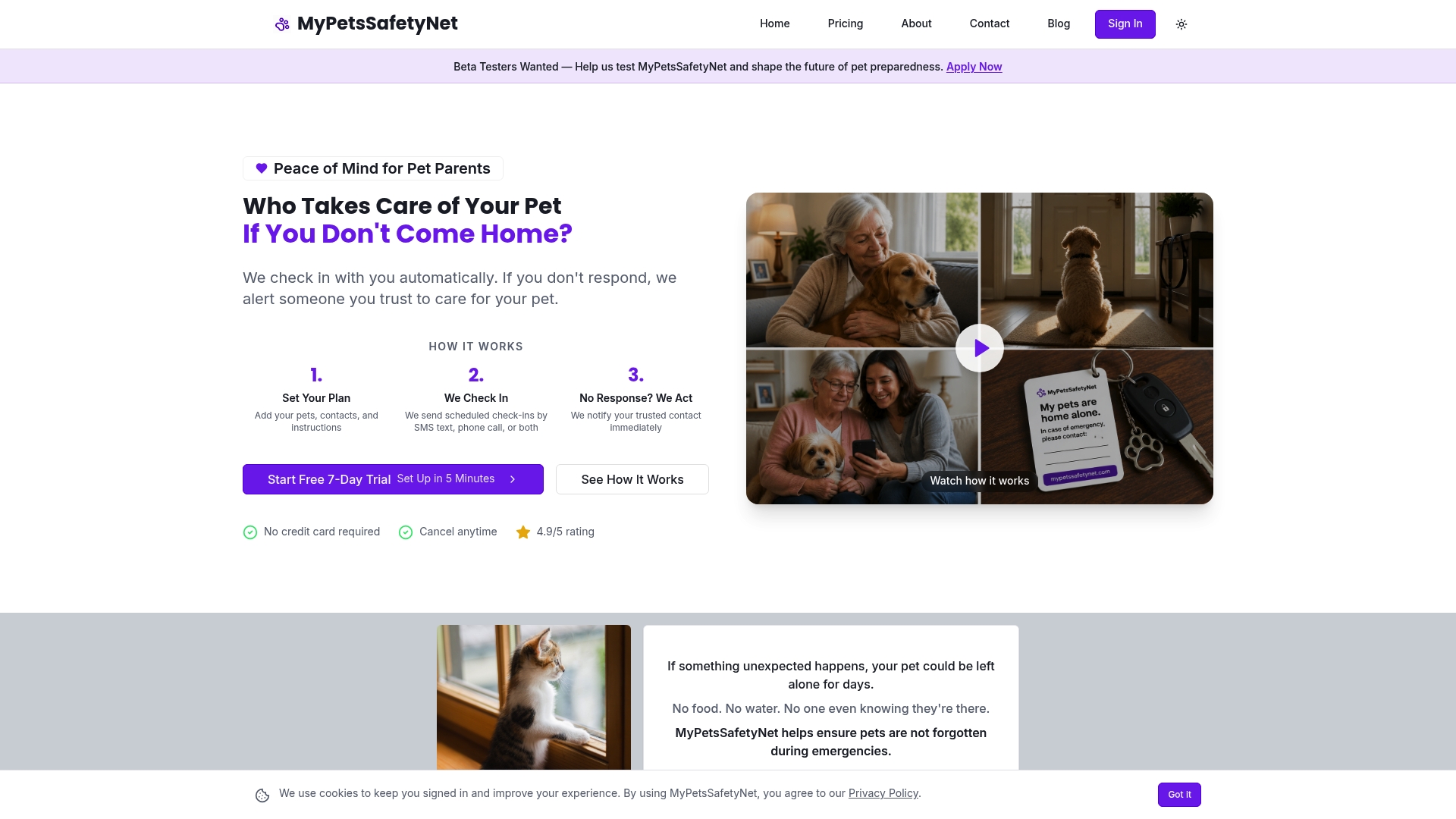
The monthly plan is $6.99 per month, and it starts with a 7-day free trial that doesn’t require a credit card. You can review the refund policy and SMS consent terms before you sign up. For the wider picture, start with our guide to an emergency pet care plan, or visit MyPetsSafetyNet to see how it works.
A review routine that keeps the plan alive
A plan from three years ago may name a neighbor who moved. Set a reminder, twice a year works for most people, and run through this list:
- Text your primary buddy and backup to confirm they’re still willing and able
- Check that keys or access codes still work
- Update your pets’ photos, weights, and medications
- Replace expiring food and medicine in the kit
- Confirm your vet’s phone number and your signed authorization
- Update your emergency contacts and your wallet card
Repeat the review after any move, new pet, change in health, or change in your buddy’s circumstances.
FAQ
What is a pet care buddy system?
It’s an agreement with a neighbor, friend, or relative to care for or evacuate your pets if you can’t. Ready.gov recommends arranging this ahead of time as part of your emergency plan. Both people should know the details, including access and your pets’ needs.
How many buddies should I have?
Have at least two: a primary who lives close and a backup in a different household. If you want more people involved, name one decision maker so they don’t work against each other. Check in with each of them periodically to confirm they’re still willing.
What should I give my pet buddy?
A key or access method, a one-page instruction sheet, your vet’s contact information, medication details, and a signed veterinary care authorization with spending limits. The FDA and ASPCA both recommend sharing written instructions and records. Show them where the supplies are kept.
Do I need a smartphone to use an automated check-in?
Not with MyPetsSafetyNet. Our check-ins work by SMS, phone call, or email, so any phone that can receive calls or texts will do. You choose the contact method and the schedule.
What if my buddy can’t physically handle my pet?
Match the helper to the animal. If your dog is large or your cat resists carriers, consider a second person, or look into local senior pet-support services that may offer help such as mobile vet visits. Put those limits in your instructions so everyone knows the plan.
Sources
- Prepare Your Pets for Disasters | Ready.gov
- Making a Plan for Your Pet | ASPCA
- Animal Owners | VDACS
- Take Care of Your Pets Before Disaster Strikes | FDA
- Pet Emergency and Disaster Preparedness | Best Friends Animal Society
- Pets and Service Animals | Ready NC
- Pet Preparedness | Salt Lake City Emergency Management
- Pets can make aging easier, but they’re expensive | UC Berkeley Journalism