Solo Owners: Introduce Your Pet and Alert 3 Caregivers Automatically

Name a primary and a backup caregiver today, confirm they’re willing to help, and give them a signed veterinary authorization plus a short pet profile covering meds, feeding, and behavior. Set up automated check-in alerts that notify them if you don’t respond, and store a sufficient supply of food, medication, and records in an accessible kit. That’s the whole plan in outline. The rest of this guide shows you how to build each piece.
TL;DR:
- Caregivers should be chosen based on proximity, experience, and flexibility, with at least one designated as the final authority for veterinary decisions.
- A detailed pet profile including identification, medical history, daily routine, and practical handling instructions must be kept accessible both physically and digitally.
- Signed authorization forms and updated microchip contact info are essential to prevent delays in emergency veterinary care.
- Regularly scheduled check-ins and mock alerts help verify caregiver responsiveness and readiness, with immediate replacement if they become unavailable.
- An automated system with escalation workflows ensures prompt notifications to emergency contacts if responses are delayed or absent.
Table of Contents
- Step-by-step checklist to register and introduce an emergency caregiver
- What to include in your pet profile and care instructions
- Legal and veterinary authorization documents you should prepare
- Communicate, verify, and run readiness checks with your caregivers
- Assembling an emergency pet kit and using signage so first responders know pets are inside
- How automated alerts and escalation workflows work
- Why this matters for solo pet owners
- How MyPetsSafetyNet puts this plan on autopilot
- Sources
- FAQ
Step-by-step checklist to register and introduce an emergency caregiver
Start by choosing people, not just names on a list. A good caregiver lives close enough to reach your home quickly, has a flexible schedule, owns or can borrow transportation, and has handled a dog or cat before. The AVMA notes that neighbors and local friends often make the most effective immediate caregivers, since they can get to your pet fast. Treat that role as separate from any long-term guardianship conversation.
- List two or three candidates who live nearby and know your pet.
- Ask directly if they’re willing to serve as primary or backup caregiver, and get a yes in writing, even a text message works.
- Reconfirm every few months, since availability and circumstances change.
- Decide how each caregiver will get into your home: spare key, lockbox code, or a neighbor who holds a duplicate.
- Name one person as the final decision-maker for veterinary care, so there’s no confusion if both caregivers are reachable at once.
The AVMA points out that naming only one caregiver creates a single point of failure. Designate primary and backup contacts and spell out who has final authority, so your pet’s care never depends on one person answering their phone.
Pro Tip: Text your caregivers a one-line confirmation request every quarter: “Still good to be [Pet’s name]'s emergency contact?” A quick “yes” is enough to keep your plan current.
What to include in your pet profile and care instructions
A caregiver who has never met your pet needs more than a phone number. Build a short, printable profile that covers everything they’d need in the first hour.
- Pet identifiers: a current photo, name, microchip number, registry name, and proof of ownership.
- Medical history: vaccine records, chronic conditions, medication names with exact dosages and times, and your vet’s contact information.
- Daily routine: feeding schedule and amounts, exercise needs, toileting habits, and any calming techniques for anxious moments.
- Practical details: where the carrier and leash are kept, where spare keys live, and how the caregiver should handle any related expenses.
Keep this profile somewhere easy to find, both on paper in your emergency kit and digitally where a caregiver can pull it up from a phone. The clearer the instructions, the less guessing anyone has to do when they’re already worried about you.
Legal and veterinary authorization documents you should prepare
A caregiver showing up at a clinic without paperwork can face real delays. Veterinary offices routinely require proof that the person in front of them has permission to authorize treatment, and some clinics may use their own specific forms.
- Ask your regular vet whether they require a clinic-specific authorization form, since many do before they’ll treat a pet on someone else’s behalf.
- Put the authorization in writing: your pet’s name, the caregiver’s name and contact details, and a statement granting them permission to approve care and payment.
- Add your caregiver as an alternate contact on your pet’s microchip registry so rescuers or shelters can reach someone besides you.
- Keep copies in two places: a waterproof folder in your emergency kit and a digital copy a caregiver can access remotely.
- Set aside a small emergency fund or written payment instructions, since the ASPCA suggests this eases the financial burden on whoever steps in, even though it isn’t required.
A signed form takes a few minutes to prepare now and can save a caregiver hour of frustration later.
Communicate, verify, and run readiness checks with your caregivers
A plan only works if the people in it know what to do. Walk each caregiver through your home before anything happens: show them the kit, the pet’s hiding spots when stressed, and anything unusual about your pet’s behavior.
- Give each caregiver a short handover checklist covering feeding, meds, and where documents live.
- Schedule a readiness check every three months, or sooner after any major life change like a new medication or a move.
- Run a short test: send a mock alert and time how long it takes the caregiver to respond and confirm they can get into your home.
- Confirm the caregiver is still comfortable making medical decisions on your pet’s behalf, not just available to visit.
If a caregiver moves away, becomes ill, or simply stops responding to check-ins, replace them immediately rather than leaving a gap. A plan with an unreliable backup is worse than knowing you need a new one.
Pro Tip: Treat the test alert like a fire drill. If the caregiver takes a day to notice a text, that’s useful information before an actual emergency, not after.

Assembling an emergency pet kit and using signage so first responders know pets are inside
Supplies matter as much as people. The CDC recommends keeping a seven to fourteen day supply of food and medication, along with vaccination records and proof of ownership, in a waterproof container that’s easy to grab.
- Pack enough food and medication for about one to two weeks, plus copies of medical records and proof of ownership.
- Include a carrier, a spare leash, recent photos of your pet, and basic first-aid items recommended for pets.
- Store everything in a clearly marked, waterproof container near an exit, not buried in a closet.
- Place a pet-alert sticker on a front window or door listing the number and type of pets inside, so rescuers know to look.
- Factor pets into any evacuation plan, since the Ready guidance notes that many shelters and hotels don’t accept animals, making a caregiver network or pet-friendly lodging essential ahead of time.
How automated alerts and escalation workflows work
Caregivers can’t help if they don’t know they’re needed. An automated check-in system fills that gap by watching for your response and escalating when it doesn’t get one.
- The typical flow: a scheduled check-in message goes out, a wait window passes, then a primary alert fires to your first caregiver, followed by backup escalation if nobody responds.
- Each alert should carry a link to the pet profile, your home’s location, a note on the signed authorization, and direct contact numbers.
- Choose intervals that fit your routine. A shorter wait window catches problems faster but risks more false alarms; a longer one reduces noise but delays help.
- Decide what goes in the text or call itself versus what stays in a linked document. Keep sensitive details like medication dosages in the profile link rather than the alert text.
Why this matters for solo pet owners
A single emergency contact is a fragile plan. Naming a primary and backup caregiver, backed by automated check-ins, closes that gap before it ever becomes a crisis. At MyPetsSafetyNet, we built our tools around fast notifications and caregiver-ready pet profiles for exactly this reason. For deeper templates, see our guides on emergency pet care plans and caretaker agreements.
— MyPetsSafetyNet
How MyPetsSafetyNet puts this plan on autopilot
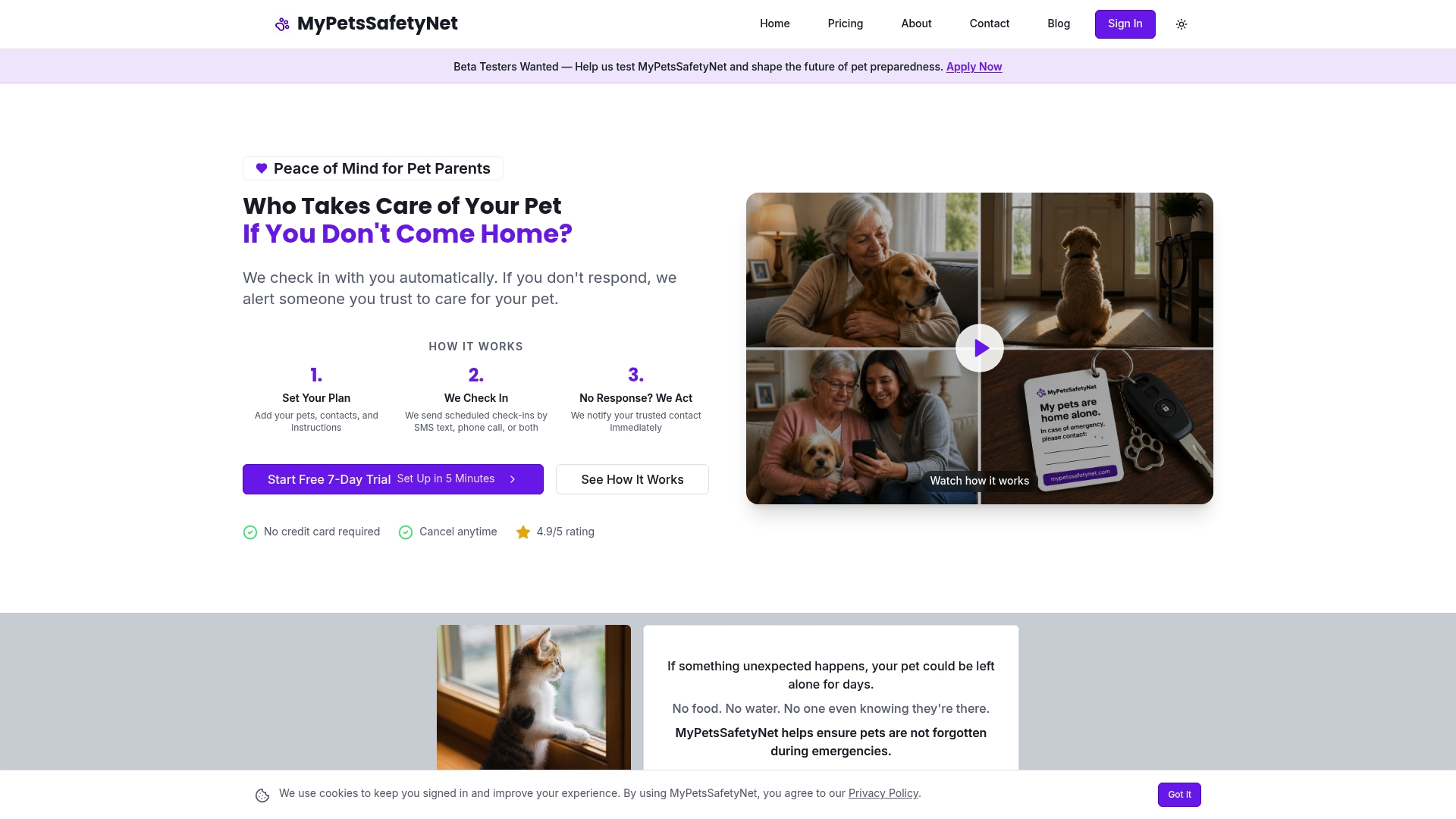
You’ve done the hard part: naming caregivers, writing instructions, signing authorization. MyPetsSafetyNet handles the part that’s easy to forget, the actual notification when something goes wrong. Our service sends scheduled wellness check-ins by SMS, call, or email, and escalates to your named contacts with your pet’s full care profile if you don’t respond. No smartphone required.
| Feature | What it does |
|---|---|
| Automated check-ins | Scheduled SMS, call, or email prompts on your own timeline |
| Escalation workflow | Alerts up to three emergency contacts if you miss a check-in |
| Pet profile generator | Stores care instructions, meds, and authorization notes for up to five pets |
| Access | Works on any phone, no app or smartphone needed |
Try the free pet card to build your pet’s profile now, or check the Monthly plan for current pricing details and trial offers.
Sources
- Ensuring your pet is protected when you’re away | American Veterinary Medical Association
- Emergency preparedness and your pets | CDC
- Making a plan for your pet | ASPCA
- Ready
FAQ
How do I choose between a primary and backup caregiver?
Pick a primary caregiver who lives closest and can respond fastest, then choose a backup who’s available if the primary can’t be reached. The AVMA recommends confirming both are willing and periodically reconfirming, since availability changes over time.
What documents does a caregiver need to authorize vet care?
A caregiver typically needs a signed authorization naming them and granting permission to approve treatment and payment on your behalf. Some clinics require their own specific form, so it’s worth asking your vet directly what they need before an emergency happens.
How much pet food and medication should I keep in an emergency kit?
The CDC recommends keeping a seven to fourteen day supply of food and medication on hand, stored with vaccination records and proof of ownership in a waterproof container. Check and rotate these supplies regularly so nothing expires unnoticed.
Does MyPetsSafetyNet require a smartphone to receive alerts?
No. MyPetsSafetyNet sends check-ins and emergency alerts by SMS, phone call, or email, so any phone works without needing an app or smartphone.
How often should I test my emergency caregiver plan?
A quarterly check is a reasonable baseline, with an extra review after any major change like a move or a new medication. Testing confirms your caregivers can still access your home and respond within a reasonable time.