Who Takes Care of My Pets If I Am Hospitalized?

If you’re hospitalized unexpectedly, your pre-named emergency contact is the first person who should step in, followed by a neighbor, a vetted pet sitter, or a boarding facility if no one responds. The fastest way to guarantee care right now is to call your primary contact and activate an automated wellness-check service like Mypetssafetynet that will escalate alerts to your backup contacts if you can’t respond. The ASPCA recommends keeping a written Emergency Pet Care Plan and Emergency Contact Sheet ready before any crisis, and the AVMA advises pairing that plan with a physical Pet Alert card first responders can find immediately.
Research published in PMC found that many hospitalized patients reported challenges securing pet care, and some said pet-care concerns influenced whether they accepted or continued hospital treatment. That’s a real consequence of not planning ahead.
Pro Tip: In the next 15 minutes, text your primary emergency contact to confirm they still have a key to your home and know where your pet supplies are. Then set up or review your automated wellness-check settings.
Table of Contents
- Who can step in to care for your pets right now?
- What to do in the first hours after hospitalization
- How to build an Emergency Pet Care Plan
- How to make hospital staff aware of your pets
- What automated wellness-check services do for you
- How long can your pet wait, and what will it cost?
- How to pick and prepare the right caregiver
- Legal and authorization considerations for emergency pet care
- Key Takeaways
- Why automated alerts plus a written plan are the right combination
- Mypetssafetynet gives solo owners a safety net that works automatically
- Useful sources and resources
Who can step in to care for your pets right now?
Not every caregiver option works equally fast or well. Here’s how to think through your choices, ordered by speed and reliability.
- Friends and family (fastest): They know your pet, have emotional investment, and can usually get to your home quickly. Best for short stays of 1–3 days.
- Trusted neighbors: Convenient for daily feeding and walks, but may not be comfortable with medications or extended care.
- Professional pet sitters: Pet sitters care for pets in the client’s own home, which reduces stress for the animal. They can handle medications and follow detailed care plans, but booking last-minute costs more.
- Boarding facilities: Good for stays beyond 72 hours. Require vaccination records and advance notice; some offer emergency intake.
- Veterinary hospital boarding: The right choice for pets with diabetes, injections, or specialty medical needs. Staff can administer complex medications safely.
- Animal welfare foster programs: A last resort. Some hospital-linked programs exist, and research shows that access to low- or no-cost foster options reduces the risk of patients leaving the hospital early against medical advice.
| Caregiver type | Speed | Handles meds | Cost | Best for |
|---|---|---|---|---|
| Friend / family | Immediate | Varies | Free | Short stays |
| Neighbor | Same day | Rarely | Free or low | Daily check-ins |
| Professional sitter | Hours | Yes | — | Multi-day stays |
| Boarding facility | Same day | Sometimes | — | Extended stays |
| Vet hospital boarding | Same day | Yes | — | Medically complex pets |
| Foster / shelter | 24–48 hrs | Limited | Low / free | Last resort only |
When you have an automated alert service running, the sequence changes: a missed check-in triggers a notification cascade to your contacts before anyone realizes you’re in the hospital, cutting response time from hours to minutes.
What to do in the first hours after hospitalization
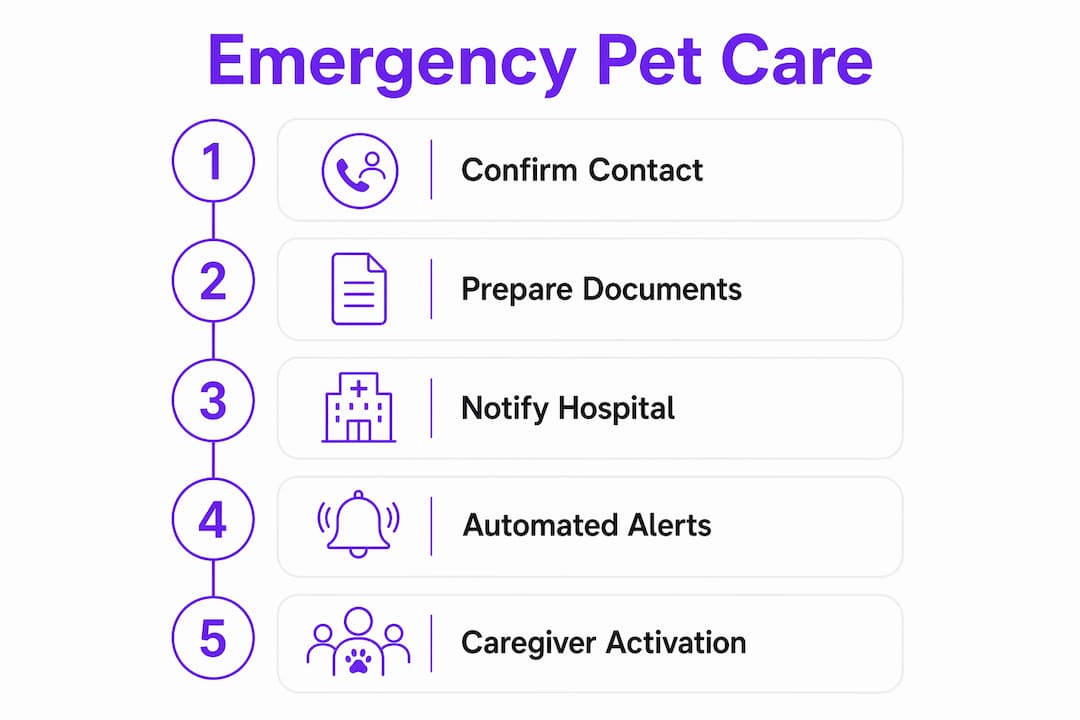
Act on these steps in order. If a helper is doing this for you, share this list with them.
- Call your primary emergency contact and tell them you’re hospitalized, your expected stay length, and where to find the house key and pet supplies.
- Activate or confirm your automated wellness-check escalation so backup contacts are notified if you stop responding.
- Share home-access instructions: key location, door code, building management contact if needed, and any alarm codes.
- Locate your Emergency Pet Care Plan and send a photo or digital copy to the caregiver immediately.
- Contact your vet to let them know you’re hospitalized and to confirm who is authorized to bring in your pet.
- Book boarding as a backup if your primary contact can only cover 24–48 hours.
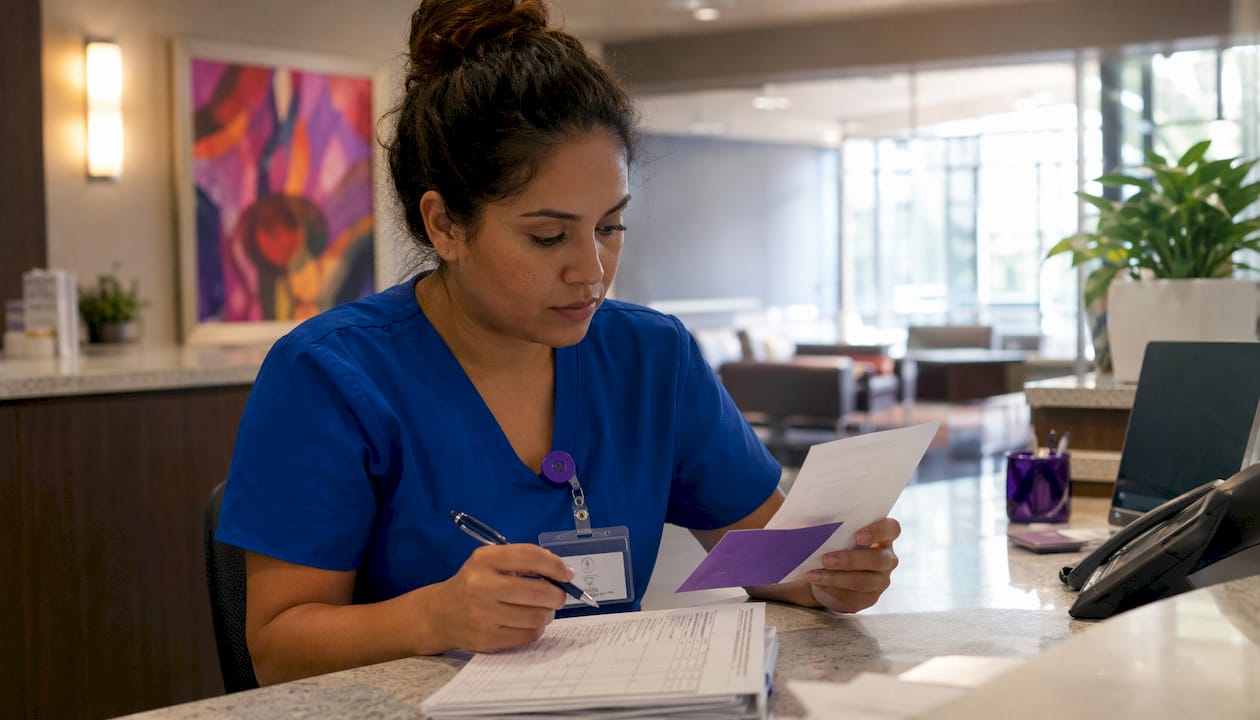
Pro Tip: At hospital intake, tell the triage nurse or admissions staff: “I live alone and have pets at home. Can you note that in my chart and connect me with a social worker?” That one sentence opens the door to hospital resources you may not know exist.
How to build an Emergency Pet Care Plan
A solid plan gives any caregiver everything they need without a single phone call to you. Store a printed copy by your front door and a digital copy in your phone’s Medical ID notes.
Your plan should include:
- Feeding schedule: times, portion sizes, brand, and any dietary restrictions
- Medication details: drug name, dose, administration method, and timing
- Vet contact: clinic name, phone, address, and your pet’s patient ID or microchip number
- Emergency clinic: nearest 24-hour animal hospital
- Behavioral notes: triggers, fears, aggression warnings, or comfort items
- Supply locations: food, leash, carrier, litter, medications
- Home access: key location, alarm code, building manager contact
- Payment authorization: credit card on file at the vet, or a written note authorizing the caregiver to approve treatment up to a specified amount
“Carrying a wallet card or adding pet info to the phone medical ID helps first responders quickly identify that pets are at home and who to contact.” — AVMA guidance on emergency pet planning
The AVMA notes that physical Pet Alert cards are critical because first responders are trained to look for physical ID and may not access cloud accounts quickly. Keep one in your wallet and tape one inside your front door.
Pro Tip: Use the emergency document guide from Mypetssafetynet to build your plan in one sitting. The pet alert card generator creates a printable card you can laminate and carry.
How to make hospital staff aware of your pets
Hospitals rarely have formal pet-care protocols. Research confirms that the burden of raising pet-care needs falls almost entirely on the patient, so early self-advocacy is the only reliable path.
Tell each of these people as soon as you can:
- Triage or admissions staff: Ask them to note “patient has pets at home, solo owner” in your chart.
- Nursing intake: Repeat the note and give them your emergency contact’s name and number.
- Hospital social worker: Ask specifically about pet-care resources, foster programs, or community partnerships.
- Security or patient services: If your emergency contact needs building access, they may be able to help.
“Many hospitals lack formal pet-care protocols; patients who advocate early — at intake and with social work — have the best chance of getting timely help and avoiding the pressure to leave against medical advice.” — PMC study findings on hospitalized pet owners
Hand the admissions team your Emergency Contact Sheet and your Pet Alert card. Write your authorized caregiver’s name clearly on both.
What automated wellness-check services do for you
An automated wellness-check service sends you a scheduled message by SMS, phone call, or email. If you don’t respond within a set countdown window, it automatically notifies your emergency contacts with your full pet care details. No one has to wonder whether you’re okay.
When evaluating any service, look for these features:
- Customizable countdown intervals (how long before escalation triggers)
- Multiple emergency contacts with a defined notification order
- Pet profile storage: species, breed, medical needs, feeding schedule
- Caregiver instruction delivery: contacts receive care details automatically
- Escalation confirmation: verification that a contact has acknowledged the alert
- Pet Alert card generator for physical backup
Mypetssafetynet is built specifically for solo pet owners and covers all of these. It supports up to 5 pets and 3 emergency contacts, stores complete pet profiles and care instructions, and includes a pet alert card generator. When you miss a check-in, your contacts receive your pet’s full care plan automatically, so they can act without waiting to hear from you.
How long can your pet wait, and what will it cost?
Timelines vary by species and health status. Here’s a practical breakdown:
- Healthy adult dog: Safe alone for up to 8 hours; needs care within 24 hours at the latest.
- Puppy or senior dog: Needs care within 4–6 hours.
- Healthy adult cat: Can manage 24–48 hours with adequate food and water, but daily check-ins are still recommended.
- Diabetic or medically complex pet: Needs care within the same window as their next scheduled medication dose, often 8–12 hours.
- Small animals (rabbits, birds, reptiles): Needs vary widely; most need daily attention.
Typical costs for emergency pet care in the U.S.:
| Service | Typical daily cost | Notes |
|---|---|---|
| Professional pet sitter | — | Higher for last-minute booking |
| Standard boarding | — | Requires vaccination records |
| Veterinary hospital boarding | — | Best for medically complex pets |
| Emergency foster (nonprofit) | usually low cost or free, though availability is limited | Limited availability; apply early |
The PMC study found that pet-care concerns influenced some patients’ decisions to leave the hospital early, which can have serious health consequences. Sorting out care quickly protects both your pet and your own recovery.
How to pick and prepare the right caregiver
Choosing the right person before an emergency is the single step most owners skip. The American Humane Society recommends a meet-and-greet as a best practice so caregivers understand your pet’s routine and behavioral triggers before they’re needed.
Vetting checklist:
- Experience with your species and breed
- Comfort administering medications
- Proximity and reliable transportation
- Availability for extended stays
- References from other pet owners
Meet-and-greet steps:
- Introduce the caregiver to your pet in your home.
- Walk through the feeding and medication routine together.
- Identify any behavioral triggers (leash reactivity, food guarding, separation anxiety).
- Do a trial run: have them care for your pet for one day while you’re reachable.
- Confirm they know where supplies, the vet’s number, and the spare key are stored.
Name at least two caregivers and document why each is suitable. One person may be closer; another may be better with medications. The ASPCA advises confirming that both backups are physically comfortable with your pet’s routine, not just willing in principle.
Legal and authorization considerations for emergency pet care
You don’t need a lawyer to authorize someone to care for your pets, but a written document prevents delays at the vet and avoids confusion between caregivers.
A basic authorization form should include:
- Your full name and address
- Your pet’s name, species, breed, and microchip number
- The authorized agent’s full name and contact information
- Scope of authority: feeding, transport, veterinary decisions, payment approval
- A spending limit or instruction to consult you before major procedures
- Your signature and the date
“If you appoint multiple agents, expressly state who has final decision-making authority to avoid delays at vets or clinics when emergency procedures or euthanasia decisions arise.” — AVMA guidance on caregiver authorization
Veterinary clinics can record authorized contacts on your pet’s account and may have their own emergency authorization forms. Call your vet now and ask them to add your emergency contact to the file. Also confirm your pet’s microchip registration is current and lists your emergency contact as a secondary contact.
This section is general information, not legal advice. For a legally binding arrangement such as a pet trust, consult a qualified attorney.
Key Takeaways
Solo pet owners who combine a written Emergency Pet Care Plan with an automated wellness-check service have the fastest, most reliable path to guaranteed pet care during hospitalization.
| Point | Details |
|---|---|
| Call your primary contact first | Confirm they have home access and know where your pet’s supplies and care plan are. |
| Activate automated escalation | A service like Mypetssafetynet notifies backup contacts automatically if you stop responding. |
| Tell hospital intake about your pets | Ask staff to note it in your chart and connect you with a social worker for resources. |
| Complete a meet-and-greet in advance | A trial run with your caregiver reveals behavioral triggers and logistics before a crisis hits. |
| Name two caregivers and assign authority | Designate a primary and a backup, and specify who makes final veterinary decisions in writing. |
Why automated alerts plus a written plan are the right combination
Most pet owners focus on the first 24 hours and stop there. What actually protects your pet is a plan that covers the full arc: immediate response, a short-term caregiver, and a longer-term arrangement if your stay extends beyond a few days. A written plan handles the information problem. An automated alert handles the notification problem. Neither one alone is enough.
At Mypetssafetynet, we built our service around the reality that solo owners can’t always make a phone call when something goes wrong. The escalation workflow, pet profile storage, and card generator exist because the gap between “something happened” and “someone knows to check on your pets” is where animals get hurt. Pairing our service with a vetted local caregiver, a vet who has your authorization on file, and a physical Pet Alert card in your wallet closes that gap as completely as anything can.
Mypetssafetynet gives solo owners a safety net that works automatically
No plan survives a medical emergency if it depends entirely on you being able to make calls. Mypetssafetynet removes that dependency. You set up your check-in schedule, store your pet profiles and care instructions, and name up to 3 emergency contacts. If you miss a check-in, your contacts are notified automatically with everything they need to act, including your pet’s feeding schedule, medications, and vet contact.
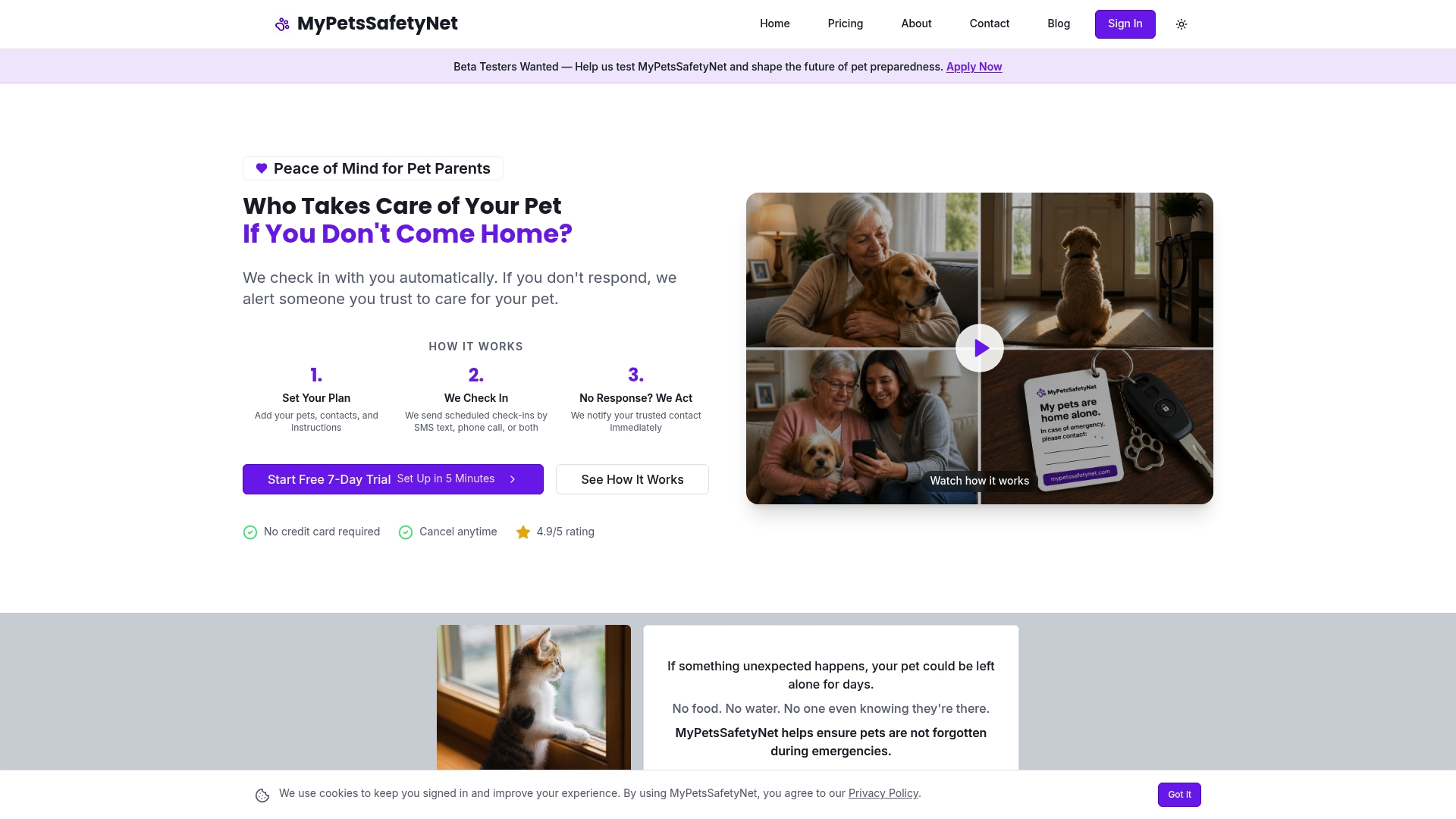
Getting started takes about 10 minutes:
- Create your account and set your check-in frequency (daily, twice daily, or custom intervals).
- Build your pet profiles with feeding schedules, medication details, and behavioral notes.
- Add your emergency contacts and confirm they know they’re listed.
- Generate and print your Pet Alert card to keep in your wallet and on your fridge.
- Complete your Emergency Pet Care Plan using the in-app tools or the planning guide.
Start your free trial at Mypetssafetynet and have your safety net in place before you ever need it. You can also review SMS notification options when you sign up.
Useful sources and resources
Authoritative guidance:
- ASPCA: Making a Plan for Your Pet — Emergency Contact Sheet templates and planning checklists
- AVMA: Who’s in Charge of Your Animals’ Care While You’re Away — Pet Alert card guidance and caregiver authorization
- American Humane: Pet Sitter & Boarding Guide — Meet-and-greet best practices and sitter vetting
- PMC: The Impact of Pet Care Needs on Medical Decision-Making — Research on hospitalized patients and pet-care challenges
- NYC Animal Welfare: Support for People with Pets — Local foster and boarding programs for hospitalized owners
- PAW Vet Practice: Vet Referral — Hospital protocols and patient responsibilities for pet care during admission
Mypetssafetynet resources:
- Emergency Pet Care Plan guide
- How to write pet care instructions for caregivers
- Caretaker agreements explained
- Building your pet care network
For low- or no-cost boarding options, contact your hospital’s social work department early in your stay. Some hospitals partner with local shelters or foster programs, and asking on day one gives you the best chance of finding a placement before your pet is at risk.