Pet Care Handoff Checklist: One Page Solo Owners Can Print

The minimum a sitter or boarding facility needs to care for your pet safely is a concise handoff covering your contact details, a named authorized agent, your veterinarian and emergency clinic, exact feeding and medication instructions, labeled supplies, ID and microchip information, and a signed emergency authorization with payment instructions. Without that signed authorization and clearly labeled supplies, a caregiver can feed and walk your pet, but may not be able to act fast if something goes wrong.
TL;DR:
- Name one authorized agent, specify who has final say, and document treatment permission, payment method, spending limit, and procedures requiring your consent.
- Leave food, water, and medication for your full trip plus a few extra days, and store labeled supplies with carriers and medical records together.
- Copy medication directions from the prescription label, including strength, route, dose, schedule, and expiration date; tell the sitter to call rather than guess.
- Meet before drop off to rehearse feeding and medication, test access instructions, and agree on check ins; ask your clinic what paperwork it requires.
- Keep current ID tags, the microchip registry contact, and recent photos together; if your pet goes missing, alert your agent and check the registry first.
Table of Contents
- Quick printable checklist for your sitter
- Contact and emergency authorization: who can decide and how to document it
- Supplies and logistics: what to leave and where to put it
- Feeding, medications, and medical records: exact instructions the sitter must follow
- Routine, behavior, and comfort: daily schedule and handling notes
- Identification, microchip, and lost-pet steps
- Meet-and-greet, handoff timing, and access protocol
- Why these checklist items matter: quick evidence and best-practice backing
- A short note on planning for the unexpected
- Consider automated wellness check-ins as a backup
- FAQ
- Sources
Quick printable checklist for your sitter
Before you leave, put this list where your sitter can see it, ideally taped inside a cabinet or saved as a photo on their phone.
- Your name, phone number, and travel itinerary or return date
- Authorized emergency agent: name, relationship, phone number
- Veterinarian name, clinic phone number, and address
- Nearest emergency or after-hours clinic contact
- Feeding amounts, times, and food brand
- Medication names, doses, and schedule
- Supply locations: food, leashes, carriers, waste bags
- Keys, alarm codes, and access instructions
- Microchip number and registry contact
- Payment method and written consent for veterinary care
- Confirmation that a meet-and-greet happened before drop-off
Contact and emergency authorization: who can decide and how to document it
Your sitter needs more than your phone number. They need someone who can make a decision the moment you’re unreachable. List your own contact information plus a backup phone number, then name one authorized agent who can approve veterinary treatment if you can’t be reached. For each contact, include their name, relationship to you, primary phone, and an alternate number.
If you have more than one potential decision-maker, say clearly who has final say, so your sitter isn’t stuck choosing between two conflicting instructions during a crisis.
Put the following in a signed, written emergency authorization:
- Permission for the named agent or sitter to authorize veterinary treatment
- Your preferred payment method and spending limit, if any
- Any procedures you do not want performed without your direct consent
- Your wishes regarding euthanasia in a worst-case scenario
Pro Tip: Call your veterinary clinic ahead of time and ask what documentation they require from a non-owner before they’ll treat your pet.
The AVMA’s guidance on pet care while you’re away walks through exactly this kind of advance planning, including clarifying payment arrangements and putting authorizations in writing.
Supplies and logistics: what to leave and where to put it
A sitter shouldn’t have to search your house during an emergency. Label everything and keep it together.
- Label the food container, scoop, and treats with exact portion sizes
- Store a few extra days of food and medication beyond your travel dates, in case of delays
- Keep carriers, leashes, and collars in one visible, accessible spot, not buried in a closet
- Write down where spare keys, alarm codes, and the circuit breaker or water shutoff are located
- Pack a small “grab-and-go” bag with medication, a few days of food, and copies of medical records in case your pet needs to leave quickly with someone else
Ready.gov’s pet emergency preparedness guidance recommends keeping several days of food, water, and medication ready in both a shelter-in-place kit and an evacuation kit, and reviewing those supplies regularly so nothing expires unnoticed.
Feeding, medications, and medical records: exact instructions the sitter must follow
Guesswork around medication is where handoffs go wrong. Copy directions straight from the prescription label or your vet’s instructions rather than relying on memory: drug name, strength, route, dose, schedule, and expiration date.
Medication and feeding notes should include:
- Exact drug name, strength, dose, and route (oral, topical, injectable)
- Schedule and how many doses remain, with a refill date if needed
- Food brand and exact measured amount per meal, not “a cup or so”
- Feeding frequency and any special method, like a slow feeder or two smaller meals for a larger dog prone to bloat
- A direct instruction not to change your vet’s established plan without calling first
Pro Tip: If your sitter is ever unsure about a dose or a missed dose, the written plan should tell them to call you or your vet immediately rather than guess.
The AVMA’s prescription drug guidance notes that prescription veterinary medications are restricted by federal law to use under a licensed veterinarian’s direction, and that records should preserve the drug name, active ingredient, dosage, strength, route, and cautions exactly as written, never paraphrased from memory.
Routine, behavior, and comfort: daily schedule and handling notes
Pets settle faster with a caregiver who already knows their habits. Write down your pet’s normal walk and potty schedule, preferred routes, and typical energy level, so a sudden change signals something worth watching.
- Note leash behavior, pulling habits, or reactivity to other animals
- For cats, list favorite hiding spots, litter box location, and cleaning method
- Mention furniture rules and anything that reliably calms your pet, like a blanket or white noise
- Leave a favorite toy and an item with your scent on it, such as a worn T-shirt, to ease anxiety
Identification, microchip, and lost-pet steps
Confirm your pet’s collar and ID tags are current, and write down the microchip number along with the registry’s contact information. Include a few recent, clear photos your sitter can share quickly if needed.
If your pet goes missing, your sitter should follow these steps in order:
- Call you and your authorized emergency agent immediately.
- Check the microchip registry contact to confirm the chip is registered to current information.
- Post in neighborhood groups and with local shelters, including a recent photo.
- Contact your veterinarian in case the pet is brought in injured or found nearby.
- Keep searching during peak activity hours, since many pets return when the area is quiet.
Keep proof of rabies vaccination and other records in the same folder as your emergency authorization, since shelters and clinics may ask for it before releasing or treating a found pet.
Meet-and-greet, handoff timing, and access protocol
A short in-person meeting before drop-off prevents most day-one problems. Walk your sitter through a real feeding, show them how you give any medication, take a short walk together, and point out exactly where supplies live.
- Ask your sitter to send a quick text once they’ve arrived and settled your pet
- Agree on how often they’ll check in with you, daily or every other day
- If your pet is going to a kennel or clinic instead, prepare a boarding packet with the same contacts, medication list, and signed authorization
Why these checklist items matter: quick evidence and best-practice backing
A named decision-maker with documented authority shortens the time between a problem and actual treatment, which is the core reason the AVMA recommends appointing someone in writing before you leave. Extra food, medication, and supplies account for delays or evacuations, a point Ready.gov’s pet preparedness guidance makes directly. Copying medication directions from the label, rather than from memory, avoids dosing errors. Practical details like litter box placement and fresh water availability, covered in ASPCA’s dog care guidance, matter just as much as the paperwork.

A short note on planning for the unexpected
A signed, labeled handoff with one clearly named alternate contact dramatically improves your pet’s odds of getting timely care if something goes wrong. Before you leave, test your access instructions once yourself, and tell at least one person exactly where your documents live.
— MyPetsSafetyNet
Consider automated wellness check-ins as a backup
A written handoff covers your sitter while you’re traveling, but it doesn’t cover what happens if you’re the one who can’t respond, whether you’re away or simply home alone. Automated wellness check-ins add a layer most paper checklists miss: scheduled messages that, if you miss them, automatically notify your named emergency contacts with your pet’s care details.
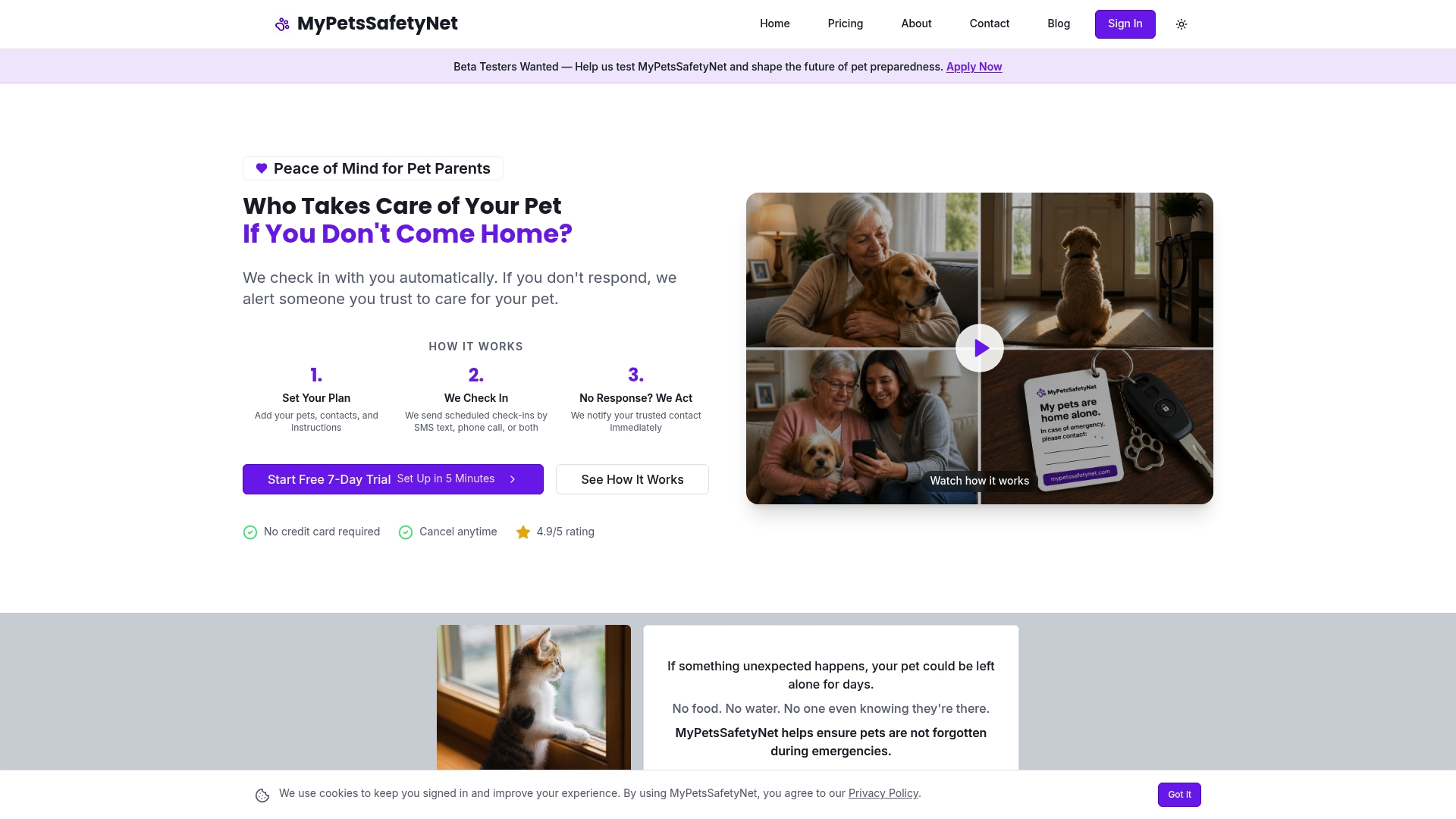
- Check in by text, call, or email on a schedule you set
- Escalate automatically to your emergency contacts if you don’t respond
- Pull from a pet profile for your pets, so caregivers get full instructions instantly
Start with our pet card to build a shareable summary of your pet’s essentials, or see how the monthly plan works for $6.99 a month, no credit card required.
FAQ
What should be included in a pet sitter handoff checklist?
A solid handoff includes your contact information, an authorized emergency agent, your veterinarian and an emergency clinic, exact feeding and medication instructions, labeled supply locations, microchip and ID details, and a signed authorization for veterinary care and payment. Our pet card can help you organize these into one printable page.
How much extra food and medication should I leave for a sitter?
Leave enough food, water, and medication to cover your full trip plus a few extra days in case your return is delayed. Ready.gov’s pet preparedness guidance recommends keeping multiple days of supplies on hand for exactly this kind of delay or emergency.
Who should have authority to make vet decisions while I’m away?
Name one person as your primary authorized agent so your sitter knows exactly who to call and isn’t caught between conflicting instructions. The AVMA recommends putting this authorization in writing and confirming payment and documentation requirements with your veterinary clinic ahead of time.
What should I do if my sitter reports my pet is missing?
Have your sitter call you and your emergency agent first, then check the microchip registry, post in local groups with a recent photo, and contact your veterinarian in case the pet turns up there. Keeping your pet’s ID tags current and a few clear photos on hand speeds up every one of these steps.
Are there household items I should warn my pet sitter about?
Yes, certain common plants and flowers are toxic to cats and dogs, so it’s worth flagging anything in your home that could pose a risk. Greet 'n Grow’s list of flowers toxic to cats is a quick reference worth sharing with your sitter before you go.
Sources
- Ensuring your pet is protected when you’re away | American Veterinary Medical Association
- General Dog Care | ASPCA
- Ready