Emergency Pet Care Plan Every Pet Owner Needs
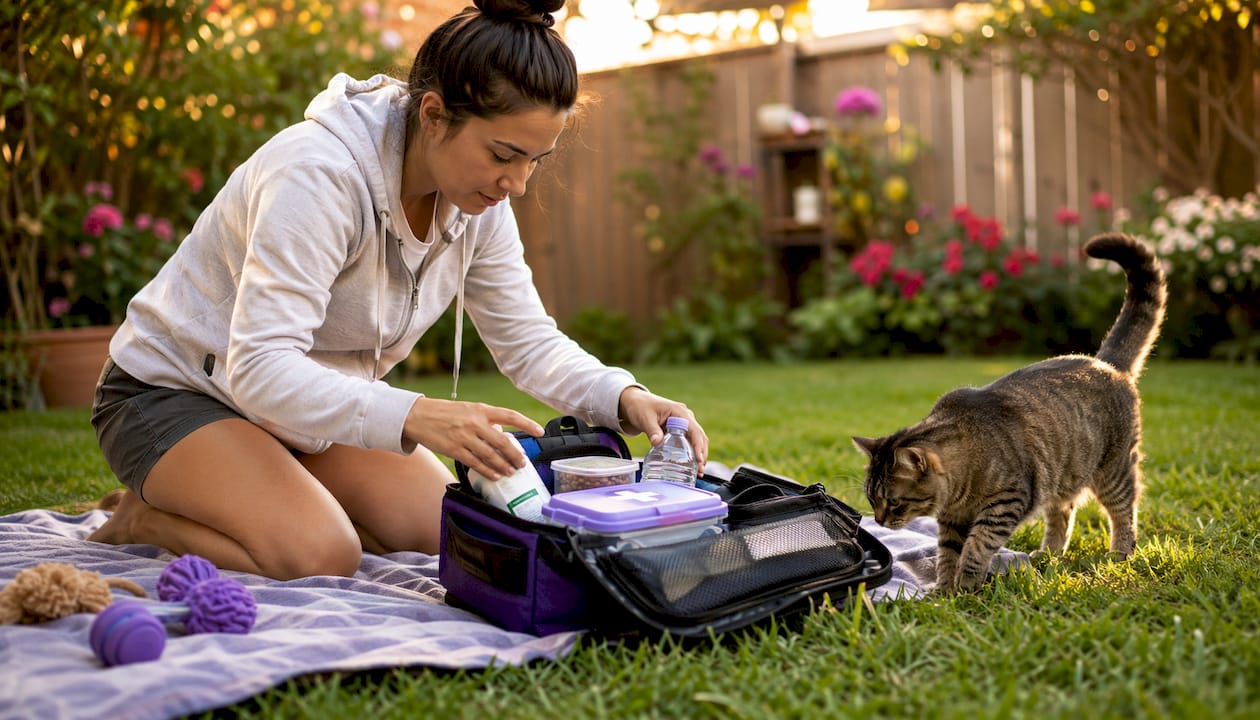
If you can’t care for your pet right now, your plan needs four things in place: a designated caregiver, primary care instructions, quick-access documents, and saved emergency contacts. Do those four things, and your pet has a real safety net.
Start here:
- Save your primary vet’s number and the nearest 24-hour emergency hospital in your phone today.
- Save the Pet Poison Helpline (800-213-6680) as a contact labeled “Pet Poison.”
- Confirm at least one person who can step in as your emergency pet caregiver.
- Register or update your pet’s microchip with your current contact information.
Table of Contents
- What does a solid emergency pet care checklist look like?
- Who should you call first, second, and third?
- Which documents does your caregiver actually need?
- What are the pet first aid basics before you reach a vet?
- How do you evacuate safely with your pet?
- What are your short-term care options and what do they cost?
- How do you make care legally and practically continuous?
- How do you test and maintain your plan so it stays current?
- Key Takeaways
- Why planning ahead is the most caring thing you can do
- Mypetssafetynet closes the gap your plan can’t cover alone
- Useful sources and next steps
What does a solid emergency pet care checklist look like?
A working plan takes about two hours to build and covers five areas: contacts, documents, a care kit, a designated caregiver, and a backup caregiver.
Here’s what to do right now.
Contacts and caregivers:
- Identify a primary caregiver and a backup; confirm both verbally before you write them down.
- Save your vet, the nearest 24-hour emergency hospital, and the poison helpline in your phone.
Emergency kit (keep it in one bag or bin):
- Secure carrier and leash or harness
- Three days of food and fresh water
- All current medications with written dosing instructions
- Recent photo of your pet (printed and digital)
- Vaccination records and microchip ID number
- Basic first-aid supplies (gauze, adhesive tape, digital thermometer)
Documents:
- Caregiver authorization letter (signed and dated)
- Medication and medical history summary
- Behavior notes (fears, triggers, feeding schedule)
Storage: Keep a physical copy in a labeled binder near your front door, a digital copy in a cloud folder (Google Drive or iCloud work well), and a phone photo of every document. Check out this emergency document guide for ready-to-use templates.
Pro Tip: Write a single index card that says: “Pet emergency contacts and care instructions are in the red binder by the front door.” Tape it inside your front door so any first responder or neighbor can find it immediately.
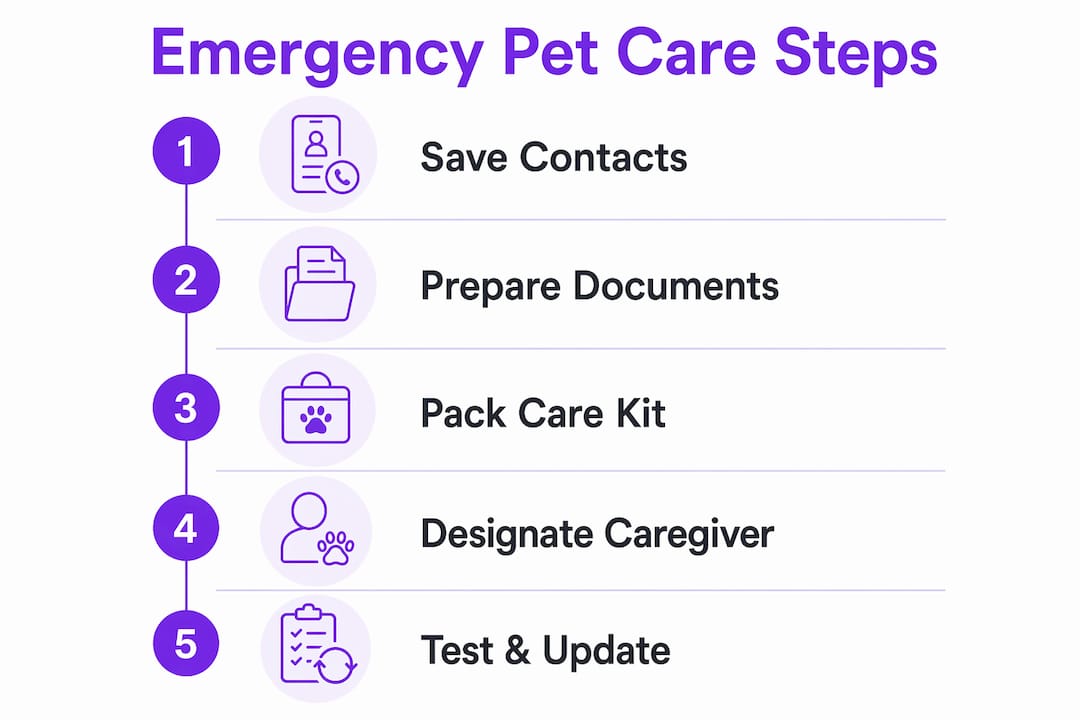
Who should you call first, second, and third?
Under stress, most people freeze on this question. Decide the call order now, not during the emergency.
Call priority:
- Life-threatening signs (collapse, seizure, uncontrolled bleeding, difficulty breathing): call the nearest 24-hour emergency hospital first, then your caregiver.
- Suspected poisoning or ingestion: call the Pet Poison Helpline (800-213-6680) immediately, then your vet or emergency hospital.
- Non-critical urgent issue (limping, vomiting once, minor wound): call your primary vet first; if closed, call the 24-hour facility.
- Owner incapacitation (you’re hospitalized or unable to act): your caregiver is the first call, followed by your vet for any ongoing medical needs.
The AVMA recommends discussing an emergency protocol with your primary vet in advance and keeping the nearest 24-hour hospital number saved. Many emergency hospitals operate around the clock and welcome a call before you arrive so staff can prepare.
Practical storage tips:
- Label contacts clearly: “VET – Dr. Smith,” “24HR EMERGENCY VET,” “PET POISON HELPLINE.”
- Create a phone contact group called “Pet Emergency” with all three numbers.
- Share the group or a screenshot with your designated caregiver.
If you’re ever hospitalized unexpectedly, the guide on what happens to your pets walks through the exact notification steps your caregiver will need.
Key contacts to save now: Primary vet, nearest 24-hour emergency hospital, Pet Poison Helpline (800-213-6680), and your designated caregiver.
Which documents does your caregiver actually need?
Your caregiver can’t make decisions without the right paperwork. Prepare these before anything happens.
Document checklist:
- Medication list (drug name, dose, frequency, and what it treats)
- Vaccination records (required by most boarding facilities and shelters)
- Microchip registration number and registry contact
- Caregiver authorization letter (grants permission to seek vet care and make decisions)
- Vet release form (authorizes your vet to speak with and treat under your caregiver’s direction)
- Behavior notes (feeding schedule, fears, aggression triggers, comfort routines)
- Recent photo ID of your pet
Caregiver authorization letter basics: The letter should state your full name, your pet’s name and description, the caregiver’s full name, the duration of authorization, and explicit permission to authorize veterinary treatment. Sign it, date it, and have a witness sign it. For longer-term arrangements, a notarized copy adds legal weight.
Storage:
- Physical binder near the front door (label the spine “PET EMERGENCY”)
- Encrypted cloud folder shared with your caregiver
- Phone photo of every document, stored in a dedicated album
Pro Tip: Update your documents immediately after every vet visit. A medication list that’s six months out of date can cause real harm during an emergency.
What are the pet first aid basics before you reach a vet?
First aid is a temporary measure to stabilize your pet for transport, not a replacement for professional care. Keep that boundary clear.
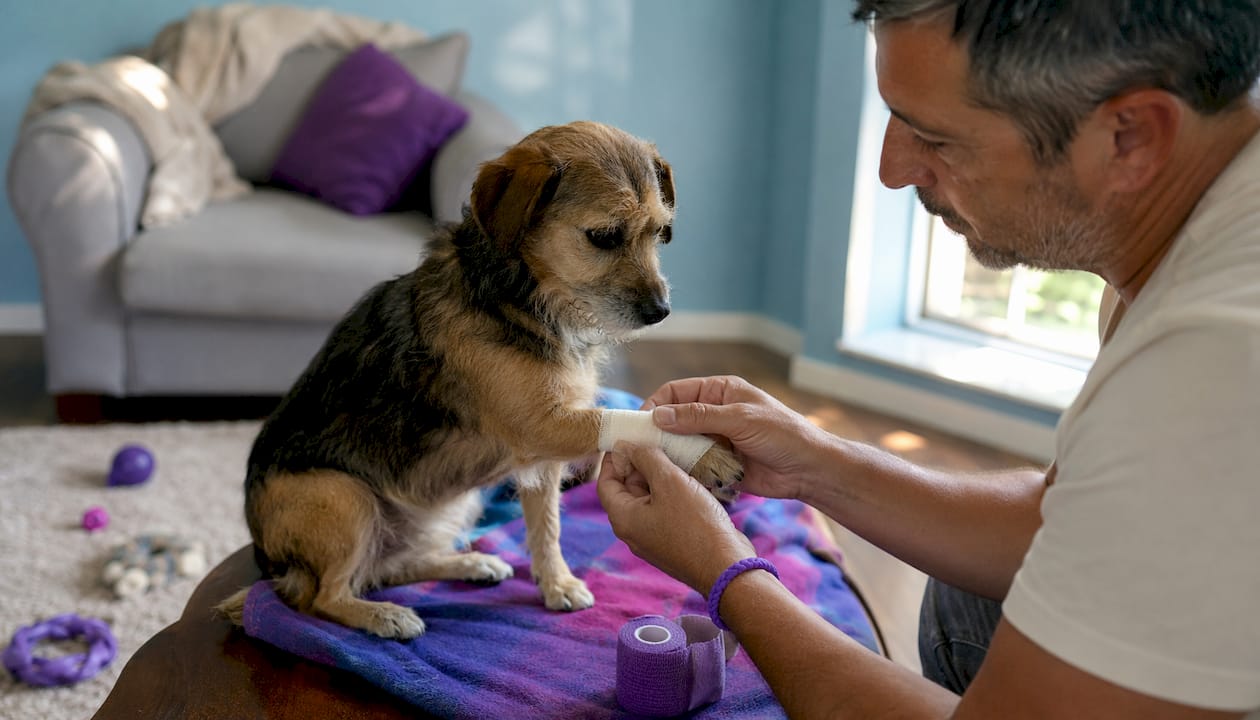
Triage rule: Stabilize, protect yourself, call ahead when possible, then transport.
Red flags requiring immediate emergency care:
- Difficulty breathing or choking
- Collapse or loss of consciousness
- Uncontrolled bleeding
- Seizures lasting more than two minutes
- Suspected poisoning or toxic ingestion
- Distended or rigid abdomen (possible GDV in dogs)
- Male cat unable to urinate
- No water intake for several hours (dehydration can become life-threatening within hours)
Safe first-aid steps:
- Bleeding: Apply firm pressure with a clean cloth. If blood soaks through, add more layers on top; do not remove the first cloth.
- Poisoning: Call the Pet Poison Helpline or ASPCA Poison Control (888-426-4435) before doing anything else. Never induce vomiting unless a vet or poison-control expert explicitly directs you to.
- CPR: If your pet is unconscious and not breathing, perform rescue breathing by holding the mouth closed and breathing into the nose until the chest rises, then continue at 10 breaths per minute until you reach the hospital.
- Injured pet: A frightened, injured pet may bite. Use a soft cloth as a temporary muzzle if needed, keeping it loose enough for breathing.
The American Red Cross 35-minute Cat & Dog First Aid course covers all of these scenarios in detail, and the free Red Cross Pet First Aid app puts step-by-step guidance on your phone for any situation. Both are worth doing before an emergency, not during one.
Emergency facilities triage by medical urgency, not arrival order. Calling ahead lets staff prepare and can reduce the time before your pet is seen.
How do you evacuate safely with your pet?
Evacuation works best when the kit is already packed. Build it once, then check it every six months.
Evacuation kit essentials:
- Secure, labeled carrier or crate (one per pet)
- Leash and harness (even for cats)
- Three days of food and bottled water
- All medications with written dosing notes
- Sanitation supplies (waste bags, litter, small litter box)
- A comfort item (familiar blanket or toy)
- Printed vaccination records and microchip ID
Where to go:
- Pet-friendly hotels (search “pet-friendly hotels” on Google Maps or Bring Fido before a crisis, not during one)
- Friends or family who have confirmed they can take your pet
- Pre-arranged boarding facility (confirm their emergency intake policy in advance)
- Public emergency shelters: policies vary by county, so check your local emergency management office now
Most boarding facilities and many public shelters require proof of current vaccinations. Keep a printed copy in the kit and a digital copy on your phone.
A feeder maintenance schedule can help caregivers maintain consistent feeding routines during a handoff or extended evacuation.
What are your short-term care options and what do they cost?
Choosing the right temporary care option depends on how long you’ll be unavailable and your pet’s needs.
Options at a glance:
- Friends or family: Best for short, unplanned absences; confirm willingness in advance and leave written care instructions.
- Vetted pet sitters: Good for stays up to a week; use platforms that verify sitters and carry insurance.
- Overnight boarding: Appropriate for multi-day absences; costs typically range from $25–$85 per night depending on location and facility type.
- Emergency rescue or welfare hold: A last resort when no caregiver is available; contact your local humane society or animal control for options.
Emergency vet costs vary significantly. An urgent care visit generally runs less than a full emergency hospital visit, which can range from a few hundred dollars to several thousand for critical cases. The difference between urgent care and emergency care matters: urgent care handles non-life-threatening issues and may ask you to call ahead for a triage time, while an emergency hospital handles critical cases around the clock.
Funding prep:
- Keep a dedicated pet emergency fund accessible to cover unexpected costs.
- Store a payment method (credit card or CareCredit) that your caregiver can use with written authorization.
- Write a brief authorization note allowing your caregiver to approve and pay for veterinary treatment on your behalf.
How do you make care legally and practically continuous?
A verbal agreement with a friend is a start, but a written caretaker agreement and updated ID records protect your pet if things get complicated.
Caretaker agreement essentials:
- Duration of care (start date and expected end date or review date)
- Financial responsibility (who pays for food, vet bills, and boarding)
- Vet authorization (caregiver’s name explicitly listed)
- Handover plan (how and when your pet returns to you or transfers to a backup)
Microchip and ID steps:
- Confirm your pet’s microchip is registered (check via the AVMA’s guidance or your chip’s registry directly).
- Update your address, phone number, and an alternate contact in the registry.
- Check that your pet’s collar ID tag shows a current phone number.
Legal tools for longer-term arrangements:
- A temporary power of attorney for pet care authorizes a named person to make decisions on your behalf.
- A pet trust or guardianship designation (available in all 50 states) can formalize long-term care if you become permanently incapacitated.
- State laws vary; consult a licensed attorney for arrangements beyond a few weeks.
Pro Tip: Review your pet owner accountability system annually. Caregivers move, phone numbers change, and a plan that worked last year may have gaps today.
How do you test and maintain your plan so it stays current?
A plan that’s never tested is a plan you can’t trust. Build a simple maintenance schedule and stick to it.
Quarterly:
- Confirm all emergency phone numbers are still correct.
- Check medication supplies and expiration dates.
- Verify your caregiver is still available and willing.
After every vet visit:
- Update the medication list and any new diagnoses.
- Scan or photograph updated vaccination records.
- Replace outdated documents in your binder and cloud folder.
Every six months:
- Repack the evacuation kit (replace expired food, water, and medications).
- Run a short drill: practice loading your pet into the carrier and walking to your car with the kit.
- Confirm your backup caregiver is still reachable.
Full plan review triggers:
- You move to a new address or city.
- You add a new pet to the household.
- Your pet receives a new diagnosis or starts a new medication.
- A designated caregiver is no longer available.
- Annually, regardless of changes.
Your 2026 emergency preparedness guide has a printable maintenance schedule you can post alongside your binder.
Key Takeaways
A complete emergency pet care plan requires saved contacts, prepared documents, a confirmed caregiver, and a tested evacuation kit — all in place before a crisis happens.
| Point | Details |
|---|---|
| Save critical contacts now | Store your vet, nearest 24-hour emergency hospital, and Pet Poison Helpline (800-213-6680) in your phone today. |
| Prepare your documents | A signed caregiver authorization letter, medication list, and vaccination records are the minimum your caregiver needs. |
| Know the triage red flags | Collapse, seizures, uncontrolled bleeding, suspected poisoning, and breathing difficulty all require immediate emergency care. |
| Budget for emergencies | Keep at least $500–$1,000 accessible for pet care costs; overnight boarding typically runs $25–$85 per night. |
| Mypetssafetynet fills the notification gap | When you’re incapacitated and can’t make the call yourself, Mypetssafetynet alerts your designated caregivers automatically. |
Why planning ahead is the most caring thing you can do
Most pet owners think about emergencies in the abstract — “I’ll figure it out if something happens.” The problem is that emergencies, by definition, remove your ability to figure things out in the moment. A hospitalization, a serious accident, or even a sudden illness can leave your pet without food, water, or medical attention for hours or days.
The owners who fare best in these situations aren’t the ones who love their pets most. They’re the ones who prepared. A signed caregiver authorization letter takes twenty minutes to write. Saving three phone numbers takes two minutes. Packing an evacuation kit takes an afternoon. None of these tasks require special skills or significant money. What they require is deciding to do them before you need them.
The gap between “I have a plan” and “my caregiver actually knows what to do” is where most plans fail. A caregiver who doesn’t know where the documents are, doesn’t have vet authorization, and hasn’t confirmed they’re available is not a real backup. Close that gap now, while you have time and clarity.
Mypetssafetynet closes the gap your plan can’t cover alone
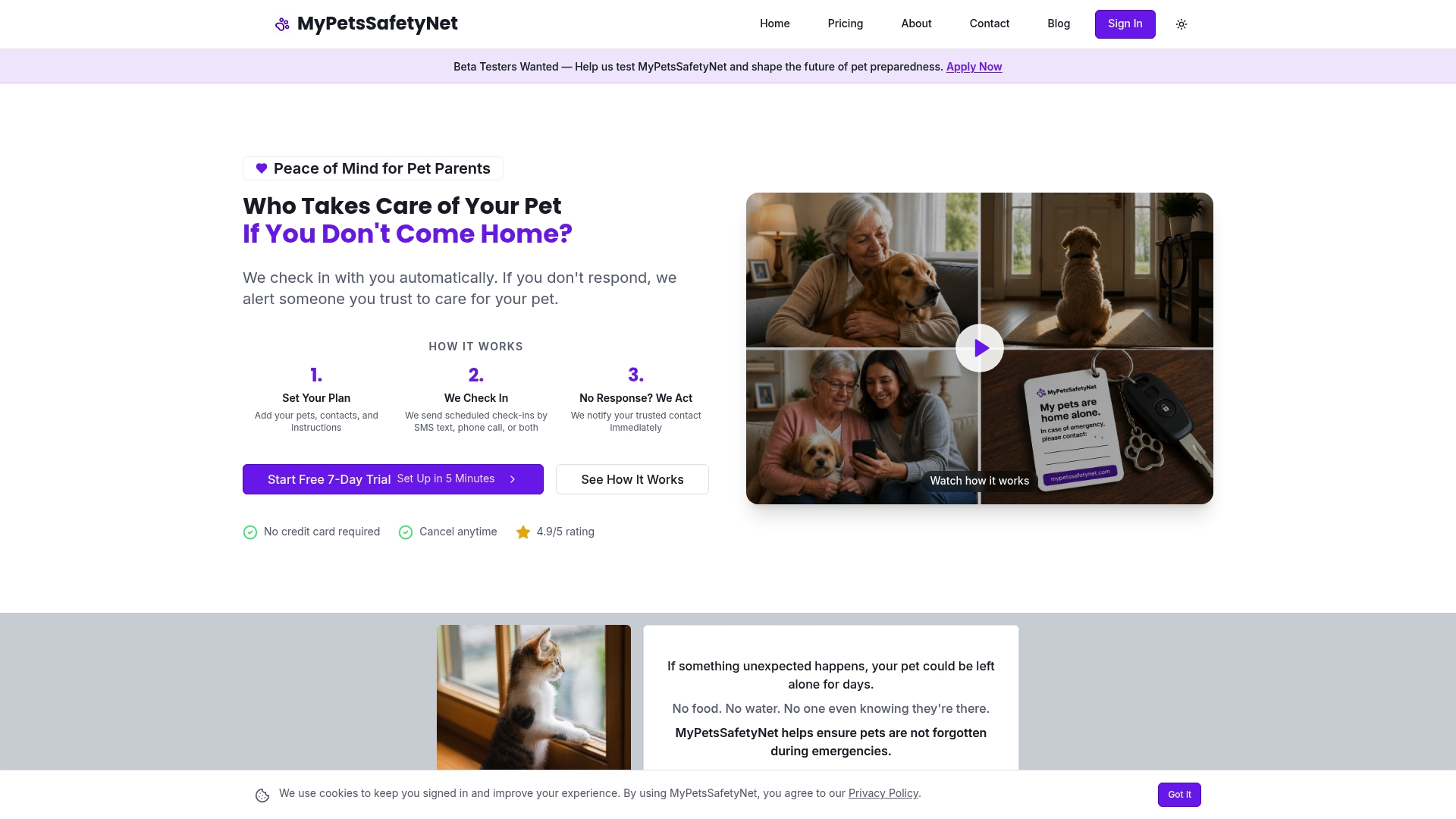
Every plan has one weak point: the moment you’re unable to make the call yourself. You can’t notify your caregiver if you’re unconscious. You can’t hand over documents if you’re in an ambulance. That’s the specific problem Mypetssafetynet was built to solve.
The service monitors your check-ins and, if you don’t respond, automatically notifies your designated emergency contacts with your stored care instructions, document locations, and pet details. Your caregiver gets the information they need without waiting for you to send it.
A few practical notes: Mypetssafetynet handles notification, not physical care. Your caregiver still needs to be willing, available, and funded. The service works best when it’s connected to a complete plan: confirmed caregivers, stored documents, and a tested evacuation kit. Set up your wellness check-in today, and your pets will have a real safety net the moment they need one.
Useful sources and next steps
Use these vetted resources to build and strengthen your plan:
- American Red Cross: 35-minute Cat & Dog First Aid course and free Pet First Aid app (text “GETPET” to 90999 or download on iOS/Google Play)
- AVMA: First-aid tips and emergency protocol guidance for pet owners, including a printable emergency information card
- ASPCA: Emergency care guidance and Poison Control hotline: 888-426-4435
- American Humane: 10 first-aid tips for pet parents including dehydration warning signs and poison helpline contacts
- Pet Poison Helpline: 800-213-6680 (save this number now; a consultation fee may apply)
- Microchip registry: Search your chip number at the AVMA site or contact your chip’s registry directly to confirm and update your contact details
- Document templates: Download and print the AVMA emergency information card; store one copy in your home binder and one in your cloud folder