Pet Care Plan for Living Alone: Your 2026 Guide
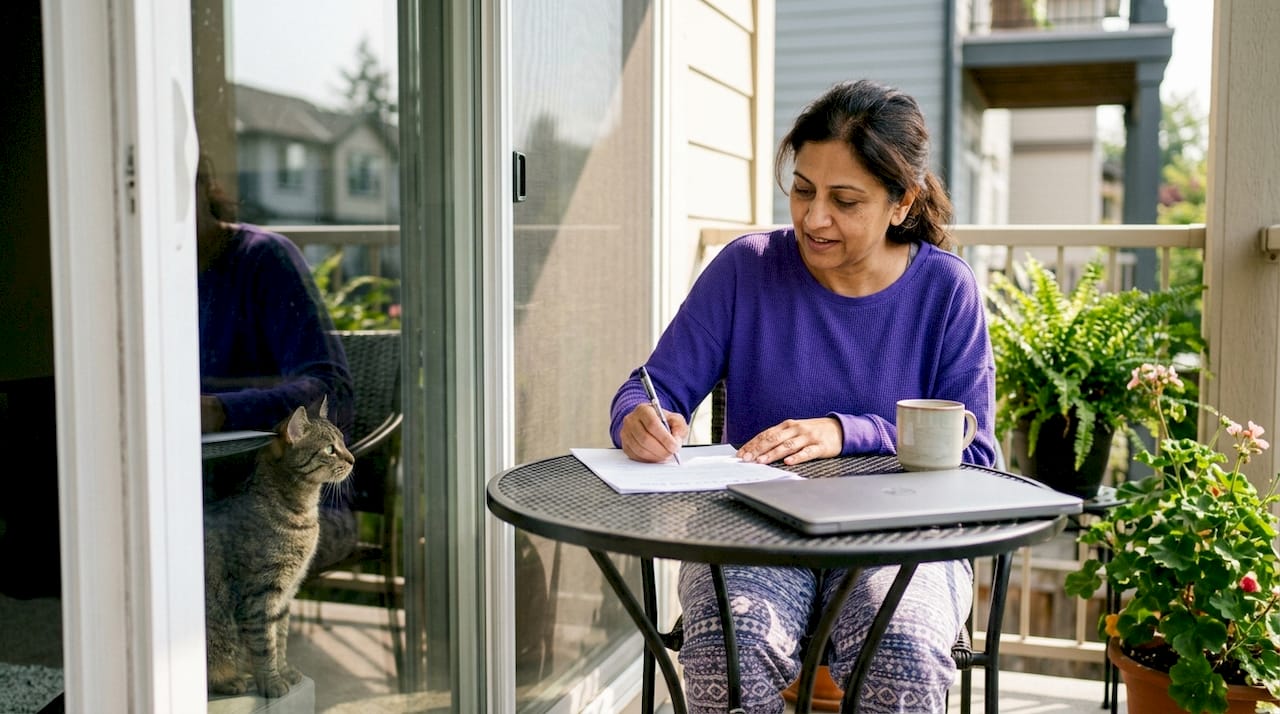
A pet care plan for people living alone is a structured arrangement that protects your pet’s welfare when you cannot provide care yourself, whether due to a medical emergency, hospitalization, or the gradual challenges of aging in place. Solo pet ownership carries a specific risk that paired households don’t face: if something happens to you, no one automatically steps in for your animal. Only 23% of residential care facilities have formal pet policies, which means the responsibility for planning falls entirely on you. Mypetssafetynet was built specifically to address this gap, giving solo pet owners a reliable safety net when they need it most.
What are the essential elements of a pet care plan living alone?
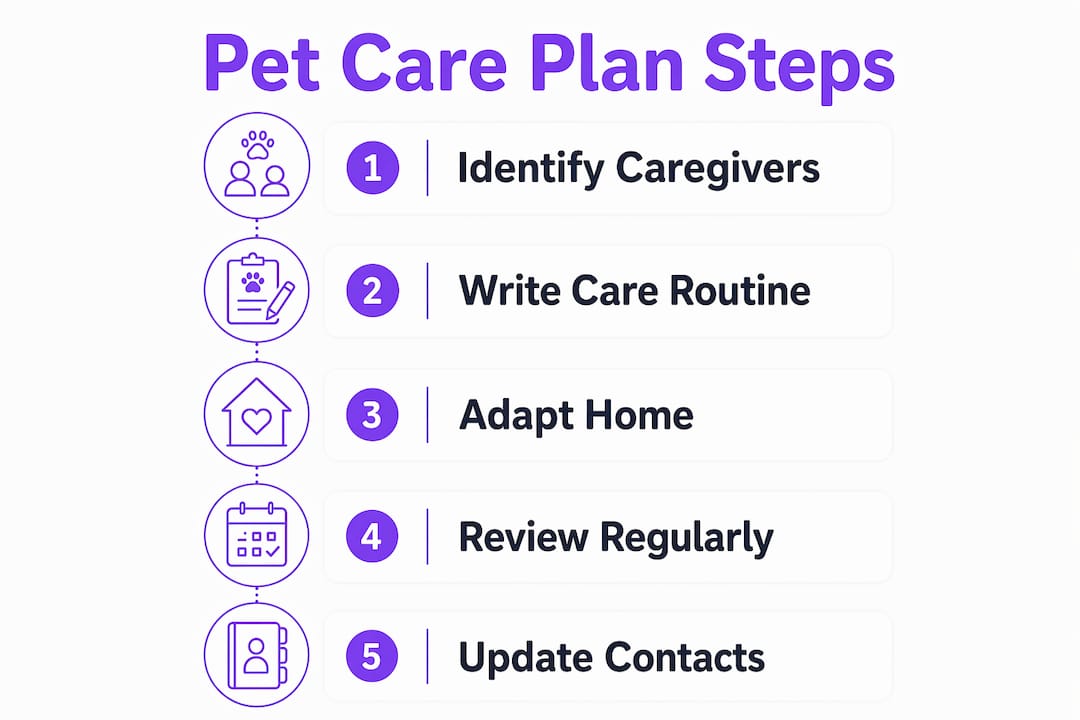
A solid emergency pet care plan has five core components. Each one closes a specific gap that solo pet owners face when an unexpected situation arises.
- Identify 2–3 trusted backup caregivers. Choose people who already know your pet, not just people who are willing in theory. A neighbor who has met your dog is far more reliable than a cousin three states away.
- Document every care routine in writing. Include feeding times, portion sizes, medication names and doses, behavioral quirks, and your veterinarian’s contact information. Verbal instructions get forgotten under stress.
- Formalize the arrangement legally. Verbal promises often fail, and pets end up in shelters when owners become incapacitated. A written pet guardianship agreement, reviewed by an attorney, gives your backup caregiver clear legal standing to act.
- Prepare a pet go-bag. Pack a week’s worth of food, medications, vaccination records, a favorite toy, and a copy of your care document. Store it near your front door or in a labeled container your caregiver can find immediately.
- Brief your caregivers and any home care workers. Walk each person through the routine at least once. Confirm they know where the go-bag is and how to reach your vet.
Pro Tip: Register your backup caregiver’s contact information with your veterinary clinic so the clinic can release your pet’s records to them in an emergency without requiring your signature.
If you’re unsure where to start, the guide on what happens if you’re hospitalized walks through the legal and practical steps in plain language. Managing pets alone requires this kind of written, tested plan. A good intention is not a plan.
How to adapt your home for aging pets when you live alone
Aging in place is a term used in human elder care to describe living independently at home as health declines. The same concept applies to pets. What does aging in place mean for pets? It means modifying your home so your senior animal can move safely, eat comfortably, and rest without pain, even as mobility decreases.
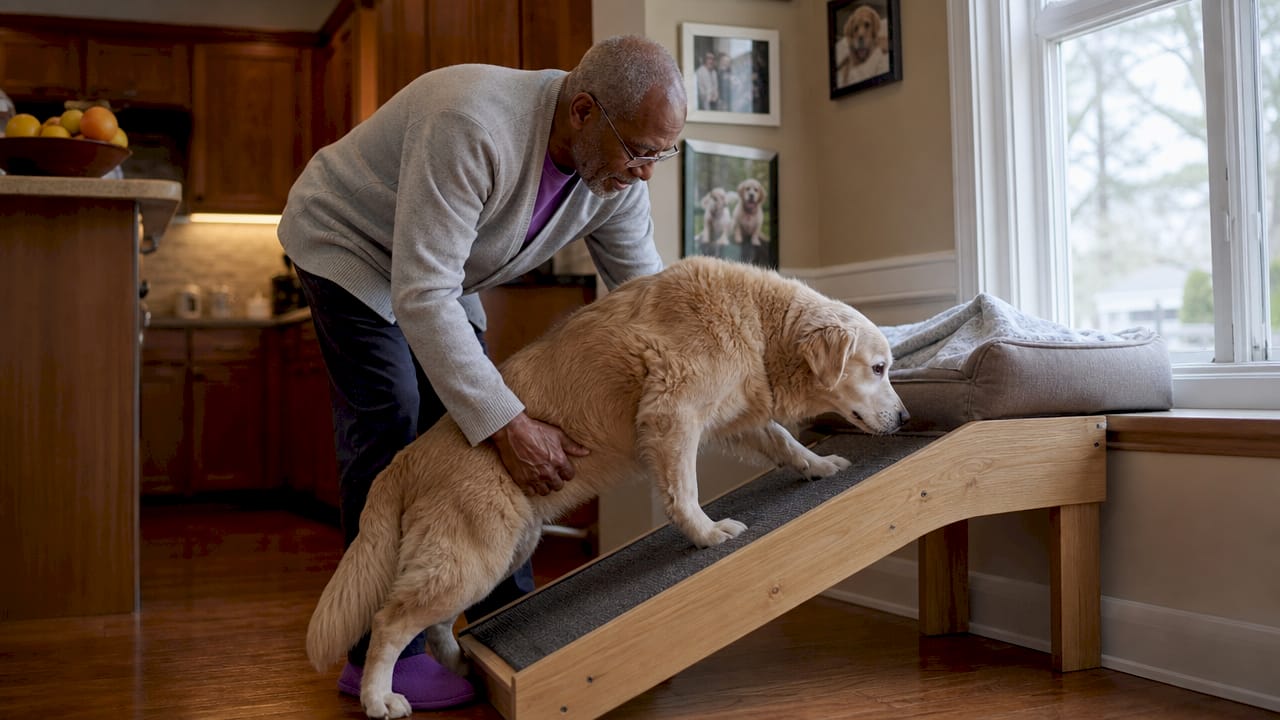
Behavioral changes in aging pets often mimic chronic pain or cognitive dysfunction. A cat that stops using the litter box may not be misbehaving. She may be unable to step over the high sides. A dog that hesitates at the stairs may have arthritis, not stubbornness. Professional diagnosis comes first. Then you adapt the environment.
The most effective home modifications for senior pets include:
- Ramps and steps over stairs or furniture edges. Simple ramps are inexpensive, reversible, and restore access to favorite resting spots.
- Non-slip surfaces on hardwood or tile floors. Yoga mats, carpet runners, and rubber-backed rugs prevent falls and reduce joint strain.
- Orthopedic bedding placed at floor level. Orthopedic beds and easier access to food, water, and litter directly reduce arthritis pain and accidents.
- Raised food and water bowls for dogs with neck or shoulder stiffness.
- Low-sided litter boxes for cats with hip or knee problems.
| Modification | Problem it solves | Approximate cost |
|---|---|---|
| Ramp to couch or bed | Reduces joint impact from jumping | $20–$80 |
| Non-slip floor runner | Prevents slipping on hard floors | $15–$50 |
| Orthopedic pet bed | Relieves arthritis pressure points | $40–$120 |
| Raised food bowl | Eases neck and shoulder strain | $10–$40 |
| Low-sided litter box | Allows arthritic cats to enter easily | $10–$30 |
Pro Tip: Reassess your home setup every six months. A modification that worked well at age 10 may need upgrading by age 13. Small, reversible changes are easier to make gradually than one large overhaul.
A pet care plan aging in place should include a home modification checklist that gets updated at each veterinary visit. Your vet can flag new mobility concerns before they become serious problems.
How can solo pet owners build professional and community support?
Living solo with pets means you carry the full weight of daily care. Professional and community support reduces that weight and fills critical gaps when your own capacity is limited.
Pet-friendly home care services can include assistance with pet feeding, medication administration, grooming, and walking as part of a broader home care package. This matters because including pet care in an official care plan improves how home care providers understand your needs and supports your independence. When a home aide knows your dog’s feeding schedule, they can maintain it without you having to ask each time.
“Pets provide seniors with companionship, reduced isolation, and motivation for physical activity. Keeping pets in the home, with proper support, directly improves emotional and physical health outcomes for older adults living alone.”
Community resources add another layer of reliability. Options worth building into your plan include:
- Local pet sitter networks. Many communities have volunteer or low-cost pet sitter registries through senior centers or animal shelters.
- Veterinary transportation services. Some clinics offer or coordinate transport for owners who cannot drive. Ask your vet directly.
- Neighbor agreements. A formal, written arrangement with a trusted neighbor to check on your pet daily costs nothing and provides immediate local coverage.
- Home aide coordination. The role of home aides in pet care is expanding. Aides who understand your pet’s routine can act as a first line of response.
Scientific exercise programs reduce muscle loss in older pets by 40%. That number underscores why maintaining physical activity, even through short, assisted walks, belongs in every senior pet care plan. Community support makes those walks possible on days when you cannot manage them alone.
What steps should you take to review your pet care plan over time?
A pet care plan is not a document you write once and file away. It needs regular updates to stay accurate and effective.
- Review the plan annually. Set a calendar reminder each year to check that caregiver contact details are current, care instructions reflect your pet’s current routine, and any legal documents are still valid.
- Update medical details after every vet visit. New medications, dosage changes, or diagnoses should go into the written plan the same week they occur. Outdated medication instructions are dangerous.
- Reassess home modifications every six months. Home modifications should be regularly reassessed as your pet’s mobility changes. What worked last year may no longer be sufficient.
- Confirm caregiver readiness twice a year. Life changes for your backup caregivers too. A person who agreed to help two years ago may have moved, had a baby, or developed their own health concerns. Confirm their availability directly.
- Share every update promptly. Send revised care documents to all caregivers, your vet, and any home care providers as soon as changes are made. Do not wait for the next scheduled review.
Pro Tip: Keep a single shared digital document, such as a Google Doc, that all caregivers can access in real time. When you update it, they see the change immediately without needing a separate notification.
68% of U.S. households own pets, and a large share of those pets are seniors requiring quarterly vet checkups. Each of those visits is a natural trigger to review and update your care plan. Build the habit of treating vet appointments as plan review sessions, not just health checks.
Key Takeaways
A reliable pet care plan for solo owners requires legal backup arrangements, written care routines, home adaptations, and regular reviews to protect your pet through any emergency or health change.
| Point | Details |
|---|---|
| Formalize backup caregivers | Written guardianship agreements prevent pets from entering shelters when verbal promises fail. |
| Document every care routine | Written feeding, medication, and behavioral details give caregivers what they need to act immediately. |
| Adapt your home for aging pets | Ramps, non-slip surfaces, and orthopedic bedding reduce pain and accidents for senior animals. |
| Integrate professional support | Home aides and community pet sitters fill daily care gaps that solo owners cannot always cover alone. |
| Review the plan regularly | Update caregiver contacts and medical details after every vet visit and confirm readiness twice a year. |
What I’ve learned from watching solo owners plan (and not plan) for their pets
The most common mistake I see is treating a pet care plan as a one-time task. An owner writes down a feeding schedule, asks a friend to “be available if needed,” and considers the job done. That approach fails the moment the friend moves away, the pet develops a new health condition, or the emergency happens at 2:00 AM when no one has been briefed on where the go-bag is.
The second mistake is underestimating how quickly a senior pet’s needs change. A dog that was fully mobile at 10 may need ramps, a new diet, and quarterly vet visits by 12. If the care plan hasn’t kept pace, the backup caregiver walks into a situation they’re not prepared for.
What actually works is treating the pet care plan as a living document, the same way you’d treat a will or an insurance policy. It needs a named person with legal authority, written instructions that are current, and at least two people who have physically practiced the routine. The proactive planning guide we recommend covers exactly this kind of layered preparation.
Pets provide real, measurable benefits to people living alone, including reduced isolation and improved physical health. Protecting that relationship through a formal plan isn’t excessive. It’s responsible ownership.
— Mypetssafetynet
How Mypetssafetynet supports solo pet owners every day
Solo pet owners deserve a system that watches out for both them and their animals, not just a document sitting in a drawer.
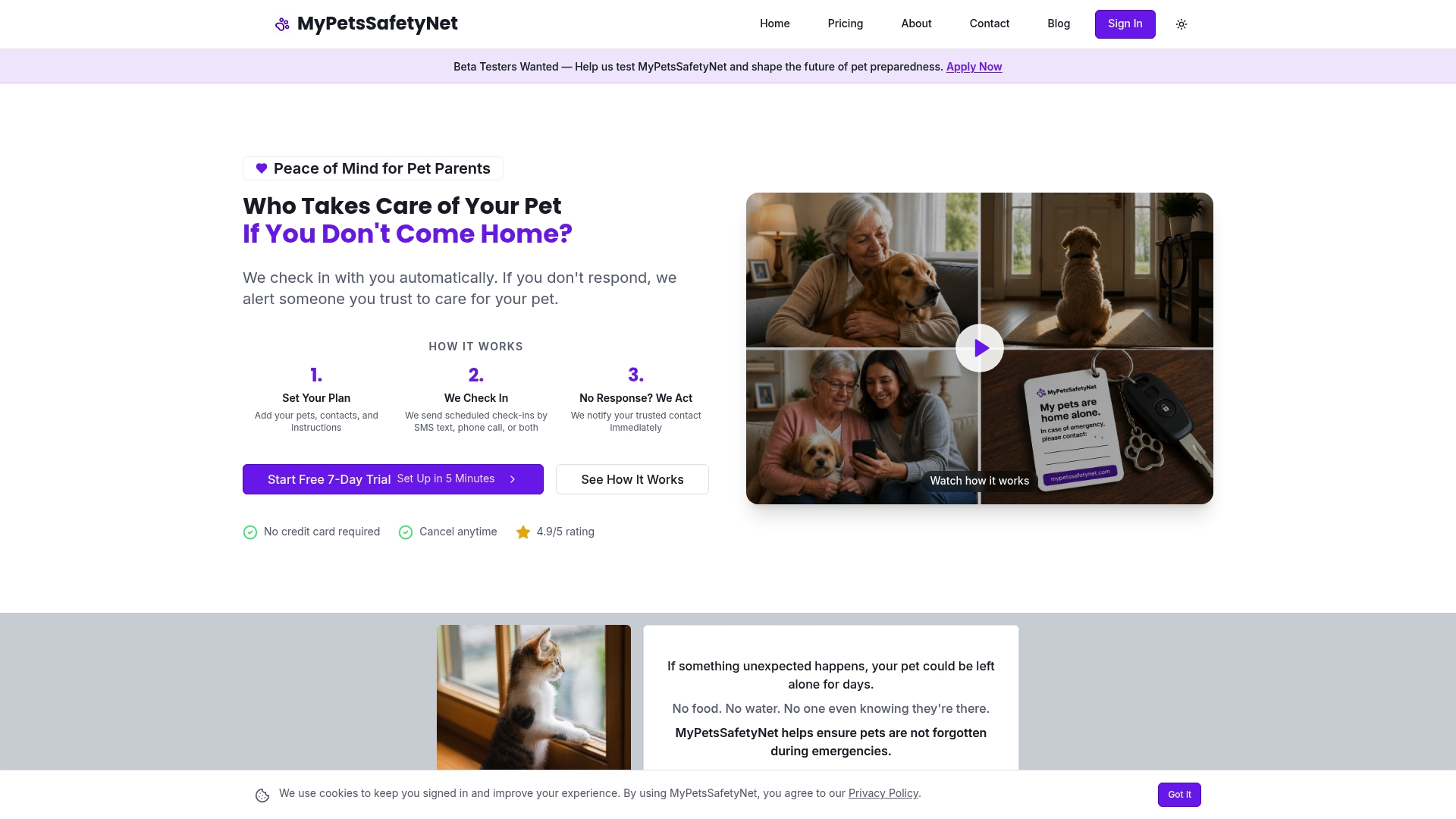
Mypetssafetynet offers wellness check-in services designed specifically for people living alone with pets. The platform notifies your emergency contacts if you miss a check-in, so someone can reach your pet quickly when it matters most. You can document your pet’s full care routine, share it with trusted caregivers, and update it anytime. For solo pet owners managing aging animals or chronic health conditions, this kind of structured backup is the difference between a pet that gets help within hours and one that waits days. Learn more about how the service works and how to set up SMS alerts for your emergency contacts today.
FAQ
What is a pet care plan for someone living alone?
A pet care plan for solo owners is a written document that identifies backup caregivers, details daily care routines, and includes legal arrangements to protect your pet if you become unable to provide care.
How do I choose a backup caregiver for my pet?
Choose someone who already knows your pet, lives nearby, and is willing to sign a written guardianship agreement. Verbal commitments are unreliable and can leave pets without care during emergencies.
What does aging in place mean for pets?
Aging in place for pets means modifying your home so a senior animal can live comfortably and safely as mobility and health decline, using tools like ramps, non-slip surfaces, and orthopedic bedding.
How often should I update my pet care plan?
Review your plan annually, update medical details after every vet visit, and confirm caregiver availability at least twice a year to keep the plan accurate and effective.
Can home care services help with pet care for solo owners?
Yes. Pet-friendly home care packages can include feeding, medication, grooming, and walking assistance, making them a practical option for solo owners who need daily support.