Pet Anxiety When Owner Is Hospitalized: How to Help

When you go into the hospital without warning, your pet loses its person, its routine and its home rhythm all at once. Some pets handle it quietly. Others pace, hide, stop eating or act in ways no one expects. The most helpful thing you can do is give a caregiver three things: a familiar routine to keep, written instructions to follow, and a way to know they’re needed in the first place. This guide covers all three, for the person caring for your pet now and for you, if you want to be ready before anything happens.
TL;DR
- Sudden changes can cause stress in pets, and the FDA notes that normally well-behaved animals may act out of character, with recovery taking several weeks.
- Caregivers should keep meals, medication, play and exercise on the usual schedule, and keep the pet in its own home when possible.
- Call a veterinarian if the pet hurts itself, refuses to eat, can’t settle or shows sudden behavior changes.
- If you live alone, the real risk is that no one knows you’re in the hospital. Written instructions, named caregivers and an automated check-in close that gap.
Table of Contents
- What your pet may go through when you’re suddenly hospitalized
- Signs of stress and anxiety a temporary caregiver should watch for
- How a caregiver can help an anxious pet feel secure
- When to call a veterinarian
- What to prepare so a caregiver can act with confidence
- The gap that catches people who live alone
- Our perspective: a plan only works if someone is alerted
- How MyPetsSafetyNet closes the gap
- Coming home: helping your pet readjust
- FAQ
- Sources
What your pet may go through when you’re suddenly hospitalized
Pets can’t be told what happened. They only notice that you didn’t come home, that feeding times slipped, and that a stranger or a semi-familiar person is in the house, or that they’ve been moved somewhere new.
The FDA says emergencies can cause unexpected or uncharacteristic behavior. A pet that is usually calm may turn defensive or even aggressive after a big disruption, and settling back can take weeks. That’s useful to know if you’re the sitter: a pet that snaps or hides isn’t being “bad.” It’s coping.
The American Humane Society adds that a sudden change in environment or schedule can cause stress, especially in animals that already have anxiety. Dogs that are very attached to one person, rescued pets and older animals deserve extra patience.
The problem is also bigger than the pet. Emory Healthcare reported in 2026 that illness and hospitalization can abruptly cut off access to the human–animal relationship, raising worries about the animal’s welfare and the patient’s own wellbeing. Patients worry about their pets, and that worry can follow them through recovery.
Signs of stress and anxiety a temporary caregiver should watch for
Anxiety doesn’t always look dramatic. The 2015 AAHA behavior guidelines list both obvious and subtle signs.
Obvious signs
- Pacing and panting
- Excessive vocalizing (barking, howling, crying, yowling)
- Going to the bathroom in the house
- Chewing or destroying property
- Drooling or salivating
Subtler signs
- Lip licking, nose licking or yawning when nothing is going on
- Freezing in place or scanning the room
- Hiding
- Eating or drinking much less, or much more, than usual
Cats are easy to miss. A cat that hides under the bed, skips meals and stops using the litter box is telling you something, even though it’s quiet.
Is it separation anxiety or something else?
Not every upset dog has separation anxiety. Barking at a delivery truck or a noise outside looks similar from the next room. AAHA notes that video recording a dog after its owner leaves is the best way to tell separation anxiety apart from reactions to outside stimuli. A caregiver can prop up a phone, record for an hour or two, and show the footage to the vet.
How a caregiver can help an anxious pet feel secure
The core principle is simple: protect the routine. AAHA says cats and dogs are creatures of habit, and closely keeping their daily routine can help them feel safe when their owner is away. That means meals, medication, play and exercise at the usual times.

Keep the pet at home if you can
Preventive Vet recommends in-home sitting where possible, because a dog in its familiar environment keeps its usual routine and has less stress. It matters most for anxious dogs and those with a history of rehoming. If a pet has to move, bring its bed, toys, bowls and food with it.
Practical steps for the first few days
- Match the schedule. Feed, walk and give medication at the times written down for you. Don’t switch foods suddenly.
- Bring comfort items. The American Humane Society suggests leaving a familiar shirt or blanket near the pet’s sleeping area. An unwashed shirt that smells like its owner can help.
- Give cats a safe room. The same guidance recommends a room with food, water, litter and a hiding spot, rather than forcing a cat to socialize. The FDA also says cats in unfamiliar surroundings should start in one room or a small indoor area.
- Supervise dogs outdoors. Per the FDA, dogs in unfamiliar places should be leash-walked or supervised in a secured area, since a stressed dog may bolt.
- Allow time to adjust. The FDA advises letting pets acclimate to new surroundings. Don’t expect a calm pet on day one.
- Stay calm yourself. Pets read tone. Speak softly and keep the house quiet and predictable.
What about visits to the hospital?
Some hospitals allow pet visits and some don’t, so ask the care team before bringing an animal. If a visit isn’t possible, a phone call with the sitter holding the phone near the pet can still help some pets hear a familiar voice. Don’t count on it to cure anxiety. Routine does more.
When to call a veterinarian
Mild unsettled behavior often eases over days. Some signs need professional help. AAHA advises contacting a veterinarian if the pet injures itself, refuses to eat, can’t settle when alone, shows sudden behavior changes, or stays distressed despite gradual training.
A few situations are clear:
- A dog scratching at doors or windows until its paws bleed
- A cat that hasn’t eaten for a day or more
- Vomiting or diarrhea along with the behavior change
- A sudden switch to aggression
For these, the caregiver should call the vet, not wait. That only works if the caregiver has the vet’s number and the authority to approve treatment. That’s why the next section matters.
What to prepare so a caregiver can act with confidence
Most of what makes a pet’s time without you easier is decided before the emergency. The AVMA suggests you pick an authorized agent, settle how veterinary costs will be paid, put care details and authorization in writing, and show the agent where supplies are kept. It also recommends a trusted emergency decision-maker who can handle veterinary emergencies if you can’t be reached.

The FDA says a temporary caretaker should have your phone number and complete care instructions, including a signed authorization for veterinary care and stated financial limits.
A checklist for your pet care instructions
- Feeding times, portions, brand and where food is stored
- Medications, doses, times and how your pet takes them (pill pocket, crushed in food)
- Vet name, clinic phone number and after-hours emergency clinic
- Written veterinary authorization and a spending limit
- Walk routine, leash location, and any triggers (other dogs, thunder, strangers)
- Litter box location and cleaning habits
- Favorite toys, bed and comfort items
- Quirks: hiding spots, fear of the vacuum, a cat that won’t eat with someone watching
- How to get in: key location, door code, or who holds a spare
AAHA’s view is that detailed written instructions boost a sitter’s confidence and give the pet the consistency it needs to feel safe. A sitter who knows the routine is less likely to improvise and more likely to keep your pet calm.
Supplies and microchip details
A VCA emergency guide suggests a go bag with two weeks of food and medication, vet contacts, medical records, feeding instructions, leashes or carriers and first-aid items. Keep it somewhere your caregiver can reach without you.
Also check your microchip. The AVMA notes registry databases can list your emergency agent as an alternate contact, so someone can be reached if your pet is found. Our guide to microchip registration steps for solo owners walks through it.
For more on what to put in the packet, see our guides to emergency document essentials and a one-page handoff checklist. If you’re deciding who should do what, five caregiver roles can help you split up the work.
The gap that catches people who live alone
Everything above assumes someone knows you’re in the hospital. If you live alone, that’s not guaranteed. A fall, a stroke, a car accident on the way home: no one may notice for hours or days, and in that time the pet is alone, hungry and frightened.
Physicians and veterinarians are starting to talk about this. Emory physician Reshma Jagsi and Ohio State veterinarian Rustin Moore say clinicians should ask hospitalized patients about pets, since pet responsibilities may shape patients’ decisions, and that case management or social work can help. That’s a good step, but it only helps once you’re already in a hospital and able to speak. It doesn’t cover the hours before anyone knows.
So plan for that window. Tell your caregivers where the pet instructions are. Tell a neighbor. Put a card in your wallet saying you have pets at home and who to call. Our articles on who checks on pets if an owner is hospitalized and what happens to your pets if you’re hospitalized go through the scenarios in more detail, and our solo owner’s plan for when you can’t get home covers the first hours.
Our perspective: a plan only works if someone is alerted
We built MyPetsSafetyNet around one worry: what happens to a pet if its owner has an emergency and lives alone? In our experience, the written plan is rarely the part people skip. The part they skip is the trigger. A folder of instructions in a drawer helps no one if nobody knows to open it.
We think a good pet emergency plan has three parts:
- Named people. Specific caregivers, not “someone will help.” Up to three emergency contacts is enough for most households, and each should know their role.
- Clear instructions. Care details the caregiver gets directly, including feeding, medication, vet and home access, so they don’t have to guess or hunt for them.
- A way to detect silence. A scheduled check-in that asks “are you okay?” and, if you don’t answer, escalates to your people.
We also believe the check-in shouldn’t depend on a smartphone or an app. Many of the people who most need a safety net, including older adults and people with disabilities, are comfortable with a plain phone call or text. And the alert should go to your chosen pet caregivers, with your pet’s needs attached, not just to a general emergency line.
An anxious pet is easier to help when the person arriving already knows the routine, the vet and where the food is.
— MyPetsSafetyNet
How MyPetsSafetyNet closes the gap
MyPetsSafetyNet is an automated wellness check-in for pet owners. You choose a schedule, and we reach out by text message, phone call or email. If you don’t respond within your countdown, we move through an escalation and notify your emergency contacts with your pet care details, so they can check on you and your pets.
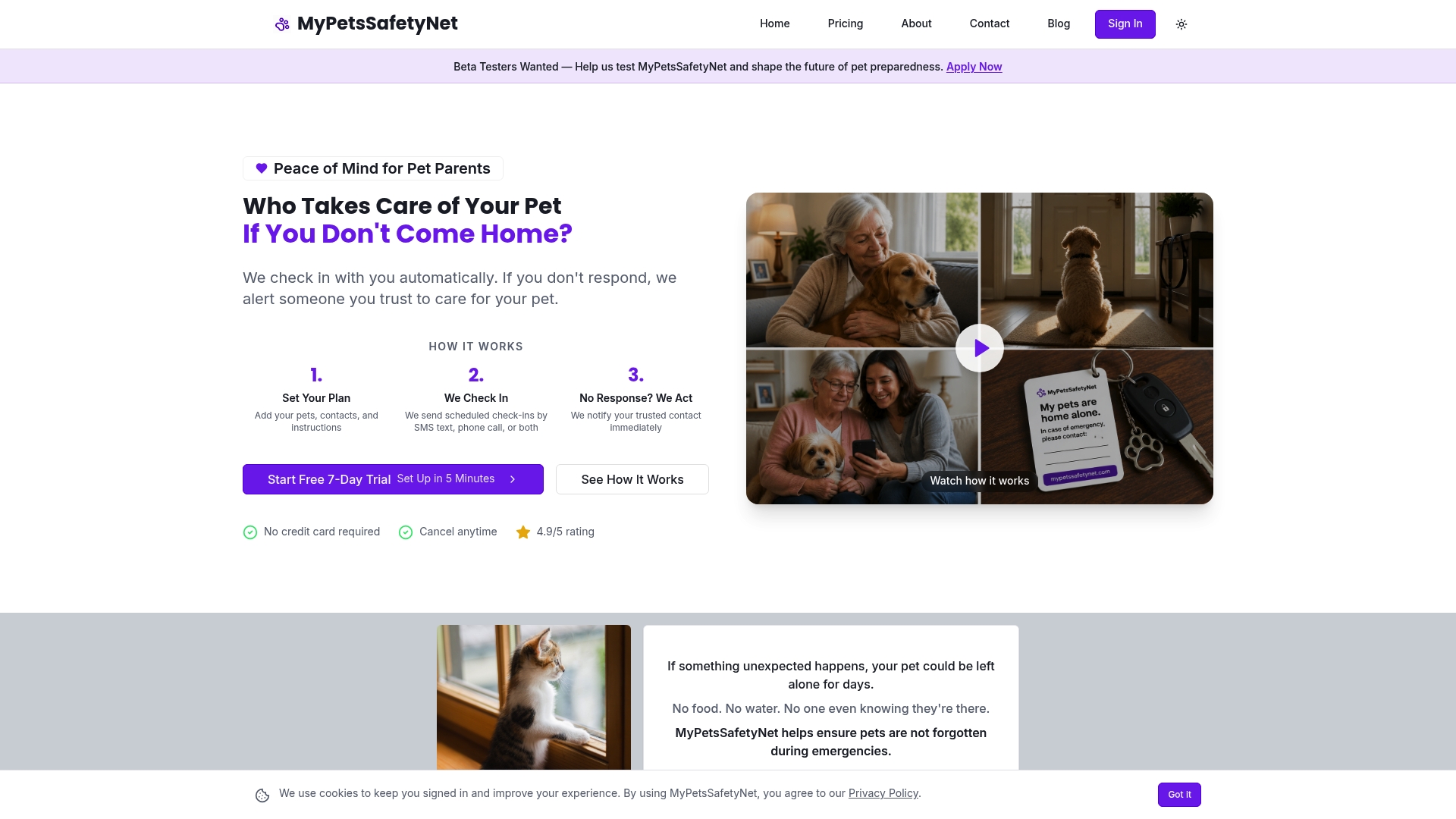
Here’s what you can set up:
- Customizable check-in schedules and countdown intervals
- Profiles and care instructions for up to 5 pets
- Up to 3 emergency contacts
- A pet care instruction card generator
- No smartphone required: it works with any phone through SMS or calls
The Monthly plan is $6.99 per month, and there’s a 7-day free trial with no credit card required. Most people finish setup in under 10 minutes. You can see the details on the pricing page, or start with our free pet card if you want to get your instructions down first.
Coming home: helping your pet readjust
When you’re back, expect some wobble. Your pet may be clingy, follow you from room to room, or act oddly for a while. The FDA’s note about recovery taking several weeks applies here as well. Keep routines steady, avoid big changes (new foods, new furniture, long absences) in the first weeks, and give your pet quiet time with you.
If your recovery means you can’t walk a dog or lift a litter box for a while, line up help now: a neighbor, a walker, a family member. Our guide on who takes care of your pets if you’re hospitalized can help you think through options, and our overview of an emergency pet care plan covers the basics of putting it all together.
FAQ
How long does a pet’s anxiety last after its owner goes to the hospital?
It varies by pet and by how well the routine is kept. The FDA says recovery from a major disruption can take several weeks. If the pet stops eating, hurts itself or gets worse, call a veterinarian rather than waiting.
Can my dog or cat get depressed when I’m hospitalized?
Pets can show signs that look like sadness: low energy, hiding, less interest in food or play. Those signs can also point to stress or illness, so a caregiver should watch the pattern and talk to the vet if it lasts or the pet stops eating. Familiar routines, your scent on a blanket and calm company usually help.
Should my pet stay at home or go somewhere else?
Where possible, home is better. Preventive Vet says keeping a dog in its familiar environment preserves its routine and lowers stress, especially for anxious dogs. If your pet must move, send its bed, toys, food and written instructions along.
What should I tell the person caring for my pet?
Give them your feeding and medication schedule, your vet’s details, a signed authorization for veterinary care with a spending limit, home access information and your pet’s quirks. The FDA and AVMA both recommend putting this in writing.
How will anyone know to check on my pets if I live alone?
Only if you set it up in advance. Name your caregivers, tell them where your instructions are, and use something that alerts them when you can’t. An automated check-in that notifies your contacts if you don’t respond does that job.
Sources
- Take Care of Your Pets Before Disaster Strikes | FDA
- Views from a physician and veterinarian: How to improve barriers to pet care when owners are hospitalized | Emory Healthcare
- 2015 AAHA Canine and Feline Behavior Management Guidelines
- Separation Anxiety and the “Pandemic Puppy” | AAHA
- Pet Sitter & Boarding 101 | American Humane Society
- Ensuring your pet is protected when you’re away | AVMA
- Preparing for the Unexpected: Essential Pet Sitter Instructions | AAHA
- Emergency pet care guide | VCA Hospitals
- Choosing a Dog Sitter or Boarding Facility | Preventive Vet
- Separation Anxiety in Pets: Signs, Causes, and Solutions | AAHA