Insulin Dog Emergency Plan: What to Write Down and Who to Tell

An emergency plan for an insulin-dependent dog has four parts: written instructions a stranger could follow, a backup caregiver who has already practiced the injection, a grab-and-go bag with supplies and records, and a dependable way to alert that caregiver if you can’t. The fourth part is the one most owners skip, and it matters most if you live alone. A dog on insulin can’t wait days for someone to wonder why you haven’t answered the phone. Our automated check-in service exists for that gap: if you miss a check-in, your emergency contacts get a message with your pet’s care details.
This guide walks through each part in plain steps. It is written for owners who want calm, practical preparation, not a scare.
TL;DR
- Write down every step of your dog’s insulin routine: dose, timing, storage, syringe prep, feeding, exercise, and low blood sugar signs.
- Pick a backup caregiver now, and have them practice the injection with you while your dog is well.
- Keep a go bag with medications, food, records, and vet and emergency clinic numbers where your caregiver can find it.
- Teach your caregiver what to do about a missed dose, a skipped meal, or signs of low blood sugar, and make sure they know to call the vet.
- Set up an automatic way for someone to be alerted if you can’t respond, because a plan only works if the right person hears about the emergency.
Table of Contents
- Why insulin makes a dog emergency plan different
- Step 1: Write the routine so someone else can follow it
- Step 2: Choose and train a backup caregiver
- Step 3: Pack a go bag that includes the insulin routine
- Step 4: Tell the caregiver what to do when something goes wrong
- Step 5: Make sure someone is alerted
- A simple monthly review
- Perspective: why we put the alert first
- Try the check-in with your own dog’s routine
- FAQ
- Sources
Why insulin makes a dog emergency plan different
Most pets can go a day without a caregiver and be uncomfortable but fine. A diabetic dog is on a schedule. Insulin is usually given by injection twice a day, and the dose is matched to meals. If the owner is suddenly in the hospital, or has fallen at home, two things can go wrong quickly: the dog misses insulin and food, or someone gives insulin without the matching meal.
VCA Animal Hospitals notes that missing insulin doses can lead to high blood sugar or diabetic ketoacidosis, a medical emergency. The opposite problem is just as serious. Merck Animal Health lists too much insulin, a missed or delayed meal, illness, vomiting, and extra activity as causes of low blood sugar (hypoglycemia), which can be fatal if untreated.
So a good plan does two jobs. It tells a substitute exactly what to do, and it makes sure that substitute finds out in time.
Step 1: Write the routine so someone else can follow it
Assume the person reading your instructions has never touched a syringe and doesn’t know where you keep anything. PetDiabetes.org’s guidance on arranging care suggests the written instructions cover supply locations, insulin storage and handling, the dose, syringe preparation, injection, timing, disposal, feeding, exercise, and signs of low blood sugar with how to treat them.
Use this as your checklist:
- Insulin name and strength. Write the brand and the concentration printed on the vial. If you use a diluted insulin or a syringe that doesn’t match the vial, write the number of units to give, not the marks on the syringe. This is a common source of dosing mistakes.
- Dose and times. For example, “4 units at 7:30 a.m. and 7:30 p.m., right after the meal.” Use your dog’s actual numbers from your vet.
- Storage. Where the unopened and in-use vials are kept, and any handling steps your vet taught you.
- Food. Exact amount, brand, and times. Merck advises feeding at the same times each day and keeping the diet consistent, with no treats or changes unless the vet recommends them.
- Exercise. Usual walk length and times. Changes in activity can affect blood sugar, so the caregiver shouldn’t change the routine without checking with your vet.
- Daily routine details. The American Animal Hospital Association’s pet sitter instruction guidance also suggests walk locations, off-limits areas, and where the leashes, collars, toys, and cleaning supplies are kept.
- Disposal. Where used needles go.
Keep it to one or two pages with large type. Someone reading it while worried about you will skim, so put the injection steps in numbered order and the low blood sugar signs in a box at the top.
If you’d like a template, our pet care handoff checklist is a one-page format you can print and fill in, and our guide to pet care emergency documents explains what else belongs in the packet.
Step 2: Choose and train a backup caregiver
The American Society for the Prevention of Cruelty to Animals (ASPCA) points out that an emergency caregiver doesn’t have to be the dog’s permanent guardian. A neighbor or friend can step in if you are hospitalized. It also recommends checking in periodically to confirm they’re still willing and able.
For a dog on insulin, willingness isn’t enough. Your caregiver needs hands-on practice. A few ways to do that:
- Ask your vet or a vet nurse to teach them. One diabetic-dog educator recommends having the clinic train your backup while the dog is well, then practicing together once or twice.
- Do a full practice run. PetDiabetes.org suggests the person prepares a syringe with the right amount of insulin and gives the injection a few days before they might need to, and is shown where every supply is kept.
- Use one shared dose chart. A daily checklist for insulin time and dose, food, water, and exercise helps ensure nobody doubles up an injection. Keep it on the fridge and have the caregiver tick it each time.
- Give them a key and access. VCA’s emergency guide says the temporary caregiver should have spare keys and know where the go bag is.
If you live alone, name more than one person. Someone in the next building may be fastest, while a family member two hours away may be the one who can stay. Our guide to naming two to four pet emergency contacts and our breakdown of pet caregiver roles show how to divide the jobs so nobody is guessing.
Step 3: Pack a go bag that includes the insulin routine
A go bag sounds like a disaster-kit idea, and it is, but it also solves the most ordinary emergency: you’re taken to the hospital and a friend has to get your dog’s things in a hurry.
Based on the VCA emergency guide, the FDA’s pet disaster guidance, and Ready New York’s pet plan, a diabetic dog’s bag should hold:
| Item | What to include |
|---|---|
| Medication | Insulin and syringes. VCA suggests two weeks of medications with up-to-date instructions; the FDA suggests at least a one-week supply of food and water when evacuating. |
| Food and water | Two weeks of the same food your dog eats, with feeding instructions, plus bowls. |
| Records | Medical records in a waterproof container, including a list of medications and what each is for, and vaccination dates. |
| Phone numbers | Your vet, the nearest animal emergency hospital, the Pet Poison Helpline, and local animal control. |
| Identification | A current photo of you and your dog, and proof of ownership or microchip information. |
| Transport and handling | Leash, harness, or carrier. |
| Written permission | A signed treatment authorization (see below). |
Because insulin needs to be stored properly, the bag can’t hold the vial if it sits in the fridge. Instead, put a bright note in the bag and on the fridge door that says where the insulin is. Rotate food and medications on a schedule, as the American Red Cross preparedness workbook recommends practicing the plan and replacing emergency food, water, and medications.
For a longer packing list built for the person who has to grab it, see our pet hospital go bag guide. The dog emergency preparedness guide is another helpful read on packing emergency supplies for evacuation or temporary care.

The treatment permission form
Your caregiver may need to take your dog to the vet while you can’t be reached. PetDiabetes.org advises leaving a signed emergency treatment permission form with the sitter and a copy in the vet’s file. It should include:
- Your dog’s name, age, species, and condition (write DIABETIC)
- Current medications with dose and frequency
- Your phone numbers
- The caregiver’s name and authorization to seek care
- Special considerations, such as a dog that is nervous at the clinic
Call your vet’s office to ask how they handle authorization for someone else to approve treatment. Policies differ between clinics.
Step 4: Tell the caregiver what to do when something goes wrong
This is the part to go over aloud, not just on paper. Your caregiver doesn’t need to be a clinician, but they need three rules and one phone number: your vet’s (or the 24-hour clinic’s).
If a dose is missed
VCA’s advice is to contact the veterinarian. If the vet can’t be reached and your dog is acting normally and eating, skip the missed dose and give the next one at its regular time. Never give two doses at once or extra doses to catch up. Write that sentence on the instruction sheet in your own words, matched to what your vet has told you.
If your dog may have low blood sugar
Signs your vet has described to you should be on the sheet. Merck notes that a dog with diabetes can have low blood sugar without obvious signs, so a caregiver should watch for changes in behavior rather than wait for collapse.
The guidance from Merck and VCA is consistent:
- Call the veterinarian right away. Hospitalization may be needed.
- If the dog is conscious and able to swallow, rub a small amount of corn syrup, honey, or another sugar syrup on the gums. Do not use sugar substitutes.
- Wait for your dog to respond, then offer a small amount of food once they can swallow.
- If the dog is unconscious or seizing, do not put anything in the mouth. Call the vet or the local emergency clinic immediately.
Keep a small bottle of corn syrup or honey with the supplies and label it on the sheet. A caregiver searching a stranger’s kitchen shouldn’t also be hunting for sugar.
If your dog seems ill or insulin runs low
A dog that is vomiting, not eating, or unusually lethargic needs a call to the vet before the next injection, because insulin without food can be dangerous. Add the vet’s name, phone number, address, and directions, plus a 24-hour emergency clinic if your regular vet isn’t open overnight, as PetDiabetes.org recommends. Ask your vet how much insulin to keep on hand so a caregiver never faces an empty vial on a weekend.
This is the section where the vet is the authority. Your plan should make it easy for a caregiver to call, not to decide alone.
Step 5: Make sure someone is alerted
Everything above fails if the caregiver doesn’t know you need help. The ASPCA suggests three layers: a wallet Pet Alert Card naming two emergency contacts, a clearly visible emergency contact sheet in the home, and a pet portfolio with habits, medical conditions, medications, vet information, and behavior notes, shared with everyone in the pet’s circle of care.
Those are solid and cost nothing. Their limit is that they only work once a responder has found you. If you fall in the bathroom on a Tuesday and your neighbor doesn’t normally visit, a wallet card sits in a purse while your dog waits for the 7:30 p.m. injection.
That’s why we built an automatic check-in. You choose a schedule, and we reach you by text message, phone call, or email. If you don’t respond, an escalation sequence contacts the people you named, with your dog’s care details included. You can match the countdown intervals to your dog’s insulin schedule. For a person with a diabetic dog, that means deciding in advance how long a silence is too long.

If you’re deciding who should receive these messages, and how much to share with them, our guide on emergency contact privacy for owners without a smartphone and the piece on contacts who don’t answer can help. If your dog goes out with a walker, see dog walker emergency contacts.
A simple monthly review
A plan from last spring may be wrong today. Dose changes, a new food, a new neighbor, or a caregiver who moved all break it. Once a month, take ten minutes to:
- Compare the written instructions to your vet’s latest dose
- Replace expiring items in the go bag
- Text your caregivers to confirm they’re still available
- Check the check-in schedule and contact list
- Update the photo and vet phone numbers
The ASPCA also recommends checking in periodically with whoever has agreed to help, and the Red Cross workbook encourages practicing the plan, not just writing it.
Perspective: why we put the alert first
Most of the emergency plans we read for diabetic dogs are thorough about the dog and silent about the owner. They explain syringes, dose charts, and corn syrup, and then assume somebody already knows you are in trouble.
For people who live alone, that assumption is the weak link. Our service was created around one question: what happens to a pet if you have an emergency and nobody knows? So we built it to do the one thing a printed sheet can’t. If you miss a check-in, we notify your emergency contacts so they can check on you and your pet, with the care details already in their hands.
It works with any phone, by text or call, so you don’t need a smartphone. You can keep up to five pets and three emergency contacts on a profile, write the instructions once, and generate a pet care instruction card from it. Setup takes less than ten minutes, and we send care details to the named caregivers you chose, not to emergency services.
A trained caregiver, a clear sheet, and an automatic alert together are what let a diabetic dog stay on schedule when life doesn’t.
MyPetsSafetyNet
Try the check-in with your own dog’s routine
If you’ve written your dog’s insulin routine and picked your caregivers, the last step is making sure they’re notified. MyPetsSafetyNet is $6.99 per month, and there is a 7-day free trial with no credit card required. You can see the plan on our pricing page.
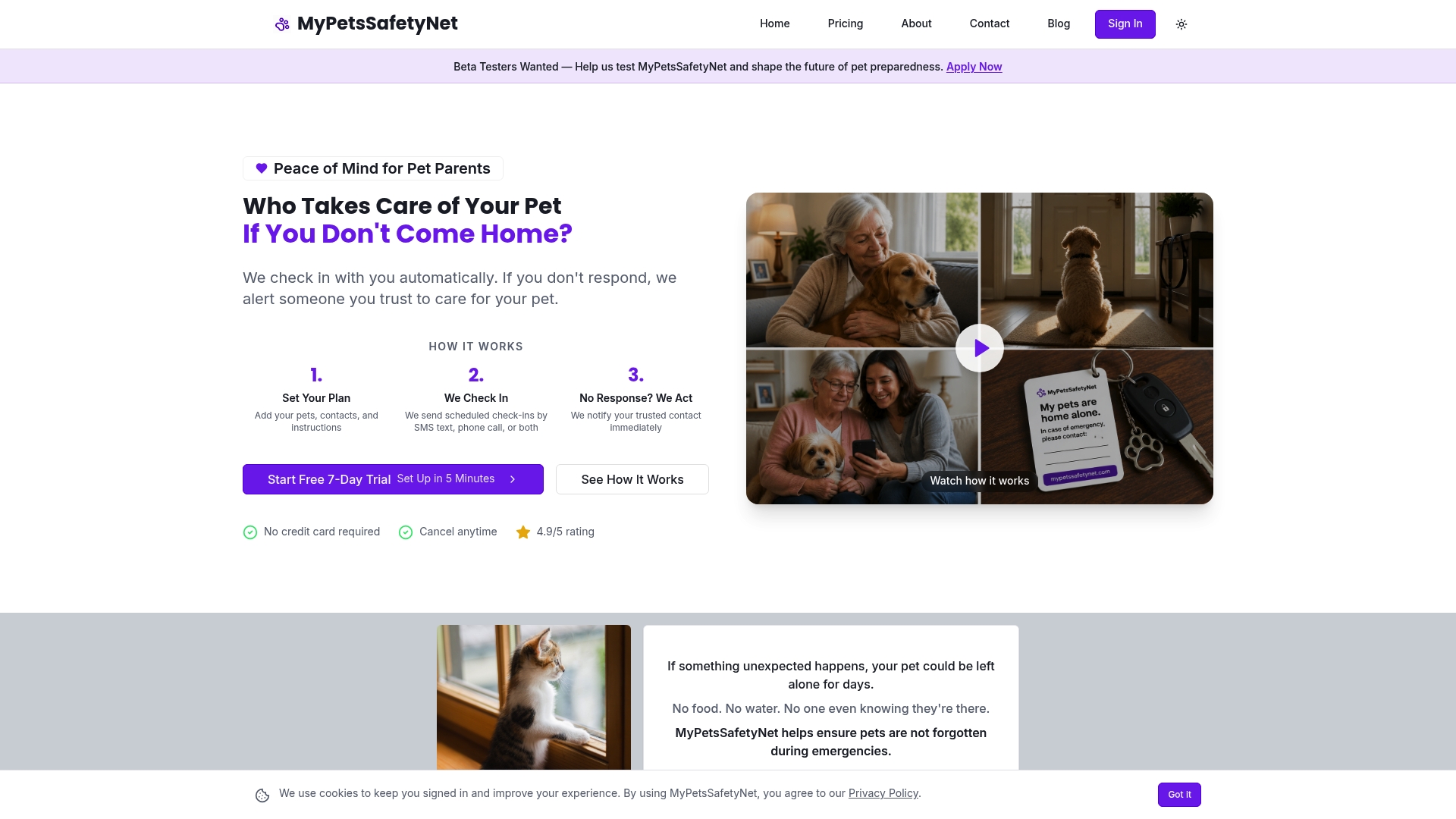
We’d suggest starting with your pet profile: add your dog’s insulin schedule, feeding instructions, and your vet’s number, then add your contacts and set the check-in times. If you’d like to see our one-page card first, you’ll find it on our free pet card page.
FAQ
Who should I choose as my diabetic dog’s emergency caregiver?
Pick someone reliable who lives close enough to reach your home quickly and is willing to learn the injection. The ASPCA notes this person doesn’t have to be the permanent guardian. Name a second person too, since one may be away or unreachable when you need help.
What should I do if my dog’s insulin is missed because I’m in the hospital?
Have your caregiver call your vet first. If the vet can’t be reached and the dog is eating and acting normally, VCA advises skipping the missed dose and giving the next one on schedule. They should never give a double dose.
What can I give my dog for low blood sugar?
For a conscious dog that can swallow, Merck advises rubbing a small amount of corn syrup on the gums, then feeding a small amount once the dog responds, and calling the vet immediately. Use real syrup or honey, never a sugar substitute. If your dog is unconscious, call the vet or emergency clinic right away.
What should be in a go bag for a diabetic dog?
Include medications with current instructions, food, medical records, your vet’s and emergency clinic’s numbers, a photo, and a leash or carrier. VCA’s emergency guide suggests two weeks of food and medications. Add a signed treatment permission form.
Does my caregiver need a smartphone to get alerts?
No. Our check-ins and alerts work with any phone through text messages or calls, so the people you choose, and you, can use the service without a smartphone app.
Sources
- Insulin | VCA Animal Hospitals
- Emergencies and Dogs With Diabetes | Merck Animal Health USA
- Pets with Diabetes: Arranging for care
- Making a Plan for Your Pet | ASPCA
- Preparing for the Unexpected: Essential Pet Sitter Instructions | AAHA
- A backup carer for your diabetic dog | Firstlightdog
- Emergency pet care guide | VCA Hospitals
- Take Care of Your Pets Before Disaster Strikes | FDA
- Ready New York: Pet emergency plan
- Family Preparedness Plan Workbook | American Red Cross