A Daily Check In Is the Core of a Solo Dog Owner Emergency Plan
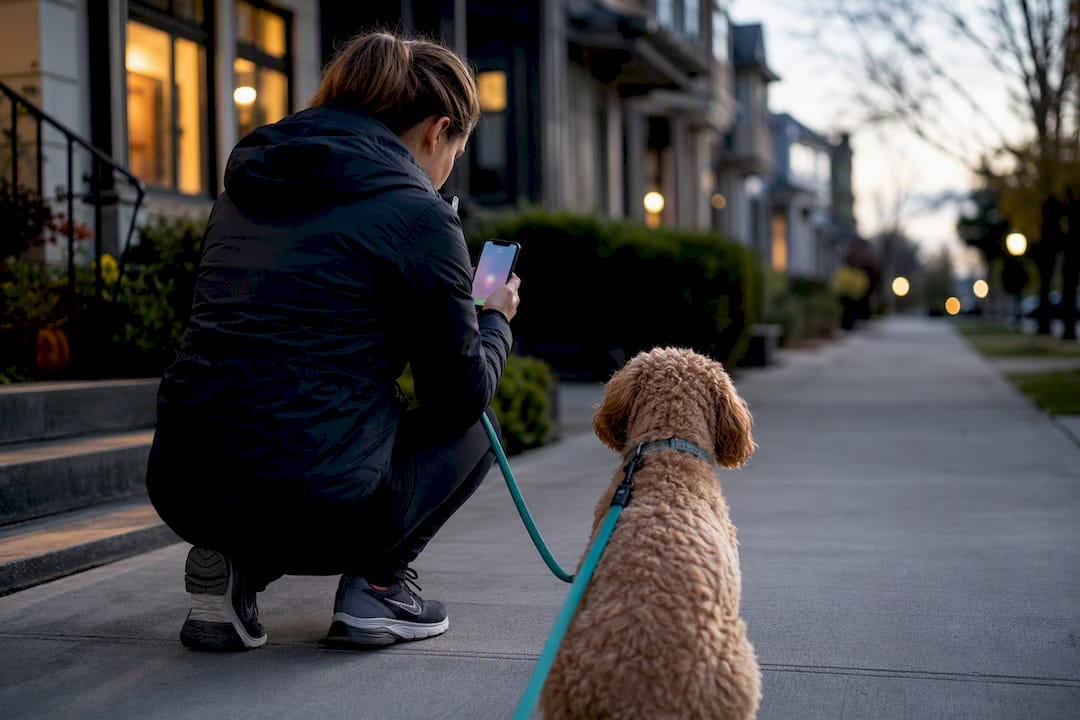
A daily automated check-in that alerts named caregivers within hours is the fastest way to keep your dog fed, medicated, and safe if you become unresponsive. Do three things today: turn on a check-in, name two emergency contacts, and put a pet instruction card where a caregiver can find it. This kind of service automates all three in one setup.
TL;DR:
- Automated daily check-ins can detect owner unresponsiveness within hours, significantly reducing the time before someone intervenes.
- A proper plan includes naming two emergency contacts with clear roles, plus pre-registered boarding or veterinary options for fast relocation.
- Pet instruction cards should contain detailed feeding, medication, vet, and allergy info, kept in three accessible copies, including digital versions.
- Regular testing of the check-in system and plan simulation every quarter ensures caregivers respond correctly during actual emergencies.
- Legal and financial preparations, such as vet authorization letters and pre-funded accounts, are essential to allow prompt medical treatment when needed.
Table of Contents
- Your 30-Minute Dog Owner Emergency Plan Checklist
- How Should You Set Up an Automated Daily Check-In?
- Building Your Pet’s Care Dossier and Instruction Card
- Building a 72-Hour Response Network Around Your Dog
- What Legal and Financial Steps Protect Your Dog?
- How Often Should You Test Your Dog’s Emergency Plan?
- What Happens if You’re Hospitalized and Can’t Get Home?
- Who Should Be in Your Dog’s Emergency Communication Plan?
- Planning for Disasters, Accidents, and Sudden Illness
- One Missed Check-In, One Dog Fed on Time
- Start Your Dog’s Emergency Plan With MyPetsSafetyNet
- Templates and Official Guidance Worth Bookmarking
- Sources
Your 30-Minute Dog Owner Emergency Plan Checklist
Building a full dog owner emergency plan sounds like a weekend project. It isn’t. You can close most of the risk in under half an hour if you work through these steps in order.
- Pick a daily check-in time and method. Choose a call, text, or app confirmation, and test it once right now so you know it actually reaches you.
- Name two emergency contacts and assign roles. Tell each person what you expect from them, and confirm at least one has a key, a code, or another way into your home.
- Build a printed pet instruction card and a grab-and-go kit. Cover feeding, medication, and vet contact information, plus a few days of food and supplies.
- Label the kit’s location and share a digital copy of the dossier. Send it to both contacts so nobody is searching your kitchen drawers in a panic.
Pro Tip: Text your instruction card to both contacts as a photo the same day you make it. Paper gets lost. A phone doesn’t.
This checklist won’t cover every disaster scenario, but it closes the most dangerous gap: the hours between something going wrong and someone finding out.
How Should You Set Up an Automated Daily Check-In?
A missed check-in is the signal that something is wrong, and it’s the only part of a dog owner emergency plan that works without you doing anything after the initial setup. The American Veterinary Medical Association notes that a consistent daily confirmation is what triggers caregiver notification when an owner goes silent, and the confirmation itself usually takes under 30 seconds.
A well-built escalation flow follows a predictable pattern:
- A reminder goes out at your chosen time, by call, text, or app notification.
- If you don’t respond, a short retry window opens, typically another attempt or two within an hour or two.
- A missed retry triggers an alert to your primary contact.
- If that contact doesn’t confirm they’ve reached you, a secondary contact gets notified.
- Some services can escalate further to a wellness check request if nobody responds at all.
Detection speed matters more than most owners assume. According to I’m Alive’s guidance for pet owners living alone, a daily check-in service can shrink the discovery window from days down to hours, which is the difference between a dog going hungry for an afternoon and going hungry for a weekend.
When picking a method, favor whatever your contacts will actually answer. A phone call works better for a contact who ignores texts. An app notification works better for one who’s glued to their phone. Run one full test cycle, including a deliberate missed response, and write down what time each alert fired and who responded.
Building Your Pet’s Care Dossier and Instruction Card
A caregiver arriving at your door needs facts, not guesswork. The Mississippi State University Extension recommends that a pet emergency instruction card include your dog’s name and photo, along with feeding and medical details a stranger could follow without calling you first.
Your card and dossier should cover:
- Pet name, breed, photo, and microchip number
- Medications with exact dosages, copied directly from the vet label rather than from memory
- Feeding schedule, including amounts and any dietary restrictions
- Vet name, clinic phone number, and address
- Allergies, behavioral quirks, and anything a stranger needs to know before opening the door
Never paraphrase a medication dose from memory. Copy it straight off the vet-labeled bottle or prescription sheet, because a caregiver guessing at dosage is how a manageable situation turns into an emergency room visit.
Keep three copies: one printed and posted near your front door, one in a waterproof bag inside a grab-and-go kit, and one shared digitally with both emergency contacts and saved on your own phone. The CDC’s pet preparedness guidance suggests packing a go-bag with several days of food and water, a leash, a carrier, recent photos, and copies of vaccination and medical records. Most owners aim for several days of supplies, which covers the typical window before a longer-term arrangement kicks in.
Building a 72-Hour Response Network Around Your Dog
One emergency contact isn’t a plan. It’s a hope. A real 72-hour response network splits responsibility across tiers so nobody is stuck improvising when your dog needs care fast.
- Tier 1: the same-day responder. This is a nearby friend or neighbor with a key, a code, or another way in, and the ability to feed and walk your dog within hours of an alert.
- Tier 2: the short-term caregiver. A sitter or a pre-registered boarding facility that can take your dog for a few days while things get sorted out.
- Tier 3: veterinary or clinic boarding. For longer hospitalizations or medical complications, a clinic that already knows your dog and has your paperwork on file.
Pre-registration is the part owners skip and later regret. Many boarding facilities and clinics require an established relationship or signed paperwork before they’ll accept an animal on short notice, according to the CDC. Call ahead, fill out intake forms now, and confirm in writing what each tier will do.
Brief every tier on where the dossier lives, where the key is, and any handling quirks your dog has. If Tier 1 can’t be reached, fall back to a secondary contact or a paid emergency boarding option, and know your local animal control’s after-hours line as a last resort. Labeling each person’s exact role, rather than leaving it vague, is what a 72-hour response framework is built around.
Pro Tip: Ask your Tier 2 boarding facility what documents they require before an emergency, not during one. Most want vaccination records and a signed agreement on file in advance.
What Legal and Financial Steps Protect Your Dog?
A caregiver willing to help still needs the authority and the money to act. A short vet authorization letter, filed with your clinic in advance, should state who can approve treatment and up to what dollar amount if you’re unreachable.
For payment, keep it simple:
- A small pre-funded account earmarked for pet emergencies
- A credit card on file at your regular vet clinic
- A written authorization letting a trusted contact access funds for pet care
A formal pet trust matters mainly for owners with significant assets or long-term care concerns, and that’s a conversation for an attorney, not a checklist. Whatever you choose, confirm your clinic’s actual acceptance policy ahead of time. Pre-registration lowers the odds of refusal at the exact moment you can’t afford a delay.
How Often Should You Test Your Dog’s Emergency Plan?
A plan you never test is a plan you’re guessing works. Run a quick check weekly to confirm your check-in method still fires correctly.
- Weekly: Confirm the check-in triggers and reaches you on the method you chose.
- Quarterly: Walk through the plan with your Tier 1 contact, verify kit contents, and check medication expiration dates.
- Annually: Run a full simulation, including a deliberate missed check-in, to see how the whole chain responds.
Short drills catch what paperwork misses. A 10 to 15 minute walk-through with your Tier 1 contact tends to surface access problems, hiding spots your dog uses, and instructions that sounded clear on paper but confuse a real person standing at your door. Re-brief Tier 1 and Tier 2 contacts anytime you move, change a medication, or bring home a new pet.
What Happens if You’re Hospitalized and Can’t Get Home?
Hospitalization is the scenario a dog owner emergency plan is really built for, because it’s the one where you’re alive, safe, and completely unable to get to your dog. The daily check-in still does its job here. A missed confirmation triggers the same alert chain, whether you’re unconscious at home or sitting in an emergency room without your phone.
The moment your contact reaches you or hospital staff, the plan shifts from detection to logistics. Your Tier 1 contact should already know to head to your home first, using the dossier to feed and walk your dog while longer-term arrangements get sorted out. If your hospital stay runs past a day or two, that’s when Tier 2 or Tier 3 comes in, whether that’s a sitter, a boarding facility, or your vet clinic holding your dog until you’re discharged.
This is exactly why the CDC’s guidance on pet emergency preparedness frames wellness check-ins as protection for both you and your pet simultaneously. A missed check-in doesn’t just get your dog fed. It gets someone checking on you, too, which matters if the reason you didn’t respond is medical rather than logistical.
Keep a card in your wallet or phone lock screen noting your dog’s name and your emergency contacts. Hospital staff often ask, and it saves precious time getting your Tier 1 contact activated.
Who Should Be in Your Dog’s Emergency Communication Plan?
Your communication plan is only as strong as the list of people who know they’re on it. That means going beyond a single phone number saved under “in case of emergency” and actually briefing each person on their role.
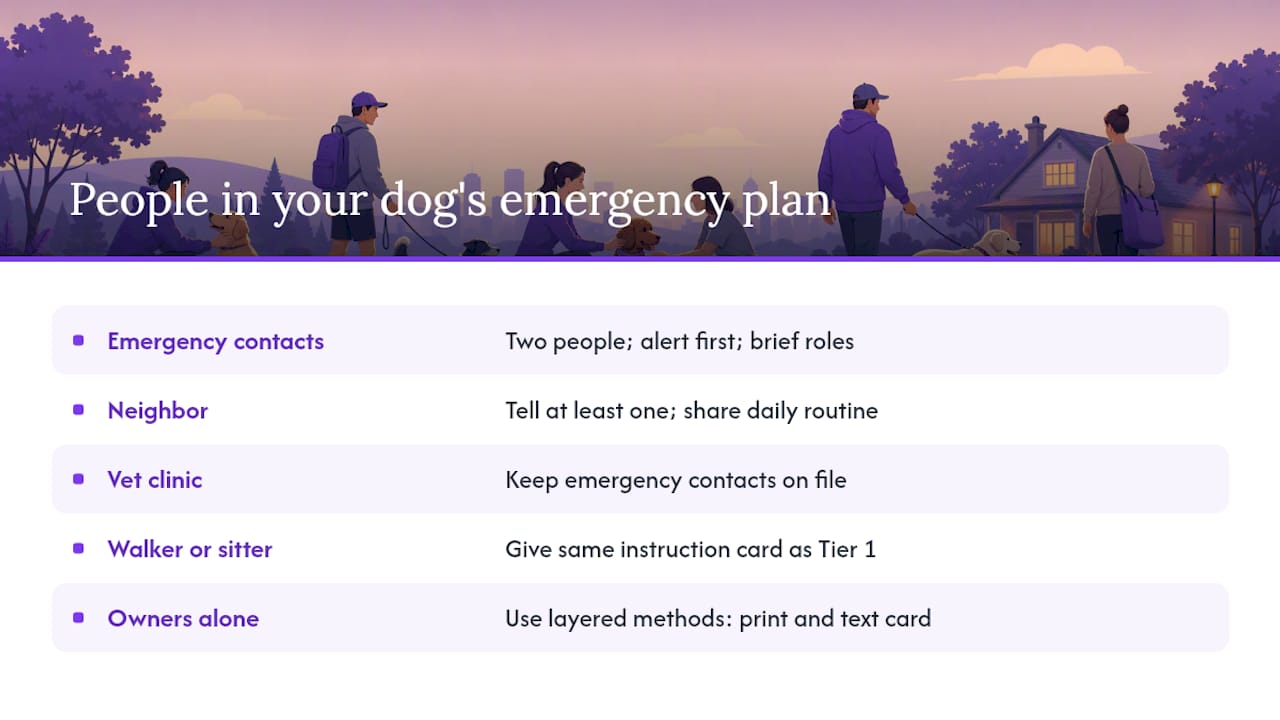
Start with your two emergency contacts, the ones your check-in service will alert first. Beyond them, tell at least one neighbor that you have a dog and roughly what your daily routine looks like. A neighbor who’s used to seeing you walk your dog at 7 a.m. will notice faster than a contact three towns away, even if that neighbor isn’t formally on your caregiver list.
Add your vet clinic to the loop by making sure they have your emergency contacts on file too, not just your name and address. If you use a dog walker, sitter, or boarding facility regularly, give them the same instruction card your Tier 1 contact has, since they may be the first ones to notice something’s off if you miss a scheduled appointment.
Older adults and other owners living alone benefit from layering communication methods rather than relying on one channel. SAMHSA’s guidance for disaster planners notes that combining phone contact with printed materials increases the odds a plan actually gets received and acted on, especially when the person receiving it is stressed or in a hurry. Print your card. Text it. Don’t rely on memory alone, yours or theirs.
Planning for Disasters, Accidents, and Sudden Illness
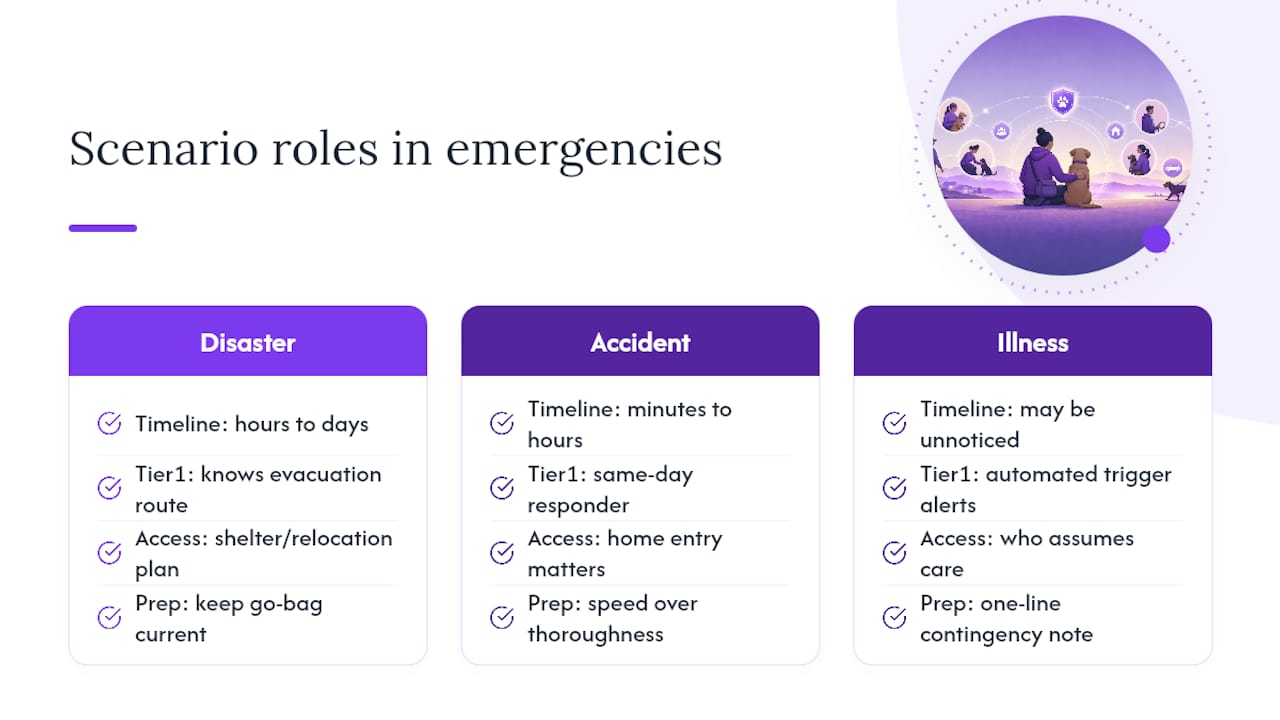
Not every emergency looks the same, and your plan should flex without needing a total rebuild each time. A natural disaster, a car accident, and a sudden medical event each create a different timeline, but the same daily check-in and caregiver network handle all three if you’ve built them right.
For natural disasters like a regional storm or wildfire evacuation, your Tier 1 contact needs to know your evacuation route and where you’d take your dog if you can’t get home yourself. Keep your go-bag current so it’s grab-ready regardless of the reason you’re leaving.
For accidents, the timeline is often faster and more chaotic. You may be unreachable within minutes rather than hours, which is exactly why a same-day Tier 1 responder with home access matters more than a distant Tier 3 option. Speed beats thoroughness in the first few hours.
For sudden illness, the check-in usually catches the gap before anyone else notices, since you might not call for help yourself. This is the scenario where the automated trigger earns its place in the plan: nobody has to guess something’s wrong. The system already knows.
Write a one-line contingency note for each scenario type into your dossier, noting who takes point and what changes about the standard plan. It’s a small addition that keeps your caregivers from freezing when the emergency doesn’t match the drill they practiced.
One Missed Check-In, One Dog Fed on Time
A dog owner using a daily check-in missed her scheduled confirmation one afternoon. Her Tier 1 neighbor got the alert within the hour, let herself in with the spare key, fed and walked the dog, and called the vet listed on the instruction card while the owner was getting help she needed. Nothing about that outcome was luck. It worked because the check-in caught the miss fast and the neighbor already knew exactly what to do.
If you take one thing from this, make it this: the check-in and one briefed neighbor do most of the work. Everything else in a dog owner emergency plan supports that one link.
— MyPetsSafetyNet
Start Your Dog’s Emergency Plan With MyPetsSafetyNet
Certain platforms turn everything in this guide into a system you set up once and never have to think about again. You configure a daily check-in on a schedule you choose, by call, text, or email. Miss it, and the platform automatically alerts emergency contacts with your dog’s care details, no scrambling to remember who has which phone number.
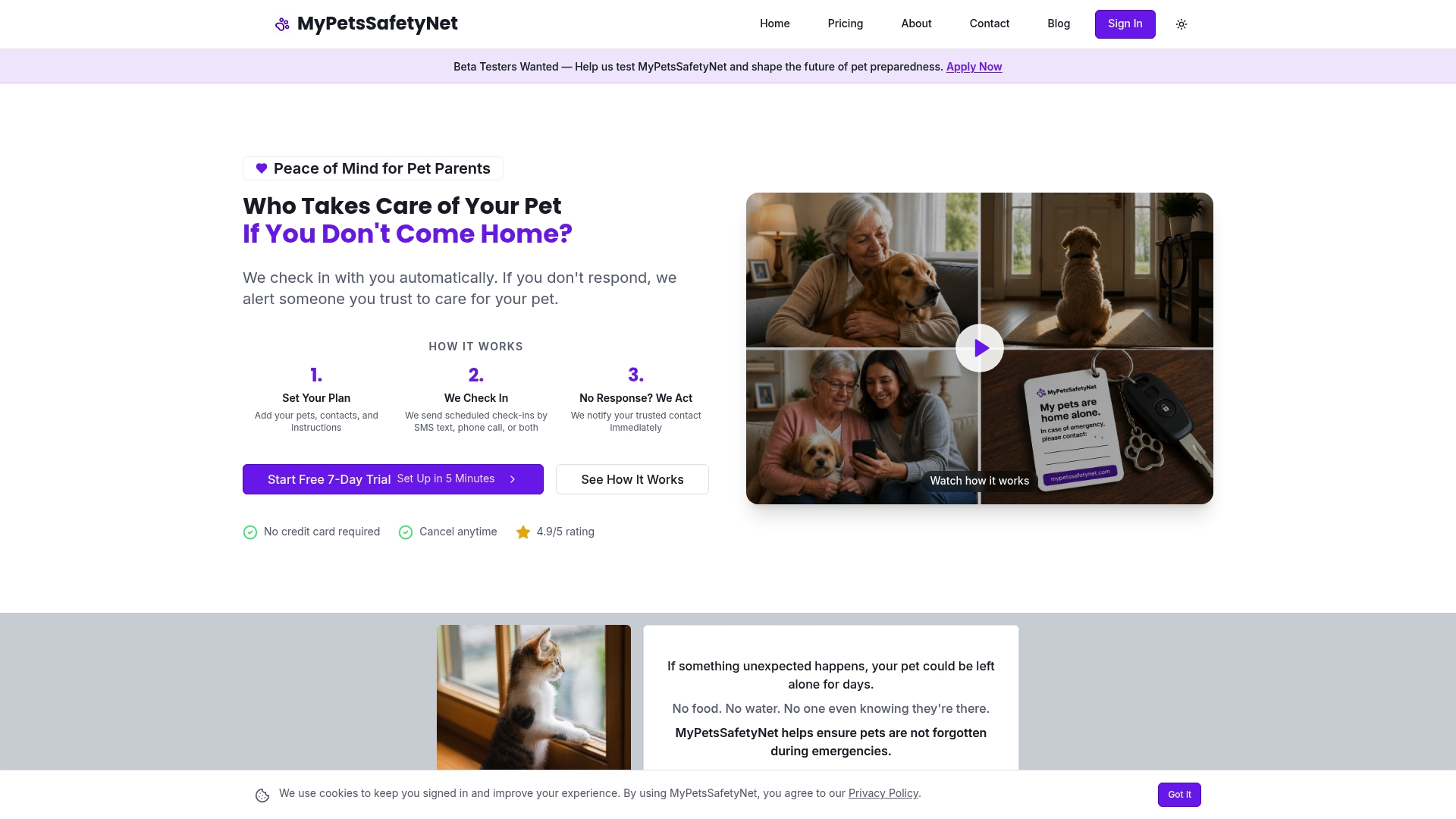
Setup takes about as long as the 30-minute checklist above, because it’s built around the same steps: create a pet profile and instruction card, add your emergency contacts, and set your check-in interval. Some platforms generate the instruction card for you instead of leaving you to format one from scratch, and can hold records for multiple pets. Start your free pet card today and get your check-in running before the day is over.
Templates and Official Guidance Worth Bookmarking
For further reading, the CDC’s pet preparedness kit checklist lists official supply recommendations, the AVMA’s disaster resource page covers general planning guidance, and this printable pet care checklist offers a template format for your own instruction card.
Sources
- American Veterinary Medical Association: Pets and disasters
- Mississippi State Extension: Disaster preparedness for pet owners
- CDC: Pet preparedness kit