Pet Care Emergency Document Essentials: A Complete Guide

Pet care emergency document essentials are the organized records, contacts, and authorizations that allow someone else to care for your pet safely when you cannot. A well-maintained emergency contact list can reduce response time from over 30 minutes to under 5 minutes during a crisis. That difference can determine whether your pet receives timely treatment or waits in distress. Mypetssafetynet was built specifically for this gap: ensuring that if something happens to you, your emergency contacts are notified promptly so your pets are never left alone. The documents covered here form the backbone of any responsible pet emergency plan.
1. What are the six essential categories every pet emergency document list must contain?
Every effective pet emergency plan starts with six core document categories. Each one serves a distinct purpose, and missing even one can create dangerous gaps during a real crisis.
Primary veterinarian information

Your primary vet’s contact details are the first thing any caretaker needs. Include the clinic name, address, phone number, after-hours protocol, and your client ID number. After-hours protocols vary widely. Some clinics redirect to a partner emergency hospital; others have an on-call vet. Knowing this in advance prevents wasted time during a crisis.
24-hour emergency and specialty clinic contacts
Your regular vet may be unavailable on a Sunday night or during a natural disaster. Document at least two emergency vet contacts with full addresses, phone numbers, and any specialty services they offer, such as cardiology or oncology. Knowing which clinic handles exotic animals or orthopedic injuries before you need it saves critical minutes.
Poison control hotlines
Poison emergencies require immediate guidance. The ASPCA Animal Poison Control Center operates 24/7 at 888-426-4435. The Pet Poison Helpline is available at 855-764-7661 and charges an $89 incident fee. Write both numbers down. Do not rely on searching for them under stress.
Pet insurance and financial information
Include your insurance provider’s name, policy number, coverage limits, and claims phone number. Add a signed financial authorization that allows a trusted caretaker to approve treatment up to a specified dollar amount. Without this, a caretaker may face delays getting your pet treated.
Trusted caretakers and authorization letters
Authorization letters give trusted individuals legal permission to make medical decisions for your pet. They reduce treatment delays when you are incapacitated. List at least two backup caretakers with their full names, phone numbers, and relationship to you. A simple signed letter is often all a vet clinic needs to proceed.
Microchip and identification details
Record your pet’s microchip number, the registry where it is enrolled, and the registry’s contact number. Add collar tag details and a description of any unique physical markings. This information becomes critical during evacuation or emergency transport when pets can become separated from their owners.
2. How to organize, store, and access your pet emergency documents effectively
Organization determines whether your documents actually work when needed. A perfectly complete document set is useless if no one can find it.
The most reliable approach combines physical and digital storage. Physical copies reduce risk when phones lose battery or connectivity fails during emergencies. Digital copies provide backup access for caretakers who are not physically present.
For physical storage, place copies in these five locations:
- Your wallet or purse (a laminated card works well)
- Your car’s glove compartment
- Your pet’s carrier or go-bag
- Your refrigerator door (first responders are trained to check there)
- Near your front door or in a visible spot for emergency responders
For digital storage, create a shared cloud folder using Google Drive or iCloud and grant access to your two or three most trusted contacts. Label the folder clearly so they can find it without instructions from you.
On your mobile phone, create a contact group labeled “PET EMERGENCY” in all caps. This rapid retrieval label ensures anyone helping you can find the right numbers instantly, even under stress.
Pro Tip: Set a recurring calendar reminder every three months to review and update your documents. Review immediately after any medication change, new diagnosis, or change in your pet’s care routine.
Audit your documents every few months or after any material change to your pet’s health or care. Outdated information is almost as dangerous as no information at all.
3. What supporting health and behavior information should accompany emergency documents?
Contact information alone is not enough. Emergency responders and temporary caretakers need a clear picture of your pet’s medical history and personality to provide safe, appropriate care.
Include the following with your core documents:
- Current medications: List each medication by name, dosage, frequency, and what it treats. Note whether it requires refrigeration.
- Known allergies and reactions: Document any drug, food, or environmental allergies. Include the specific reaction your pet has shown, such as vomiting or hives.
- Chronic conditions and recent procedures: List any ongoing diagnoses, such as diabetes or heart disease, and note any surgeries or treatments from the past 12 months.
- Behavioral notes: Flag any behaviors that affect safe handling. A bite risk, fear of strangers, or severe anxiety around other animals must be communicated clearly to anyone providing care.
- Vaccination records and feeding schedule: Include proof of current vaccinations for boarding or shelter intake. Add your pet’s feeding schedule, portion sizes, and any dietary restrictions.
- A recent photo with identifying markings: A clear recent photo aids rapid identification during emergency transport or evacuation. Note any unique markings, scars, or coloring in writing alongside the photo.
This level of detail allows a vet or caretaker to act confidently without needing to reach you first. It also reduces the risk of a harmful medication error or a handling incident.
4. How to build a support network and authorization agreements for emergency pet care
Documents alone do not protect your pet. You need real people who know your pet, know where your documents are, and have the authority to act.
Start by identifying at least two trusted individuals who can step in on short notice. These could be family members, close friends, or neighbors. The role of neighbors in pet emergencies is often underestimated. A neighbor who has a key to your home and knows your pet’s routine can respond within minutes. That speed matters enormously when you are hospitalized or otherwise unreachable.
Building a mutual aid network with other pet owners in your area creates a layer of community support that no document can replace. Pet owners who share contact information with neighbors are far better positioned to receive spontaneous help during a crisis. This is especially true for elderly or isolated pet owners, where community checks can prevent pets from going days without care.
Here is how to build your support network effectively:
- Have the conversation now. Tell your backup caretakers where your documents are stored and how to access them. Do not assume they will figure it out.
- Draft a simple authorization letter. It should state your name, your pet’s name, the caretaker’s name, and the scope of their authority. Have it signed and dated.
- Identify a local boarding facility or animal shelter that accepts emergency placements. Know their intake requirements in advance, including vaccination records they require.
- Share updated documents with all caretakers every time you make a change. A caretaker working from outdated information is a liability, not an asset.
Pro Tip: If you are a senior pet owner or live alone, consider connecting with local senior services or pet care resources. Mypetssafetynet’s senior pet care guide outlines specific support options for this situation.
Failing to plan for a pet care gap during a medical crisis can delay your own treatment. Knowing your pets are covered allows you to focus on getting help for yourself.
Key takeaways
A complete pet emergency plan requires current documents, multiple storage locations, trusted caretakers with authorization letters, and a community network that can act immediately when you cannot.
| Point | Details |
|---|---|
| Six document categories | Cover vet contacts, poison control, insurance, caretakers, and microchip details. |
| Multi-location storage | Keep physical copies in your wallet, car, carrier, refrigerator, and near your front door. |
| Health and behavior records | Include medications, allergies, behavioral notes, and a recent photo for safe emergency care. |
| Authorization letters | Give at least two trusted caretakers written permission to make medical decisions for your pet. |
| Regular audits | Review and update all documents every few months or after any change in your pet’s health. |
What I’ve learned about pet emergency preparedness after years of working with pet owners
Most pet owners believe they are more prepared than they actually are. They have their vet’s number saved in their phone. They know their pet’s medications. They have a neighbor who “would probably help.” That is not a plan. That is a hope.
The single most common failure I see is outdated information. A pet owner updates their dog’s medication in january, but the emergency card in their wallet still lists the old dosage from the previous year. A caretaker follows that card during a crisis and gives the wrong dose. This is not a rare scenario. It happens because updating documents feels like a low-priority task until it suddenly becomes the only task that matters.
The second failure is inaccessibility. A beautifully organized binder in a home office does nothing for a neighbor who has been handed a key and told to “figure it out.” Documents need to be where people can find them without guidance from you, because in a real emergency, you will not be available to guide anyone.
What actually works is integrating document maintenance into your existing routines. Tie your document review to your pet’s annual vet visit. Set a phone reminder. Keep a laminated card in your wallet and update it the same day you update anything else. These small habits remove the friction that causes people to put it off.
The emotional relief that comes from genuine preparedness is real. Pet owners who have gone through the process of building a complete emergency kit consistently report feeling calmer and more confident. That peace of mind is not a side benefit. For many pet owners, especially those who live alone or have health concerns, it is the whole point.
— Mypetssafetynet
How Mypetssafetynet helps you stay prepared and connected
Mypetssafetynet was built for the exact scenario this article describes: a pet owner who cannot reach out for help, and pets who depend entirely on someone else stepping in.
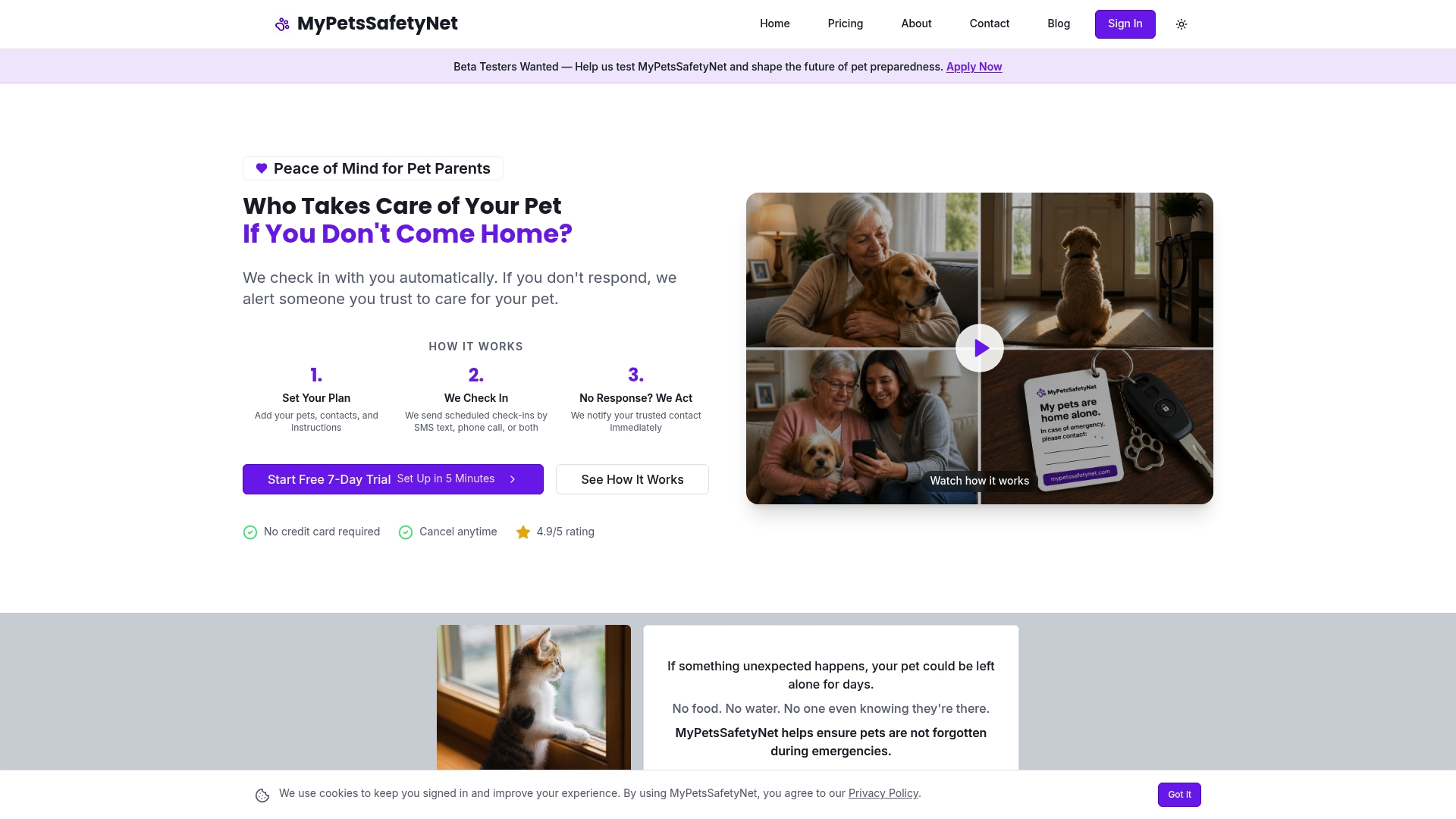
The platform sends wellness check-in alerts to your designated emergency contacts if you do not respond, prompting them to check on both you and your pets. You can store and update your emergency contacts directly through the service, keeping everyone informed without manual follow-up. Whether you are a solo pet owner, managing a health condition, or simply want a reliable backup system, Mypetssafetynet gives you a structured safety net that works even when you cannot. Visit Mypetssafetynet to set up your emergency contacts and start building the plan your pets deserve.
FAQ
What does a pet emergency plan include?
A pet emergency plan includes your vet’s contact details, 24-hour emergency clinic information, poison control numbers, pet insurance details, caretaker authorization letters, and your pet’s medical and behavioral records.
How often should I update my pet emergency documents?
Update your documents every few months or immediately after any change in your pet’s medications, diagnoses, or care routine.
Why does neighbor involvement matter for pet emergencies?
Neighbors can respond within minutes when an owner is incapacitated. For elderly or isolated pet owners, community support networks are often the fastest line of defense against pets going without care.
What is a pet caretaker authorization letter?
A pet caretaker authorization letter is a signed document that gives a named individual legal permission to make veterinary and care decisions for your pet when you are unavailable or incapacitated.
Where should I store my pet emergency documents?
Store physical copies in your wallet, car, pet carrier, refrigerator, and near your front door. Keep a digital copy in a shared cloud folder accessible to your trusted caretakers.