Under 10 Minutes to a Working Pet Emergency Plan for Solo Owners
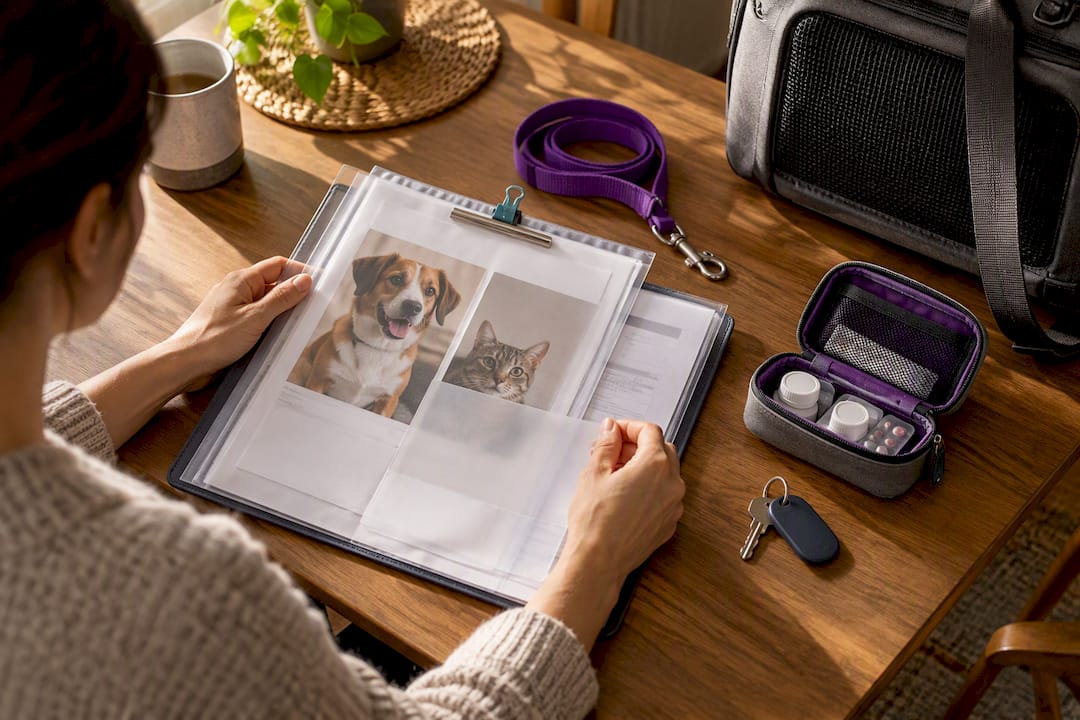
A pet emergency plan uses automated wellness check-ins that notify named caregivers with your pet care dossier the moment you become unresponsive. The check-in is the trigger that shortens detection time from days to hours. Pair it with a written pet dossier, at least two named caregivers, and simple legal authorizations, and your pets get fed, medicated, and cared for even if you can’t make a single phone call.
TL;DR:
- Automatic wellness check-ins can notify caregivers within hours if you become unresponsive, significantly reducing detection time compared to relying on manual checks.
- A pet care dossier should include essential details such as pet ID, vet contacts, daily routine, medication, behavior notes, logistics, and legal authorizations, kept accessible in print and digital formats.
- Legal tools like pet trusts and durable power of attorney are necessary to give caregivers authority and financial resources to act swiftly during emergencies.
- Building a three-tier response network with nearby neighbors, pre-approved pet sitters, and veterinary clinics ensures your pet remains safe for the critical first 72 hours.
- Setting up a pet emergency plan takes less than a day, and regular reviews every six months help keep all information current and effective.
Table of Contents
- What Should Go in a Pet Care Dossier?
- How Do Automated Wellness Check-Ins Trigger Emergency Care?
- What Legal and Financial Steps Let Caregivers Act Fast?
- How Do You Build a 72-Hour Response Network?
- How Do You Set Up a Working Plan This Afternoon?
- Why Automation Closes the Gap Static Plans Leave Open
- Start Your Automated Pet Emergency Plan Today
- Sources
- FAQ
What Should Go in a Pet Care Dossier?
Your pet care dossier is the document a caregiver reads in the first five minutes after they get the alert. It needs to answer every question a stranger to your routine would have, fast enough that they don’t have to guess.
A structured plan that separates first-24-hour instructions from longer-term care details, as PetNPrep’s emergency planning guide recommends, gives caregivers confidence to act immediately instead of hesitating over unfamiliar decisions. Build yours with these items:
- Pet ID basics: current photo, microchip number, registry contact, breed, age, weight
- Vet and clinic contacts: primary vet phone number, address, and after-hours emergency clinic
- Daily routine: feeding times, food brand and portion size, bathroom schedule, exercise needs
- Medication: drug names, doses, times, storage location, and a clearly labeled med box
- Behavior notes: fears, triggers, calming tricks, known commands, favorite treats or comfort items
- Logistics: spare key location, carrier location, where food and supplies are stored
- Authorization notes: signed vet consent, whether a trust or power of attorney exists, and where those documents live
Templates like Pet Alert cards and inventory tables, detailed in ElderPet’s care planning packet, are a practical starting point rather than something you build from scratch. Keep a printed folder somewhere a caregiver would actually look, like a kitchen drawer or the refrigerator door, and share an encrypted digital copy with every named caregiver.
Pro Tip: Laminate the printed dossier and clip it to your pet’s leash or carrier. If someone needs to grab your pet and go, the instructions travel with them.
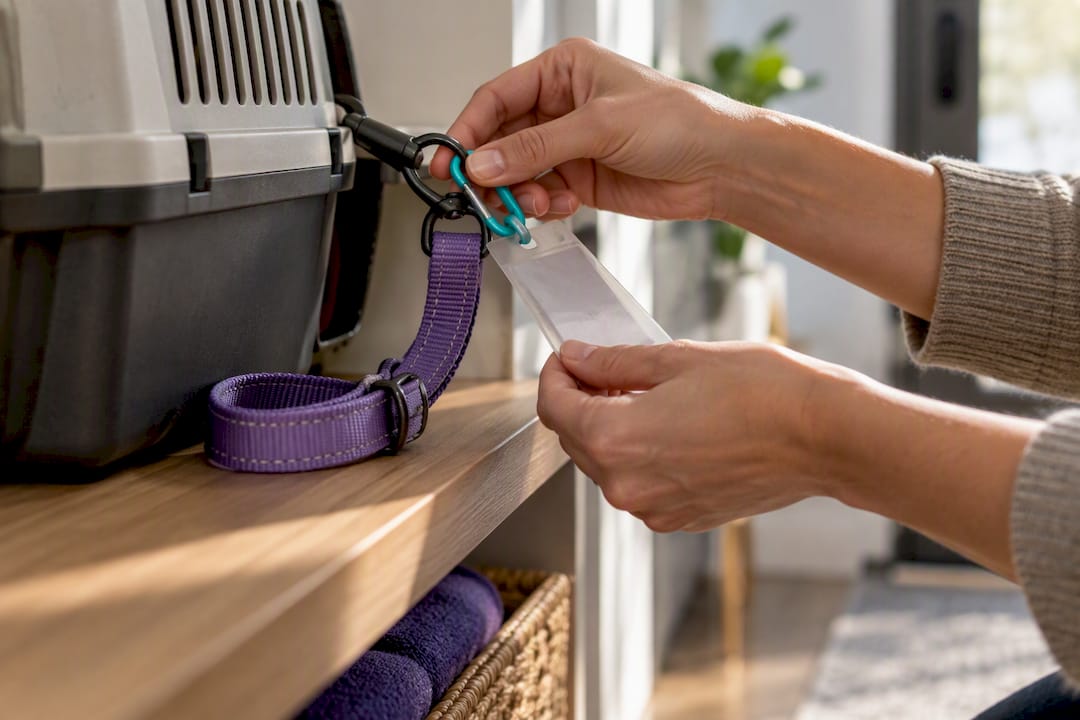
For a deeper walk-through of what belongs in each document, Mypetssafetynet’s guide on pet care emergency document essentials covers formatting and sharing options in more detail.
How Do Automated Wellness Check-Ins Trigger Emergency Care?
An automated check-in service contacts you on a set schedule, usually daily, and waits for a response within a window you define. Miss that window, and the system doesn’t just sit quietly. It moves.
The escalation sequence typically looks like this:
- The service attempts contact by phone call, SMS, or email at your chosen time
- If you don’t respond, it retries after a short buffer, often 30 to 60 minutes
- A missed response triggers notification to your primary emergency contact
- No response from them within a set window escalates to backup contacts
- Each notification includes your pet dossier and home location, not just an alert
Proactive check-in services that attach care instructions directly to the alert, as described by AssureOkay’s emergency plan tool, close the gap between “something is wrong” and “someone knows what to do about it.” That gap is where pets go hungry or miss medication for days.
You control the number of contacts, their calling order, and how long the response window stays open before escalating. Run a test cycle before you rely on the system. For readers without a smartphone, phone-call and SMS-only options keep the system functional. Contacts should also confirm they’re comfortable being listed, since consent up front avoids confusion during a real alert.
What Legal and Financial Steps Let Caregivers Act Fast?
A caregiver showing up with a spare key is only half the job. Without legal or financial authority, they may hit a wall at the vet’s front desk exactly when speed matters most.
A funded pet trust is the strongest tool available. All U.S. states and the District of Columbia recognize pet trusts, and a properly funded one can pay caregivers directly and enforce your care instructions during incapacity, according to the ASPCA’s pet trust primer. State law varies on the details, so a local estate attorney can tailor the structure to where you live.
Pair the trust with a durable power of attorney for pet care, which grants a named agent authority to make decisions while you’re alive but unable to act yourself. Legal professionals often recommend combining both instruments so the agent has authority and the trust has the money to back it up.
Other steps worth taking now:
- Sign a vet authorization letter and ask your clinic to note it in your pet’s file, since many clinics accept a signed authorization for a named caregiver to approve routine treatment
- Set up a dedicated pet emergency fund or pre-authorized vet account
- Check whether your pet insurance policy allows a caregiver to file claims
- Keep signed copies with your dossier, and tell your vet and caregivers these documents exist
Statistic Callout: Pet trusts are legally recognized in every U.S. state and D.C., according to the ASPCA. Most owners never set one up, simply because nobody told them it was an option.
How Do You Build a 72-Hour Response Network?
The first three days after an incident are the most dangerous window for a pet left alone. You need a tiered network, not a single backup plan that fails the moment one person doesn’t answer their phone.
- Tier 1: Same-day neighbor or nearby friend. This person holds a spare key and simple written instructions, and lives close enough to respond within hours, not days.
- Tier 2: Pre-approved pet sitter or boarding facility. Register your pet in advance so intake doesn’t stall on paperwork during a crisis.
- Tier 3: Veterinary boarding or hospital. Reserve this tier for pets with medical needs or behavioral challenges that make a transfer to an unfamiliar caregiver risky.
A layered network like this, outlined in AloneAssist’s guide for seniors living alone, keeps pets fed and safe while longer-term arrangements get sorted out. When you select each tier, weigh distance, physical ability to handle your pet, and whether you have a written agreement on file. Spare-key logistics matter more than people expect: a lockbox code shared only with Tier 1 contacts avoids the awkwardness of hiding keys under doormats.
Pro Tip: Ask your Tier 1 and Tier 2 contacts to visit your home once, with your pet present, before any emergency happens. A dry run exposes gaps in your instructions that you’d never catch on paper.
Build in a fallback for the worst case: if your primary and backup contacts are both unreachable, your dossier should list a boarding facility or vet clinic that can take your pet on short notice, funded by the arrangements described above. For more on choosing contacts specifically, see Mypetssafetynet’s guide to naming pet emergency contacts.
How Do You Set Up a Working Plan This Afternoon?
You don’t need a weekend to get this done. A focused afternoon covers every essential piece.
- Pick your caregivers. Confirm one primary and at least one backup, and get their agreement in writing, even if it’s just a text message you save.
- Assemble the dossier. Print it, place it somewhere visible, and share an encrypted digital copy with every named caregiver.
- Sign a vet authorization letter. Ask your clinic to add caregiver authorization to your pet’s file while you’re there.
- Configure your check-in service. Start a trial run, set your cadence, and load your escalation contacts in order.
- Test the system. Intentionally miss a check-in on purpose and confirm the notifications and dossier reach your contacts as expected.
- Set a review date. Most planning guides recommend reviewing your plan every six months or immediately after any change in medication, caregiver availability, or pet health.
Pro Tip: Schedule your six-month review on a date you already remember, like a birthday or the start of daylight saving time. A plan nobody updates is only slightly better than no plan at all.
If you want a fuller walkthrough of scenarios this checklist doesn’t cover, like extended hospitalization versus a short-term incident, Mypetssafetynet’s guide on what happens to your pets if you’re hospitalized fills in that context.
Why Automation Closes the Gap Static Plans Leave Open
The biggest risk in any pet emergency plan isn’t a missing document. It’s detection lag, the stretch of time between something going wrong and anyone finding out. A folder in a drawer does nothing until someone opens it, and daily automated check-ins are what actually close that gap.
This service was built around solo owners specifically, with no-smartphone options and pet-focused instructions attached to every alert. A dossier without a trigger is just paperwork. Combine the check-in with the dossier and the legal basics, and you’ve built something that works while you’re unable to.
— MyPetsSafetyNet
Start Your Automated Pet Emergency Plan Today
This service is built specifically around the gap this article just walked through: the days that pass before anyone realizes you’ve gone quiet. Setup takes less than 10 minutes, works over SMS or a plain phone call so no smartphone is required, and lets you name multiple pets and emergency contacts with a customizable check-in schedule and escalation order.
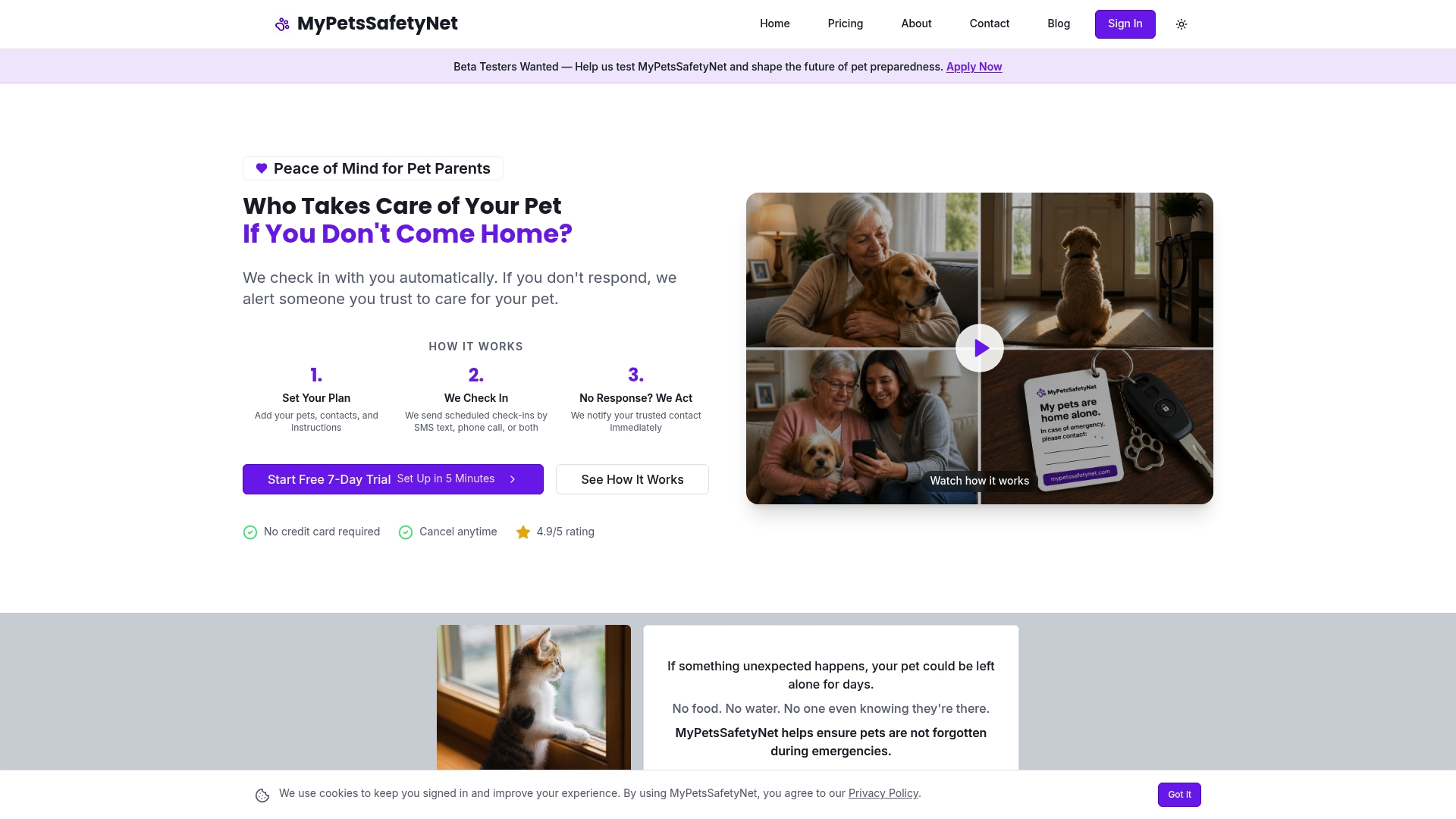
Every missed check-in triggers a notification carrying your full pet dossier, not just a bare alert, so whoever answers knows exactly what to do. You can start with the free pet card to build your dossier right now, or go straight to the 7-day free trial at $6.99 a month with no credit card required. Set your first check-in, then intentionally miss one to confirm your contacts get the alert exactly as designed.
Sources
- Pet Trust Primer | ASPCA
- Emergency Pet Care Plan for Hospitalization, Disability, or Travel - PetNPrep
- Emergency pet care planning packet (ElderPet)
- Free Pet Emergency Plan Creator | AssureOkay
FAQ
What Is a Pet Emergency Plan?
A pet emergency plan is a system that automatically notifies named caregivers with your pet’s care instructions if you become unresponsive. It combines a check-in trigger, a written dossier, and named contacts so care starts within hours instead of days.
How Often Should I Update My Pet Emergency Plan?
Review and update your plan at least every six months, or immediately after any change in medication, caregiver availability, or pet health, following the interval most planning templates recommend. Outdated dosage or contact information is one of the most common reasons a plan fails when it’s actually needed.
Do I Need a Lawyer to Set Up a Pet Trust?
You don’t strictly need one, but working with an estate attorney is wise since pet trust rules vary by state. A funded trust can pay caregivers directly and enforce your care instructions, which a simple letter cannot do on its own.
How Much Does Mypetssafetynet Cost?
Mypetssafetynet’s Monthly plan costs $6.99 per month, with a 7-day free trial and no credit card required to start. You can set up your check-in schedule, contacts, and pet dossier within that trial period before deciding to continue.
Can I Set Up a Pet Emergency Plan Without a Smartphone?
Yes. Phone-call and SMS-based check-ins work on any phone, which is why accessibility-focused planning tools recommend low-tech options for seniors and solo owners. The check-in system is built around this exact need, so a smartphone or app is never required.