Seniors With Pets: A Practical Safety Guide

Living with a pet in later life can bring companionship and routine, and it takes planning in three areas. Make the home safer to move around in with an animal underfoot. Name backup caregivers who can get into your home quickly. Set up a way for those people to find out when something is wrong. This guide covers each step, with checklists you can finish in an afternoon.
We wrote it for older adults, people with disabilities or health conditions, and anyone who lives alone with a dog, cat, or other pet. The aim is calm preparation, not worry.
TL;DR
- Falls are the most common injury risk linked to pets. Clear walkways, secure cords, and know where your pet is whenever you stand or walk.
- Choose a local backup caregiver, ideally a neighbor, who has a key and knows your pet. Re-confirm that person every so often.
- Keep a two-week supply of food and medication, vaccination records, and written care instructions where your contacts can find them.
- Add a check-in so someone is alerted if you can’t respond. Our service does this by text, phone call, or email and sends your contacts your pet’s care details.
Table of Contents
- Why pets and older adults need a safety plan
- Preventing falls at home with a pet
- Choose backup caregivers who can get to your pet
- Supplies, records, and care instructions
- Our perspective: a plan only works if someone knows to use it
- Add a check-in so your plan activates itself
- A weekend plan to get started
- FAQ
- Sources
Why pets and older adults need a safety plan
Pets can be good for you. A 2022 analysis from the Baltimore Longitudinal Study of Aging found slower decline in several measures of physical function among pet owners, although dog walking on its own was not independently linked to keeping physical function. A 2021 case study from Canada described a pet giving an older adult a sense of safety, a better mood, and motivation for daily activity.
The same research is honest about the practical side. A 2014 peer-reviewed review lists falls, fractures, costs, bites, and zoonotic infection among the risks older adults should plan for. Good planning is how you keep the benefits and handle those risks.
There is also a question many solo owners avoid: if you were hospitalized or unable to get to your pet, who would know? The ASPCA notes that a pet may need someone to check on it if its owner is hospitalized or can no longer provide care, and that the emergency caregiver doesn’t have to be the permanent one. If no caregiver is available, local animal welfare groups may help place the pet. A plan written down in advance keeps that decision in your hands.
Preventing falls at home with a pet
The CDC analyzed U.S. emergency department data for 2001 to 2006 and estimated an average of 86,629 fall injuries a year associated with dogs and cats. About 88% involved dogs. The details point to where changes help most:
- Of dog-related falls, 31.3% involved tripping over the dog and 21.2% involved being pushed or pulled by it.
- About 26% of dog-related falls happened while walking the dog, and 61.6% happened in or around the home.
- Among cat-related falls, 85.7% happened at home and 66.4% involved tripping over the cat.
The National Institute on Aging advises keeping walking areas tidy, securing cords, avoiding small rugs, using good lighting and nonslip strips, keeping frequently used items within reach, and knowing where your pet is whenever you stand or walk.
Simple changes that work with pets
- Feed in a fixed spot away from doorways, hallways, and the path to the bathroom. Pets that wait for food tend to gather underfoot.
- Put a bell on a cat’s collar so you hear where it is before you step.
- Pick up toys and chews before you go to bed, so a nighttime walk is clear.
- Use a leash or harness that suits your strength. If a dog pulls hard, talk to your veterinarian or a trainer about training or equipment that gives you more control.
- Keep a night light on the route between your bed, the bathroom, and the pet’s food and water.
- Move slowly when you change position, especially if a pet is waiting at the door. The NIA’s fall-prevention guidance also covers strength and balance exercise, medication and vision review, nonskid footwear, and appropriate assistive devices.
An occupational therapist, physical therapist, or nurse can assess your home and suggest changes for your situation. If you fall, report it to your doctor even if you feel fine. Doing so helps you get the right support.
Choose backup caregivers who can get to your pet
The most useful safety step is picking people who can act quickly. Best Friends Animal Society recommends local emergency contacts, ideally neighbors, who can quickly reach your home and your pet. If your main decision-maker lives far away, connect that person with someone local who can get a key or deliver food.

The CDC suggests a pet buddy system: ask a trusted neighbor to check on your animals and evacuate them if necessary. New York City’s official pet plan adds what that person should have: house keys, familiarity with your home and pet, an understanding of your plan, and your contact information.
What to ask before you name someone
- Are they able to reach your home within an hour or so?
- Do they have a key, or do they know where to get one?
- Is your pet comfortable with them?
- Can they take the pet for a few days, or do they only want to check in?
- Do they know who else is on your list?
The ASPCA points out that the person who provides immediate care may differ from the person you’d choose as the pet’s permanent guardian, and that you should re-confirm chosen caregivers periodically to be sure they are still willing and able. A quick call twice a year works well. Update the list after any move, illness, or change in someone’s circumstances.
Make your plan visible
The ASPCA’s plan includes a wallet Pet Alert Card naming two emergency contacts, a visible Emergency Contact Sheet so that friends, family, or emergency responders entering your home can account for your pets and reach someone to care for them, and a Pet Portfolio. Best Friends recommends keeping contact information both in your wallet and at home, and telling your contacts where your supplies are kept.
Our own guides go deeper on this: how to prepare your home for pet caregivers, who checks on pets if their owner is hospitalized, and a solo owner’s plan for when you can’t get home.
Supplies, records, and care instructions
A caregiver who walks into your home with no information has to guess. Written details remove the guesswork and help your pet stay on its routine. Best Friends recommends a two-week supply of pet food, medications, and care supplies, along with vaccination records, a medication schedule, your veterinarian’s contact information, and written diet, walking, and behavior instructions kept somewhere your contacts can reach them. Keep ID-tag and microchip information current.
A ready-to-use checklist
- Two weeks of food, any medication, litter or waste bags, and bowls.
- A leash, harness, or carrier that is easy to find. The CDC advises that each carrier show the pet’s name, your name, and your phone numbers, and that the emergency kit hold vaccination records, prescriptions, and medical history.
- Your veterinarian’s name and number, plus an alternate clinic.
- A written profile: feeding times, portions, favorite spots, fears, how the pet reacts to strangers, children, and other animals. The ASPCA’s Pet Portfolio covers these habits, food preferences, conditions, and medications.
- Proof of ownership and, when appropriate, a signed veterinary treatment authorization, as the AVMA recommends.
- For wet food, pop-up cans or a manual opener. New York City advises rotating food and water every six months and refreshing pet-alert stickers at your entrances on the same schedule.
Routine health records matter too. If you want to keep a dog’s health up to date between vet visits, a step-by-step dog health check can help you note changes worth passing on to your veterinarian and caregivers.
If you’d like a fuller list, see our guide to pet care emergency document essentials. For a broader overview, read the emergency pet care plan every owner needs.
Plan for evacuation and shelters
The CDC warns that local shelters may not accept pets unless they are service animals, so identify pet-accepting shelters, or friends and relatives out of town, before you need them. The AVMA recommends arranging an evacuation site outside the affected area, planning transportation, practicing the evacuation, and keeping animal equipment where rescuers, neighbors, and friends can find it. If you use a mobility aid, think through how you would get yourself and your pet out, and share that with your neighbor.

Living in an apartment? Our solo owner’s apartment plan covers building access, neighbors, and door signage.
Our perspective: a plan only works if someone knows to use it
We built MyPetsSafetyNet around one worry we kept hearing: a person lives alone, something happens, and nobody realizes the pet is waiting at home.
Most safety advice stops at making a plan. Cards, contact sheets, and care notes are valuable, and we encourage every owner to make them. But a plan helps only if the right person finds out in time. If you fall in the evening and nobody expects to hear from you until the weekend, your pet could go a long time without food, water, or a bathroom break.
That’s why we focus on pets, not only on personal safety. You set a check-in schedule that fits your day. If you don’t respond, our escalation steps begin, and your named emergency contacts get your pet’s care details directly: feeding, medication, and what your pet needs. We send them to the caregivers you chose, not to a general emergency line.
We also built it for people who don’t want more technology. No smartphone is required. Check-ins work with any phone by text message or phone call, or by email, and setup is designed to take under 10 minutes. You decide the schedule and the countdown. You stay in charge of your routine, and your pet has a safety net behind it.
MyPetsSafetyNet
Add a check-in so your plan activates itself
A written plan covers what people should do. A check-in covers when they should do it. With MyPetsSafetyNet, you receive a scheduled message by SMS, phone call, or email. If you reply, nothing else happens. If you don’t, the escalation workflow runs and your emergency contacts are notified with your pet’s full care information, so they can check on you and on your pets.
Here is what’s included:
- Customizable schedules and countdown intervals, so the timing matches your day.
- Pet profiles and care instructions for up to 5 pets.
- A pet care instruction card generator.
- Up to 3 emergency contacts, with an escalation workflow.
- A 7-day free trial with no credit card required, then the Monthly plan at $6.99 per month.
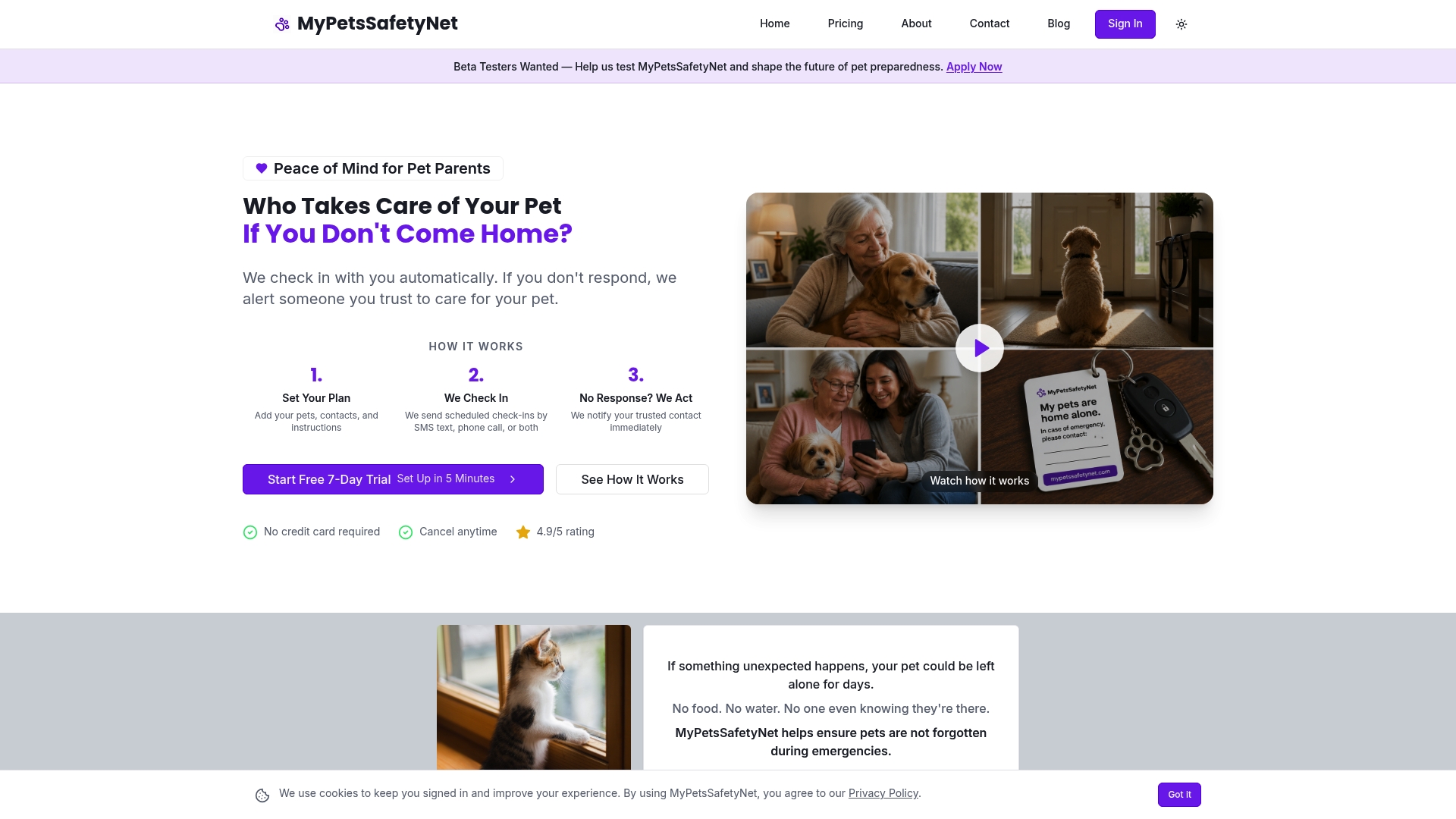
You can see the plan on our pricing page or start from the MyPetsSafetyNet home page. Setting up takes minutes, and your contacts will have what they need.
A weekend plan to get started
You don’t need to do everything at once. Try this order:
- Saturday morning: clear walkways, secure loose cords, add a night light, and move toys out of hallways.
- Saturday afternoon: talk to a neighbor and one other person about being your pet contacts. Confirm who has a key.
- Sunday morning: write your pet’s profile, gather vaccination records, and put them in one folder. Fill a go-bag with a few days of supplies, then top up to two weeks of food and medication.
- Sunday afternoon: post a contact sheet, put a card in your wallet, and set up your daily check-in.
- Twice a year: call your caregivers, refresh supplies, and update your records.
If you’d like to understand what happens when a hospital stay is planned, read how to prepare your pets for a hospital stay. Worried about your pet’s feelings? We cover pet anxiety when an owner is hospitalized as well.
FAQ
What are the biggest safety risks for seniors with pets?
Falls come first. The CDC’s analysis of U.S. injury data found that tripping over a dog or cat and being pulled by a dog were common causes. The research also lists bites, costs, and infection risks among the things to plan for, so regular vet care and good hygiene belong in your routine.
Who should be my emergency contact for my pet?
Choose someone local who can reach your home quickly and whom your pet knows, ideally a neighbor. The ASPCA suggests naming two contacts on a wallet card. If your closest family member lives far away, pair them with a local person who can get a key and bring supplies.
What should my pet’s caregiver know?
Give them your pet’s feeding schedule, medications, veterinarian, behavior around strangers, and the location of supplies and records. Write it down and keep it somewhere they can find it. Our care instruction card generator is built to organize these details.
Can I use a check-in service if I don’t have a smartphone?
Yes. MyPetsSafetyNet works with any phone through SMS or voice calls, and it also offers email. You choose how and when you’re contacted, and you can try it free for 7 days without a credit card.
How often should I review my pet emergency plan?
Review it at least twice a year. Re-confirm your caregivers, refresh food and medication, and check that tags and microchip details match your current phone number and address.
Sources
- The Baltimore Longitudinal Study of Aging analysis: Pet Ownership and Maintenance of Physical Function in Older Adults
- Understanding the Benefits, Challenges, and the Role of Pets for Older Adults (2021 case study)
- The Benefit of Pets and Animal-Assisted Therapy to the Health of Older Individuals
- ASPCA: Making a Plan for Your Pet
- CDC MMWR: Nonfatal Fall-Related Injuries Associated with Dogs and Cats
- National Institute on Aging: Preventing Falls at Home, Room by Room
- National Institute on Aging: Falls and Fractures in Older Adults
- Best Friends Animal Society: Pet Emergency and Disaster Preparedness
- CDC: Be Prepared, Pet Safety in Emergencies
- Ready New York: Pets Emergency Plan
- AVMA: Pets and disasters
- Step-by-step dog health check