Pet Ownership and Senior Mental Health Explained
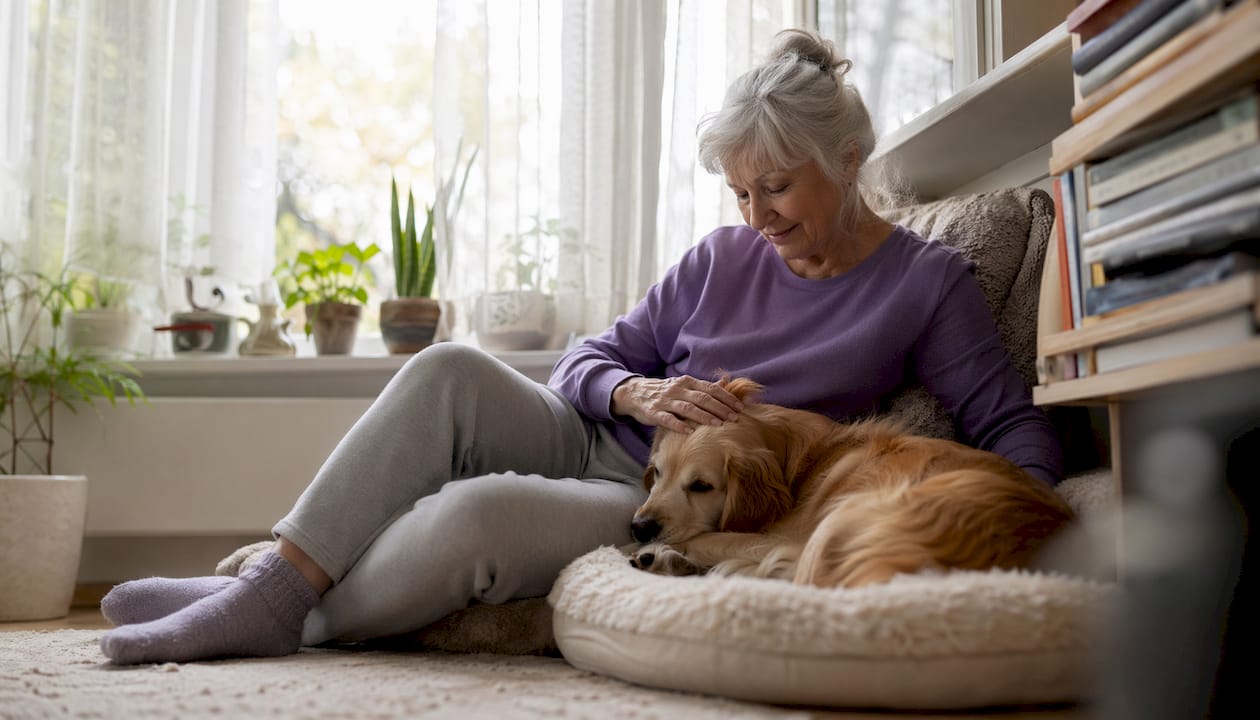
Pet ownership is a proven contributor to improved mental health and cognitive well-being among seniors, offering companionship and purposeful engagement that formal care systems rarely replicate. The connection between pet ownership and senior mental health explained through recent research is striking: animals reduce stress hormones, improve mood, and slow cognitive decline in measurable ways. For seniors living alone or managing chronic illness, a pet can be the difference between isolation and daily connection. This article covers the emotional, cognitive, and practical dimensions of pet ownership for older adults, drawing on 2026 research and guidance from Mypetssafetynet.
What are the mental health benefits of owning a pet for seniors?
Animal companionship for seniors delivers benefits across mood, motivation, and brain function. The science behind this is well established and growing more specific every year.
The physiological “pet effect”
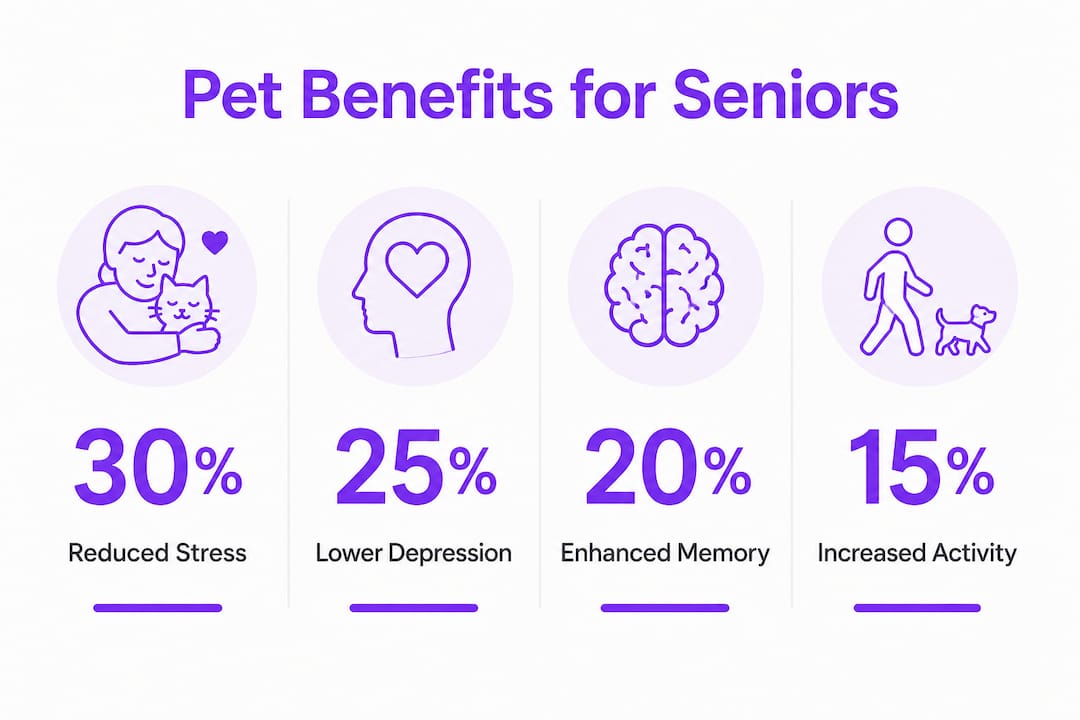
Interacting with a pet reduces cortisol and increases oxytocin and dopamine in the body. These are the hormones responsible for stress regulation and positive emotion. That shift in body chemistry is what researchers call the “pet effect,” and it explains why seniors often report feeling calmer and happier after time with their animals. The quality of the human-animal bond determines how strong this effect is, which means a well-matched pet matters more than simply having any pet.
Mood, depression, and anxiety
Pets reduce symptoms of depression, anxiety, and loneliness in older adults. Companion animals act as relational agents embedded in daily life, providing a form of social support that human relationships and professional care often cannot match. A dog that greets you at the door or a cat that settles in your lap delivers unconditional presence. That consistency matters enormously for seniors who may have lost spouses, friends, or regular social contact.
Motivation and reduced apathy
Dog ownership reduces apathy among seniors, a finding with real clinical weight. A 2026 cross-sectional study found that dog owners had an odds ratio of 0.49 for apathy compared to non-owners. That means dog owners were roughly half as likely to fall into high-apathy patterns. Apathy in older adults is a serious concern because it predicts faster functional decline and poorer quality of life. A dog’s daily needs create a built-in reason to get up, move, and engage.
Key mental health benefits at a glance:
- Reduced symptoms of depression and anxiety
- Lower cortisol levels and improved stress response
- Decreased apathy and improved daily motivation
- Stronger sense of purpose and emotional connection
- Reduced loneliness through consistent companionship
How do pets enhance daily routine, social connection, and purpose?
Pets give seniors structure that is hard to manufacture any other way. A cat needs feeding at the same time each morning. A dog needs a walk regardless of how you feel. That external demand creates a daily rhythm that supports emotional wellness.
Building routine and a sense of accomplishment
Routine is one of the most underrated factors in senior mental health. Seniors who care for pets report a stronger sense of accomplishment from completing daily care tasks. Filling a water bowl, grooming a rabbit, or refreshing a bird’s cage may seem small, but these acts reinforce a sense of competence and usefulness. For seniors who have retired or lost other roles, that feeling carries real weight.
Social engagement through dog walking
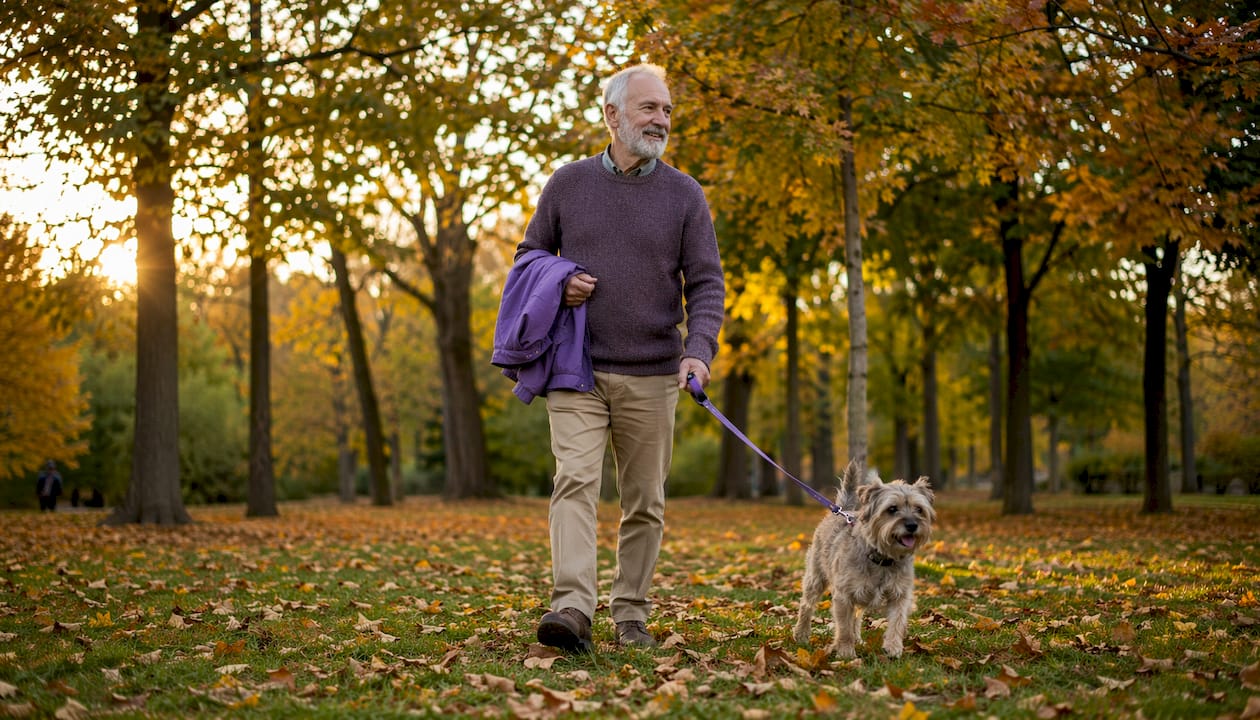
Walking dogs increases social interactions and community engagement for seniors in ways that solo walks rarely do. Other dog owners stop to chat. Neighbors ask about the breed. A dog is a social catalyst that makes conversation feel natural and low-pressure. For seniors managing social anxiety or grief, this kind of organic interaction is far easier than joining a formal group.
- Morning walks create a predictable daily anchor.
- Encounters with neighbors build informal social networks.
- Regular outings reduce the physical and emotional effects of isolation.
- Shared pet ownership topics give seniors easy conversation starters.
- Community visibility increases the chance that someone notices if a senior needs help.
Pro Tip: If mobility is a concern, even a short five-minute walk around the block with a dog counts. The social and physical benefits accumulate over time, and consistency matters more than distance.
Unconditional support and emotional resilience
Pets foster empathy and tenderness in seniors, breaking cycles of isolation and depression when the relationship reduces stress rather than adds burden. The key phrase there is “rather than adds burden.” A well-chosen pet strengthens emotional resilience. A poorly chosen one can do the opposite, which is why practical selection matters as much as the emotional appeal.
What practical considerations should seniors and caregivers keep in mind?
Choosing the right pet is as important as choosing to get one. The wrong match can create stress that cancels out the mental health benefits entirely.
Selecting a pet for your realistic capacity
Experts recommend choosing a pet that is manageable on your worst day, not your best. That means thinking about what you can handle when your arthritis flares, when you’re recovering from a procedure, or when your energy is low. An older, calmer dog requires less training and exercise than a puppy. A cat is largely self-sufficient. A bird or fish provides companionship with minimal physical demands.
Practical checklist for seniors and caregivers:
- Assess your physical capacity on low-energy days before selecting a pet.
- Consider adopting an older animal rather than a young one.
- Choose a size and breed suited to your living space and strength.
- Confirm that your housing allows pets before committing.
- Budget for veterinary care, food, and supplies realistically.
- Identify at least two people who can step in for pet care if you need them.
Planning for emergencies
Backup arrangements for pet care in emergencies prevent neglect and reduce owner anxiety. Every senior with a pet needs a named backup caregiver, whether that is a family member, a neighbor, or a formal service. Without that plan, a hospitalization becomes a crisis for both the senior and the animal. Mypetssafetynet addresses this directly by notifying emergency contacts when something happens, so your pet is never left without care.
Pro Tip: Write your pet’s care instructions, vet contact, and backup caregiver’s name in a single document. Keep one copy at home and share one digitally. This takes 20 minutes and removes enormous uncertainty in an emergency.
When full ownership is not the right fit
Part-time interactions with pets, such as volunteering at a shelter or receiving therapy animal visits, still deliver measurable mental health benefits. Seniors with significant physical limitations, unstable housing, or advanced cognitive decline can still benefit from animal contact without the full responsibilities of ownership. Therapy animal programs operate through hospitals, senior centers, and memory care facilities across the country. For caregivers, this is worth exploring before ruling out animal companionship entirely. You can find more on pet care during illness for seniors managing health challenges.
What does recent research reveal about pets and cognitive health?
Pet ownership and mental acuity in seniors is now a distinct area of scientific study, and the findings are specific enough to be clinically useful.
A 2026 study of more than 1,300 adults aged 50 and older found that long-term pet ownership improves working verbal memory and delays cognitive decline by 1.2 points over six years. That is a meaningful difference in a population where cognitive preservation is a primary health goal. Critically, the benefits extended beyond dogs and cats to rabbits, guinea pigs, and birds. Any consistent animal companionship appears to support brain health.
The mechanisms are not fully isolated, but researchers point to three overlapping pathways: increased physical activity from pet care, more frequent social interaction, and the emotional regulation effects of the human-animal bond. Each of these independently supports cognitive health. Together, they create a compounding effect.
| Cognitive measure | Pet owners | Non-owners |
|---|---|---|
| Working verbal memory | Higher scores over 6 years | Faster decline |
| Rate of cognitive decline | 1.2 points slower | Baseline rate |
| Species providing benefit | Dogs, cats, rabbits, birds, guinea pigs | N/A |
| Primary mechanisms | Activity, social contact, emotional regulation | N/A |
How can seniors integrate pet ownership with supportive services?
Pet ownership works best when it is supported, not managed in isolation. Social workers and home aides effectively support seniors in caring for pets, and their involvement directly improves the mental health benefits seniors receive.
Ways supportive services strengthen the pet-human bond:
- Home aides can assist with feeding, grooming, and vet transportation on difficult days.
- Social workers can connect seniors with community pet care resources and financial assistance programs.
- Pet care support groups provide peer connection and practical advice for senior pet owners.
- Regular wellness check-ins, like those offered through Mypetssafetynet, reduce the anxiety of managing pet care alone.
- Caregiver involvement reduces the risk that a senior’s health episode results in a pet being neglected or surrendered.
The goal is not to take over pet care for the senior. The goal is to remove the barriers that make pet ownership feel stressful rather than rewarding. When support is in place, the emotional benefits of animal companionship for seniors are far more likely to be sustained over time.
Key Takeaways
Pet ownership delivers proven mental health and cognitive benefits for seniors, and those benefits are most sustainable when paired with practical planning and supportive care.
| Point | Details |
|---|---|
| Physiological benefits are real | Pets reduce cortisol and increase oxytocin and dopamine, directly improving mood and stress response. |
| Cognitive decline slows | Long-term pet ownership is linked to 1.2 points slower cognitive decline over six years in adults 50 and older. |
| Pet selection determines outcomes | Choosing a pet manageable on your worst day prevents stress and sustains mental health benefits. |
| Emergency planning is non-negotiable | Every senior pet owner needs a named backup caregiver to prevent crisis during hospitalization. |
| Part-time contact still helps | Therapy animal visits and shelter volunteering deliver measurable benefits for seniors who cannot own a pet. |
What we’ve learned from supporting senior pet owners
At Mypetssafetynet, we’ve worked with enough seniors and caregivers to say this plainly: the emotional case for pet ownership is strong, but the practical case is what determines whether it actually helps.
The research on mood and cognition is compelling. What the research doesn’t always capture is the senior who had to surrender a beloved dog after a hospitalization because no plan was in place. That loss compounds grief in ways that are hard to measure. The mental health benefits of pet ownership are real, but they depend entirely on the pet being there consistently. A disrupted bond is not a neutral outcome. It can set a senior back significantly.
We also want to say something to caregivers directly: don’t underestimate what a pet means to the person you’re supporting. Seniors often describe their animals as their closest companion, their reason to get up, and their source of daily joy. Treating that relationship as a logistical problem to manage misses the point. The better frame is to ask how you can protect and support that bond, because doing so protects the senior’s mental health at the same time.
The most overlooked piece of advice we give is this: plan for the pet before you need to. Know who takes over, know where the vet records are, and have a system that activates automatically if something happens. That preparation is what keeps the benefits of pet ownership intact through the hard moments.
— Mypetssafetynet
How Mypetssafetynet supports senior pet owners
Senior pet owners deserve peace of mind, not just for themselves but for the animals who depend on them.
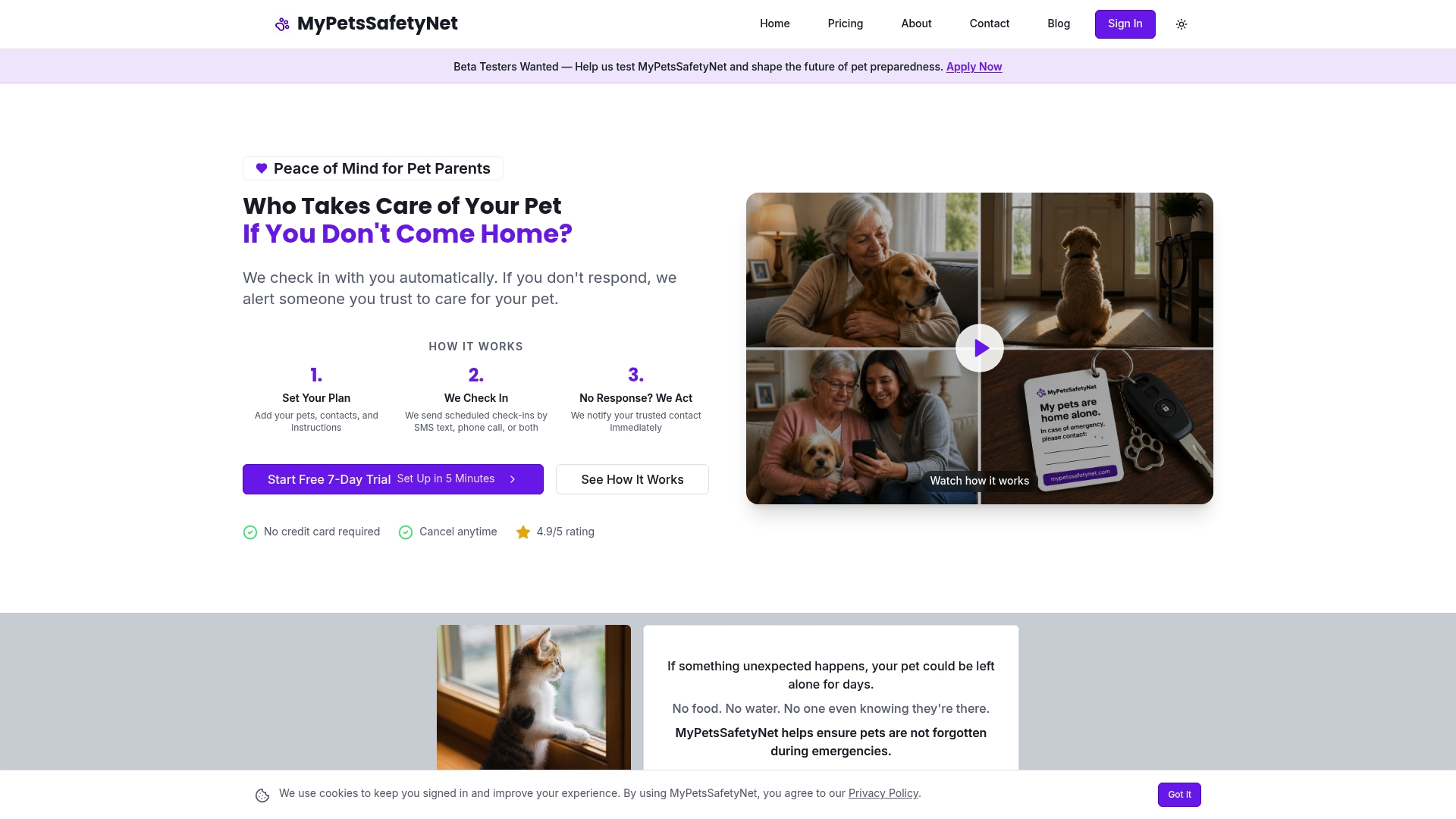
Mypetssafetynet was built for exactly this situation. If you live alone with a pet and something happens, your emergency contacts are notified promptly so they can check on both you and your animal. The wellness check-in tools are designed to fit into your existing routine without adding complexity. You can also set up SMS-based reminders and consent to keep your care network informed. For seniors and caregivers who want to protect the mental health benefits that come from animal companionship, having a reliable safety net in place is the most practical step you can take.
FAQ
What mental health benefits do pets provide for seniors?
Pets reduce cortisol, increase oxytocin and dopamine, and lower symptoms of depression, anxiety, and loneliness. Research consistently links animal companionship to improved mood and reduced apathy in older adults.
Can pets slow cognitive decline in older adults?
A 2026 study found that long-term pet ownership slows cognitive decline by 1.2 points over six years in adults aged 50 and older. Benefits extended to rabbits, guinea pigs, and birds, not just dogs and cats.
What is the best type of pet for a senior with limited mobility?
Experts recommend choosing a pet manageable on your worst day, such as an older cat, a small calm dog, a bird, or a fish. Low-maintenance animals provide companionship without physical demands that exceed a senior’s realistic capacity.
What should seniors do if they can’t manage full pet ownership?
Part-time interactions, including therapy animal visits and shelter volunteering, still deliver measurable mental health benefits. These options are worth exploring for seniors with significant health limitations or unstable living situations.
How can caregivers support a senior’s relationship with their pet?
Caregivers can arrange backup care plans, connect seniors with home aide pet support, and use services like Mypetssafetynet to ensure the pet is never left without care during a health emergency.