Pet Care If You Can’t Get Home: A Solo Owner’s Plan

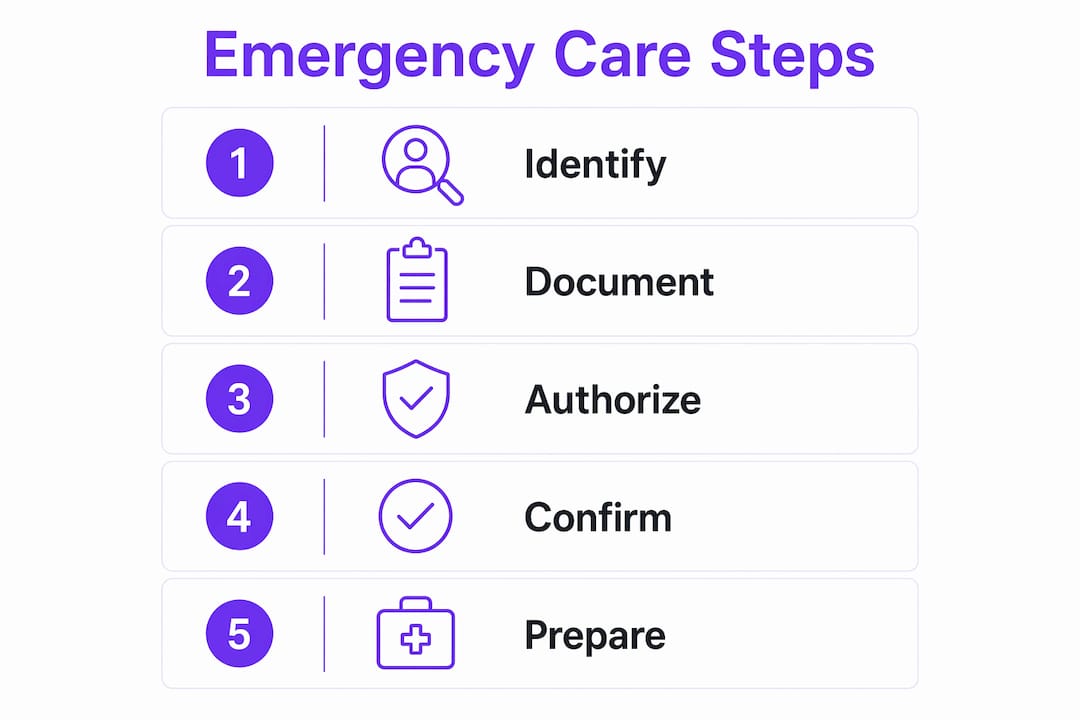
If you can’t get home, call your designated emergency caregiver right now, then contact your preferred emergency vet, hand over home access, and activate your written authorization. Those four steps, done in the first 15 minutes, are what stand between your pet and a frightening night alone.
- Call your emergency caregiver
- Arrange key or lockbox access
- Notify your vet and confirm authorization
- Activate your Mypetssafetynet emergency notification
Pro Tip: The most common failure isn’t a missing plan. It’s an assumed commitment. A friend who said “sure, I’ll help” is not the same as a friend who has your key, knows your vet’s number, and has confirmed in writing that they’ll act.
Table of Contents
- What should you do in the first 24 hours if you can’t get home?
- How do you choose and confirm an emergency pet caregiver?
- What should your Pet Emergency Care Plan include?
- What legal authorizations do you need to give a caregiver?
- What are your fallback options when no personal contact can help?
- How should you prepare your home and an emergency kit?
- What should you expect at an emergency veterinary hospital?
- How do you stop assuming others will act?
- Key Takeaways
- Why solo pet owners deserve a better safety net
- How Mypetssafetynet keeps your pets safe when you can’t
- Vetted resources to bookmark right now
What should you do in the first 24 hours if you can’t get home?
Hours 0–6: immediate actions
- Call your emergency caregiver. Give them your address, access method (key, lockbox code, building entry), and the name of your vet.
- Contact your veterinary clinic or emergency hospital. Confirm your authorization is on file and that your caregiver is named as the decision-maker.
- Confirm payment authorization. The AVMA recommends pre-authorizing a payment method with your vet to prevent treatment delays.
- Send your caregiver your Pet Emergency Care Plan (feeding schedule, meds, behavior notes, vet contacts).
- Arrange transport if your pet needs urgent care and your caregiver doesn’t have a vehicle.
Hours 6–24: monitoring and next steps
- Request a check-in update from your caregiver every 4–6 hours.
- Assess duration. If you’ll be away more than 24 hours, arrange boarding, a professional in-home sitter, or a foster placement.
- Notify your vet of the extended timeline so they can prepare for potential boarding or ongoing treatment.
- Update your emergency contacts with any changes to your situation.
Emergency phone template (copy and send): “Hi [Name], I have an emergency and cannot get home. My pet [Name] is at [address]. The lockbox code is [code]. Please check on them now. Vet: [Clinic name, phone]. My care plan is attached. You are authorized to make decisions on my behalf. Thank you.”
How do you choose and confirm an emergency pet caregiver?
Picking the right person matters as much as having a plan at all. Your caregiver needs to be available quickly, comfortable entering your home, and capable of handling your pet’s specific needs, including medications or mobility support.
Criteria for a strong emergency caregiver:
- Lives within 30 minutes of your home
- Has or can get a copy of your key or lockbox code
- Is comfortable with your pet’s temperament and any medical needs
- Can transport your pet to a vet if needed
- Has confirmed availability in writing (text, email, or signed note)
American Humane recommends in-home caregivers for pets with anxiety, complex medical needs, or advanced age, since maintaining a familiar environment reduces stress significantly.
Pro Tip: Name at least two backup caregivers and log both in your plan. If your primary contact is unreachable, you need someone who can step in without a second’s hesitation.

What should your Pet Emergency Care Plan include?
A solid plan lets a caregiver act without calling you for every detail. The AVMA and American Humane both stress that exact feeding amounts, medication instructions, and behavior notes reduce caregiver errors during stressful situations. For a full document walkthrough, the pet care emergency document guide from Mypetssafetynet covers every field in detail.
Required fields:
- Pet’s name, species, breed, age, and microchip number
- Primary vet name, address, and phone; nearest 24/7 emergency clinic
- Medication names, doses, and schedule (with original label photos)
- Feeding routine: exact portions, times, and any dietary restrictions
- Behavior notes: fears, triggers, how they respond to strangers
- Insurance policy number and payment method on file with vet
- Your emergency contacts in priority order
- Home access instructions (key location, alarm code, building entry)
| Document field | Sample entry |
|---|---|
| Medication | Apoquel, one tablet every morning with food |
| Feeding | 1 cup dry kibble at 7 AM and 6 PM; no table scraps |
| Emergency vet | City Animal Emergency, open 24/7 |
| Behavior note | Hides under the bed when scared; use a calm voice and treats |
| Microchip | Microchip number, registered with HomeAgain |
Store one printed copy in a visible spot (on the fridge or near the front door), one digital copy in cloud storage, and one copy shared directly with each named caregiver. Review and update the plan every six months.
What legal authorizations do you need to give a caregiver?
Two documents cover most situations: a veterinary emergency authorization form and a written home-entry permission letter. Most vets have their own authorization form; if yours doesn’t, a signed letter naming your caregiver and stating they may authorize treatment and payment is widely accepted.
Add your caregiver as an alternate contact in your pet’s microchip registry. That single step means any shelter or vet who scans your pet can reach someone who can act.
One legal note: a simple written authorization is sufficient for most emergency vet situations. A formal durable power of attorney offers broader legal protection but isn’t required for routine emergency care. Consult an attorney if you want coverage for longer-term or financial decisions.
Pro Tip: Pre-authorize a payment method with your vet or leave a prepaid card with your named caregiver. Treatment delays caused by payment uncertainty are avoidable and can be dangerous.
What are your fallback options when no personal contact can help?
Sometimes your primary and backup caregivers are both unavailable. These options, arranged in advance, give you a reliable safety net.
- Emergency vet boarding: Most 24/7 emergency hospitals will board a stable pet overnight while you’re incapacitated. Call ahead to confirm availability and cost.
- Professional in-home sitters: Services that send a sitter to your home are lower-stress for anxious or elderly pets. The Animal Humane Society recommends in-home care for pets with separation anxiety, mobility issues, or complex health needs.
- PACT-style community foster programs: Hospital-focused and senior-focused community programs coordinate temporary foster placements for pets when owners are hospitalized. Research your local options now and register before you need them.
- Last-resort shelter placement: Municipal shelters will accept pets in a genuine emergency, but this should be a final option. Reunification can take days and is stressful for your pet.
For meet-and-greets, required paperwork, and trial stays, contact each option in advance. Many professional sitters and foster programs have intake requirements that take a few days to complete.
How should you prepare your home and an emergency kit?
An AVMA-recommended emergency kit removes guesswork for any caregiver who walks through your door.
Emergency kit checklist:
- 3–5 days of pre-measured food in a labeled container
- Medications in original packaging with dosing instructions
- A recent photo of your pet (for identification)
- Leash, harness, or carrier
- Litter and litter box (cats)
- Favorite bedding or toy for comfort
- Printed care instructions sheet
- Spare key or lockbox code written on a card
- Payment method details or a prepaid card
An automatic pet feeder can bridge a short gap before your caregiver arrives, and a portable water dispenser is a useful addition to any go-bag or emergency kit. Store the kit near the front door and label it clearly. A short video walkthrough of your home, showing where supplies and instructions are kept, takes five minutes to record and can save your caregiver significant time.
What should you expect at an emergency veterinary hospital?
Many 24/7 emergency hospitals accept walk-ins around the clock with no referral required. Emergency patients are triaged by medical urgency, not arrival order, so a critical case is seen immediately while a stable pet may wait briefly.
What to bring or have on file:
- Your signed authorization form naming the caregiver
- Payment method or pre-authorization confirmation
- Vaccination history and microchip number
- Your contact information and the caregiver’s contact information
- A list of current medications and known allergies
| Situation | Recommended action |
|---|---|
| Pet is stable, no immediate symptoms | Call ahead, then bring in for assessment |
| Pet is in distress (seizure, collapse, bleeding) | Go directly; call on the way if possible |
| Owner is unreachable | Caregiver presents authorization and payment |
| After-hours, regular vet closed | Proceed to nearest 24/7 emergency center |
How do you stop assuming others will act?
Confirming a commitment takes 10 minutes. Discovering it failed takes much longer to fix.
Commitment confirmation checklist:
- Get a written or texted “yes, I confirm” from each named caregiver.
- Complete a physical key exchange or share the lockbox code.
- Schedule a meet-and-greet between your caregiver and your pet.
- Run one brief drill: ask your caregiver to walk through the steps they’d take if you called right now.
- Confirm that your caregiver has your care plan saved on their phone.
A caretaker agreement should name the person, list exact responsibilities (med dosing, transport, home entry), and specify who has final decision-making authority if multiple agents are named.
Pro Tip: Set a recurring calendar reminder every 3–6 months to re-confirm your caregivers’ availability and update your plan. People move, schedules change, and a plan that was solid last year may have a gap today.
Key Takeaways
A solo pet owner’s emergency plan works only when caregivers are confirmed, documents are current, and access is arranged before a crisis happens.
| Point | Details |
|---|---|
| Confirm, don’t assume | Get written confirmation from at least two named caregivers before you need them. |
| Build a complete care plan | Include meds, feeding schedule, vet contacts, microchip number, and home access in one document. |
| Pre-authorize payment | Place a payment method on file with your vet to prevent treatment delays in an emergency. |
| Prepare a home kit | Store 3–5 days of food, meds, and a printed care sheet near the front door for any caregiver. |
| Use Mypetssafetynet | Register with Mypetssafetynet so your emergency contacts are notified automatically if you’re unreachable. |
Why solo pet owners deserve a better safety net
The conventional wisdom around pet emergency planning focuses on vacations and planned travel. But for people living alone, the real risk is different: an unexpected hospitalization, a car accident, or a sudden illness where no one knows your pet is home alone.
What most planning guides miss is the notification gap. You can have a perfect written plan, a confirmed caregiver, and a stocked emergency kit, and still have it fail if no one knows to activate it. A friend won’t check on your pet if they don’t know something happened to you. That’s the problem Mypetssafetynet was built to solve, and it’s why the notification step belongs at the center of any solo owner’s plan, not as an afterthought.
The other thing worth saying plainly: formalizing your plan isn’t pessimistic. It’s the most caring thing you can do for an animal who depends entirely on you.
How Mypetssafetynet keeps your pets safe when you can’t
For solo pet owners, the hardest part of emergency planning isn’t writing the documents. It’s making sure someone is alerted fast enough to act. Mypetssafetynet closes that gap directly: if you become unreachable, your named emergency contacts are notified automatically so they can check on you and your pets without delay.
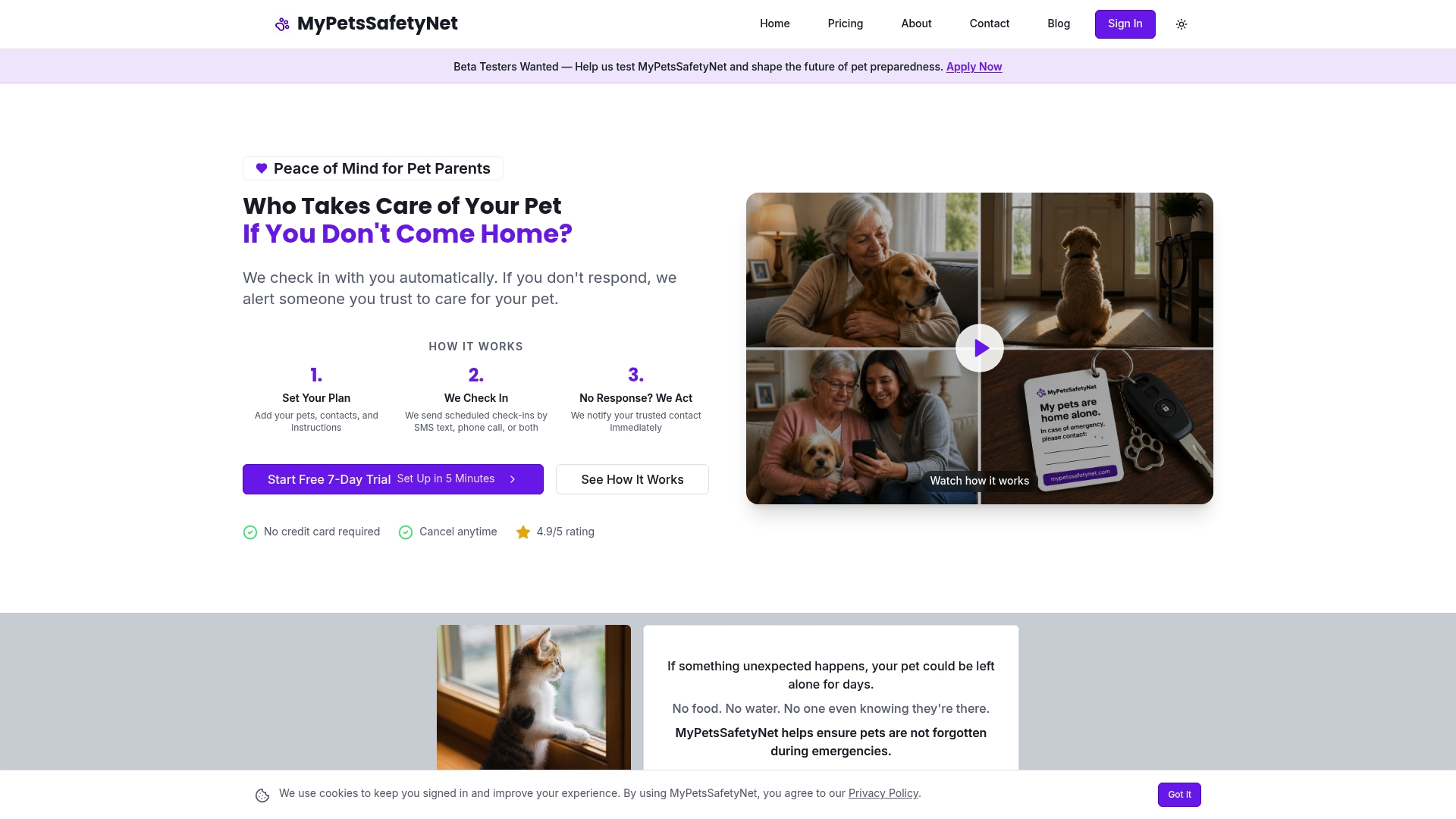
Getting started takes three steps. First, sign up at Mypetssafetynet and add your emergency contacts. Second, upload or link your pet care documents so your contacts have everything they need. Third, activate SMS-based wellness check-ins so the system knows when to alert your network. Your contacts get the right information at the right time, and your pet doesn’t spend an anxious night alone wondering where you are. Visit Mypetssafetynet to set up your notification preferences and get your plan in place today.
Vetted resources to bookmark right now
Build your local emergency contact list from these authoritative sources and save each link in your care plan document.
- AVMA (American Veterinary Medical Association): avma.org — authorization guidance, payment planning, and emergency preparedness checklists
- American Humane: americanhumane.org — sitter and boarding guidance, care document standards
- Mypetssafetynet resources: mypetssafetynet.com — solo owner safety planning, downloadable templates, and blog guides
- Local university veterinary hospitals: Search “[your city] university veterinary emergency” for 24/7 referral centers near you
- PACT-style community programs: Search “[your city] pet foster program hospitalization” or contact your local Area Agency on Aging for hospital-linked pet care programs
Save these links in both your digital care plan and your printed emergency kit. When a crisis happens, the last thing you want to do is search for a phone number.