Fall Prevention While Caring for Pets: A Safety Guide
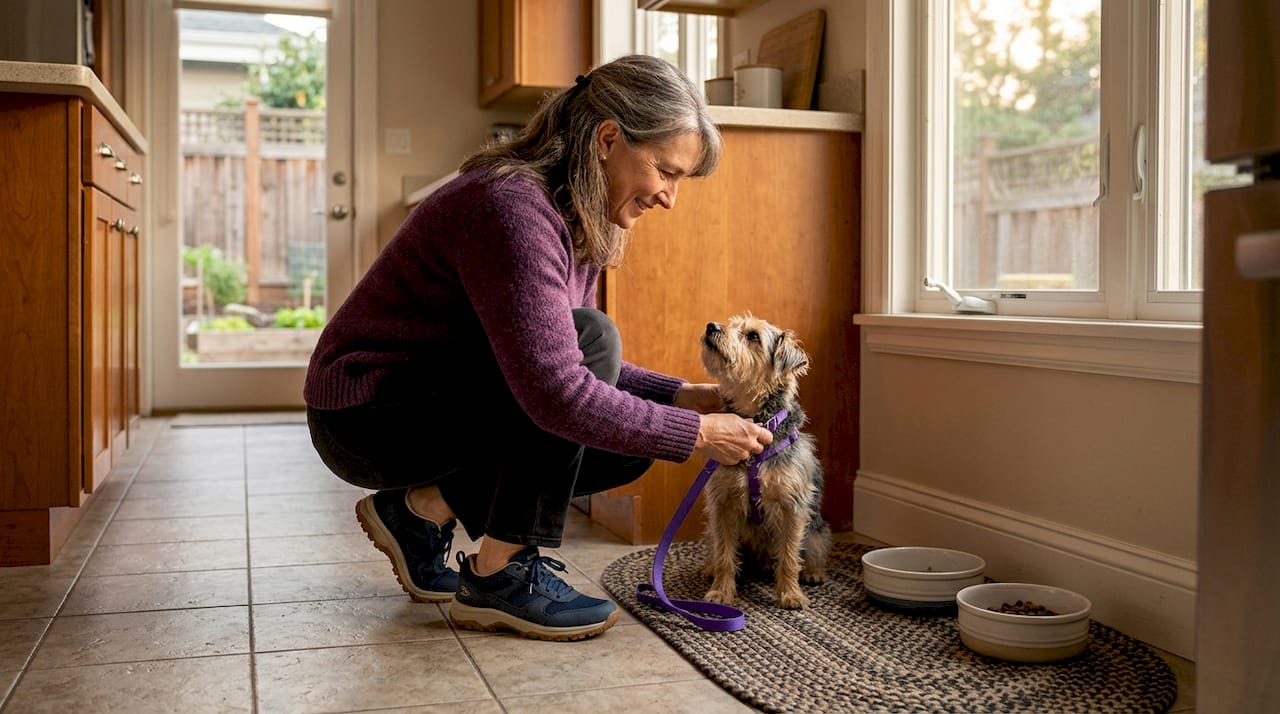
Fall prevention while caring for pets is defined as the practice of identifying and removing physical and behavioral hazards that cause pet owners to trip, slip, or lose balance during daily pet care. Dog-related falls cause 3.6% of hip and pelvis fractures in older adults, with that number rising each year. The most common mechanisms are tripping over a dog (44.9% of cases) or a leash (42%). For pet owners managing mobility challenges or chronic health conditions, these numbers make fall risk management a non-negotiable part of responsible pet ownership. Mypetssafetynet supports pet owners in building the proactive routines that keep both you and your pets safe.
What are the most common fall hazards when caring for pets?
Pet care fall hazards are concentrated in three areas: the home environment, pet behavior, and owner habits. Recognizing all three is the first step toward preventing falls with pets before an injury occurs.
The home environment creates the most predictable risks. Pet toys left on the floor, leashes coiled near doorways, food and water bowls placed in high-traffic paths, and wet floors after bathing a pet are all classic trip hazards. Lighting is equally critical. A dark hallway at 2:00 AM when your dog needs to go outside is a fall waiting to happen.
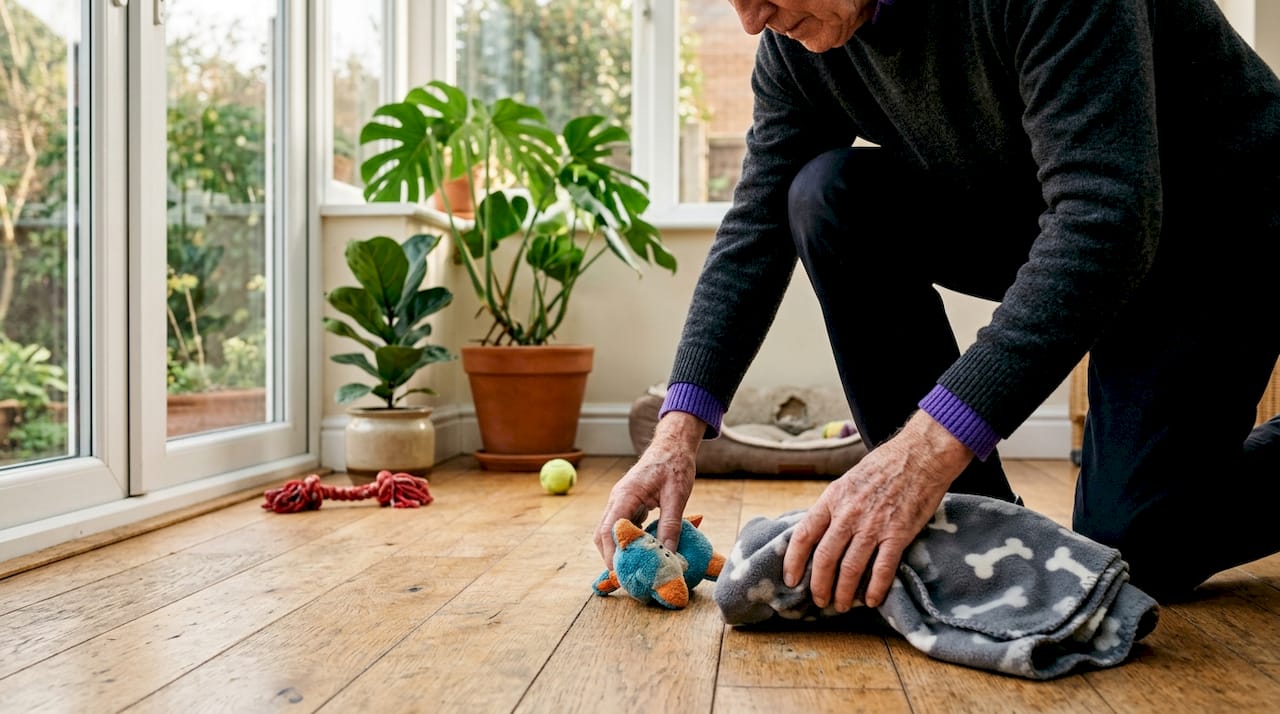
Pet behavior adds an unpredictable layer. Dogs that dart underfoot, cats that weave between your legs, and animals that lunge suddenly on a leash can pull you off balance in a fraction of a second. One in four adults 65 and older experiences a fall annually, and pet-related unpredictability compounds that risk significantly.
Common pet care fall hazards to check for at home:
- Pet toys, chews, and balls scattered across floors and stairs
- Leashes, collars, and harnesses left on the floor near entry doors
- Food and water bowls placed directly in walking paths
- Wet or slippery floors after bathing or outdoor walks in rain
- Poor lighting in hallways, stairwells, and outdoor steps
- Threshold zones where leash pulls and elevation changes coincide
- Cluttered pet supply areas that force awkward reaching or stepping
Pro Tip: Walk through your home once a week with the specific goal of spotting pet-related hazards. Do it at night with only your normal lighting to catch visibility gaps you miss during the day.
How do you walk and handle pets outdoors safely?
Outdoor walks are the highest-risk activity for pet owners with mobility concerns. The combination of uneven terrain, unpredictable animal behavior, and weather conditions creates a setting where falls happen fast.
Leash selection is the single most controllable variable. Stable, short leashes prevent trips and give you far more control than retractable models. A retractable leash extends up to 26 feet, which means your dog can wrap the cord around your legs or pull you off balance before you can react. A standard 4-foot to 6-foot leash keeps your pet close and your footing predictable.
Follow these steps to make outdoor walks safer:
- Choose the right equipment. Use a 4-foot to 6-foot fixed leash and a well-fitted harness. Harnesses distribute pulling force across your pet’s chest rather than the neck, which reduces sudden jerks.
- Train for calm transitions. Teach your pet to sit before you open the front door. This one habit eliminates the most common moment of sudden leash tension.
- Pick safe surfaces. Avoid wet grass, gravel, and uneven pavement. Stick to flat, dry paths whenever possible.
- Schedule walks wisely. Walk during early morning or late evening to avoid peak heat. Heat causes fatigue in both you and your pet, and fatigue increases impulsive behavior that leads to falls.
- Hydrate before and after. Bring water for both yourself and your pet on any walk longer than 20 minutes. Dehydration reduces coordination and reaction time.
- Avoid multitasking. Do not use your phone while walking your pet. Divided attention is a direct fall risk.
Pro Tip: Establish a consistent pre-walk routine: leash on, sit command, door opens, step out together. Pets that know the routine move more predictably, which keeps you steadier on your feet.
What home modifications reduce fall risk for pet owners?
Environmental upgrades are the most reliable form of fall prevention because they work passively. You do not have to remember to use them. Simple environmental modifications significantly decrease fall risk, particularly for aging adults who share their home with animals.
Focus your modifications on the paths you travel most often: the route from your bedroom to the back door, the stairs, and the entry threshold. These are the zones where pet-related falls cluster.
Threshold zones carry elevated risk because they combine elevation changes with the exact moment a dog is most excited to go outside. A leash pull at a threshold, combined with a small step, is a common fall scenario.
| Modification | Benefit |
|---|---|
| Non-slip stair treads | Prevents slipping on stairs, especially when carrying a pet or supplies |
| Motion-sensor nightlights | Illuminates paths automatically during nighttime pet care |
| High-contrast paint on step edges | Improves depth perception in low light, reducing missteps |
| Pet ramps near furniture or vehicles | Eliminates awkward lifting that shifts your center of gravity |
| Adhesive grip strips on thresholds | Adds traction at the highest-risk transition zones |
| Handrails on all outdoor steps | Provides a stable anchor when a pet pulls unexpectedly |
Non-slip stair treads and weather-resistant handrails are the two modifications with the broadest impact. Install them on every staircase your pet uses, including outdoor yard steps. Wear supportive, closed-toe footwear with non-slip soles whenever you are actively caring for your pet, even indoors.
Pro Tip: Break installation projects into short sessions to avoid fatigue. A tired person making home repairs is more likely to make mistakes that create new hazards rather than fix existing ones.
How do daily routines and training reduce fall risk with pets?
Consistent routines reduce falls because they eliminate the moments of surprise that cause sudden imbalance. Training pets to sit calmly before doorways and using bells on collars to track pet location are two of the most practical strategies available to pet owners with mobility concerns.
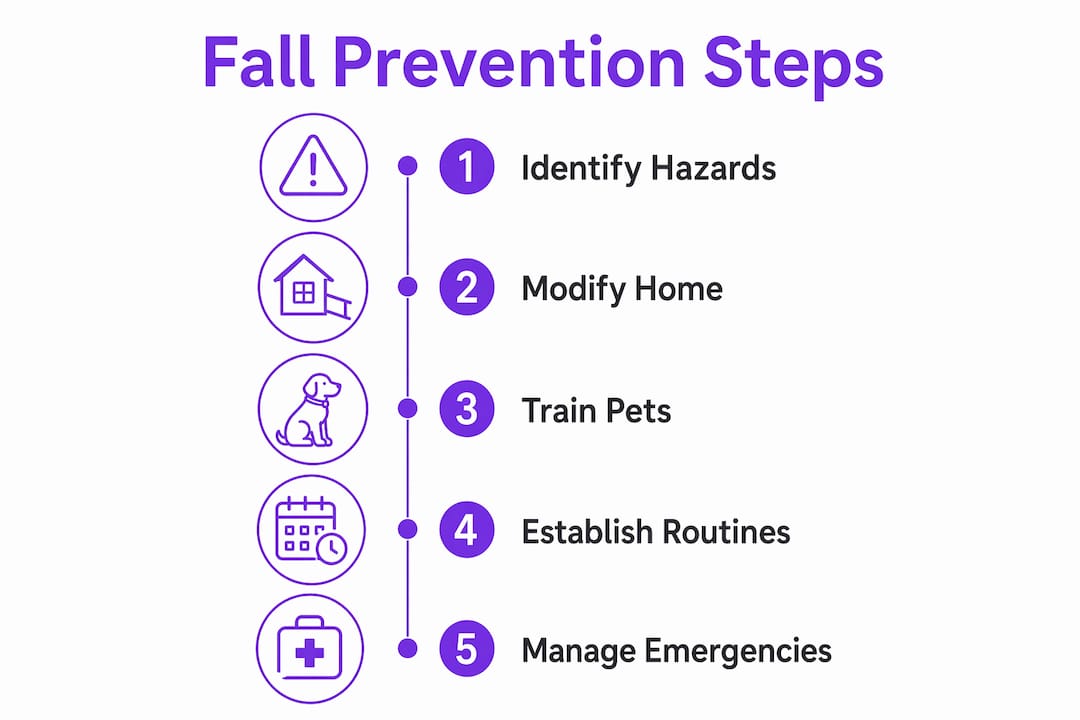
A structured daily routine for safer pet interaction looks like this:
- Morning check. Before getting out of bed, locate your pet by sound or sight. Do not step onto the floor without knowing where your animal is.
- Feeding station discipline. Place food and water bowls in a fixed corner away from main walking paths. Never move them.
- Leash staging. Hang leashes and harnesses on a hook at shoulder height near the door. This prevents floor-level trip hazards and makes gear easy to grab without bending.
- Collar bells. Attach a small bell to your pet’s collar. The sound tells you exactly where your pet is moving, even when you cannot see them.
- End-of-day reset. Before bed, collect all pet toys from the floor and return them to a basket. This takes two minutes and eliminates the most common nighttime fall hazard.
Delegating challenging tasks protects you. If your dog pulls hard on the leash or is difficult to manage during grooming, ask a family member, professional dog walker, or trainer to handle those specific interactions. Women account for 73% of dog-related fall trauma cases, which reflects how often pet owners push through physically demanding pet care without asking for help. Asking for support is not a limitation. It is a safety decision.
For pet owners managing chronic illness, the guide on pet ownership during chronic illness offers additional strategies for balancing your health needs with your pet’s daily care requirements.
How should you handle emergencies and avoid common fall prevention mistakes?
Knowing how to respond after a fall, and how to avoid the most common errors before one happens, is the part of fall risk management most pet owners skip entirely. Preparation matters as much as prevention.
Key emergency safety tips and mistakes to avoid:
- Do not step over your pet. Call your pet to move, then walk through the space. Stepping over an animal that shifts position mid-stride is a leading cause of falls.
- Check yourself after a fall. Do not immediately try to stand. Assess for pain, dizziness, or weakness before moving. Hip fractures requiring surgery occur in 85.5% to 92% of dog-related fall cases, which means the injury is often more serious than it initially feels.
- Pace your activities. Fatigue is a major contributor to pet-related accidents. Schedule demanding pet care tasks, such as bathing or nail trimming, for times when you are most rested.
- Check pavement temperature. Hot pavement burns pet paws and causes animals to jump, pull, or stop suddenly. Place your palm on the pavement for seven seconds. If it is too hot for your hand, it is too hot for your pet’s paws.
- Consult professionals when needed. If your balance has changed due to a health condition, speak with your physician or a physical therapist about specific fall prevention strategies. If your pet’s behavior is creating consistent risk, consult a certified dog trainer.
- Never carry large pet items while walking stairs. Move heavy bags of food, litter, or supplies in smaller loads or ask for help.
Pet fatigue management through short, cooled walks and hydration reduces impulsive behaviors that lead to injury. A tired, overheated dog is far more likely to lunge, stop abruptly, or behave unpredictably than a well-rested one.
Key Takeaways
Effective fall prevention while caring for pets requires combining environmental modifications, consistent pet training, and deliberate daily routines tailored to your mobility needs.
| Point | Details |
|---|---|
| Identify hazards first | Scan your home weekly for pet toys, leashes, and wet floors in walking paths. |
| Use a short, fixed leash | A 4-foot to 6-foot leash gives you control and prevents retractable-cord trip injuries. |
| Modify your environment | Install non-slip treads, motion-sensor lights, and grip strips at thresholds and stairs. |
| Build consistent routines | Train pets to sit before doors and use collar bells to track their location at all times. |
| Ask for help proactively | Delegate physically demanding pet tasks to reduce fatigue and fall risk. |
What Mypetssafetynet has learned about safety and pet care
The pet owners who struggle most with fall prevention are not the ones who lack information. They are the ones who underestimate how quickly a familiar routine can go wrong. A dog you have walked for five years can still pull you off balance on a wet morning when you are tired and distracted. That is not a failure of knowledge. It is a failure of preparation.
What works, based on working with pet owners facing real mobility challenges, is treating safety as a repeatable system rather than a one-time fix. The senior pet owner wellness check concept exists for exactly this reason. Safety is not a project you complete. It is a habit you maintain.
Small modifications matter more than people expect. A motion-sensor nightlight costs under $15 and eliminates an entire category of nighttime fall risk. A collar bell costs under $5 and tells you where your cat is every second of the day. The gap between a safe home and a hazardous one is often measured in small, affordable decisions that most pet owners simply have not made yet.
The harder truth is this: loving your pet and prioritizing your own physical safety are not competing goals. They are the same goal. You cannot care for your pet if you are injured. Building a support network, whether that means a neighbor, a dog walker, or a service like Mypetssafetynet, is not giving up independence. It is protecting it.
— Mypetssafetynet
Mypetssafetynet supports pet owners who care about staying safe
Pet owners with mobility concerns deserve more than generic safety advice. They need a support system that responds when something goes wrong.
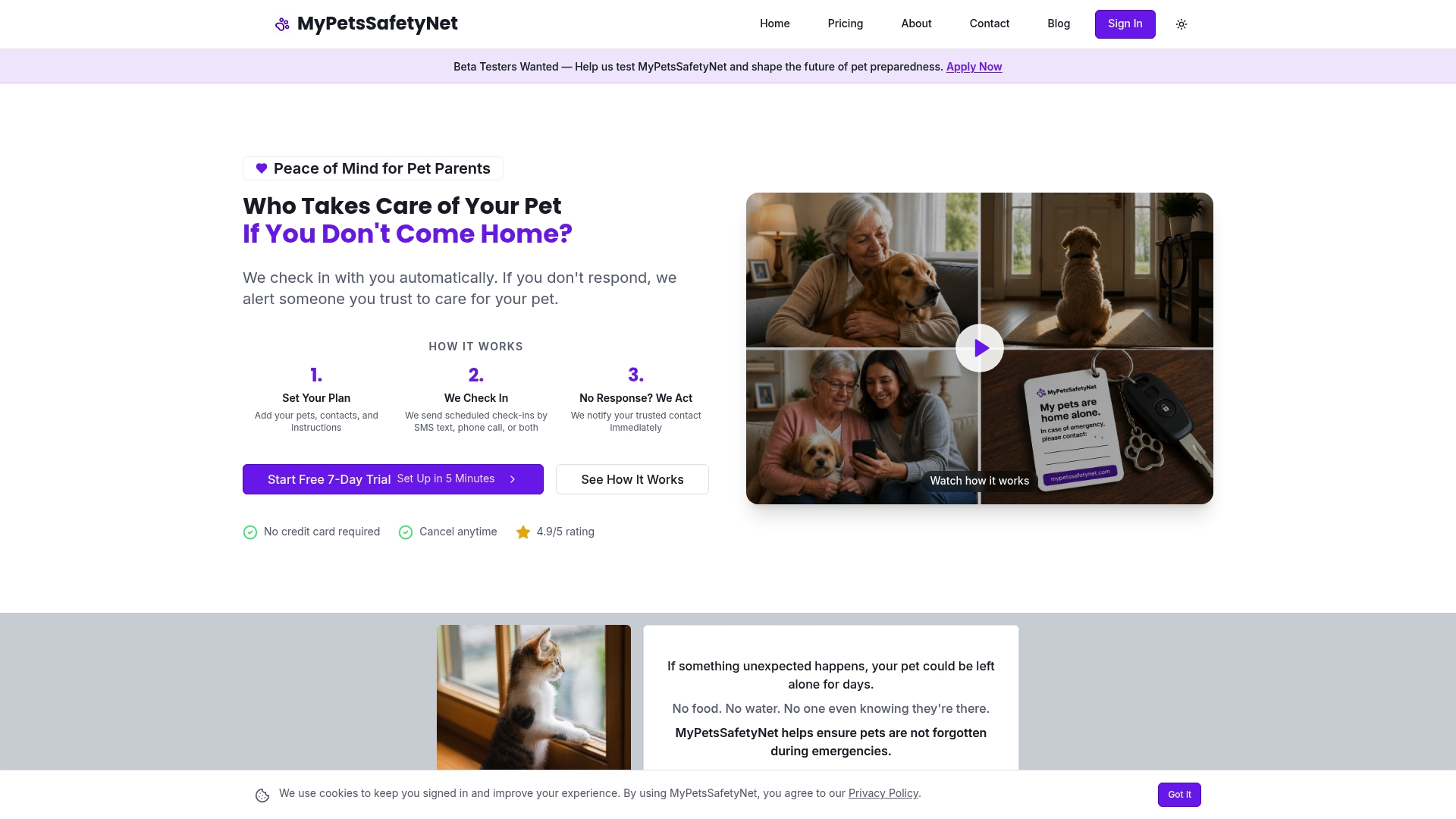
Mypetssafetynet was built for exactly this situation. If you live alone with a pet and experience a fall or health emergency, the service notifies your emergency contacts promptly so they can check on both you and your animals. Your pets depend on you being okay. Mypetssafetynet helps make sure someone always knows when you are not. For pet care resources for seniors and a full overview of wellness check-in options, visit Mypetssafetynet and see how the service fits your daily routine.
FAQ
What causes most pet-related falls in older adults?
Tripping over a dog accounts for 44.9% of pet-related falls, and leash entanglement accounts for 42%. Both are preventable with leash management and home hazard removal.
What is the safest leash type for owners with mobility challenges?
A standard 4-foot to 6-foot fixed leash is the safest option. Retractable leashes extend too far and create cord entanglement and sudden pull risks that are difficult to control.
How do I stop my pet from darting underfoot?
Train your pet to sit before every door transition and use a collar bell so you always know their location. Consistent repetition of the sit command at doorways reduces unexpected movement significantly.
When should I ask for professional help with pet care and fall risk?
Consult a physical therapist if your balance has changed due to a health condition, and a certified dog trainer if your pet’s behavior consistently creates fall risk during walks or transitions.
Does hot weather increase fall risk during pet walks?
Yes. Heat causes fatigue in both owners and pets, which increases impulsive animal behavior and reduces your reaction time. Walk during early morning or late evening and check pavement temperature before going out.