Hospice Pet Care for Solo Owners: 4 Steps for the First 48 Hours

The most reliable hospice patient pets plan names a primary caregiver and at least one backup, puts written pet-care instructions and house keys somewhere caregivers can actually find them, and uses a legal tool like a pet trust or durable power of attorney for long-term protection. Adding an automated wellness-check service, like MyPetsSafetyNet, gives you a fail-safe that alerts your chosen people the moment you can’t respond.
TL;DR:
- Within 48 hours, confirm caregivers can enter, post emergency contacts, and place food, medications, leashes, and a crate together for rapid access.
- A will only takes effect after death and may face probate delays, while a durable power of attorney and statutory pet trust can cover incapacity.
- Hospice programs can connect patients with pet care volunteers, but usually require advance contact; lifetime care centers may require $10,000 to $25,000 and advance enrollment.
- Authorize caregivers in writing to approve emergency veterinary treatment, reserve funds for visits, and list them with your veterinarian and your pet’s microchip registry.
- The wellness check service needs no smartphone, supports five pets and three emergency contacts, and takes under 10 minutes to set up.
Table of Contents
- Your Step-by-Step Pet Care Checklist for Hospice Planning
- Pet Trusts, Power of Attorney, and Other Legal Tools
- Where to Turn if You Don’t Have Family Nearby
- What We See Go Wrong, and How to Fix It
- How MyPetsSafetyNet Fits Into Your Plan
- FAQ
- Sources
Your Step-by-Step Pet Care Checklist for Hospice Planning
Once you know hospice is part of your path, your pets need a plan that works whether you have two days or two months to prepare. Breaking it into phases keeps the process manageable instead of overwhelming.
Immediate actions (0 to 48 hours):
- Call your primary caregiver and confirm they still have a working set of your house keys.
- Post a laminated emergency-contact note on your front door or refrigerator where hospice staff and first responders will see it.
- Text or email your backup caregiver the same information in case your primary contact is unreachable.
- Set out food, medications, leashes, and a crate in one visible spot so anyone can step in without searching your home.
Short-term care while you’re in hospice:
- Authorize your caregiver, in writing, to approve emergency veterinary treatment on your behalf.
- Leave a credit card or cash set aside specifically for vet visits or pet supplies.
- Confirm your vet’s office has your caregiver’s name and phone number on file.
- Update your pet’s microchip registry with your caregiver as a secondary contact.
Pre-hospice preparation:
Before things move quickly, assemble a full pet care file: a one-page medical summary, feeding schedule, medication list with dosages, your vet’s contact information, behavior notes for new caregivers, and a transport plan if your pet needs to move. Our guide to writing pet care instructions walks through exact wording for each section, and our feeding schedule templates give you paste-ready blocks instead of starting from scratch.
Name two to three caregivers with actual access, not just people who said yes once. The AARP’s guidance on pet planning recommends identifying at least three options, including organizations as a backup layer, so one unavailable friend doesn’t leave your pet stranded.

Pro Tip: Keep a printed wallet-sized pet card using the AVMA’s emergency template next to your driver’s license, not just in a drawer at home.

For questions about who steps in during a hospital stay versus a longer hospice admission, our piece on temporary caregiver arrangements covers the practical differences.
Pet Trusts, Power of Attorney, and Other Legal Tools
A written note asking a friend to “take care of Max” isn’t a legal plan, and a will alone often isn’t either. Wills only take effect after death and typically go through probate, which can take weeks or months, long after your pet needs care during a hospice stay or sudden incapacity.
That’s why most estate planning attorneys point hospice patients toward tools that work while you’re still alive:
- Pet trusts set aside funds specifically for your animal’s care and name a trustee to manage them. Cornell Law School’s Legal Information Institute explains three main types: honorary trusts, which are generally unenforceable and rely on goodwill; traditional common-law trusts; and statutory pet trusts, which most states now recognize as legally binding. A properly drafted statutory trust gives your caregiver enforceable authority and funding, not just a verbal promise.
- Durable power of attorney lets you delegate decision-making authority, including pet care decisions, to someone you trust if you become incapacitated. Unlike a will, it activates immediately upon incapacity rather than waiting for death. Pet trusts can operate during your lifetime incapacity, which makes the combination of a trust and a durable power of attorney more reliable than a will for hospice situations.
- Low-cost alternatives exist if a full trust isn’t practical right now: pet protection agreements, reimbursement contracts with a caregiver, or a pre-arranged boarding or veterinary retainer agreement that covers costs in advance.
Where to Turn if You Don’t Have Family Nearby
Not everyone has a nearby relative who can take on pet care. If that describes your situation, several realistic options exist.
- Hospice-affiliated pet programs connect patients with trained volunteers for walking, feeding, transport to vet appointments, and even temporary fostering. Programs like Pet Peace of Mind partner with hospice organizations specifically so patients can keep their pets as long as it’s safely possible, but they generally need advance contact rather than a same-day request.
- Lifetime-care centers, often run by universities or specialized nonprofits, will care for your pet permanently after you can no longer do so. These programs typically require a significant donation, sometimes in the $10,000 to $25,000 range, and advance enrollment rather than emergency drop-off.
- Humane rehoming services, such as Rehome or Home to Home style platforms, let you screen adopters yourself instead of surrendering to a shelter, which tends to be less stressful for the animal.
- Most organizations, from shelters to lifetime-care centers, require health history, signed agreements, and sometimes donations before accepting an animal, so reaching out early matters more than almost anything else on this list.
Our resource guide for seniors lists additional national programs, and our guide for when you can’t keep your pet walks through the rehoming process step by step.
What We See Go Wrong, and How to Fix It
Across the pet care plans we review, three gaps show up again and again: no named backup caregiver, keys that only one person can access, and no written note about medications or feeding amounts. Each one is fixable in an afternoon.
Clear instructions and a simple alert workflow take the guesswork off hospice staff and grieving family members at the exact moment they have the least bandwidth to search for answers. A plan your family can read in two minutes is worth more than one that lives only in your head.
— MyPetsSafetyNet
How MyPetsSafetyNet Fits Into Your Plan
A written plan is only as good as its weakest link, which is usually “someone will notice if something happens.” We built our wellness check-in service to remove that gap. Our system sends scheduled SMS messages, phone calls, or emails to check on you, and if you don’t respond, it automatically alerts your named emergency contacts with full pet care details so they know exactly what to do.
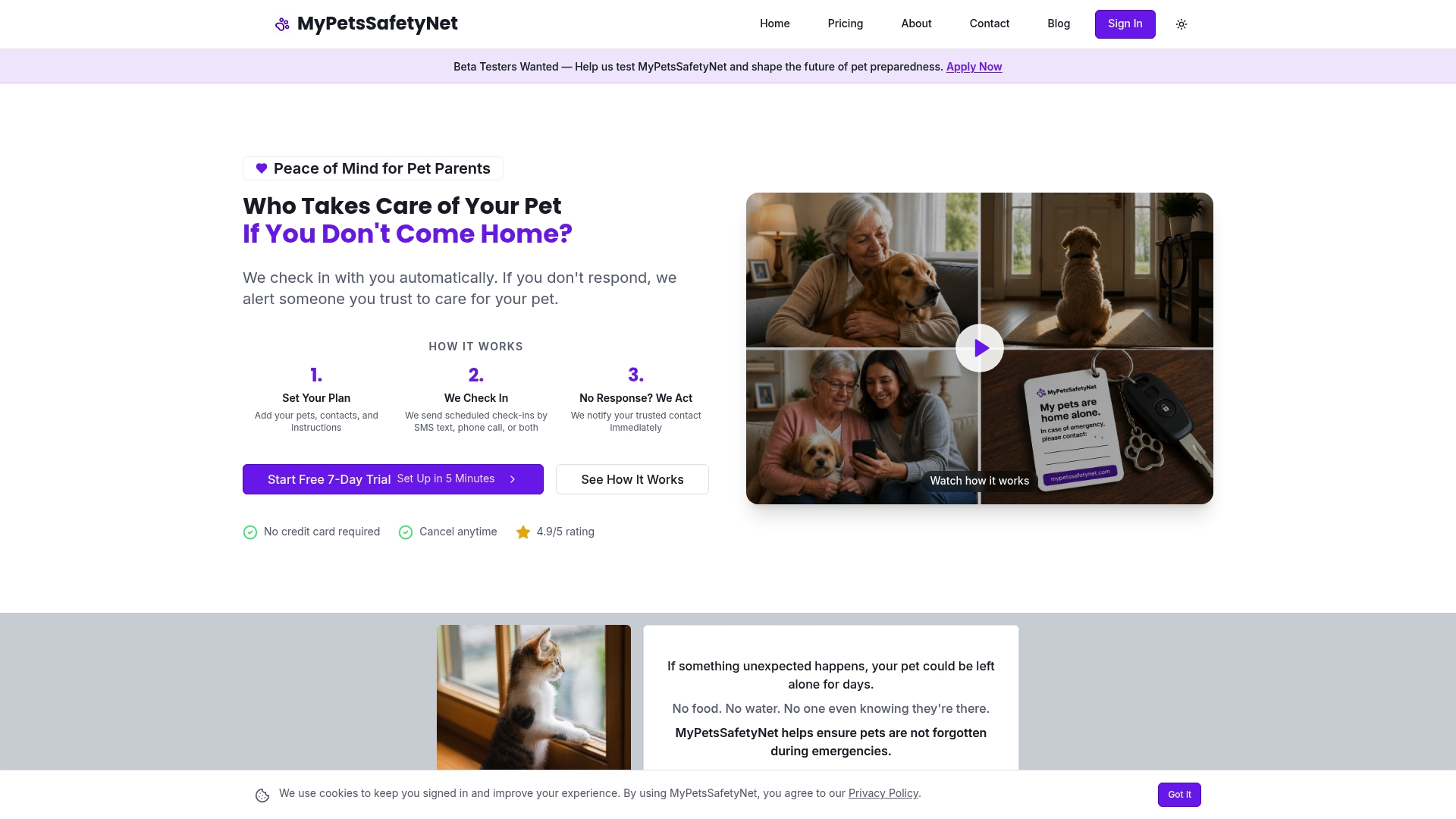
- Works with any phone through SMS or calls, no smartphone required.
- Supports up to 5 pets and 3 emergency contacts with full care profiles.
- Setup takes less than 10 minutes, with customizable check-in schedules and escalation timing.
For hospice patients especially, this means your caregivers get detailed instructions fast, not after someone happens to stop by. Start with our 7-day free trial; current prices are on the pricing page. While you’re there, print our free emergency pet card and add your caregivers today.
FAQ
How many backup caregivers should I name for my pets?
Name at least two, a primary and a backup, since one person being unavailable shouldn’t leave your pet without care. AARP recommends identifying at least three options, including an organization, for extra redundancy.
Is a pet trust better than a will for hospice patients?
Yes, for incapacity situations. A will only activates after death and often faces probate delays, while a pet trust can operate during your lifetime if you become unable to care for your pet.
Will hospice staff help coordinate pet care?
Many hospice organizations partner with volunteer pet programs that assist with walking, feeding, and transport, but this support usually requires advance coordination rather than a same-day request. Ask your hospice team directly whether they work with a program like Pet Peace of Mind.
What documents should I keep easily accessible?
Keep a wallet-sized emergency pet card, a printed pet care file near your front door, and digital copies shared with your caregivers. The AVMA’s emergency card template covers the essentials: medical history, medications, and emergency contacts.
How does an automated wellness check alert work?
An automated wellness check-in service sends scheduled messages to confirm you’re okay, and if you miss a response, it notifies your emergency contacts with your pet’s care details. Our MyPetsSafetyNet service handles this through SMS, phone calls, or email, with no smartphone required.
Sources
For readers who want to dig into the original templates and legal background, these resources cover the essentials: the AVMA emergency pet card, AARP’s pet planning guidance, and Cornell Law’s overview of pet trusts. Pair these with our own chronic illness pet care guide and, if you track a pet with a GPS collar, this guide to securely sharing tracker access with a caregiver.