How to Write Pet Care Instructions for Caregivers

What every caregiver needs in your pet care instructions
Clear, well-organized pet care instructions are the single most important thing you can leave a caregiver. The American Animal Hospital Association confirms that comprehensive instructions reduce stress for pets, caregivers, and owners alike by keeping routines familiar and communication unambiguous. Whether you’re planning a trip or preparing for an unexpected emergency, your instructions need to cover six core areas.
Pet profile
- Full name and nicknames, age, breed, and a current photo
- Personality description, behavioral quirks, and known fears or triggers
- Medical conditions, disabilities, and dietary restrictions
- Microchip ID number and tag information
Daily feeding and exercise
- Exact meal times, portion sizes, and food brand
- Treat limits and any foods that are strictly off-limits
- Walk schedule, potty routine, and preferred outdoor spots
- Playtime needs and any mental enrichment activities
Medication details
- Medication name, dose, and exact timing (anchor to meals when possible)
- Administration method: pill pocket, hidden in food, topical, or syringe
- What to do if a dose is missed or refused
- Storage location and any handling notes
Emergency contacts
- Primary vet: name, address, and phone number
- Nearest 24-hour emergency clinic
- ASPCA Poison Control Hotline: 1-888-426-4435
- Your contact information plus one or two backup contacts nearby
Behavioral and temperament notes
- Leash reactivity, resource guarding, or separation anxiety
- Fear triggers such as thunderstorms, strangers, or loud appliances
- Favorite hiding spots and comfort items
- Behavioral and environmental preferences help caregivers reduce anxiety and maintain your pet’s sense of security
Authorization and consent
- Who is permitted to approve veterinary treatment if you’re unreachable
- Spending threshold the caregiver may approve without your direct consent
- Insurance policy number and claims contact
Pro Tip: Date every version of your instructions and keep both a digital copy and a printed copy posted somewhere visible, like the refrigerator. Power outages happen, and a hard-copy backup can be the difference between a caregiver acting quickly and standing there unsure what to do.
Table of Contents
- How do you write clear pet care instructions for caregivers?
- How should caregivers use pet care instructions during an emergency?
- What legal and practical steps protect your pet in an emergency?
- What does a well-written pet care instructions template look like?
- How do you tailor pet care instructions to different caregivers?
- Key Takeaways
- Why solo pet owners can’t afford vague instructions
How do you write clear pet care instructions for caregivers?
Start with a one-page pet profile, then build outward. The goal is a document a caregiver can scan in under two minutes and still find every critical detail without calling you.
Step 1: Build the pet profile
- Name, age, breed, and a brief personality summary
- Current photo attached or printed alongside the document
- Known medical conditions and any known allergies
Step 2: Write the daily routine
- Feeding times with exact portions (feeding schedule with specific meal times)
- Walk and potty schedule with preferred locations
- Sleep routine and any comfort rituals your pet expects
Step 3: Spell out every medication
- Write the medication name, dose, and time in bold
- Describe the administration method step by step
- Include what “normal” looks like after the dose and what to watch for
Step 4: List all emergency contacts in one clearly labeled section
- Primary vet, emergency clinic, poison control, and your number
- Name the backup contact who can physically reach your pet if needed
Step 5: Set household rules and supply locations
- Where food, medications, leashes, and cleaning supplies are stored
- Off-limit rooms or furniture, alarm codes, and Wi-Fi password
- Any house-sitting tasks like mail or plant watering
Step 6: Format for fast reading
- Use short bullet points throughout
- Bold medication timing, emergency numbers, and allergy warnings
- Put the highest-risk information (allergies, escape habits, medical needs) near the top
A good nutrition and feeding guide can also help you format dietary instructions clearly, especially if your pet has specific portion or ingredient requirements.
Pro Tip: Create a separate one-page emergency summary card covering medications, allergies, urgent symptoms, emergency contacts, and consent guidelines. Laminate it and keep it with your pet’s leash or carrier. A caregiver under stress needs to find that information in seconds, not minutes.

How should caregivers use pet care instructions during an emergency?
Most pet sitting emergencies don’t happen because a caregiver is careless. They happen because critical information is missing or the caregiver isn’t sure who has the authority to act. Your instructions should remove both problems before they arise.
- Locate emergency contacts first. The caregiver should know exactly who to call and in what order before any emergency occurs, not while one is unfolding.
- Check the authorization section. If you’re unreachable, the caregiver needs written confirmation that they can consent to treatment up to a defined spending limit. Without it, vets may delay care.
- Follow the “when to call” thresholds you’ve written. Clear triggers (if vomiting occurs repeatedly within a short period, call the vet) prevent both under-reaction and unnecessary panic.
- Use medication instructions exactly. Dosing errors under stress are common. A written log where the caregiver checks off each dose given reduces that risk significantly.
- Maintain the daily routine as closely as possible. Familiar feeding times and walk schedules reduce pet anxiety when you’re absent.
- Keep a printed copy accessible. Post it on the refrigerator or near the pet supplies so it’s findable even during a power outage.
- Send daily check-in updates. Ask caregivers to report on eating, water intake, potty habits, energy level, and any symptoms at a set time each day.
What legal and practical steps protect your pet in an emergency?
Solo pet owners face a specific risk: if you’re hospitalized or otherwise unreachable, no one may have clear authority to act on your pet’s behalf. Understanding what happens to your pets if you’re hospitalized is the first step toward closing that gap.
- Document who can consent to veterinary care. Name at least two people in writing, including their contact information and relationship to you.
- Set a spending threshold. Write a clear dollar amount the caregiver may approve for emergency treatment without reaching you first.
- Keep microchip and vaccine records current and accessible. Include the microchip ID number and registration service in your instructions, and attach a copy of current vaccine records.
- Write an authorization letter. A signed, dated letter stating that a named person is authorized to seek and approve veterinary care on your behalf can prevent delays at the clinic.
- Name backup contacts. If your primary caregiver can’t be reached, a second person should be ready to step in immediately.
A pet caretaker agreement that specifies consent authority and spending limits empowers caregivers to act promptly and appropriately, without hesitation or confusion, when you cannot be reached.
Mypetssafetynet addresses this gap directly. If an emergency prevents you from caring for your pet, Mypetssafetynet notifies your designated contacts immediately so they can check on both you and your animals. For solo pet owners, that notification layer is what turns a written plan into a working safety net.
What does a well-written pet care instructions template look like?
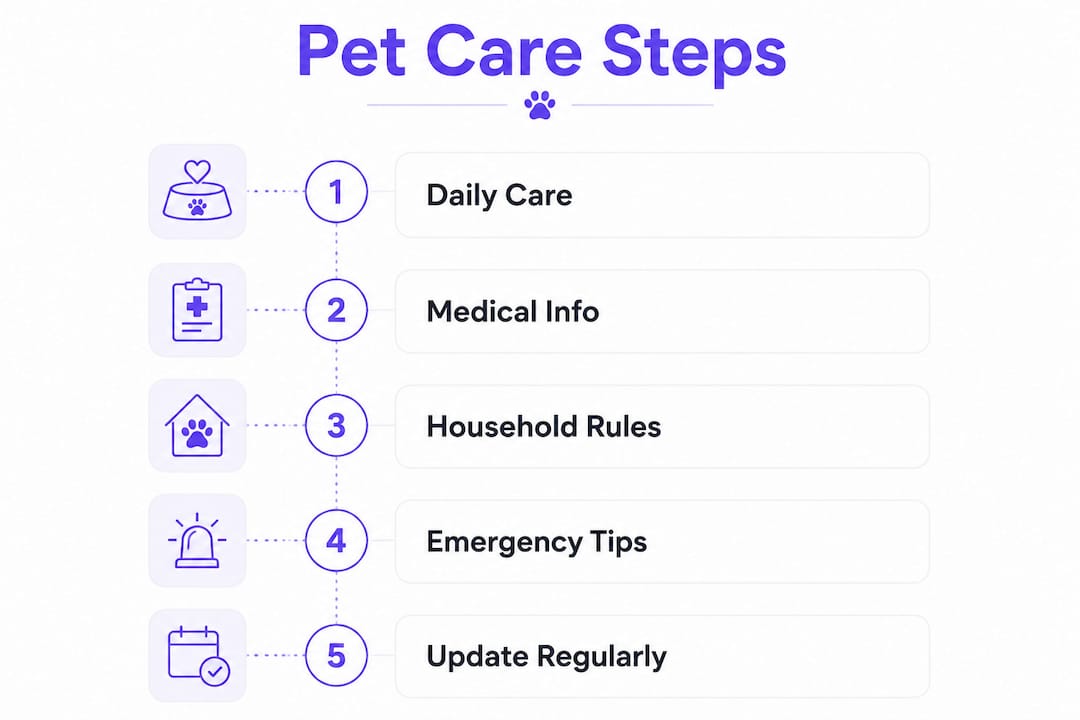
A strong template has three distinct zones: the daily care section, the medical and emergency section, and the household logistics section. Here’s how a complete, practical template breaks down.
Daily care section
| Category | What to include |
|---|---|
| Feeding | Food brand, portion size, meal times, treat limits |
| Exercise | Walk schedule, duration, leash rules, potty spots |
| Sleep and comfort | Bedtime routine, favorite resting spots, comfort items |
| Grooming | Brushing schedule, bathing notes, nail trim reminders |
Medical and emergency section
| Category | What to include |
|---|---|
| Medications | Name, dose, timing, method, missed-dose steps |
| Allergies | Foods, substances, and medications to avoid |
| Conditions | Chronic diagnoses and what “normal” looks like |
| Emergency contacts | Primary vet, 24-hour clinic, poison control, backup contact |
| Authorization | Who can consent, spending limit, insurance info |
Household logistics section
| Category | What to include |
|---|---|
| Access | Keys, alarm code, gate codes, pet door rules |
| Supplies | Location of food, meds, leashes, cleaning products |
| House rules | Off-limit rooms, furniture rules, thermostat settings |
| Check-in method | Preferred contact channel and daily update format |
Update this document after every care arrangement or significant change to your pet’s health or routine. An outdated template is almost as risky as no template at all.
How do you tailor pet care instructions to different caregivers?
The depth and format of your instructions should match who’s reading them. A professional pet sitter and your neighbor have very different starting points.
Professional sitters expect structured, complete documentation. They’re accustomed to handling multiple pets and following written protocols, so a detailed packet with a separate emergency summary page works well. Include vaccine proof if boarding or daycare is involved, and specify the daily check-in format you prefer. A handoff walkthrough, where you physically show them supply locations and demonstrate medication administration, builds confidence on both sides.
Friends and family often know your pet but may not know your routines. Keep the language conversational and avoid clinical terms where plain language works just as well. Walk them through the document in person rather than emailing it and hoping they read it. Highlight the three or four things that matter most: feeding times, medication steps, and who to call first in an emergency.
Neighbors or backup contacts typically serve a limited role, stepping in only if your primary caregiver can’t be reached. For them, a single-page emergency summary with your vet’s number, the authorization statement, and your pet’s most critical medical details is enough. They don’t need the full packet.
Regardless of who’s caring for your pet, clear communication during the handoff is what turns written instructions into real understanding. A caregiver who can repeat the key routine back to you in plain language is a caregiver who’s ready.
Key Takeaways
Clear, complete pet care instructions are the foundation of emergency readiness for solo pet owners, covering everything from daily feeding schedules to legal consent authority.
| Point | Details |
|---|---|
| Start with a full pet profile | Include name, medical conditions, behavioral notes, microchip ID, and a current photo. |
| Bold critical information | Medication timing, emergency numbers, and allergy warnings should stand out for fast scanning. |
| Create an emergency summary card | A separate one-page card with medications, contacts, and consent guidance helps caregivers act in seconds. |
| Document consent authority | Name who can approve veterinary care and set a spending threshold in writing before any emergency occurs. |
| Update instructions regularly | Revise after every care arrangement or health change to keep the document accurate and trustworthy. |
Why solo pet owners can’t afford vague instructions
Solo pet owners carry a weight that households with multiple adults don’t always feel as sharply. There’s no partner to call the vet while you’re in the ambulance. There’s no one else who automatically knows where the medications are kept or which symptoms mean “go now” versus “watch and wait.” That reality is exactly why the quality of your written instructions matters more, not less, than it does for anyone else.
Vague instructions don’t just inconvenience a caregiver. They create delays. A caregiver who isn’t sure whether they’re authorized to approve a $400 emergency procedure will hesitate, and that hesitation costs time your pet may not have. The same goes for missing medication timing or an undocumented allergy. Pet care experts note that emergencies often stem not from caregiver neglect but from missing information or unclear authority. Writing clear instructions is the most direct way to close that gap.
Preparedness also changes how you feel day to day. Knowing that a caregiver has everything they need, in writing, with a backup contact named and a consent letter signed, lets you move through your life with less background anxiety. Your pet stays calmer because their routine is protected. Your caregiver acts with confidence because the decisions have already been made for them. That’s not a small thing.
Mypetssafetynet was built specifically for this situation. When something happens to you and you can’t reach out, the service notifies your emergency contacts so your pets are never left waiting. Pair that with a thorough set of written instructions, and you’ve built a real safety net, not just a plan that lives in your head.
Your pets depend on you. Make sure someone can step in when you need it most.
Mypetssafetynet notifies your emergency contacts the moment something prevents you from caring for your animals. Set up your safety net today and give yourself the peace of mind every solo pet owner deserves.