Pet Feeding Schedule Documentation: Paste-Ready Profile Blocks
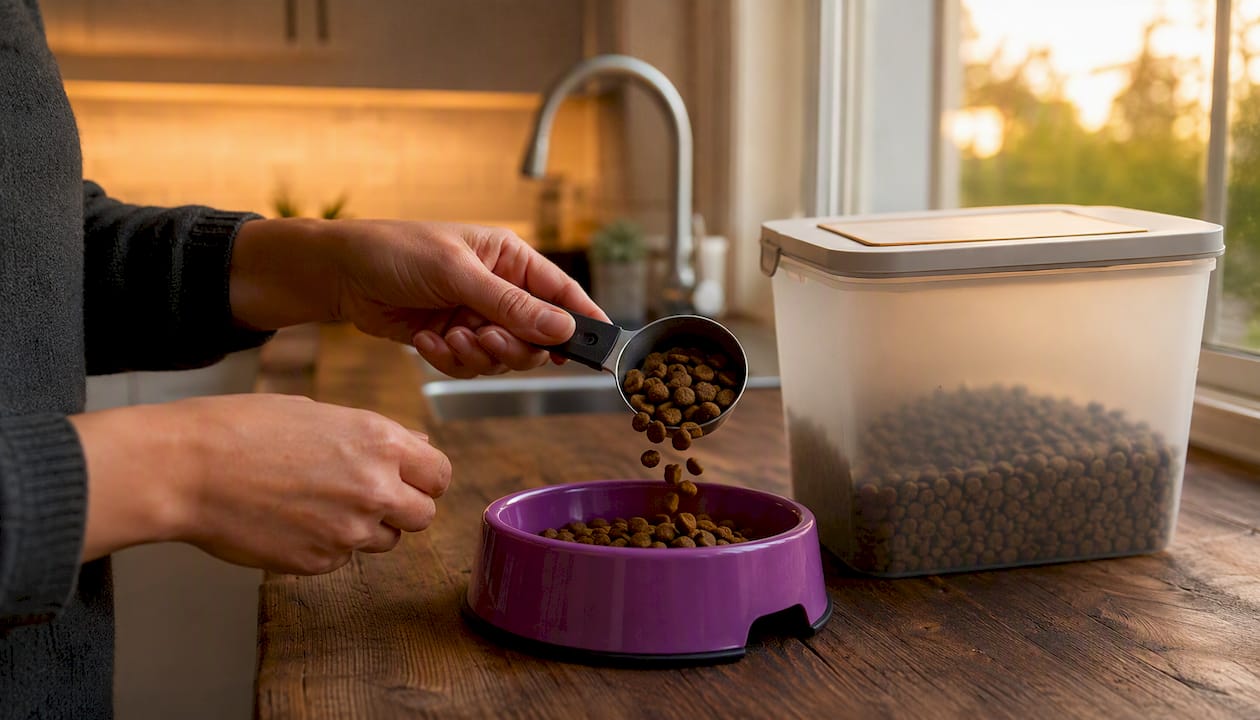
A complete pet feeding schedule entry for an automated wellness-check profile must include meal times, amounts, food brand and type, portion method, medication timing relative to meals, known allergies, and all emergency contacts. Store these feeding instructions inside a comprehensive emergency pet profile, together with primary and backup emergency contacts, veterinarian and 24-hour emergency clinic contacts, and a list of current medications and dosages. AAHA recommends storing this inside a comprehensive emergency pet profile that also lists your veterinarian, a 24-hour emergency clinic, and your pet’s microchip number.
The six fields every profile needs before you do anything else:
- Meal times: exact times (e.g., 7:00 AM / 6:00 PM)
- Amount per feeding: measured in cups, grams, or scoop counts
- Food brand, type, and form: wet, dry, or mixed, with product name
- Medication timing: before, with, or after food, plus dose and drug name
- Known allergies or dietary restrictions: specific ingredients to avoid
- Emergency contacts and medical information: owner primary and backup, vet, 24-hour clinic, microchip/ID number, and a current list of active medications and dosages.
Pro Tip: Copy this list into your profile now, even if some fields are incomplete. A partial entry is far safer than none at all.
Key Takeaways
Documented feeding instructions stored in an automated wellness-check profile, paired with a tested escalation workflow, give caregivers everything they need to feed and medicate your pet correctly without guessing.
| Point | Details |
|---|---|
| Six required fields | Meal times, amounts, food brand/type, medication timing, allergies, and all emergency contacts must be in every profile. |
| Medication clarity | Write WITH FOOD or ON EMPTY STOMACH in bold or ALL CAPS; include drug name, dose, and administration method. |
| 2-week physical supply | Keep a 2-week food and medication supply in waterproof, labeled containers near a printed feeding card. |
| Test before you need it | Run a mock wellness-check drill after every update and before any trip longer than 48 hours. |
| Mypetssafetynet | Stores feeding schedules, medication blocks, and emergency contacts, then delivers them automatically when an escalation triggers. |
Table of Contents
- What exact fields should your feeding instructions include?
- How should you format entries for a wellness-check system?
- How do you document medications alongside feeding?
- What supplies should you prepare for a caregiver?
- Where should you store and share feeding instructions?
- How do you test your wellness-check workflow before an emergency?
- When and how should you update your feeding instructions?
- Copy-ready feeding schedule templates
- What should a caregiver do first, and which contacts must be in the profile?
- Why structured feeding instructions matter more than most owners realize
- Mypetssafetynet keeps your pet’s profile ready when it matters most
- Sources
What exact fields should your feeding instructions include?
Pet feeding schedule documentation explained simply: write every field a stranger would need to feed your pet correctly on day one, with zero guessing. The CDC boarding template uses explicit fields for food type, amount, and frequency, and it’s a reliable model to follow.
For each pet, document:
- Feedings per day: “2 times daily”
- Time of feeding: “7:00 AM and 6:00 PM”
- Amount per feeding: “½ cup (40 g) dry kibble per meal”
- Food brand and product name: “Hill’s Science Diet Adult Chicken & Barley, 4 lb bag”
- Wet vs. dry and prep notes: “Mix 2 tbsp wet food (Purina Pro Plan Chicken Entrée) into dry kibble”
- Portion method: “Use the blue scoop in the food bin — one level scoop = ½ cup”
- Treat policy: “Maximum 2 small treats per day; no rawhide”
Short example phrases you can paste directly:
- “Feed 7:00 AM: ½ cup Hill’s Science Diet dry + 2 tbsp Purina wet. Use blue scoop.”
- “Feed 6:00 PM: same as morning. No extra treats after 8:00 PM.”
For medication cross-reference, add a single line under each meal entry: “AM meal: give Prednisone 5 mg tablet WITH food.” That keeps the caregiver from having to search a separate section.
Pro Tip: Always state portion size by weight or a labeled scoop, not just “a handful.” Scoop sizes vary, and a caregiver using the wrong one can over- or underfeed by 30–50%.
How should you format entries for a wellness-check system?
Automated wellness-check and escalation workflows read your profile fields quickly, often under stress. VCA’s emergency pet care guidance stresses that clear, concise, and updated routines reduce the risk of missed medications and dietary upsets.
Follow these formatting rules:
- Use 12-hour clock with AM/PM: 7:00 AM, not “morning”
- State units explicitly: ½ cup (40 g), not “half a cup-ish”
- Mark medication timing in plain words: WITH FOOD, AFTER FOOD, or ON EMPTY STOMACH
- Keep each meal as a short, separate line entry
Single-line format (for tight profile fields):
7:00 AM — ½ cup Hill's Science Diet dry + Prednisone 5 mg WITH FOOD
Multi-line caregiver block (for detailed notes):
Morning Meal — 7:00 AM
Food: ½ cup Hill's Science Diet Adult Dry + 2 tbsp Purina wet
Medication: Prednisone 5 mg tablet, hidden in pill pocket, given WITH FOOD
Portion tool: blue scoop in cabinet above food bin
Pro Tip: Add a “Last updated: 2025-06-01 / J.S.” line at the top of your feeding block. Responders will know they’re reading the current version, not an outdated one.
How do you document medications alongside feeding?
Medication errors are the highest-risk outcome when a caregiver is working from incomplete instructions. Every medication entry needs these fields:
- Drug name (generic and brand): “Prednisone (Deltasone) 5 mg”
- Dose and form: “1 tablet orally”
- Frequency: “Once daily”
- Relation to meals: WITH FOOD / AFTER FOOD / ON EMPTY STOMACH
- Administration notes: “Crush and mix into wet food” or “Use Greenies Pill Pocket”
- Refill location: “Spare pills in orange bottle, top kitchen shelf”
Never adjust medication timing or dosage without your vet’s approval. If a caregiver is unsure whether a dose was given, they should call your regular vet first. For after-hours questions, they should contact your designated 24-hour emergency clinic before skipping or doubling a dose.
Pro Tip: Write WITH FOOD or ON EMPTY STOMACH in bold or ALL CAPS in your profile. It’s the one detail caregivers miss under pressure.
What supplies should you prepare for a caregiver?
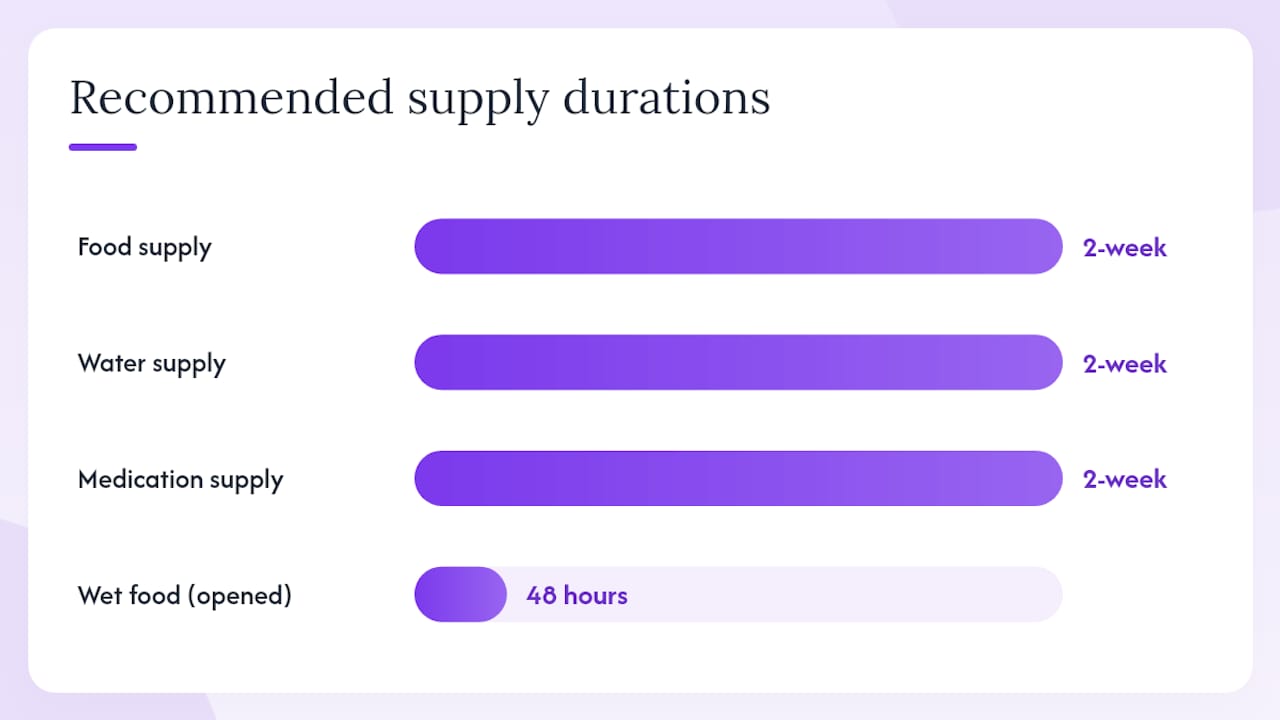
Physical logistics matter as much as the written instructions. The CDC disaster preparedness guide recommends a 2-week supply of food and water in waterproof containers, plus a 2-week medication supply.
Prepare and label these items:
- 2-week food supply in a sealed, waterproof container labeled with pet name and use-by date
- 2-week medication supply in original labeled bottles
- Non-spill food and water dishes
- Manual can opener (if using wet food)
- Measuring scoops labeled with portion size in permanent marker
- Spare leash, collar with ID tag, and crate or carrier location noted
- Printed feeding and medication instructions in a waterproof sleeve, stored with the food bin
For refrigerated or perishable food, note the shelf life clearly: “Wet food: refrigerate after opening, use within 48 hours.” The AVMA pet first aid checklist also recommends keeping a copy of medical records with your physical supply kit.
Pro Tip: Tape a laminated index card to the food bin lid with the one-line feeding entry. A caregiver who can’t find the digital profile can still feed correctly.
Where should you store and share feeding instructions?
Your feeding instructions are only useful if the right people can find them fast. Canada recommends keeping a pet file with emergency contacts, medical records, and a feeding schedule ready for emergencies.
Store your instructions in at least two places:
- Digital profile in your wellness-check service (Mypetssafetynet stores all fields and shares them with designated contacts automatically)
- Printed care packet in a labeled waterproof container near the food supply
- Waterproof wallet card with the one-line feeding entry and emergency contacts
For sharing, follow these security steps:
- Assign a primary emergency contact and a backup contact, each with confirmed access
- Use simple, agreed-upon authentication (e.g., a shared PIN or a known passphrase for digital access)
- Revoke or update access immediately after any contact change
Every shared document should include: feeding block, medication block, vet and 24-hour clinic contacts, microchip number, and physical supply location. Learning how to write pet care instructions for caregivers helps you phrase these clearly for anyone who might respond.
Pro Tip: Tell your primary contact where the physical packet is stored. A digital link is useless if their phone is dead.
How do you test your wellness-check workflow before an emergency?
A mock drill confirms that your automated alerts fire correctly and that your caregiver can actually follow the instructions. Here’s a repeatable test plan:
- Schedule a test wellness check through your service (Mypetssafetynet supports SMS, phone, and email delivery).
- Do not respond to the check-in message.
- Confirm your primary contact receives the escalation alert within the expected countdown window.
- Have your primary contact locate the feeding block in the shared profile and find the physical supply kit.
- Simulate the medication step: confirm the caregiver can identify the drug, dose, and timing without asking you.
- If no response is received at the primary contact level, verify the backup contact is also notified.
After the drill, confirm:
- Timestamped acknowledgement from at least one contact
- Caregiver located physical supplies without assistance
- Medication instructions were read and understood correctly
Pro Tip: Run a test after every instruction update and before any trip longer than 48 hours. A drill that takes 15 minutes can prevent a serious medication error.
When and how should you update your feeding instructions?
Review your feeding instructions after any diet or medication change, every 3 months, and before travel. Use a simple versioning line at the top of your profile entry:
v1.2 / 2025-09-01 / J.S.(version number, date, owner initials)- Or a short change log: “Updated: switched from Hill’s to Royal Canin Urinary SO, 9/1/25”
After any major update, your designated backup contact should confirm they’ve read the new version. A quick text exchange is enough: “Updated feeding block — please confirm you’ve seen it.” Consistent proactive pet planning keeps your profile accurate and your contacts prepared.
Copy-ready feeding schedule templates
These three templates fit directly into a wellness-check profile or a printed wallet card. The LA County public health disaster guide includes sample feeding schedule forms with the same structure.
Template 1: Minimal single-line (for tight profile fields)
[Pet name] — 7:00 AM & 6:00 PM — ½ cup Hill's Science Diet dry — Prednisone 5 mg WITH AM meal
Template 2: Full multi-line caregiver block
Pet: Max (Labrador, 4 yrs)
Morning — 7:00 AM: ½ cup Hill's Science Diet Adult Dry + 2 tbsp Purina wet
Medication: Prednisone 5 mg tablet WITH FOOD (hide in pill pocket)
Evening — 6:00 PM: ½ cup dry only, no medication
Treats: Max 2 small biscuits/day. No rawhide. No grapes or raisins.
Allergies: Chicken protein — use beef or fish varieties only
Food bin: kitchen pantry, bottom shelf. Blue scoop = ½ cup.
Last updated: 2025-09-01 / J.S.
Template 3: Printable wallet card
PET: Max | DOB: 03/2022 | Microchip: 985112345678901
FEED: 7 AM & 6 PM — ½ cup Hill's SD dry + 2 tbsp Purina wet (AM only)
MED: Prednisone 5 mg WITH AM meal
ALLERGY: Chicken protein
VET: Dr. Rivera (555) 234-5678 | ER: BluePearl (555) 987-6543
OWNER: Jane Smith (555) 111-2222 | BACKUP: Tom Lee (555) 333-4444
| Field | Example entry |
|---|---|
| Meal time | 7:00 AM / 6:00 PM |
| Amount | ½ cup (40 g) dry + 2 tbsp wet |
| Food brand | Hill’s Science Diet Adult Dry, Beef |
| Medication | Prednisone 5 mg WITH AM meal |
| Allergy | No chicken protein |
What should a caregiver do first, and which contacts must be in the profile?
When a caregiver arrives, they should follow this sequence:
- Confirm the pet is safe and contained (leash, crate, or secure room)
- Locate the food bin and printed feeding card
- Feed according to the documented schedule, administering any medications as written
- Check the medication log to confirm no dose was already given
- Contact the regular vet for any health concerns; use the 24-hour emergency clinic after hours
Every profile must include these contacts:
- Owner primary phone and email
- Owner backup contact (name, relationship, phone)
- Regular veterinarian (name, clinic, phone, hours)
- 24-hour emergency veterinary clinic (name, address, phone)
- ASPCA Animal Poison Control Center: (888) 426-4435
- Pet Poison Helpline: (855) 764-7661
- Local animal control and non-emergency police (for lost or escaped pets)
The AVMA pet emergency checklist recommends keeping important phone numbers and medical records together with your feeding and medication instructions. Understanding what happens to your pets if you’re hospitalized helps you plan the full escalation path in advance.
Poison emergency: If your pet ingests something toxic, call ASPCA Animal Poison Control (888) 426-4435 or Pet Poison Helpline (855) 764-7661 immediately. Have your pet’s weight, the substance name, and the estimated amount ingested ready.
Why structured feeding instructions matter more than most owners realize
Most pet owners think of a feeding schedule as a convenience, not a safety document. After working with solo pet owners and people managing health conditions, Mypetssafetynet has seen a consistent pattern: the instructions that prevent real harm are the ones written for a stranger, not a trusted friend.
A caregiver who knows your pet well will still hesitate if the medication label says “once daily” but doesn’t specify morning or evening, or if the food bin holds two different bags with no label. That hesitation costs time. In a medication-sensitive case, it can cost more. Structured documentation, paired with a tested escalation workflow, closes that gap before it opens.
Mypetssafetynet keeps your pet’s profile ready when it matters most
Your feeding block, medication schedule, and emergency contacts are only as useful as the system delivering them. Mypetssafetynet stores all of it in one place and sends it automatically to your designated contacts the moment an escalation triggers.
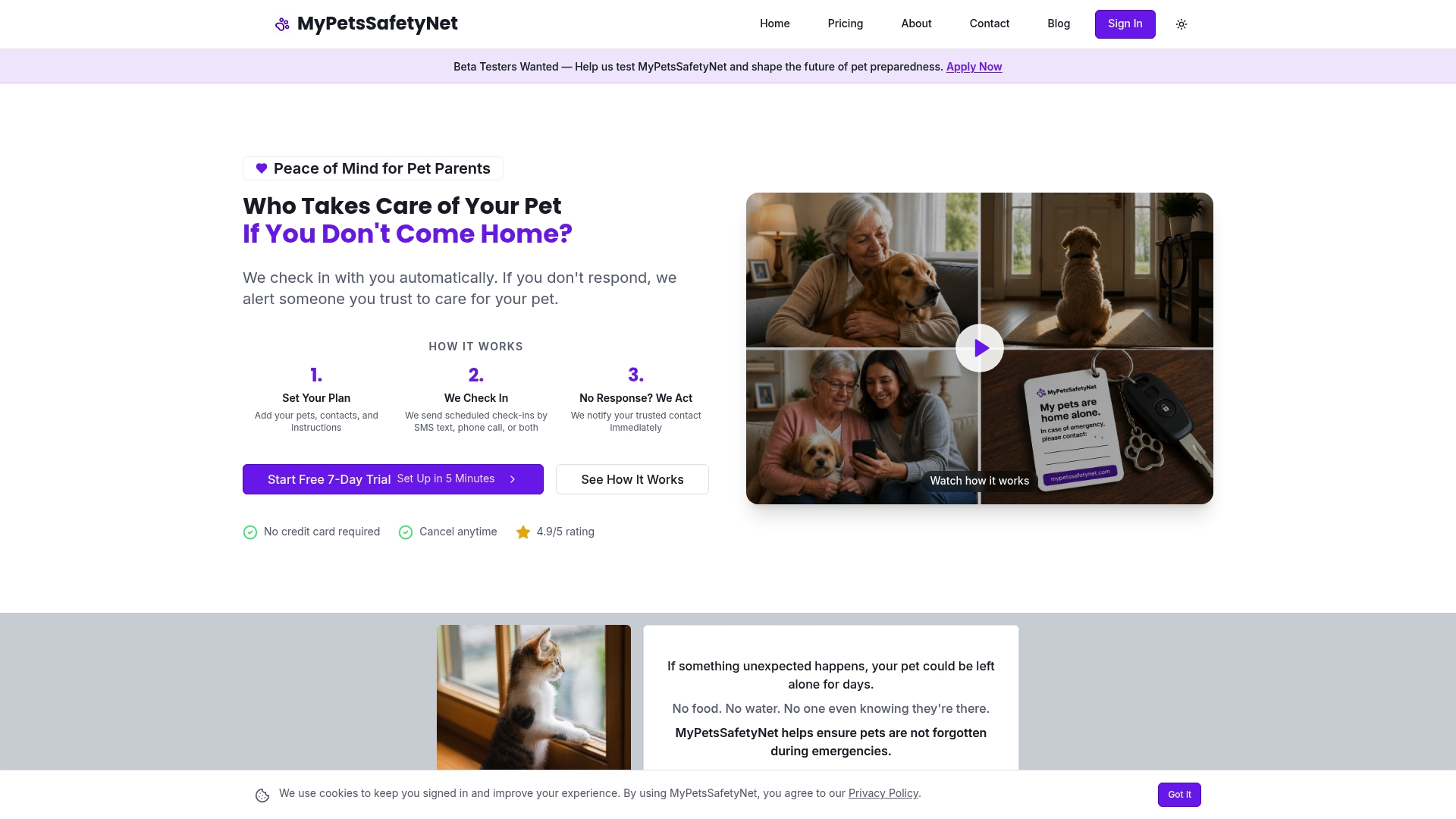
The service covers up to 5 pets and 3 emergency contacts, with scheduled wellness checks by SMS, phone, or email, a customizable countdown before escalation, and a care instruction card generator you can print or share digitally. Your contacts receive the full feeding and medication block, not just a notification that something is wrong.
Start your free trial at Mypetssafetynet and build your first pet profile today. Once it’s live, run the mock drill from Section 7 to confirm everything works before you need it.
Sources
- Preparing for the unexpected: essential pet sitter instructions | AAHA
- VCA Emergency Pet Care Guide
- Pet information for boarding (CDC PDF)
- Pet first aid client brochure | AVMA
- Canada
- Emergency preparedness & pets (LA County public health)
This article is general information, not a substitute for advice from a qualified doctor. Consult a qualified healthcare professional about your own circumstances before acting on anything here.