Temporary Pet Custody for Solo Owners: A Fast-Action Plan

Temporary pet custody, in this article’s terms, means emergency short-term care for your pet activated when you become incapacitated, not a court order or legal proceeding. The single fastest thing you can do right now: set up an automated daily check-in and name a local backup caregiver who has a key to your home. Three things you can do in the next ten minutes:
- Text or call one trusted neighbor or friend and ask them to be your emergency pet caregiver
- Write down your pet’s feeding schedule, medications, and your vet’s phone number on a single sheet of paper
- Place that sheet on your refrigerator door where any first responder can see it
Key Takeaways
A daily automated check-in paired with two named local caregivers and a complete pet profile is the most reliable emergency pet care plan a solo owner can build today.
| Point | Details |
|---|---|
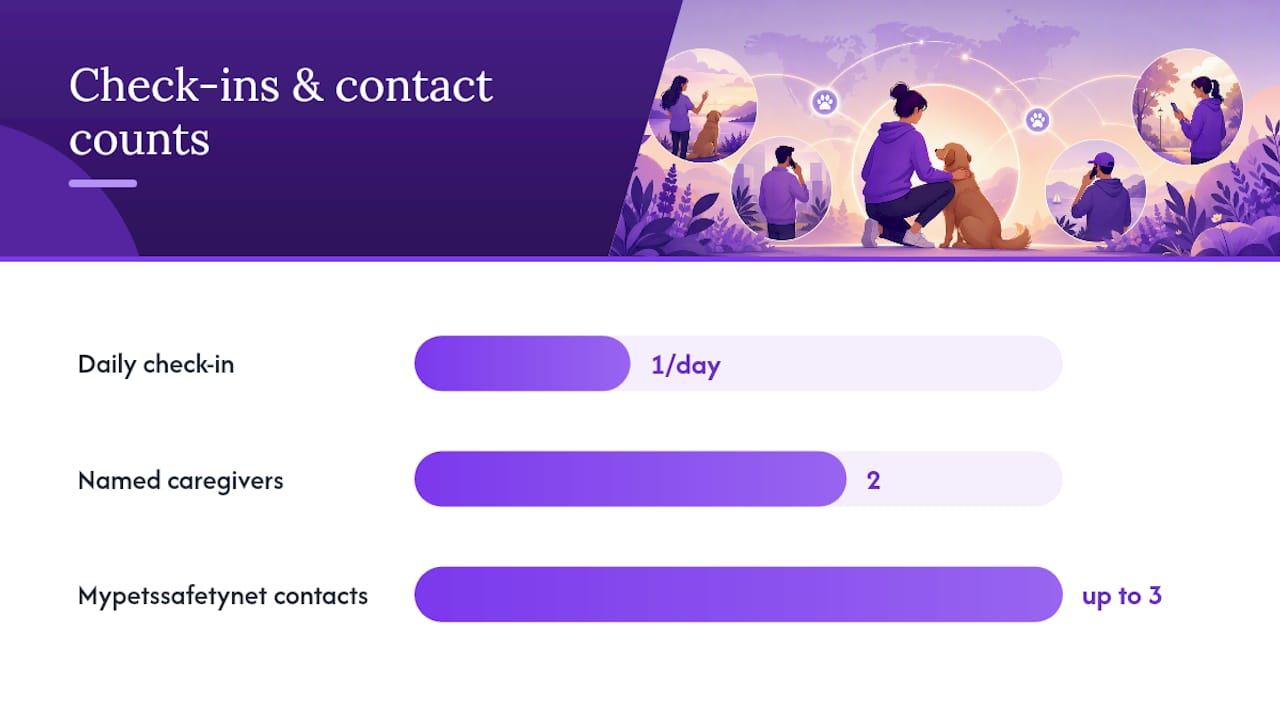
| Set up daily check-ins | An automated daily prompt with a grace period notifies caregivers within hours if you don’t respond. |
| Name two local caregivers | Both contacts need proximity, access, and a copy of your pet profile before an emergency happens. |
| Prepare your documents | Carry the AVMA emergency card and post your pet profile on the refrigerator for first responders. |
| Test the full flow | Simulate a missed check-in this week to confirm your contacts receive the escalation package correctly. |
| Mypetssafetynet | Automates check-ins, stores pet profiles, and notifies up to three contacts with care instructions on escalation. |
Table of Contents
- What temporary pet custody means for solo owners
- How automated wellness check-ins create emergency pet care in practice
- Step-by-step checklist you can complete today
- Documents to prepare and where to get them
- How long “temporary” usually lasts and what it costs
- How to choose emergency caregivers and what red flags to avoid
- What your emergency contacts should do first when alerted
- Why the automated trigger matters more than any single document
- Mypetssafetynet gives solo owners a complete emergency pet care system
- Authoritative resources and templates
- Sources
What temporary pet custody means for solo owners
This article is not about divorce or court-ordered custody. Temporary pet custody here means a practical emergency arrangement: someone you’ve designated steps in to care for your pet when you can’t, triggered by a missed check-in or an alert from your emergency system. The distinction matters because the legal version involves attorneys and judges. This version involves a neighbor, a signed letter, and a plan you can set up today.
Response time is the core issue for solo owners. If you live alone and something happens, your pet could be without food, water, or care for hours or days before anyone notices. The ASPCA recommends naming at least two emergency contacts and carrying a pet alert card, and notes that your short-term emergency caregiver doesn’t need to be your pet’s long-term guardian. Local proximity often matters far more than any formal relationship.
The AVMA’s emergency contact card and downloadable pet emergency card exist precisely for this scenario: so first responders arriving at your home know a pet is present and who to call.
How automated wellness check-ins create emergency pet care in practice
The mechanics are straightforward. Each day at a time you choose, the system sends you a check-in prompt by SMS, phone call, or email. You respond, and the day clears. If you don’t respond within a configurable grace period, the system escalates to your emergency contacts in a set order, delivering your pet’s full care instructions automatically. No one needs to download an app. Your caregiver simply receives a message with everything they need to act.
What that escalation package should contain:
- Your pet’s name, species, breed, age, and photo
- Feeding schedule and exact food amounts
- Medications with doses and timing
- Your veterinarian’s name, address, and phone number
- Your home address and access instructions (key location or lockbox code)
- Your pet’s microchip number and any behavioral notes
Pro Tip: Set your grace period to match your real routine. If you typically sleep late on weekends, configure a later check-in window for those days so you don’t trigger false alerts.
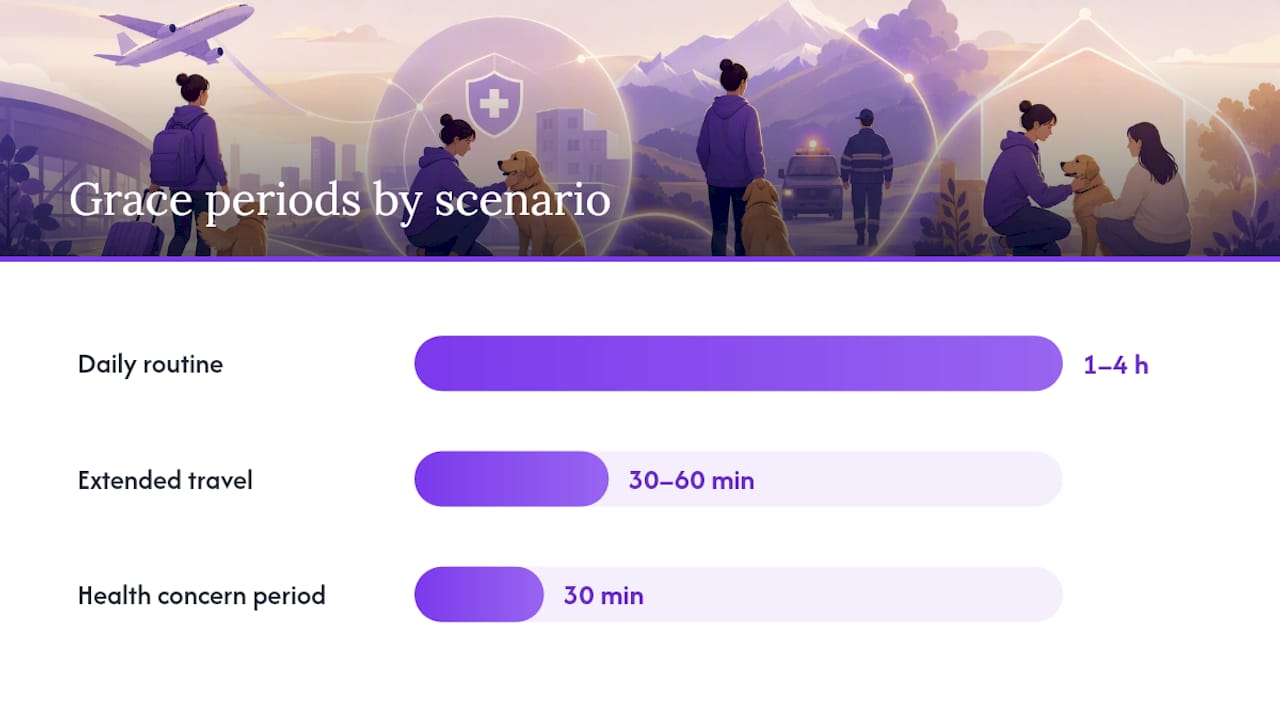
Automated systems typically prompt at a chosen time and escalate to designated contacts in order if no response is received, delivering care instructions without requiring recipients to install any software. The table below shows how cadence and escalation work across common scenarios.
| Scenario | Check-in cadence | Grace period | Escalation action |
|---|---|---|---|
| Daily routine | Once per day (morning) | 1–4 hours | Alert primary caregiver with pet profile |
| Extended travel | Twice daily | 30–60 minutes | Alert primary, then secondary caregiver |
| Health concern period | Twice daily | 30 minutes | Alert primary caregiver, then emergency vet |
Step-by-step checklist you can complete today
A solid emergency pet care plan covers both the first 24 hours and longer-term care. Work through these steps in order.
- Choose a primary and a secondary local caregiver. Both should live close enough to reach your home within an hour. Give at least one of them a key or the code to a lockbox.
- Build your pet profile. Include feeding, medications with exact doses, your vet’s contact, microchip number, behavioral notes, and where to find the carrier. PetNPrep recommends separating immediate 24-hour instructions from longer-term care details on the same document.
- Set up automated daily check-ins and add your two emergency contacts with their escalation order. Confirm they’ll receive your pet profile automatically if you miss a check-in.
- Write a signed caretaker agreement and give a copy to each caregiver. This letter should authorize temporary vet decisions and home access. Caretaker agreements reduce confusion at the moment of activation by clarifying expectations and permissions in advance.
- Test the full flow. Simulate a missed check-in and confirm your contacts receive the escalation package with your pet’s details intact.
Pro Tip: Review your caregiver list every six months. People move, change schedules, or get new pets of their own. A contact who was ideal last year may no longer be the right fit.
Documents to prepare and where to get them
Every pet care emergency document serves a specific purpose. Here’s what you need and what each must include:
- AVMA emergency contact card: Carry one in your wallet and post one on your refrigerator. It tells first responders that pets are in the home and lists who to call. Download it directly from the AVMA’s emergency contact card page.
- Pet profile / care instructions: Required fields are food type and daily amount, medications with doses and schedule, veterinarian name and phone, microchip number, behavioral notes (fear triggers, aggression history), and carrier or crate location.
- Written caretaker authorization: A signed letter stating the caregiver has your permission to enter your home, transport your pet, and authorize veterinary treatment up to a specified dollar amount. Keep it simple and dated.
- Storage: Post the original on your refrigerator or inside your front door. Give a copy to each caregiver. Store a digital version in a shared folder or email thread your caregivers can access.
How long “temporary” usually lasts and what it costs
Temporary care timelines fall into three practical categories:
- Same-day (0–24 hours): A neighbor checks in, feeds your pet, and monitors the situation while your condition is assessed. Cost is typically nothing if it’s a friend or neighbor.
- Short-term (24–72 hours): A caregiver stays involved while you’re hospitalized briefly. A professional pet sitter in this range often charges fees that vary depending on your area.
- Extended (one week or more): Emergency boarding or a live-in sitter becomes necessary. Boarding rates vary widely by region and facility, with common rates differing for dogs and cats. Emergency vet fees, if your pet needs care during this period, are separate.
Subscription costs for an automated check-in service are a modest, predictable line item compared to emergency boarding. Pre-arranging a friend or neighbor as your primary caregiver eliminates most of the short-term cost entirely. A caretaker letter that includes a small float fund (cash in an envelope your caregiver can access) handles incidental expenses like food or a vet co-pay without delay.
How to choose emergency caregivers and what red flags to avoid
The right caregiver is local first, willing second, and capable third. Geographic proximity matters more than almost any other factor because a remote friend who loves your pet can’t get there in two hours if they live four states away.
Selection criteria to prioritize:
- Lives within 30–60 minutes of your home
- Has or can get a key or access code
- Can transport your pet to a vet if needed
- Has met your pet at least once and knows its basic temperament
- Has confirmed willingness in writing or by text
Red flags to watch for:
- Vague verbal promises with no follow-through on getting a key
- Persistent scheduling conflicts when you try to do a test run
- No reliable transportation
- Unresponsiveness to test alerts or check-in confirmations
- A household with animals that don’t get along with yours
The two-contact rule is non-optional. Your primary caregiver handles the first response. Your secondary caregiver activates if the primary is unreachable. Assign escalation order in your automated system so the handoff is automatic.
What your emergency contacts should do first when alerted
When your contacts receive an escalation alert, the first hour matters most. Here’s the priority sequence:
- Confirm your condition first. Try to reach you by phone. If no answer, contact the other emergency contact or call 911 if there’s reason to believe you’re in medical distress.
- Secure your pet. Go to your home, use the key or lockbox code, and locate your pet. Check for immediate needs: water, food, litter, or signs of distress.
- Locate the pet profile. It’s on the refrigerator or front door. Read the feeding and medication instructions before doing anything else.
- Contact your vet if your pet shows signs of illness, injury, or has missed a medication dose that requires professional guidance.
- For common situations:
- Owner hospitalized: Follow the pet profile, coordinate with the secondary caregiver on a daily schedule, and notify the vet that care has transferred temporarily.
- Owner unreachable, home unlocked: Enter, secure the pet, and call 911 to report a welfare concern for the owner.
- Owner unreachable, home locked: Use the lockbox code from the escalation package. If no access is possible, call local animal control for guidance while continuing to try reaching the owner.
Why the automated trigger matters more than any single document
Most solo pet owners have good intentions. They’ve told a friend, maybe even written something down. What they haven’t done is build a system that activates automatically when they can’t activate it themselves. That’s the gap.
A static plan, even a detailed one, depends on someone noticing something is wrong. An automated daily check-in converts that passive hope into an active trigger. If you don’t respond, your contacts are notified within hours, not days. Local proximity then determines whether that notification translates into actual care within a timeframe that keeps your pet safe.
The documents matter. The caretaker agreement matters. But without the trigger, they’re just paper. Mypetssafetynet was built specifically around this reality: solo owners need a system that works even when they can’t.
Mypetssafetynet gives solo owners a complete emergency pet care system
Solo pet owners who live alone need more than a printed card on the fridge. Mypetssafetynet delivers automated wellness check-ins by SMS, phone call, or email on a schedule you set, with configurable grace periods and a three-contact escalation chain. When you miss a check-in, your designated caregivers receive your pet’s full care instructions automatically, no app required on their end.
You can store profiles for up to five pets and manage up to three emergency contacts, each with their own escalation order. Setup takes minutes, and a free trial lets you test the full flow before committing to a subscription. Caretaker agreement templates and the AVMA emergency card are linked directly from the Mypetssafetynet blog so you can complete your plan in one session. Start your free trial at Mypetssafetynet and run a test alert this week.
Authoritative resources and templates
- AVMA emergency contact card: Download and print from the AVMA emergency contact cards page. Carry one in your wallet and post one at home.
- ASPCA pet planning guidance: The ASPCA’s pet planning page covers emergency contacts, pet alert cards, and the difference between short-term caregivers and long-term guardians.
- Mypetssafetynet blog templates: The caretaker agreement guide and emergency document essentials post give you ready-to-use frameworks for both documents.
- PetNPrep emergency care plan: Covers the required fields for a complete pet profile, including immediate and longer-term care instructions, at Petnprep.
Sources
- Emergency contact cards | American Veterinary Medical Association
- Making a Plan for Your Pet | ASPCA
- Petnprep