What to Do If You Can’t Take Care of Your Pet
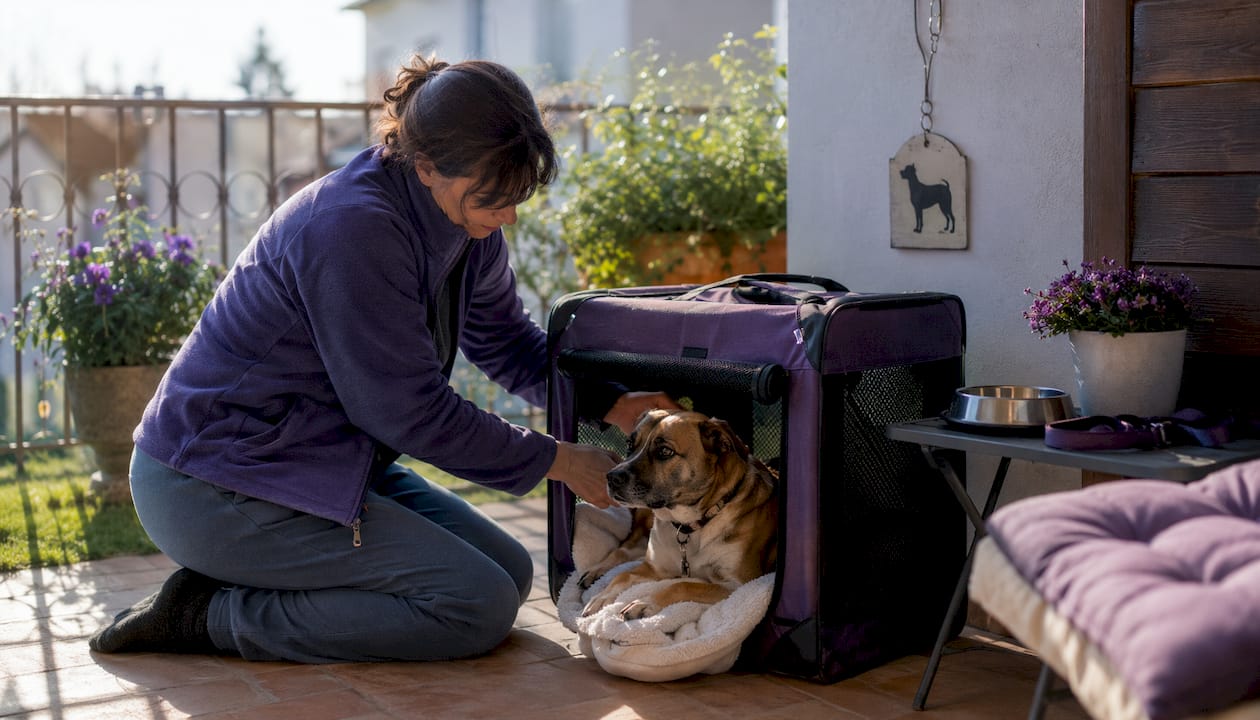
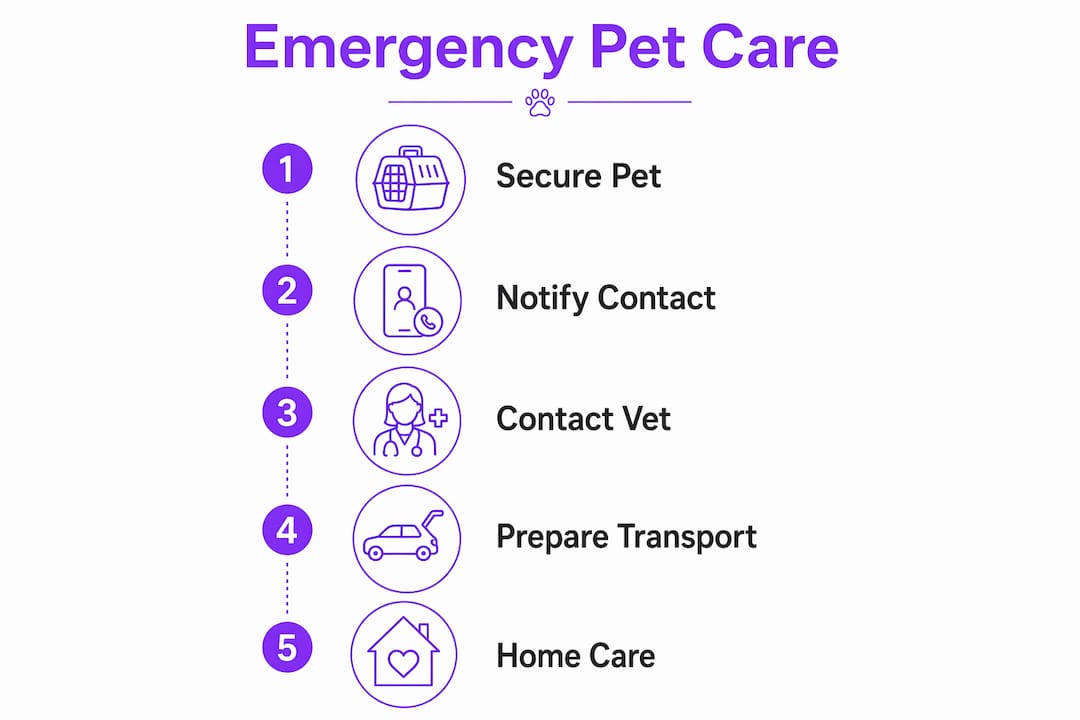
If you suddenly can’t care for your pet, do three things right now: secure your animal in a safe, confined space with food and water, call your designated emergency contact and tell them where the key is, and notify your veterinarian or the nearest emergency clinic. That’s the core of every plan that works.
For people living alone, this situation carries extra weight. Hospital staff won’t care for your pet if you’re admitted — without a pre-arranged contact who has access to your home, your pet can be left alone for hours or days. Knowing what to do if I can’t take care of my pet is something you’ve thought through in advance is the difference between a manageable situation and a crisis.
Your first 10 minutes:
- Confine your pet to one room with bedding, food, water, and a litter box or pee pad
- Call your primary emergency contact and give them your address and key location
- Call your vet or the nearest 24-hour emergency clinic and describe what’s happening
- If EMS is present, tell them your pet is home and who holds the key
- Activate any pre-set wellness check service (such as Mypetssafetynet)
Pro Tip: As Dr. Lancaster puts it, “if you think it is an emergency, it probably is.” Seizures, difficulty breathing, collapse, or blood in urine or stool are not wait-and-see situations. Call the emergency clinic immediately.
Table of Contents
- What should you do in the next hour?
- How do you build an emergency pet-care plan today?
- What are your practical temporary pet-care options?
- What medical red flags must a caregiver recognize?
- What if you can’t return for a long time?
- How do you set up alerts so someone checks on you and your pet?
- Key Takeaways
- Why living alone changes everything for your pet
- Mypetssafetynet gives your pet a safety net you set up once
- Useful resources to save in your pet care folder
What should you do in the next hour?
Once the first ten minutes are handled, the next hour is about stabilizing the situation for whoever steps in to help.
Secure your pet’s environment:
- Move your pet to a quiet, warm room away from hazards
- Leave familiar bedding, a worn piece of your clothing, and enough food and water for 24 hours
- Provide a quiet recovery area and follow any prescribed medication schedule exactly
Call your emergency contact and walk them through:
- Where the house key is (or the door code)
- Where medications are stored and the dosing schedule
- Your pet’s feeding routine and any behavioral notes
- Your vet’s name, phone number, and after-hours clinic address
- Where your pet care folder is located (more on this below)
If you’re being transported to a hospital, tell the EMS team your pet is home alone and give them the name and number of your emergency contact. Ask them to make that call if you can’t.
Pro Tip: For basic home care during illness, keep your pet warm, monitor food and water intake, and note any changes in behavior or elimination to report to the vet. These details help the clinic act faster.
How do you build an emergency pet-care plan today?
A pre-made plan is the single most reliable tool you have. Pre-establishing a guardianship agreement with a named, trained caregiver keeps your pet in a familiar environment and avoids the stress of emergency shelter intake.
Step-by-step plan setup:
- Assemble your pet care folder. Include vaccination records, current medications with doses and schedules, a signed emergency care authorization, microchip number, recent ID photos, behavior notes, and your feeding routine.
- Store it in two places. Keep the physical folder on or near your refrigerator (where emergency responders are trained to look) and share a digital copy with your emergency contacts.
- Name a primary and a backup caregiver. Both should have a key, know your pet, and have practiced medication administration at least once.
- Write a short emergency care authorization. Many clinics won’t perform invasive procedures without owner consent unless written authorization is on file. Confirm with your vet what the document needs to include and any limits on surgery without direct owner approval.
- Introduce caregivers to your pet ahead of time. Run through feeding, medications, and basic calming techniques during a calm visit, not during a crisis.
Your folder checklist:
- Primary caregiver name, phone, and relationship
- Backup caregiver name and phone
- Veterinarian name, clinic address, and phone
- After-hours emergency clinic address and phone
- Microchip number and registration details
- Medication names, doses, and last-dose log
- Feeding schedule and preferred food brand
- Known allergies or behavioral triggers
- Key location or door code
Pro Tip: Review the emergency document essentials guide from Mypetssafetynet for printable templates you can fill out today.
| Document | What to include | Where to store |
|---|---|---|
| Emergency care authorization | Owner name, pet name, vet contact, treatment limits | Folder + digital copy |
| Medication log | Drug name, dose, frequency, last given | Folder + caregiver copy |
| Pet ID sheet | Photo, microchip number, breed, weight | Folder + vet file |
| Caregiver instruction sheet | Feeding, behavior notes, emergency contacts | Folder + caregiver copy |
What are your practical temporary pet-care options?
Choosing the right short-term care option depends on how quickly you need help, your pet’s medical needs, and your budget. Here’s how the main options compare.

| Care option | Speed | Medical handling | Cost shape | Typical timeline |
|---|---|---|---|---|
| Trusted friend or family | Immediate | Low to moderate | Free to low | Days to weeks |
| Neighbor check-ins | Same day | Low | Free to low | Hours to days |
| In-home pet sitter | Same day to 24 hrs | Moderate (medication-trained sitters available) | Medium | Days to weeks |
| Private boarding facility | Same day | Low to moderate | Medium to high | Days to weeks |
| Veterinary/clinic boarding | Same day | High | High | Days to weeks |
| Crisis foster program | 24 hours | Moderate | Low to free | Weeks to months |
| Municipal shelter intake | Same day (call ahead) | Variable | Low (fees may apply) | Indefinite |
Community animal alliances recommend crisis foster programs and TLC placements as a first alternative to shelter intake. Municipal shelters are a last resort: they’re legally required to accept owner surrenders in most states, but space is limited and surrender fees vary — some facilities charge a surrender fee that varies depending on proof of ownership.
Pro Tip: When finding a pet sitter quickly, ask directly: Are you comfortable administering oral medications? Have you cared for a pet with [specific condition]? What’s your protocol if the pet shows signs of distress? A sitter who hesitates on these questions isn’t the right fit for a medical situation.
What medical red flags must a caregiver recognize?
Any temporary caregiver needs to know which signs require an immediate call to the emergency clinic, not a wait-and-see approach.
Red-flag signs requiring emergency veterinary care:
- Difficulty breathing or labored, open-mouth breathing
- Ongoing or repeated seizures
- Collapse or sudden inability to stand
- Profuse or uncontrolled bleeding
- Inability to urinate, especially in male cats
- Pale, white, or blue gums
- Suspected ingestion of a toxin
The Merck Veterinary Manual confirms that emergency triage prioritizes airway, breathing, and circulation first. Caregivers should not attempt to manage these signs at home. Call the emergency clinic, describe what they’re seeing, and transport the animal.
What to tell the vet when you arrive:
- Onset time and how symptoms have progressed
- Current medications: name, dose, and time of last dose
- Known allergies or prior conditions
- Microchip number and owner contact information
For immediate first-aid steps before reaching the clinic, keep the animal calm, warm, and still. Don’t offer food or water if surgery may be needed.
“If you think it is an emergency, it probably is.” — Dr. Lancaster
What if you can’t return for a long time?
If your absence extends beyond a few weeks, responsible rehoming is far better than surrender or abandonment. Abandonment is illegal in all 50 states. Contacting 2-1-1 or your local animal services office is always the right first call.
Alternatives to shelter surrender:
- Extended foster placement with a vetted friend or family member
- Long-term guardianship agreement with a named individual
- Breed-specific rescue organizations that accept owner surrenders with medical records
- Community rehoming networks through local Facebook groups or Petfinder
Steps for responsible permanent rehoming:
- Gather all medical records, vaccination history, and microchip details
- Screen potential adopters with a brief questionnaire and reference check
- Arrange a meet-and-greet before any transfer
- Transfer microchip registration to the new owner immediately
- Provide a written history: diet, routine, behavioral triggers, and vet contact
National organizations such as RedRover Relief and the ASPCA offer financial assistance and shelter-finder tools that can help you identify placement options before making a permanent decision. The Humane Society of the United States also provides guidance on responsible rehoming through its network.
How do you set up alerts so someone checks on you and your pet?
A wellness check system means that if you stop responding, someone is automatically prompted to check on both you and your animal. Mypetssafetynet is built specifically for this: when you don’t check in, your emergency contacts are notified to verify you’re safe and your pet is cared for.
Options to set up now:
- Mypetssafetynet wellness check-in service (automated alerts to named contacts)
- A neighbor check schedule with a written agreement and spare key
- Medical alert services that accept pet-care instructions alongside personal emergency data
- A staggered contact chain: text first, then call, then wellness-check escalation
How to configure your system:
- Name at least two contacts in your escalation chain
- Set a check-in frequency that matches your health situation (daily is reasonable for solo owners)
- Confirm that each contact has a key or door code and knows where the pet care folder is
- Test the system once before you rely on it
Pro Tip: Keep one physical house key with your primary emergency contact and a second with a trusted neighbor. A digital copy of your pet care folder stored in a shared cloud folder (Google Drive, iCloud) gives contacts instant access even if they can’t reach your home right away.
Integrate your folder with your notification system:
- Share the digital folder link with all named contacts
- Include the folder location in your Mypetssafetynet profile notes
- Update the folder every time medications or caregivers change
Key Takeaways
A pre-made emergency plan with named caregivers, a signed authorization, and an active wellness-check service is the most reliable way to protect your pet if you live alone and become temporarily unable to provide care.
| Point | Details |
|---|---|
| Secure and notify first | Confine your pet, call your emergency contact, and call your vet within the first 10 minutes. |
| Build a pet care folder | Store vaccination records, medications, authorization, and caregiver instructions near your refrigerator and in a shared digital folder. |
| Name trained caregivers | A pre-established guardianship agreement keeps your pet in a familiar environment and avoids shelter stress. |
| Know the red flags | Seizures, breathing difficulty, collapse, and inability to urinate require an immediate emergency clinic call, not home management. |
| Mypetssafetynet wellness checks | Mypetssafetynet automatically notifies your emergency contacts if you stop checking in, so your pet is never left without care. |
Why living alone changes everything for your pet
When you live with others, a sudden health crisis still leaves someone in the house. When you live alone, there’s no backup. That gap is where pets get left behind, sometimes for days, sometimes longer. A hospitalization that seems routine to the medical team can be a life-threatening situation for an animal at home with no food, no water, and no one checking in.
The good news is that a plan you build in an afternoon can close that gap entirely. A named caregiver who has met your pet, a signed authorization on file with your vet, and a wellness-check service that triggers an alert when you go silent: those three things cover the vast majority of emergency scenarios. You don’t need a perfect plan. You need a plan that exists.
Mypetssafetynet was built for exactly this situation. Solo pet owners deserve the same peace of mind that comes naturally to people who share their home with others.
Mypetssafetynet gives your pet a safety net you set up once
Peace of mind for your pet starts with one concrete step: activating a wellness check that alerts your emergency contacts the moment you stop responding. Mypetssafetynet does exactly that. Unlike a boarding facility or a pet sitter, it doesn’t require a crisis to be in motion first. It runs quietly in the background so that if something happens to you, the people who care about your pet are notified right away.
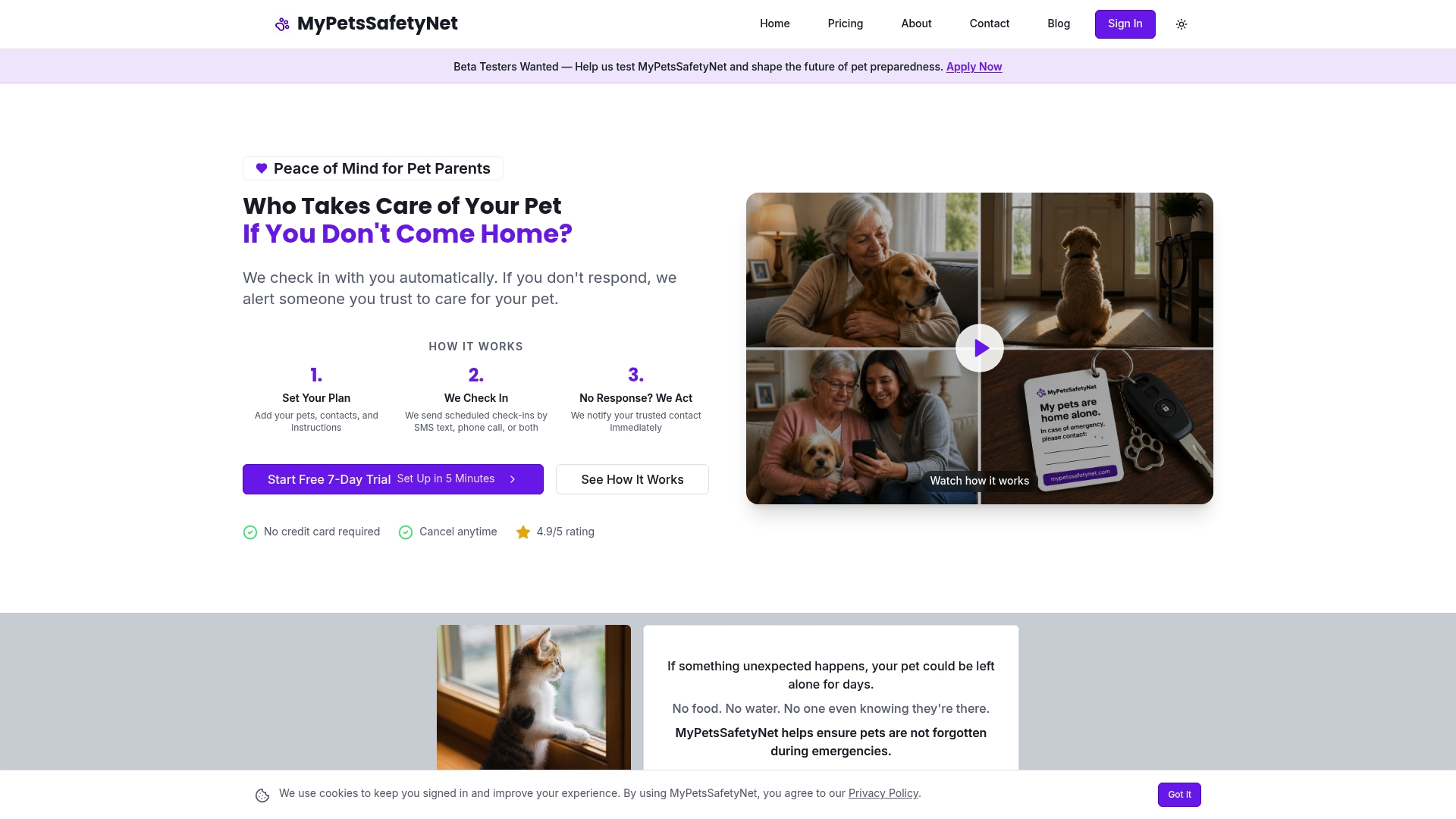
Getting started takes about ten minutes. Sign up at Mypetssafetynet, add your emergency contacts and your pet’s profile, then set your check-in frequency and escalation steps. Your contacts receive instructions on where your pet care folder is and what to do. From that point forward, your pet has a safety net that doesn’t depend on you being able to ask for help.
Useful resources to save in your pet care folder
Keep these contacts printed in your folder and saved digitally so any caregiver can reach them immediately.
- 2-1-1 (211.org): A free 24/7 helpline that connects you to local animal and human services. Call when you don’t know which local resource to contact first.
- ASPCA: Provides a shelter finder, poison control hotline (888-426-4435), and guidance on emergency placement and rehoming.
- Merck Veterinary Manual (merckvetmanual.com): Authoritative triage reference for caregivers who need to assess whether a symptom is an emergency.
- Humane Society of the United States (humanesociety.org): Offers rehoming guidance, foster network referrals, and resources for owners facing hardship.
- RedRover Relief (redrover.org): Financial assistance for emergency veterinary care and temporary housing for pets during owner crises.
- Petfinder (petfinder.com): Useful for locating breed-specific rescues and vetted adopters if permanent rehoming becomes necessary.
- AVMA (American Veterinary Medical Association) (avma.org): Provides owner-facing guidance on emergency triage, pet care during illness, and finding accredited clinics.
- Pet Help Finder (humaneworld.org): Locates low-cost veterinary services and emergency assistance programs near you.
Save these in your pet care folder alongside your caregiver instructions. A caregiver who has never dealt with a pet emergency before can use this list to get the right help fast.