Pet Ownership During Chronic Illness: A Practical Guide
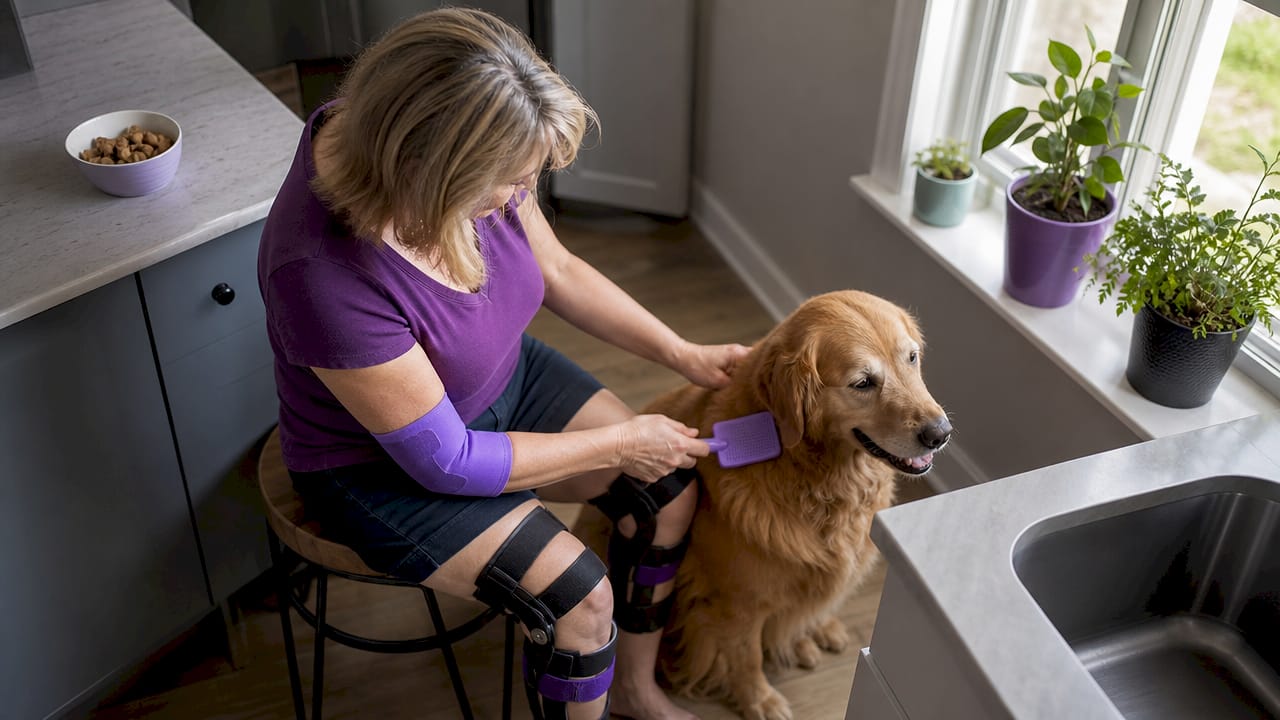
Pet ownership during chronic illness explained is the practice of responsibly managing your pet’s daily needs alongside your own health challenges through realistic monitoring, financial planning, and a strong support network. You are not just a pet owner. You are also a caregiver managing your own body, energy, and medical demands at the same time. That dual role creates real pressure, but it is manageable with the right structure. This guide covers the DAAM monitoring method, the 3-Tier Urgency System, and the financial and emergency planning tools that make sustainable pet care possible, even on your hardest days.
What is pet ownership during chronic illness?
Caring for pets with illness in your own life means accepting that your capacity will fluctuate. Some days you can do everything. Other days, feeding your dog and refilling the water bowl is a genuine accomplishment. Both are valid. The key is building a care system that holds up on the hard days, not just the good ones.
The impact of chronic illness on pets is real and often overlooked. When your health dips, your pet’s routine gets disrupted. Missed walks, delayed meals, and reduced interaction all affect your pet’s physical and emotional health. Recognizing this connection is the first step toward planning for it honestly.

Chronic illness pet care is not about achieving perfection. It is about creating a structure that protects your pet’s well-being even when your own health is unpredictable. That structure starts with knowing how to monitor your pet’s health without exhausting yourself.
How do you monitor your pet’s health when you’re managing your own illness?
The DAAM method is the most practical daily monitoring framework for pet owners with limited energy. DAAM stands for Drinking, Appetite, Activity, and Movement. Checking these four areas takes less than five minutes and gives you a reliable snapshot of your pet’s condition each day.
Behavioral changes like hiding or a sudden loss of appetite often signal health problems before any physical symptoms appear. That means your daily DAAM check is not just routine maintenance. It is early warning detection that can prevent a minor issue from becoming a costly emergency.
The 3-Tier Urgency System gives you a clear framework for deciding when to act:
- Tier 1 (Emergency): Collapse, seizure, difficulty breathing, or uncontrolled bleeding. Call an emergency vet immediately.
- Tier 2 (Same-day vet): Vomiting more than twice, refusing food for over 24 hours, limping that worsens, or visible pain.
- Tier 3 (Monitor closely): Mild lethargy, one episode of loose stool, or slight reduction in appetite with no other symptoms.
| Symptom | Urgency Tier | Recommended Action |
|---|---|---|
| Collapse or seizure | Tier 1 | Emergency vet immediately |
| Repeated vomiting | Tier 2 | Same-day vet appointment |
| Mild lethargy only | Tier 3 | Monitor for 24 hours |
| Refusing food over 24 hours | Tier 2 | Same-day vet appointment |
| Single loose stool | Tier 3 | Monitor, increase water access |
Veterinary professionals emphasize that early vet consultation keeps costs manageable and protects your pet’s quality of life. Waiting too long out of cost concerns or fear almost always makes both the health outcome and the bill worse.
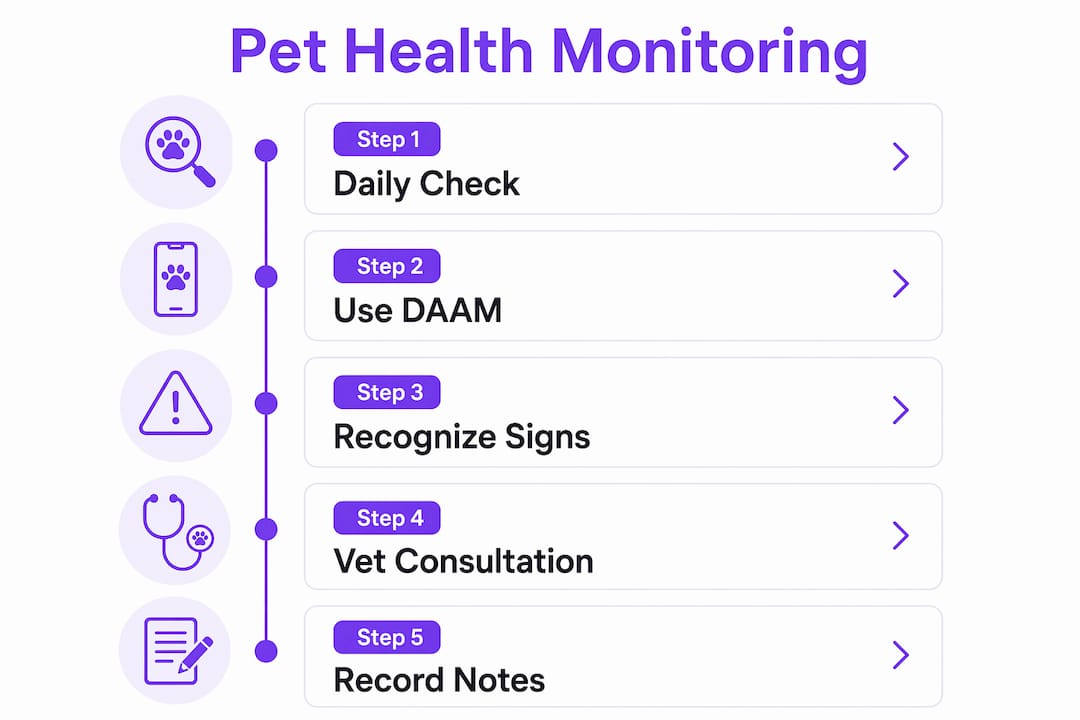
Pro Tip: Set a daily phone alarm labeled “DAAM Check.” A 5-minute habit at the same time each day is far easier to maintain than trying to remember on unpredictable days.
How do you balance your energy and still give your pet quality care?
The most useful mindset shift for pet owners with chronic illness is moving from a “curing” model to a “managing” model. You are not trying to be a perfect caregiver every single day. You are trying to maintain a consistent baseline of care that your pet can rely on, even when your body is not cooperating.
30–40% of pet owners managing chronic conditions report emotional distress including burnout, anxiety, and guilt. That guilt is one of the heaviest parts of this experience. You love your pet, and on bad days, you feel like you are failing them. That feeling is common, and it does not reflect reality.
Self-compassion and emergency support systems are clinical necessities, not luxuries. Sustainable pet care depends on realistic limits and shared responsibility. Building those systems before you need them is what separates owners who manage well from those who hit a crisis point.
Practical steps to protect your energy while maintaining quality care:
- Identify two or three trusted people who can step in on flare days, and brief them on your pet’s routine in advance.
- Simplify feeding by using automatic feeders or pre-portioned meal bags for low-energy days.
- Reduce guilt by separating “good enough” care from “ideal” care. Your pet needs food, water, safety, and connection. Everything else is a bonus.
- Schedule one low-effort bonding activity daily, such as sitting together or gentle grooming, to maintain your emotional connection without physical strain.
Pro Tip: Write a one-page “backup care sheet” for your pet and keep it somewhere visible. Include feeding times, medication doses, vet contact, and any behavioral quirks. Hand it to your backup caregiver before you need them, not during a crisis.
“Care plans that prioritize comfort and joy over clinical perfection offer better outcomes for both pets and their owners.” — Quality First Plan for Chronic Pet Care
What does financial planning look like for pet owners with chronic illness?
Financial stress is one of the most common and least discussed parts of managing pets with health issues. 66% of owners caring for chronically ill pets spend up to $250 per month on ongoing care, and 45% face emergency costs between $1,000 and $5,000. Those numbers are not meant to alarm you. They are meant to help you plan.
Financial planning reduces moral distress and improves care consistency. When you have a plan, you make better decisions under pressure. When you have no plan, financial panic can delay treatment and worsen outcomes for your pet.
| Expense Category | Typical Monthly Cost | Notes |
|---|---|---|
| Routine medications | $30–$80 | Varies by condition and pet size |
| Scheduled vet visits | $40–$100 | Chronic condition monitoring |
| Specialty food or supplements | $20–$60 | Condition-specific diets |
| Emergency fund contribution | $50–$100 | Target: $1,000–$2,000 reserve |
| Pet insurance premiums | $25–$75 | Reduces emergency cost exposure |
Practical financial steps that make a real difference:
- Talk openly with your vet about your budget. Most veterinary professionals will help you prioritize treatments and find lower-cost options when they know your constraints.
- Build a dedicated pet emergency fund, even if you start with $25 per month. A small reserve reduces the panic when an unexpected bill arrives.
- Ask your vet about generic medication options. Many chronic condition medications have affordable generic versions that work just as well.
- Review pet insurance options annually. Coverage that fits your pet’s specific condition can significantly reduce out-of-pocket emergency costs.
Discussing finances with your vet is not embarrassing. It is responsible. Vets would rather help you find an affordable path forward than see you delay care until a situation becomes critical.
How do you build an emergency care plan for your pet?
A flare care plan is a written document that tells someone else exactly how to care for your pet if you cannot. Every pet owner with a chronic illness needs one. It does not need to be long. It needs to be clear and complete.
Establishing emergency support systems with trusted friends or pet care services is a best practice for sustainable care during health flares. The goal is that anyone on your list can walk into your home and care for your pet without needing to call you for instructions.
Your flare care plan should include:
- Pet basics: Name, breed, age, weight, and any known allergies.
- Daily feeding schedule: Exact amounts, food brand, and feeding times.
- Medication list: Drug name, dose, frequency, and how to administer it.
- Vet contact information: Primary vet name, phone number, and address.
- Emergency vet contact: Name, address, and hours of the nearest 24-hour clinic.
- Behavioral notes: What is normal for your pet and what signals a problem.
- Named caregivers: At least two people who have agreed to help and have a copy of this plan.
Pro Tip: Store your flare care plan digitally and share it with your emergency contacts now. A plan that only exists in your head or on a piece of paper no one can find is not a plan.
Mypetssafetynet was built specifically for this scenario. If something happens to you and you live alone, Mypetssafetynet notifies your emergency contacts so they can check on both you and your pet. That kind of proactive alert system is the missing piece in most flare care plans.
What I’ve learned from watching pet owners navigate chronic illness
The owners who manage this best are not the ones with the most energy or the most money. They are the ones who stopped trying to do it alone. That observation holds up consistently.
The guilt piece is real, and it deserves acknowledgment. Feeling like you are letting your pet down on a bad health day is painful. But your pet does not measure your love by whether you made it to the dog park. They measure it by your presence, your consistency, and your calm. On the days when you can only offer a quiet hour on the couch together, that still counts.
Pets provide genuine mental health benefits during illness. The routine of caring for an animal gives structure to days that might otherwise feel shapeless. The physical contact reduces stress hormones. The companionship reduces isolation. These are not small things. They are part of why you keep showing up for your pet even when it is hard.
The owners who build shared care plans, talk honestly with their vets, and set up emergency contacts before they need them report far less anxiety about their pet’s welfare during flares. Planning is not pessimism. It is the most loving thing you can do for an animal who depends entirely on you.
— Mypetssafetynet
How Mypetssafetynet supports pet owners managing chronic illness
Managing your pet’s care alongside your own health is a real and ongoing challenge. Mypetssafetynet was created for exactly this situation.
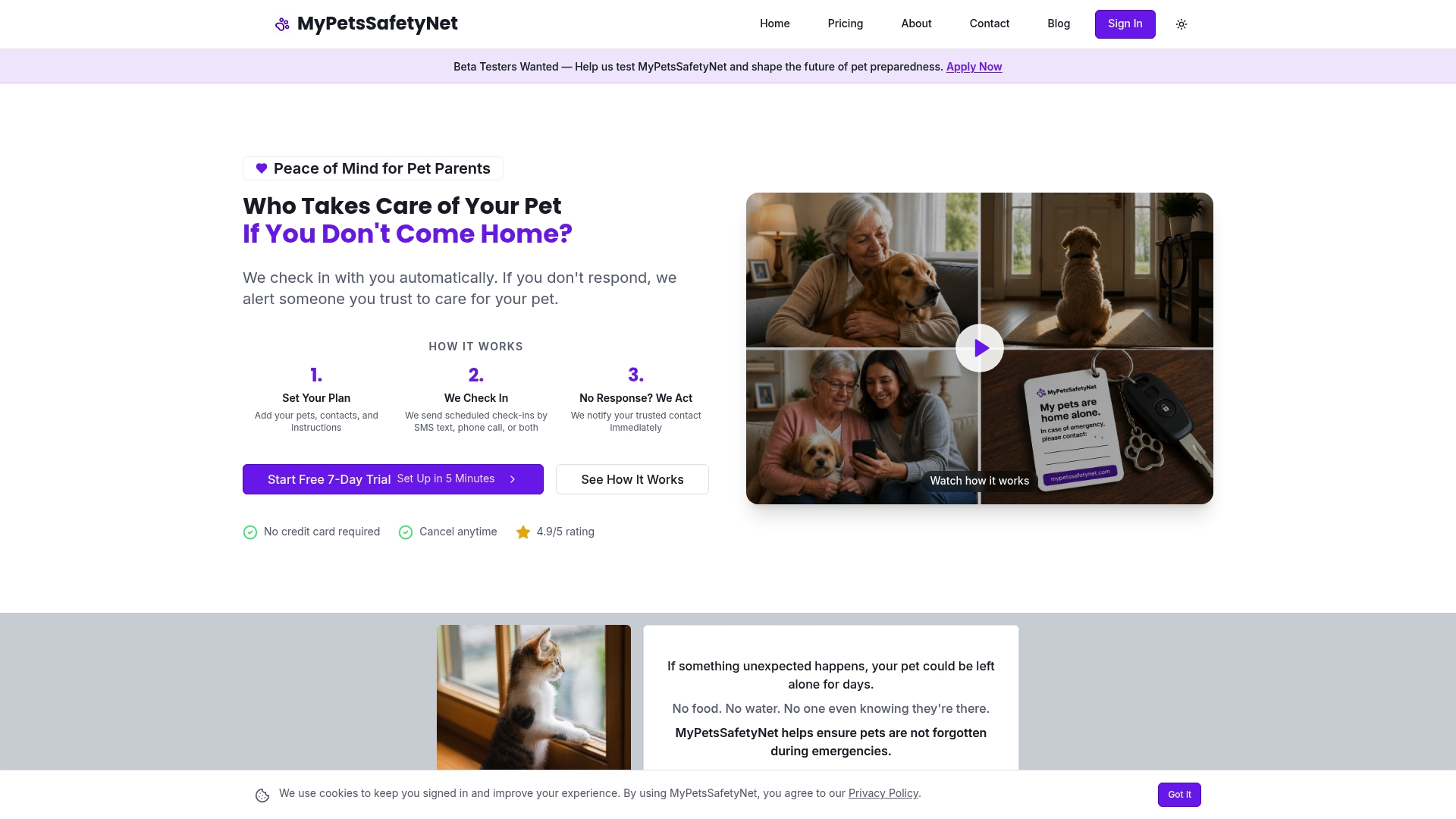
If you live alone or manage a health condition that could leave your pet without care, Mypetssafetynet’s wellness check-in service gives you a safety net you can count on. When something happens to you, your designated emergency contacts are notified promptly so they can check on both you and your pet. You can also set up care reminders and keep your pet’s information organized and accessible to the people who matter. Visit Mypetssafetynet to set up your pet’s safety plan today.
FAQ
What is the DAAM method for monitoring pet health?
DAAM stands for Drinking, Appetite, Activity, and Movement. It is a daily five-minute check that helps pet owners detect health changes early before they become emergencies.
How much does chronic pet care typically cost per month?
66% of owners caring for chronically ill pets spend up to $250 per month on routine care. Emergency costs can range from $1,000 to $5,000, which is why building an emergency fund matters.
What should a flare care plan include?
A flare care plan should include your pet’s feeding schedule, medication list, vet contacts, behavioral notes, and the names of at least two people who have agreed to step in during a health crisis.
How does pet ownership benefit people with chronic illness?
Pets provide structure, reduce stress hormones through physical contact, and reduce isolation. These pet ownership benefits during illness are well-documented and contribute meaningfully to owner mental health.
When should I call an emergency vet versus waiting to monitor?
Use the 3-Tier Urgency System. Collapse, seizures, or breathing difficulty require immediate emergency care. Repeated vomiting or food refusal over 24 hours warrants a same-day vet visit. Mild lethargy alone can be monitored for 24 hours before escalating.
Key takeaways
Pet ownership during chronic illness is sustainable when you build a monitoring routine, a financial plan, and an emergency support network before you need them.
| Point | Details |
|---|---|
| Use DAAM daily monitoring | Check Drinking, Appetite, Activity, and Movement every day to catch health changes early. |
| Apply the 3-Tier Urgency System | Match your pet’s symptoms to the right response tier to avoid delayed or unnecessary vet visits. |
| Plan finances before a crisis | Build an emergency fund and talk openly with your vet about budget constraints to reduce moral distress. |
| Create a written flare care plan | Document feeding, medications, and emergency contacts so any backup caregiver can step in immediately. |
| Build a support network now | Identify and brief at least two trusted caregivers before a health flare, not during one. |