Caregiver Onboarding Checklist for Your Pet’s Backup Caregiver

Naming a backup caregiver is only half the plan. Onboarding is the other half: giving that person the routines, health details, vet contacts, home access and supplies they need, then making sure they have actually seen them. This checklist walks you through each piece, in the order most solo pet owners find easiest to finish.
TL;DR
- Onboarding a pet caregiver means handing over seven things: basics, daily routine, health and medications, behavior, vet and spending authority, home access, and supplies.
- Write exact amounts, times and steps. Specific instructions are easier to follow than general ones, especially for someone stepping in under stress.
- Walk your caregiver through the plan once in person, and keep a copy where someone can find it if you can’t speak for yourself.
- Review the plan whenever a medication, vet, contact or door code changes.
- If you live alone, pair the plan with an automated check-in so your caregiver is alerted when you don’t respond.
Table of Contents
- What caregiver onboarding means when the “client” is your pet
- The caregiver onboarding checklist
- Quick reference: what to give, and why
- How to make sure your caregiver can actually carry out the plan
- Perspective
- Put your checklist to work with automatic check-ins
- Keeping the plan current
- FAQ
- Sources
What caregiver onboarding means when the “client” is your pet
You may have seen caregiver onboarding checklists written for home care agencies: tax forms, background checks, training modules. This one is different. It’s for a pet owner who wants a friend, neighbor, relative or professional sitter to be ready to step in if something happens to you, such as a hospital stay, a fall, or a sudden illness.
The goal is simple. If your caregiver gets a call at 9 p.m. saying you can’t come home, they should be able to open a single document, find your pet’s food, know the dose and the time of every medication, reach the right vet, and get through your front door. Nobody should have to guess.
That is why onboarding matters more than a name on a list. A person who has never met your senior cat’s medication routine or your dog’s fear of the garage door is starting from zero, at the worst possible moment.
The caregiver onboarding checklist
Work through these seven sections one at a time. You don’t need to finish in one sitting. Most people can draft all seven in an evening.
1. Basics and who’s who
Start with the page your caregiver will open first.
- Each pet’s name, species, breed, age, weight and a recent photo
- Microchip number and the company that holds the registration, if your pet is chipped
- Your name, your phone number and the names and numbers of your other emergency contacts
- Where the full care folder lives and how to reach it
The ASPCA recommends keeping a clearly visible emergency contact sheet so that pets are accounted for and someone can be reached right away to care for them. Put yours somewhere a first responder or neighbor would see it, and tell your caregiver where it is. If you’re deciding how many people to list, our guide to 2 to 4 emergency contacts for solo pet owners explains how to choose them.
2. Daily routine
Routine is the part caregivers use every day, so make it precise. According to the American Animal Hospital Association, caregivers need meal times and amounts, exercise routines and medication timing. The same guidance notes that sticking closely to an established routine can help a pet feel safe and secure while the owner is away.
For each pet, write down:
- What they eat, how much, and at what times (for example, one level scoop of the kibble in the blue bin, twice a day)
- Where food, treats and bowls are stored
- Water habits, such as a fountain that needs cleaning
- Walk length, favorite route, potty times, litter box location and cleaning schedule
- Sleep spot, crate rules, and any nighttime habits
- Which treats and toys are fine, and which foods are off limits
Vague notes like “feed normally” fall apart quickly. Our post on pet feeding schedule documentation shows how to write feeding details so anyone can follow them.
3. Health, medications and conditions
This is the section where a mistake costs the most, so be exact. Include:
- Every diagnosis, allergy and past surgery
- Each medication’s name, dose, timing and how your pet takes it (hidden in cheese, crushed in wet food, given by syringe)
- Where the medication is stored and how much is left
- Insurance details, if you carry pet insurance
- Signs that mean “call the vet today” for your particular pet
The AAHA guidance lists medical conditions, medication administration methods and insurance details among the information a caregiver needs. If your pet has a hard-to-administer medication, such as eye drops or insulin, do a live demonstration while you’re healthy. A short photo or video on your phone can help too, but a person who has done it once with you will be far more confident than one who has only read about it.
Add the number for a poison control service to this page. Pet poison hotlines exist and are staffed around the clock, but confirm the current number and any consultation fee on their official sites before you print it.
4. Behavior and temperament
A caregiver who knows your pet’s triggers can prevent a stressful night. The ASPCA suggests including behavior around other pets, people and children in your plan. Cover:
- Fears and triggers: thunder, vacuums, men in hats, the carrier
- How your pet reacts to strangers, visitors and other animals
- Escape habits, such as a dog who bolts at open doors or a cat who slips out of a cracked window
- Leash or harness quirks, and how to fit them
- Comfort routines that calm your pet
Be honest here. If your dog snaps when startled while eating, say so. That’s not a flaw in your plan, it’s the information that keeps everyone safe.
5. Vet information and spending authority
Your caregiver needs to know who to call and what they’re allowed to decide. The American Veterinary Medical Association says emergency contacts should include your regular veterinarian, a preferred emergency clinic and an authorized agent. It also advises owners to spell out any financial limits and which treatments need their direct consent, including euthanasia.
Put this on one page:
- Regular vet’s name, address, phone number and hours
- The nearest 24-hour emergency clinic and how to get there
- A spending limit your caregiver can approve without calling you, and who to ask if costs go beyond it
- Which procedures need your consent, and who speaks for you if you can’t
- Where vet records and vaccination history are kept
If your pet is microchipped, the AVMA also suggests you can consider adding your agent as an alternate contact in the microchip registry. Ask your registry how it handles this. Also tell your vet’s office in advance that your caregiver may call on your behalf, since many clinics need that permission on file.
6. Home access
A perfect care plan means nothing if your caregiver can’t get inside. The Humane Society of Mason County notes that access can be arranged through a key, a garage code or another system, and that apartment managers may allow entry if the required authorization paperwork is completed.
Decide and document:
- Who holds a key, or where a lockbox or code is kept
- Alarm codes and how to turn the alarm off
- Building entry details: gate code, doorman, parking, elevator
- For renters, a signed note or form on file with your property manager
- Where the pets are likely to be hiding if the caregiver arrives to an empty-looking house
Don’t write door codes on a document that could be posted publicly. Share them with your caregiver directly and keep the printed plan to describing where access is held.
7. Supplies, emergency kit and go-bag
Your caregiver may need to move your pet quickly or care for them somewhere new. Ready.gov lists items a pet emergency kit may include: several days of food in an airtight, waterproof container, several days of water, extra medicine in a waterproof container, a first aid kit, a collar with ID and a harness or leash, a carrier, sanitation supplies and familiar items. A VCA Animal Hospitals guide goes further for a go-bag, recommending two weeks of food and medication, feeding instructions, bowls, waste bags and veterinary and emergency-clinic phone numbers.

Store the bag by the door, and tell your caregiver where it is. If you want a packing list built around a hospital stay, see our pet hospital go bag guide.
Quick reference: what to give, and why
| Checklist item | What your caregiver needs | Why it matters |
|---|---|---|
| Basics | Photos, microchip details, contacts | Identifies your pet and who to call |
| Routine | Meal amounts, times, walks, litter | Keeps the day familiar for your pet |
| Health | Diagnoses, medication doses and timing | Prevents missed or doubled doses |
| Behavior | Triggers, fears, escape habits | Keeps pets and people safe |
| Vet and authority | Clinic details, spending limit, consent rules | Speeds decisions when you can’t be reached |
| Home access | Key, code or paperwork | Gets your caregiver through the door |
| Supplies | Food, medicine, carrier, go-bag | Lets your caregiver move or care for pets |
How to make sure your caregiver can actually carry out the plan
A document alone doesn’t make someone ready. Living alone adds one more challenge: nobody is in the house to notice something has gone wrong. These steps close the gap.
- Ask first. Confirm your caregiver is willing, and ask about their own limits: allergies, work hours, a landlord who doesn’t allow pets, other animals at home.
- Do a walk-through. Visit your home together. Show the food, the medications, the leash, the litter, the thermostat, the fuse box if relevant. Let them handle the harness or the pill once.
- Meet your pets. Introduce the caregiver to your pets several times in calm settings so the first meeting isn’t during an emergency.
- Hand over the plan in two forms. Give them a printed copy and a digital one. Keep a third copy where a responder would look.
- Assign roles if you have more than one helper. One person can handle the pets, another can handle the vet, and a third can handle the house. Our guide to pet caregiver roles shows five assignments you can divide up.
- Ask them to repeat it back. Ask your caregiver to tell you where the food, medications, and vet number are. If they hesitate, that part of the plan needs work.
- Decide how they’ll find out. This is the step most plans skip. If you collapse at home on a Tuesday, who tells your caregiver? A plan that depends on you making the call can fail at exactly the moment it’s needed.
For a printable summary your caregiver can keep on the fridge or in their phone, the pet care handoff checklist fits the essentials on one page. If you want the full list of documents behind it, read our pet care emergency document essentials.
Perspective
We built MyPetsSafetyNet around one worry we kept hearing from solo pet owners: who finds out if I can’t speak for myself?
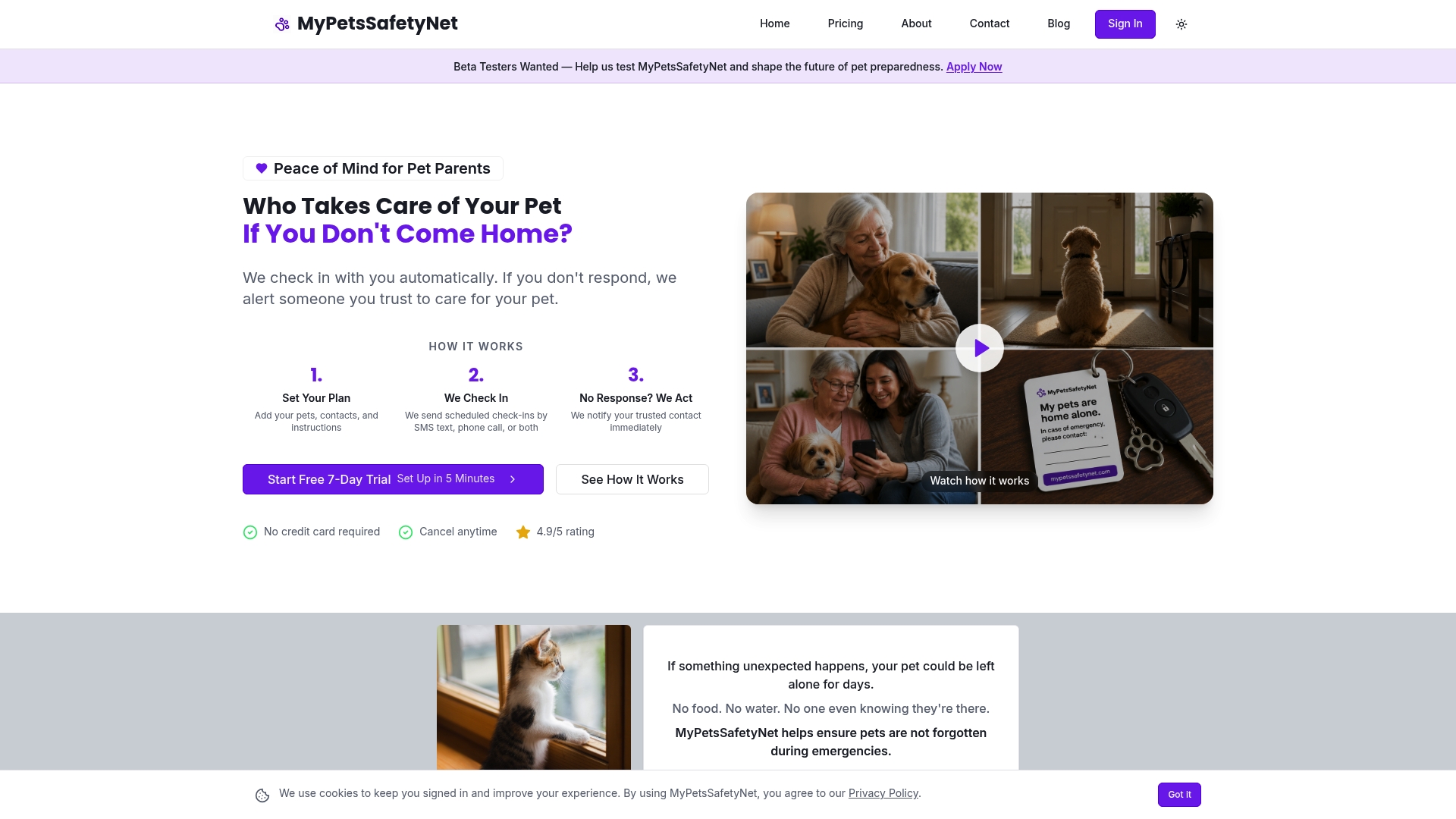
A checklist is a strong start, and we encourage everyone to write one. But a checklist only works if someone knows to open it. Our service is designed to close that gap. It sends you a scheduled check-in by SMS, phone call or email, and if you don’t respond after the countdown and escalation steps you’ve set, your emergency contacts are notified with your pet’s care details attached.
We think onboarding should happen in two stages. First, you brief your caregiver. Second, you make sure the alert reaches them without depending on you. We focus on pet care, not just personal safety, and the details go straight to the named caregivers you chose, not to emergency services.
It also doesn’t require a smartphone. Any phone that can receive a text or call will work, which matters for the many older and disabled pet owners who live alone and rely on a simple phone.
MyPetsSafetyNet
Put your checklist to work with automatic check-ins
Once your caregiver is onboarded, MyPetsSafetyNet can handle the part that is hardest to do for yourself: noticing when you don’t check in. You store profiles for up to 5 pets and up to 3 emergency contacts, set the check-in schedule and countdown intervals that suit you, and use the built-in pet care instruction card generator to turn your checklist into something your contacts can use. Setup is designed to take under 10 minutes.
The Monthly plan is $6.99 per month, and you can try it with a 7-day free trial, no credit card required. See the details on the pricing page.
Keeping the plan current
An out-of-date plan can be worse than none, because a caregiver will trust it. Set a regular date to review it, and update it right away when any of these change:
- A new medication, a dose change or a new diagnosis
- A new vet, a new emergency clinic or a new phone number
- A new pet, or a pet who has passed away
- A new door code, key holder or landlord
- A caregiver who moves, changes jobs or can no longer help
- A change in your pet’s food, brand or amount
After each update, send the caregiver the new version and ask them to discard the old one. If you use a pet profile template, editing one page is much faster than rewriting a whole folder. Our pet profile template gives you a format that supports up to five pets, and the emergency pet care plan guide covers the bigger picture.
FAQ
How early should I onboard a backup caregiver?
Do it now, while nothing is wrong. Onboarding takes a few hours spread over a week or two: drafting the plan, a home walk-through, and a short practice session with each pet. Waiting until you have a health scare means doing it under stress, and often too late.
Should my caregiver have a key to my home?
They need some way in, but it doesn’t have to be a copy of your key. Options include a lockbox, a keypad code, a neighbor who holds a key, or paperwork on file with your apartment manager. Pick the option you trust, and make sure the caregiver knows how it works before they need it.
What if my backup caregiver can’t reach me, and my pet needs urgent care?
Give them written authority and limits ahead of time. Name your regular vet, your preferred emergency clinic and an authorized agent, set a spending limit, and state which procedures need your consent. Without that, a caregiver may be unable to approve treatment when minutes count.
Is a printed checklist enough if I live alone?
It’s a good foundation, but it relies on someone knowing you need help. If you live alone, add a way to alert your caregiver automatically, such as a scheduled check-in that notifies your contacts if you don’t respond. That way the plan starts even if you can’t make a call.
Can I use the same checklist for more than one pet?
Yes, but keep a separate page for each animal. Feeding amounts, medications and behavior differ from pet to pet, and a shared page invites mix-ups. Put a shared page at the front for contacts, access and vet information.
Sources
- Making a Plan for Your Pet, ASPCA
- Preparing for the Unexpected: Essential Pet Sitter Instructions, AAHA
- Ensuring your pet is protected when you’re away, AVMA
- Planning for Pet Care, Humane Society of Mason County
- Prepare Your Pets for Disasters, Ready.gov
- Emergency pet care guide, VCA Animal Hospitals