Build a Backup Pet Caregiver Plan That Actually Works
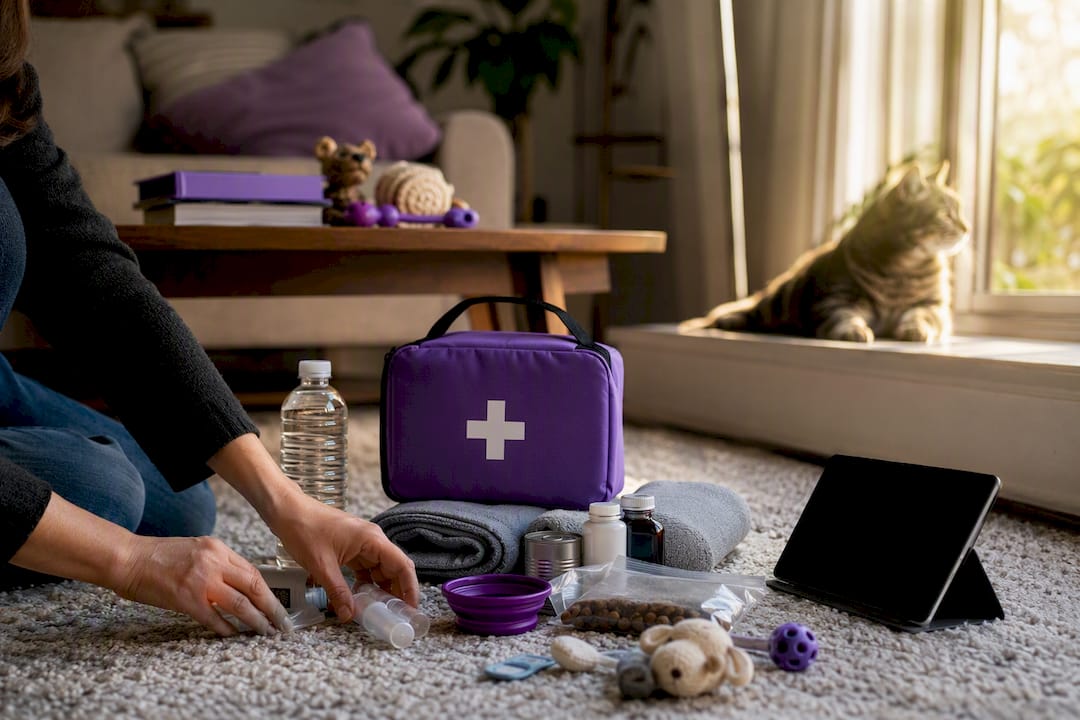
Name two backup caregivers, give them real access to your home, and leave a one-page pet portfolio somewhere they can find it fast. That’s the whole plan in one sentence, and everything else in this guide is just detail. If you do only three things this week, do these:
- Primary and secondary backup, both confirmed and willing.
- Access method in place: a spare key, lockbox code, or key with a neighbor.
- One-page pet portfolio printed and saved digitally.
- Payment method on file or pre-authorized for vet care.
- Next step: call or text your primary backup right now and set a time to hand over keys and instructions.
Key Takeaways
A backup pet caregiver plan works only when named backups have real access, written authorization, and a way to find out something is wrong.
| Point | Details |
|---|---|
| Name two backups | Confirm a primary and secondary caregiver with explicit agreement, not a vague yes. |
| Solve access first | Use a spare key, lockbox, or temporary code so a backup can get in fast. |
| Write it down | Create a one-page pet portfolio with medical, feeding, and contact details. |
| Pre-arrange payment | Set a prepaid card limit or vet-authorized card so care isn’t delayed by cost. |
| Add an activation trigger | Mypetssafetynet’s automated check-ins alert your backups the moment you miss one. |
Table of Contents
- Building Your Backup Pet Caregiver Plan Step by Step
- What Belongs on a One-Page Pet Portfolio
- How Do You Handle Access and Emergency Payment?
- Do You Need a Pet Trust, a Will, or Just a Letter?
- Two Templates to Write Down Today
- Testing and Updating Your Plan Over Time
- What to Do the Moment You Can’t Get to Your Pet
- Where to Find Paid Backup Care on Short Notice
- How an Automated Check-In Service Fits Your Plan
- Add an Automated Safety Net to Your Written Plan
- Sources
Building Your Backup Pet Caregiver Plan Step by Step
A backup pet caregiver plan only works if each piece happens in order. Skip a step and the whole thing stalls right when you need it most.
- Choose your backups. Pick someone nearby for short-notice hours and someone else, maybe farther away, for anything lasting more than a day or two.
- Get explicit agreement, not a vague “sure.” Triage Health’s guidance points out that a nodded “of course I’ll help” isn’t the same as a confirmed commitment with keys in hand.
- Create your one-page pet portfolio and share it with both backups before you need it.
- Arrange payment and emergency authorization so nobody has to guess what they’re allowed to approve.
- Set an activation trigger, like a scheduled check-in, so someone actually finds out you need help.
Pro Tip: When you ask someone to be a backup, get specific: “Can you get to my apartment within two hours, and are you comfortable giving my dog his insulin shot?” A real yes includes logistics, not just goodwill.
Try this script: “I’m setting up a backup pet caregiver plan and want to name you as my primary contact. It would mean having a key, knowing where I keep instructions, and being reachable if I miss a check-in. Can we grab 20 minutes this week to go over it?”
What Belongs on a One-Page Pet Portfolio
Your backup can’t act on information they don’t have. The AVMA recommends putting authorization and care details in writing well before a crisis, and a single-page document is the fastest way to make that happen.

| Field | Why It Matters |
|---|---|
| ID and photo | Confirms identity to vets, shelters, or shipping companies |
| Vet and emergency clinic contacts | Saves time locating care during a crisis |
| Medications (name, dose, frequency) | Prevents dosing errors or missed doses |
| Feeding instructions | Avoids stomach upset from a diet change |
| Behavior notes | Warns a new caregiver about fears, bite risk, or escape habits |
| Microchip number | Needed if the pet gets lost during handoff |
| Vet records location | Speeds up care if surgery or hospitalization is needed |
Keep one printed copy taped inside a kitchen cabinet and a digital copy in a shared folder both backups can open. The CDC’s emergency preparedness guidance also recommends keeping vaccination records accessible, which matters if your pet needs boarding or emergency treatment. A feeding schedule template can save you from writing these instructions from scratch.
How Do You Handle Access and Emergency Payment?
Access and payment sink more backup plans than anything else. Someone can be fully willing to help and still get stuck outside a locked door with no way to pay the vet.
Secure access options include:
- A spare key held by a trusted neighbor.
- A key lockbox with a code shared only with backups.
- A temporary smart-lock code you can revoke later.
- An alternate emergency contact added to your pet’s microchip registry.
For payment, options include pet insurance, a credit card already on file at your vet’s office, a prepaid card set aside for pet emergencies, or a reimbursement agreement with your backup.
Pro Tip: Set up a prepaid card with a defined limit, say $300, and write that limit into your pet portfolio. Your backup can act immediately without worrying about overspending or fronting money they can’t recover.
If you truly can’t leave a payment method, a written authorization plus a list of vets offering payment plans or charity care resources is your fallback.
Do You Need a Pet Trust, a Will, or Just a Letter?
These aren’t interchangeable, and confusing them is where a lot of plans quietly fail. A letter of instruction is informal guidance for your backup, useful but not legally binding. A limited power of attorney lets someone make decisions for your pet while you’re temporarily unable to. A will names a caregiver and can leave money for pet care, but it only takes effect after probate, which can take weeks or months. A pet trust can be structured to act immediately and fund ongoing care without waiting on the court process.
- Use an informal written agreement for day-to-day and short-term backup coverage.
- Consult an estate attorney if you want guaranteed long-term funding or legal enforcement.
- Remember that a will alone won’t help in the first 48 hours of an emergency.
The ASPCA’s planning guidance recommends pairing any formal legal document with an informal caregiver agreement so someone can step in immediately, and Smithsonian’s legacy planning resource echoes the same point: name your backups clearly, in writing, well before you need them.
Two Templates to Write Down Today
Two short documents cover almost every gap in a typical backup plan.
- Emergency authorization form, naming who may make medical decisions and what treatments they’re allowed to approve.
- Backup caregiver agreement, spelling out access, expected duration, and reimbursement.
That kind of specific wording is what a vet’s office can actually act on, rather than a vague verbal understanding.
- Give copies to your primary backup, secondary backup, and your regular vet.
- Store a printed copy at home and a digital copy in a shared file.
- Add a line about your pet to your phone’s medical ID or a wallet card.
Testing and Updating Your Plan Over Time
A plan you never test is just paperwork. Do a quick check anytime you travel or change your pet’s medication, and a full review every 6 to 12 months.
- Call or message your backup as if it were a real emergency and time their response.
- Have them locate the printed portfolio and demonstrate they can get in the door.
- Confirm the payment arrangement still works, cards don’t expire silently, insurance policies lapse.
- Update your pet’s microchip registry contact info after any change in caregivers.
What to Do the Moment You Can’t Get to Your Pet
- Confirm the pet is secure and safe where it is.
- Get someone with access there fast, key, lockbox, or landlord.
- Handle feeding, water, and medication first.
- Call the vet or emergency clinic if anything looks off.
- Notify your secondary backup and your emergency contacts.
A simple line works: “I’m a neighbor helping [owner]'s dog Max. He needs his insulin at 6pm and there’s food in the pantry labeled ‘Max.’” Keep a printed contact card in your wallet and on the fridge so anyone, even a first responder, can find it.
Where to Find Paid Backup Care on Short Notice
When no person is available, paid options fill the gap. Local boarding kennels work well for planned trips but often need advance booking. Emergency veterinary boarding handles medical needs but costs more. Professional pet sitters offer familiarity and in-home routine, though availability varies by area. Gig platforms like Rover and Care.com connect you with sitters on shorter notice, though response time and vetting depth vary by listing.
- Check reviews and confirm medical handling experience before booking.
- Ask your vet for a referral list of trusted boarding facilities.
- Keep two or three pre-approved options written into your portfolio so you’re not searching mid-crisis.
How an Automated Check-In Service Fits Your Plan
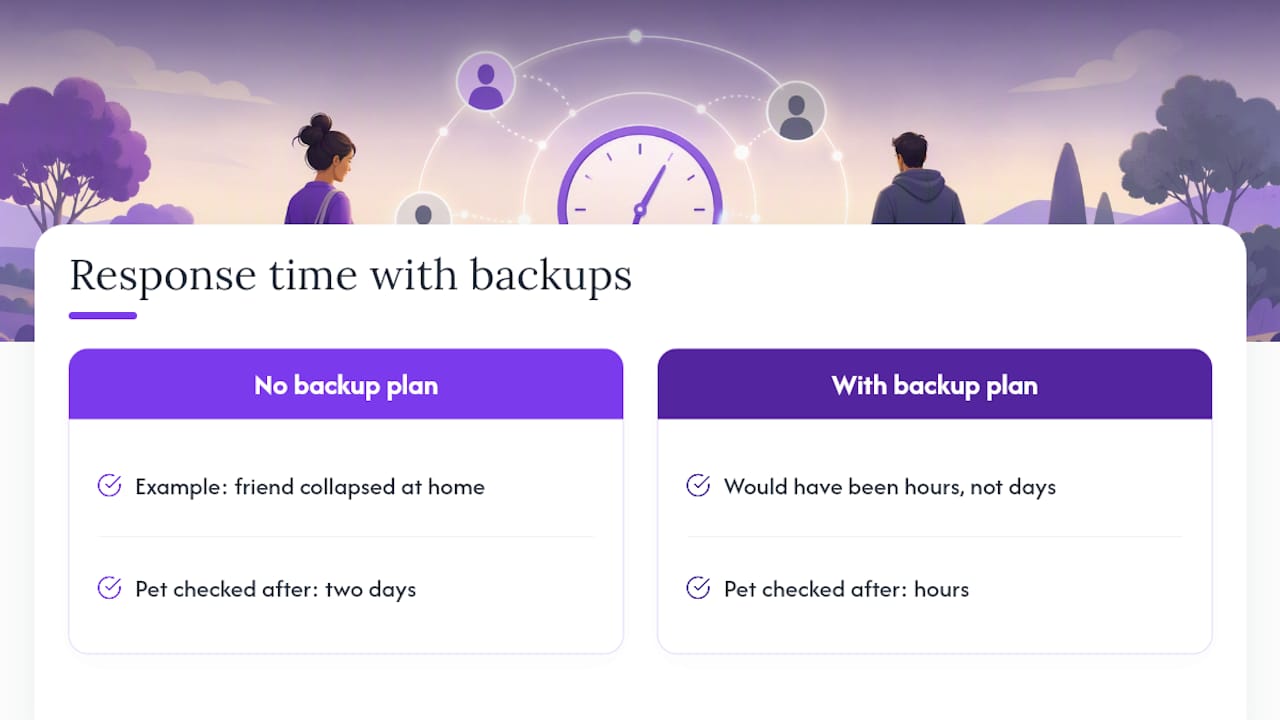
A written plan solves the “what to do” problem. It doesn’t solve “who finds out something’s wrong.” That’s the gap an automated wellness check-in closes: if you miss a scheduled check-in, the system notifies your emergency contacts along with your pet’s care details, cutting the delay from days to hours.
Look for a service that includes:
- Scheduled check-ins by text, call, or email.
- Automatic escalation to backup contacts if you don’t respond.
- Stored pet profiles with medical and care details.
- A generator for a printable pet care instruction card.
None of this replaces signed authorizations or a key in someone’s hand. It’s the trigger that gets your written plan into use.
Why I Treat This Planning Like Medicine for My Pet
A friend once collapsed at home; her dog went two days before anyone checked. A working backup plan would have meant hours, not days. Start with the three items in the BLUF today.
Add an Automated Safety Net to Your Written Plan
A written plan tells your backup what to do. It doesn’t tell them when. That’s the piece most solo and older pet owners miss, and it’s exactly what Mypetssafetynet was built to solve.
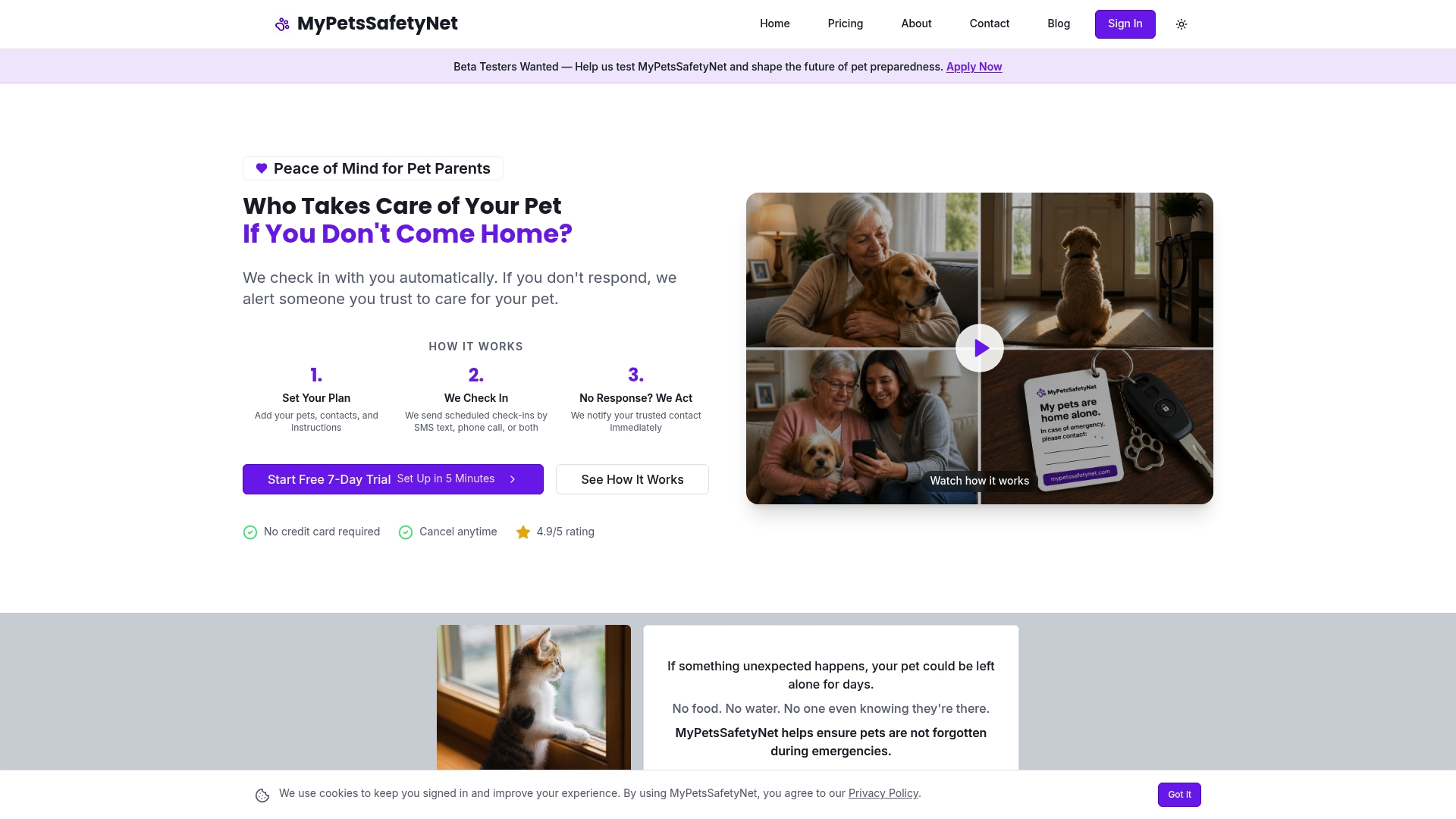
Mypetssafetynet sends you scheduled check-ins by text, call, or email. Miss one, and it automatically alerts your named emergency contacts with your pet’s stored care details, so your backup doesn’t find out by accident days later. The service manages profiles for up to five pets and three emergency contacts, and includes a free pet care instruction card you can fill out today. Try the free pet card as your first concrete step toward a plan that actually activates when you need it, rather than sitting in a drawer.
Sources
For deeper guidance beyond this plan, these resources cover the legal and medical details worth reading directly:
- Making a Plan for Your Pet | ASPCA
- Ensuring your pet is protected when you’re away | American Veterinary Medical Association
- Quick Guide to Planning Ahead for Your Pets | Triage Health
- Emergency preparedness for pets | CDC
- Protect Your Pets After You Are Gone - Gift Planning