Give a Neighbor a Key: How to Do It Safely for Your Pets

Yes, giving a spare key to a trusted neighbor is one of the most sensible things a pet owner can do. Emergency officials recommend it, and it beats hiding a key under a mat or in a planter. But a key alone doesn’t protect your pets. Your neighbor also needs to know what they’re allowed to do, where everything is, and how to find out something has gone wrong. This guide walks you through each step, calmly and in order.
TL;DR
- Leave your spare key with a trusted neighbor, not outside the house. The City of Boise Police Department gives this same advice.
- Choose someone nearby who already knows your pets and whom your pets know.
- Put the limits in writing: which door, which rooms, and what the key is for.
- Leave care instructions, vet details and payment wishes where your neighbor can find them.
- Plan how your neighbor will learn you need help. If you live alone, nobody may notice for a day or more.
Table of Contents
- Why a neighbor is the right person to hold a key
- How to choose the right neighbor
- Set clear boundaries for when they may enter
- Reduce the risk of a lost, copied or misused key
- What to leave so your neighbor can actually care for your pets
- What your neighbor should do in a pet emergency
- Ending the arrangement and getting your key back
- The gap a key can’t close
- How MyPetsSafetyNet fits with your neighbor plan
- A 20-minute checklist to finish today
- FAQ
- Sources
Why a neighbor is the right person to hold a key
When something happens to you, speed matters for your pets. A friend two hours away can’t feed a dog tonight. A neighbor can.
The Virginia Department of Agriculture and Consumer Services (VDACS) advises that you exchange keys with a trusted neighbor, friend or family member who can evacuate or care for your animals if you’re not home when disaster strikes. Best Friends Animal Society recommends local emergency contacts, preferably nearby neighbors, because they can be reached quickly and can get to your home and your pets.
The City of Boise’s police department goes one step further on the security side. It advises you to not hide spare keys outside and to leave them with a trusted neighbor. A hidden key is available to anyone who finds it. A key held by a person you chose is not.
That’s the case for doing it. The rest of this article is about doing it well.

How to choose the right neighbor
Trust is the first test, but it isn’t the only one. Run through this list before you ask.
- They’re home often enough to respond. A neighbor who travels every other week is a weak link.
- They’re comfortable with animals. VDACS says the caretaker should be comfortable and familiar with your pets, and your pets should be familiar with the caretaker. A dog that has never met your neighbor may bark, hide or bolt at the door during the worst possible moment.
- They’re willing to learn your routine. The American Veterinary Medical Association (AVMA) recommends a willing neighbor who has a house key, knows your animals, understands evacuation procedures and knows where supplies are kept. Access alone isn’t enough.
- They can be briefed ahead of time. The FDA’s guidance on pet disaster planning points to a prearranged caretaker who has your phone numbers and all the instructions needed to care for your pets. Someone you brief now won’t have to improvise later.
If no neighbor fits, you aren’t stuck. A friend or relative nearby can hold the key instead, and you can name more than one person. For how many people to name, see our guide for solo pet owners on choosing 2 to 4 emergency contacts.
Have a direct conversation first
Don’t hand over a key at the mailbox. Ask in person, explain what you’re asking, and give the person an easy way to say no. A short script works well:
“I live alone, and I’d like someone nearby who could check on my cat if something happened to me. Would you be comfortable holding a spare key? I’d write down exactly what I’m asking, so there are no surprises.”
A neighbor who hesitates is giving you useful information. Thank them and ask someone else.
Set clear boundaries for when they may enter
A neighbor’s willingness to help is not the same as permission to enter. A professional pet-sitter access checklist makes this point: define whether the neighbor may enter, hold a key, meet a contractor, or only verify conditions. Spell it out.
Write a one-page access note and give your neighbor a copy. The same checklist suggests recording these details:
- The exact door to use
- Primary and backup ways to get in
- Alarm instructions
- Whether any door locks automatically behind them
- Which rooms they may enter
- How to reach you
- A second person who can approve changes to access
Here’s a sample of how plain this can be:
| Question | Example answer |
|---|---|
| What is the key for? | Feeding and caring for Biscuit and Luna if I can’t |
| When may you enter? | If I haven’t answered a call or text and you’ve been told I’m unreachable |
| Which door? | Side door by the driveway |
| Which rooms? | Kitchen, living room, bathroom, bedroom where the cat carrier is kept |
| Who else can approve? | My sister, Dana, at the number on the card |
The point isn’t to sound formal. It’s to make sure both of you remember the arrangement the same way a year from now.
Reduce the risk of a lost, copied or misused key
A key held by a person is safer than a key hidden outside, but a few habits make it safer still.
- Don’t label the key with your address. Use a tag only you and your neighbor understand.
- Keep a record of who has keys. If you have more than one holder, write down each name.
- Share alarm details deliberately. The American Animal Hospital Association (AAHA) says home-access instructions should include alarm codes, how to arm and disarm the system, and the Wi-Fi password when relevant. Give those only to the person who needs them, and change any code after the arrangement ends.
- Use a backup key even with a keypad. The American Kennel Club recommends leaving a backup key with a neighbor even if your home uses a keypad, because keypad batteries can fail.
- Check your lease if you rent. One planning guide advises getting apartment-management permission for a caretaker to enter and care for pets. If you own, ask your insurance agent whether anything about key-holders affects your policy. Policies differ, so get the answer for yours.
If you live in an apartment, our apartment emergency plan for pets covers building-specific details like lobby access and management contacts.
What to leave so your neighbor can actually care for your pets
A key opens the door. Instructions let your neighbor do something useful once inside. Think of it as a short packet, kept somewhere findable.
The basics of daily care
VDACS tells owners to tell their pet-care buddy where the food is, where they normally feed the pets, and whether any medication is needed. Best Friends adds vaccination records, medication schedules, vet contact information, diet, walking routines and behavioral notes.
A practical checklist:
- Each pet’s name, species, age and a short description
- What and how much they eat, and when
- Medications, doses and where they’re stored
- Walking or litter routines
- Quirks: hides under the bed, bites when scared, slips out the door
- Where the leashes, carriers and supplies are
For wording that works under stress, see how to write pet care instructions for caregivers and feeding schedule documentation with paste-ready profile blocks.
Vet and medical details
AAHA recommends listing on an emergency contact card your primary veterinarian, the nearest 24-hour emergency clinic, ASPCA Poison Control and pet-insurance information.
The AVMA says to give your emergency decision-maker your contact methods, your vet’s details, medical conditions, treatment limits, euthanasia wishes, relevant insurance details and financial limits. It also says to clarify payment in advance, whether by reimbursement, insurance, a payment method on file or an emergency credit or debit card, and notes that you remain ultimately responsible for veterinary expenses. The FDA likewise says written instructions should include signed authorization for veterinary care and financial limits.

This is the part people skip, and it’s the part that decides whether a neighbor can say yes to treatment at 2 a.m. without worrying about the bill.
Where to keep it
Put the packet where it can be found even if your neighbor can’t reach you. Best Friends suggests keeping emergency contact information in your wallet and at home. Another guide suggests a note with caretaker names, phone numbers and the location of your pet portfolio in a visible place such as the refrigerator or front door.
Our guide to notifying neighbors about your pets in an emergency gives wording for the note and the conversation.
What your neighbor should do in a pet emergency
Give your neighbor a short, calm plan so they don’t have to guess.
- Call you first, then the second contact on your card.
- If a pet seems sick or has eaten something it shouldn’t, call your vet right away. The FDA says that if you can’t reach your regular veterinarian, contact a local emergency animal hospital or one of the two U.S. animal poison-control centers.
- For suspected poisoning, the FDA lists the ASPCA Animal Poison Control Center at 1-888-426-4435 and Pet Poison Helpline at 1-855-764-7661. Both charge a fee and give veterinary advice 24 hours a day, every day of the year. Put both numbers on your card.
- If a pet is missing, the ASPCA suggests searching the home and nearby hiding places, asking neighbors to check sheds and garages, and contacting animal control, vets, shelters and rescue groups. It also says lost-pet notices should list your number plus a second reachable contact’s number in case you can’t be reached.
Ending the arrangement and getting your key back
People rarely plan this part, and it’s why the search results are full of stories about keys that never came back. Agree on the ending at the start.
The professional access checklist suggests deciding in advance whether the key will be returned directly, placed in a designated lockbox, delivered by tracked service, or replaced or destroyed, and revoking any digital access when the arrangement ends.
In practice:
- Set a review date. Once a year, ask: “Are you still comfortable with this?”
- Ask for the key back in person when you move, when they move, or when the relationship changes.
- If the key doesn’t come back, a polite written request comes first. Rekeying the lock is the dependable fix, and it costs less than worrying.
- Change any alarm or door code you shared.
- Tell your other contacts so your list stays current.
The gap a key can’t close
Here is the problem most neighbor-key advice leaves out. Your neighbor can only use the key if they know something is wrong. If you live alone, a fall or sudden illness can go unnoticed. Your neighbor may not see you for days, and may assume you’re away or busy.
That’s why a key works best with a trigger: a way for someone to find out you haven’t checked in.
Our perspective
We built MyPetsSafetyNet around one worry: what happens to pets when their owner lives alone and can’t get to them. A key and a note on the fridge are good, and we recommend both. But they depend on someone noticing that something is wrong.
Our service sends you scheduled check-in messages by text, phone call or email, so you don’t need a smartphone. If you don’t respond, it follows the escalation steps you set and notifies your emergency contacts, giving them your pets’ care details so they can check on you and your animals.
We think of it as the missing half of the neighbor-key plan. The neighbor provides access, and the check-in provides the signal. We designed it for solo pet owners, older adults and people with disabilities who want their pets looked after no matter what.
MyPetsSafetyNet
How MyPetsSafetyNet fits with your neighbor plan
If you’ve chosen a neighbor, the next step is making sure they get the alert and the instructions without you having to do anything. MyPetsSafetyNet lets you:
- Set check-in schedules and countdown intervals that suit your routine
- Add up to 3 emergency contacts, including your key-holding neighbor
- Store profiles and care instructions for up to 5 pets
- Generate a pet care instruction card
The plan is $6.99 per month, and you can start with a 7-day free trial with no credit card required. Setup takes under 10 minutes.
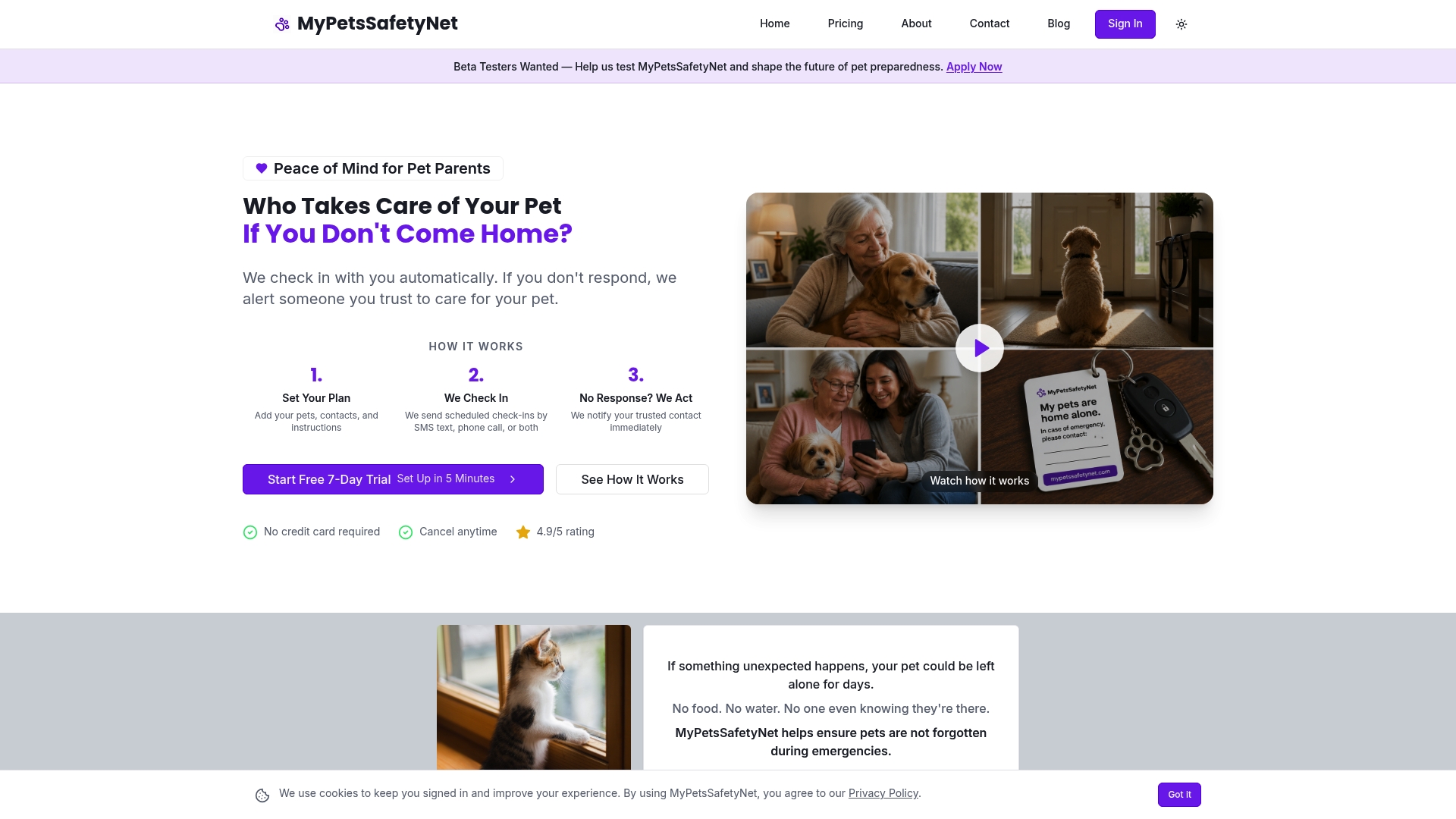
You can see everything on the MyPetsSafetyNet pricing page. If you’d like to know more first, our guide to an emergency pet care plan every owner needs is a good place to begin, and the pet caregiver roles guide helps you decide who does what.
A 20-minute checklist to finish today
- Pick one neighbor who lives close, knows your pets and is home often.
- Ask them in person and let them decline.
- Write the one-page access note: door, rooms, purpose, backup approver.
- Introduce your neighbor to your pets, if you haven’t. Our guide on introducing your pet to a caregiver can help.
- Assemble the care packet: food, meds, vet, 24-hour clinic, poison control, payment wishes.
- Put contact notes on the fridge and in your wallet.
- Set up a check-in so someone is alerted if you go silent.
- Put a yearly reminder on your calendar to review the arrangement.
If you’re short on time, the 15-minute pet disaster plan for solo owners is a quick companion, and the pet sitter communication plan helps when you travel.
FAQ
Is it a good idea to give a neighbor a key to my house?
For most pet owners, yes, if you trust the person. Officials recommend leaving a key with a trusted neighbor rather than hiding one outside. Put the limits in writing, so you both know when and why they may enter.
What should I tell my neighbor when I give them a key?
Tell them which door to use, which rooms they may enter, and what the key is for. Add alarm instructions, where the pet food and medication are, your vet’s number and a second person to call. Give them your contact details too, in case they need to reach you.
Will my neighbor be responsible for vet bills?
No, the AVMA says you remain ultimately responsible for veterinary expenses. Settle payment ahead of time, whether through insurance, a card on file or reimbursement, and write down any spending limit and your treatment wishes. That way your neighbor can act without worrying about the cost.
How do I get my key back if my neighbor won’t return it?
Start with a friendly written request and a clear date. If it still doesn’t come back, rekey the lock and change any alarm codes you shared. Agreeing on how the key will be returned when you first hand it over avoids most of these problems.
What if my neighbor doesn’t know I need help?
That’s the most common gap for people who live alone. A scheduled check-in service can notify your emergency contacts if you don’t respond, so they know to use the key and look after your pets.
Sources
- Animal Owners, VDACS
- Protecting Your Home, City of Boise
- Disaster Preparedness Series, AVMA
- Pet Emergency and Disaster Preparedness, Best Friends Animal Society
- Take Care of Your Pets Before Disaster Strikes, FDA
- Who Do You Call if You Have a Pet Emergency? FDA
- Secure Pet Sitter Home Access: Professional Entry Protocols
- Preparing for the Unexpected: Essential Pet Sitter Instructions, AAHA
- Pet Sitter Checklist: How to Prepare Your Home, American Kennel Club
- Ensuring your pet is protected when you’re away, AVMA
- Finding a Lost Pet, ASPCA
- Quick Guide to Planning Ahead for Your Pets, Triage Health