Pet Sitter Door Codes: 6 Details, One Tested Backup

The safest way to hand off your home to a pet sitter is to give them a unique, time-limited code or dedicated app login, never your master code, paired with a tested physical-key backup or a nearby trusted neighbor. This setup lets you revoke access instantly, survives a dead keypad battery or dropped Wi-Fi signal, and keeps your main security credentials private.
TL;DR:
- Set the lock’s access window to the booking dates, enable entry and exit alerts, review the log after visits, and delete credentials when the booking ends.
- Give the sitter instructions for alarm errors, feeding amounts, medication timing and dosage, emergency contacts, and water shutoff and circuit breaker locations.
- Put sitter devices on a guest network, change default router credentials, enable two factor authentication, and share codes through a secure note rather than text.
- Before departure, have the sitter operate the lock while you are present, show the spare key location, and confirm a trusted neighbor can respond.
Table of Contents
- Pet Sitter Access Checklist: What to Share Before You Leave
- Smart-Lock Best Practices Instead of Sharing Your Master Code
- Network and Device Security Basics for Sharing App Access
- Step-by-Step Workflow: Create, Share, Verify, Revoke
- Backup and Emergency Access: What Happens If the Plan Fails
- Three Rules Worth Repeating to Every Sitter
- Where MyPetsSafetyNet Fits Into Your Sitter Plan
- FAQ
- Sources
Pet Sitter Access Checklist: What to Share Before You Leave
A clear checklist takes the guesswork out of sitter instructions and protects both your home and your pets. We recommend building a printed or digital sheet the sitter can reference without texting you every few hours.
Include these items every time:
- Alarm codes with arm and disarm steps, plus what to do if the alarm triggers accidentally
- The door or garage keypad code, noted separately from any shared gate or community access code
- The location of a spare physical key and the name and number of a backup neighbor or landlord
- Vet and emergency clinic contacts, along with feeding amounts, medication timing, and dosage
- Notes on home systems like the water shut-off valve, circuit breaker panel, and thermostat settings
- Clear guidance on when to call you directly versus when to contact your designated emergency contact
The AKC recommends leaving alarm codes, water shut-off and circuit breaker locations, and detailed feeding and medication instructions for any sitter staying in your home. Pairing that checklist with a paste-ready feeding and medication template saves you from rewriting instructions every time you travel.
Smart-Lock Best Practices Instead of Sharing Your Master Code
Handing a sitter your master code means they can enter anytime, forever, unless you remember to change it. A smart lock lets you grant exactly the access they need and nothing more.
- Create a unique code or a dedicated app user for each sitter rather than reusing a shared or master credential.
- Set a scheduled or time-limited access window that matches the actual dates of the job.
- Turn on entry and exit notifications so you get an alert each time the door opens.
- Check the access log after each visit to confirm the sitter came and went as planned.
- Delete the sitter’s code the day the job ends, not “whenever you remember.”
According to Guardian Alarm’s guide to smart locks for pet sitters, unique user codes, time-restricted access, and real-time notifications let owners grant and revoke sitter access without ever sharing a master credential. Pairing the code with a visible camera or doorbell, where privacy rules and local law allow it, gives you an extra layer of confirmation beyond the lock’s own log.
Batteries die, and Wi-Fi drops out at the worst possible moment. Keep a tested physical spare key with a trusted neighbor as your fallback, and check the lock’s battery level before every booking, not after it fails.
Pro Tip: Test your smart lock’s backup key or manual override yourself before the sitter’s first visit, not during it.

Network and Device Security Basics for Sharing App Access
If your smart lock, camera, or pet-care app connects to your home Wi-Fi, a sitter’s phone touching that network is a bigger deal than it sounds. A few basic habits keep that access from becoming a liability.
- Set up a separate guest Wi-Fi network for any sitter device, rather than giving out your main network password.
- Change the router’s default admin username and password before you ever add a sitter or guest device.
- Avoid texting codes or passwords in plain messages; use a secure note or an app built for sharing access.
- Review your smart lock’s user list and connected app permissions after each sitter’s job ends, removing anyone who no longer needs access.
The FTC advises changing default router credentials, enabling two-factor authentication, and isolating guest devices on a separate network to protect your connected home devices. Two-factor authentication is one of the more reliable ways to add protection beyond a password alone, according to the FTC, so turn it on for your lock and camera apps wherever it is offered.
Step-by-Step Workflow: Create, Share, Verify, Revoke
A repeatable routine turns “hope the sitter figures it out” into a process you can trust every time you travel.
- Create a sitter-specific code or temporary app user and set a time window that matches the job’s actual dates.
- Share the code through a secure note or app, and meet the sitter in person or by video to confirm their identity before day one.
- Verify on the first visit by watching them use the code themselves and showing them exactly where the spare key lives.
- Revoke access the moment the job ends: delete the code, change any shared passwords, and confirm the deletion went through.
Skipping the verification step is where most access problems start. A sitter who struggles with the keypad on day one will struggle again on day ten, so catch it early while you’re still there to help.
Backup and Emergency Access: What Happens If the Plan Fails
Technology fails at the worst times, so a backup plan matters as much as the code itself. Build in at least one human backup and keep your emergency documentation current, not something you wrote two years ago and forgot about.
- Give a trusted neighbor or friend a tested physical key, independent of any smart-lock code.
- Write down who has authority to make pet-care decisions if you and the sitter are both unreachable.
- Keep emergency contact numbers current and confirm each contact still agrees to help before you travel.
- Test the full chain, lock, key, and contact, at least once before a trip, not during one.
The ASPCA recommends planning feeding, medication, and emergency contact details in advance as core responsible pet care. Even the best smart lock cannot call anyone if you collapse at home alone; that’s a gap a human backup closes and an automated service can close faster. Scheduled wellness check-ins notify your named emergency contacts with full pet care details if you ever miss a response, which shortens the delay between something going wrong and someone actually checking on your pets.
Pro Tip: Run a test check-in with your emergency contacts before you travel so you know they will actually respond.
Three Rules Worth Repeating to Every Sitter
Checklists get long, but the habits that actually prevent problems boil down to three rules. Give each sitter one unique, scheduled code, never a shared or master one. Test that access in person before you ever rely on it from a distance. Revoke or change the code the moment the arrangement ends, every time, without exception.
— MyPetsSafetyNet
Where MyPetsSafetyNet Fits Into Your Sitter Plan
A sitter-specific code and a spare key solve access. They don’t solve what happens if you’re the one who becomes unreachable. We built this to close that gap: scheduled SMS, phone, or email check-ins that notify your named emergency contacts with full pet care instructions if you ever fail to respond, no smartphone required on your end, and setup takes less than 10 minutes.
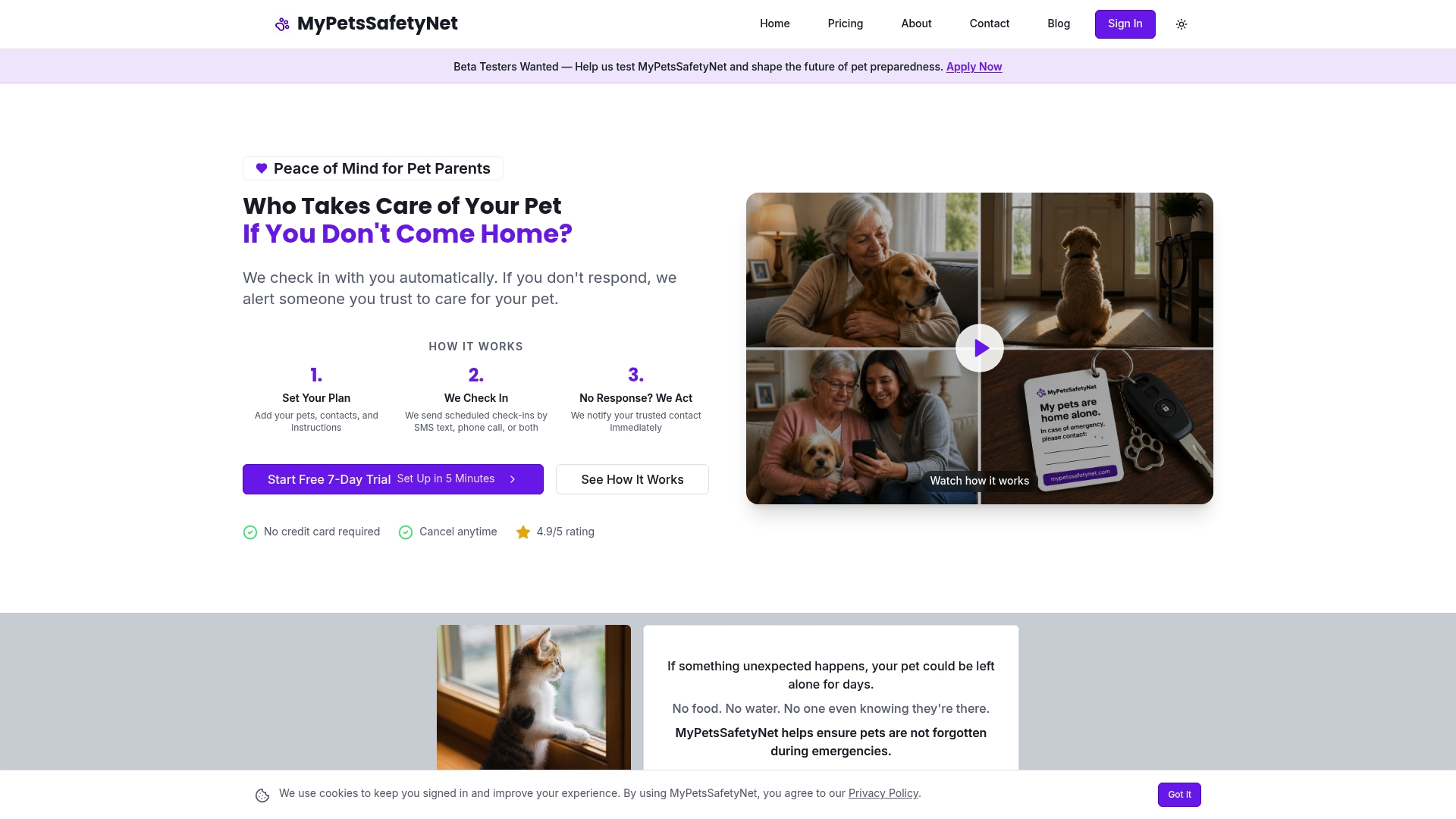
- Review our Monthly plan at $6.99 per month and start a 7-day free trial with no credit card required.
- See how to add sitter access alongside wellness checks in about 10 minutes.
- Print a free pet card listing emergency contacts and care details for your sitter.
Before your next trip, run a test check-in and confirm your emergency contacts actually respond, that single step catches gap a code and key alone never will.
FAQ
What message should I send to thank a pet sitter?
A short, specific note works best: mention something concrete they did well, like keeping to the feeding schedule or sending photo updates. Thanking them promptly and confirming payment or a tip, where applicable, also helps keep a reliable sitter available for next time.
What are the core responsibilities of a house sitter?
A house sitter is generally expected to maintain your pet’s feeding, medication, and exercise routine, keep the home secure, and handle basic upkeep like mail and plants. The ASPCA frames proactive planning around feeding, medication, and contact information as the core of responsible care while you’re away.
What should I check before choosing a pet sitter?
Confirm references, ask how they would handle a pet emergency, and watch how they interact with your pet before committing. Giving them a tested, revocable access method rather than your master code is also a sign of a well-run arrangement on your end, not just theirs.
What do I need to tell my dog sitter?
Your sitter needs feeding amounts and timing, any medication instructions, vet and emergency clinic contacts, and clear entry instructions including where the spare key is kept. The AKC also recommends sharing alarm codes and the locations of your water shut-off and circuit breaker in case of a home emergency.
How often should I change a pet sitter’s door code?
Change or delete the code as soon as that specific job ends, rather than on a fixed schedule. Yardlock’s guidance on keyless locks also recommends avoiding obvious sequences like birthdays and rotating the code whenever someone’s access should end.
Sources
- How to select a pet sitter | AKC
- Securing your internet-connected devices at home | FTC
- Pet sitter safety: what to know before you go | ASPCA
- Pet Sitter Smart Lock Guide | Guardian Alarm
- How to let the dog sitter in without giving away a key | Yardlock