Power Out? Keep Both Digital and Paper Pet Plans Ready

Keep both. FEMA, the ASPCA, and the Humane Society all point toward paper and electronic copies of your pet’s emergency-care instructions, and we built MyPetsSafetyNet to make the digital half easy. Paper wins when someone must act on-site or the power is out. Digital wins for remote sharing and backup. Pack a portable charger and a signed vet authorization form to close the gaps.
TL;DR:
- Keep a one page wallet card with critical facts, and store the full plan with medical details, routines, contacts, and caregiver names.
- Store the plan as a PDF in cloud storage and offline on your phone, encrypt a drive backup, and limit edit access to its maintainers.
- Name multiple caregivers, assign final decision authority in writing, and give them keys, payment arrangements, and clear directions for locating supplies before an emergency.
- Review the plan twice a year, refresh photos and veterinary records every six to twelve months, and test caregiver access in an annual drill.
- Automatic alerts suit solo owners and people with health concerns; the service costs $6.99 monthly and offers a free trial for seven days.
Table of Contents
- Which format should you use, and when?
- What belongs in every pet emergency-care plan
- How to store paper copies so they survive and get found
- Digital best practices: formats, backups, and access
- Handing off to caregivers: authorization and legal essentials
- Keeping your plan current: updates and drills
- Security and privacy for digital pet plans
- The risks of relying only on paper
- Connecting your plan to faster notifications and access
- What a digital pet plan service costs
- Our view: paper and digital are teammates
- A simple way to add automatic alerts to your plan
- FAQ
- Sources
Which format should you use, and when?
Think in scenarios, not preferences. The right format depends on who needs your pet’s information and how fast they need it. Ready recommend keeping both paper and electronic copies, with paper records stored in a waterproof container.
- Paper first when someone must act on-site, such as a fire or a fast evacuation, or when the power is down. The Humane Society also stresses printed copies for caregivers.
- Digital first when a caregiver lives elsewhere, when several people need access, or when paper is lost or damaged.
- The simple combo: a wallet card, a removable notice on your door, and a cloud copy.
- If you live alone, add an automated wellness-check or notification plan so someone is alerted if you can’t respond.
If you have a little time today, do three things. Print one waterproof copy of your pet’s key facts. Save a single combined PDF to the cloud. Send the link to two trusted contacts.
What belongs in every pet emergency-care plan
Whether you carry a card or keep a profile online, the content is the same. Build it once, then use it in both formats. Our guide to writing pet care instructions for caregivers offers a template you can copy.
- Identification: current photos, your pet’s microchip number, registration numbers, and proof of ownership.
- Medical details: conditions, medication names, exact dosages and how often they’re given, allergies, vaccination records, and your veterinarian’s contact information. The ASPCA checklist lists vet contacts, medical records, and microchip data among the essentials.
- Care instructions: feeding schedule, exercise routine, behavior notes, preferred carrier, and any special handling. Best Friends Animal Society recommends writing important information down in advance.
- Logistics and authorization: a signed veterinary treatment authorization form, payment arrangements, where supplies are stored, and a list of trusted caregivers.
- Local contacts: emergency boarding options, nearby shelters, and neighbors who can reach your pet quickly.
Pro Tip: Keep a one-page wallet card with only the critical facts, and a full binder or PDF for caregivers and vets. The card gets read in a hurry; the binder answers the follow-up questions.
For a deeper look at organizing these papers, see our pet care emergency document essentials.
How to store paper copies so they survive and get found
A paper plan only works if it’s visible and intact. Best Friends advises packing supplies, medicines, and documentation in a waterproof container close to an exit, and we’d add a few habits that make helpers’ lives easier.
- Keep one sealed set in a waterproof container near your main exit and a second set in your grab-and-go pet kit.
- Carry a wallet card with your emergency caregivers’ names and numbers.
- Post a removable notice on a door or window. The ASPCA suggests visible emergency notices, and removable ones let you take them down once you’ve evacuated.
- Leave a copy with a trusted neighbor or building manager, and label where carriers, medications, and food are kept.
- Write a “last updated” date on every page so a rescuer knows the record is current.
Digital best practices: formats, backups, and access
A good digital plan is simple enough to open on a stressed-out phone. Use PDF for medical records and JPEG or PNG for photos, then combine everything into one PDF so nobody has to hunt through folders.
FEMA’s pet preparedness guide tells owners to keep electronic copies of records alongside waterproof paper ones. Redundancy is the point, so build it in:
- Store files in a cloud service and on an encrypted portable drive. Never rely on a single device.
- Save an offline copy to your phone so you can open it without a signal.
- Keep a portable charger in your evacuation kit. ASPCA guidance notes that devices may be unreachable during outages.
- Share view or edit links with two trusted caregivers, and note who has access and how to reach them.
Pro Tip: Name the file the way a stranger would search for it, like “Biscuit emergency care plan,” and put a short caregiver contact list on the first page.
Handing off to caregivers: authorization and legal essentials
The biggest weakness in any plan is access. As The Humane Society of the United States points out, if you’re incapacitated, others can’t use information they can’t reach. A caregiver needs keys, clear written instructions, and the authority to act.
- Appoint more than one caregiver and state in writing who has final decision-making authority. The AVMA recommends this to avoid dangerous delays in veterinary care. Our guide to pet caregiver roles shows how to divide the work.
- Sign a veterinary treatment authorization form, give copies to your vet and caregiver, and settle payment arrangements ahead of time. Here is how a veterinary consent form works.
- Add alternate contacts to your microchip registration and give your vet your current emergency contacts.
- Practice the handoff. Show caregivers where supplies live, how to open your digital folder, and run a test notification.
Keeping your plan current: updates and drills
A stale plan can do harm, such as listing a retired medication or a disconnected phone number. Treat maintenance like a smoke-detector check.
AVMA guidance on pets and disasters emphasizes collecting medical and ownership records and pre-arranging authorized agents. We suggest reviewing twice a year: check medication and food expiration dates, and refresh photos and vet records every 6–12 months.
Once a year, run a drill. Notify your caregivers, test their access to your cloud files, and confirm they know where keys and carriers are. Keep a visible “last updated” date on both formats, plus a short change log for big updates like a new diagnosis or dosage.
Security and privacy for digital pet plans
A pet plan is more personal than it looks. It holds your name, address, phone numbers, your vet’s details, and often a note saying you live alone. Protect it like any other sensitive file.
- Lock the front door. Use a strong, unique password and turn on an additional sign-in verification method for your cloud account.
- Share narrowly. Use view-only links for people who just need to read, and edit access only for the one or two people who maintain the plan. Avoid posting links in public groups or social media.
- Encrypt the backup. If a portable drive is lost, encryption keeps strangers out.
- Trim what you store. Include what a caregiver needs, such as medications, contacts, and routines, and leave out financial account numbers.
- Review who has access. When a caregiver changes, remove the old link and issue a new one.
For any service that holds your data, look at how it describes its security and who can see your information. We use industry-standard security at MyPetsSafetyNet, and your pet profile information goes to the contacts you name, not to emergency services.
The risks of relying only on paper
Paper is dependable until it isn’t. A binder sits in one place, and one place can burn, flood, or be locked behind a door your caregiver can’t open. FEMA and the other agencies pair waterproof paper with electronic copies for exactly this reason.
Here are the common ways a paper-only plan fails, and how to fix each one:
- Damage or loss: water, fire, or a misplaced folder. Store sealed copies in a waterproof container and keep a second set elsewhere.
- Out-of-date information: pages written years ago. Date every page and review twice a year.
- Wrong location: the plan is at your house, but the caregiver is across town. Keep a digital copy they can open anywhere.
- No one knows it exists: your information is useless if nobody looks for it. Tell caregivers where it is, and leave a removable notice on your door.
- No alert when you can’t speak up: paper can’t call anyone. Add a notification plan so your contacts hear about a problem early.
Paper is a strong first layer. It just shouldn’t be your only one.
Connecting your plan to faster notifications and access
A plan helps most when the right people know to open it. Today that mostly means notifying your named contacts, not plugging into responder databases, so be cautious about any service that promises direct links to emergency dispatch.
What works reliably is a short chain: a trigger, a notification, and instant access to details. Our service sends scheduled SMS, phone, or email check-ins. If you don’t respond, we notify your emergency contacts and include your pet care details so they can act right away. It works with any phone, so no smartphone is required.

You can also build a lighter version yourself. Put a wallet card in your purse, a removable notice on your door, and a shared folder with two caregivers. Then agree on a check-in routine so they know when to worry. The emergency pet care overview on our blog walks through building that routine. Whatever you choose, test it the same way you’d test a smoke alarm.
What a digital pet plan service costs
Free templates and a DIY folder cost nothing but time, and they’re a good start. A service adds the part that’s hardest to do yourself: someone, or something, noticing when you don’t check in.
We offer one plan, Monthly, at $6.99 per month, with a 7-day free trial and no credit card required. It includes customizable countdown intervals, an escalation workflow, and a pet care instruction card generator.
Think about value in terms of the problem it solves. A paper binder protects your information. A cloud folder shares it. A subscription adds automatic alerts to named people, with your pet’s care details attached, when you can’t respond. For people who live alone, have health concerns, or travel solo, that missing alert is often the whole reason to pay. If you’re comfortable running your own check-in routine with friends, you may not need one, and the free steps above will still make your plan stronger.

Our view: paper and digital are teammates
We don’t see paper and digital as rivals. Paper is something a neighbor can read in a hurry. Digital is what a caregiver three states away can open on a phone. Neither tells anyone that something has gone wrong.
That third piece is why we built MyPetsSafetyNet. We send emergency contact notifications, and we provide a pet care instruction card generator to help your contacts know what to do. Automated check-ins matter most for solo owners, older adults, and anyone with a health condition. Used alongside your paper and digital records, they turn a good plan into one that actually reaches someone.
— MyPetsSafetyNet
A simple way to add automatic alerts to your plan
If you’ve built your paper card and digital folder, we can handle the next step: making sure your contacts hear about a problem. MyPetsSafetyNet sends wellness check-ins, notifies the people you name if you don’t respond, and shares your pet’s care details with them. It suits solo pet owners and anyone with health concerns, and it complements your own records instead of replacing them.
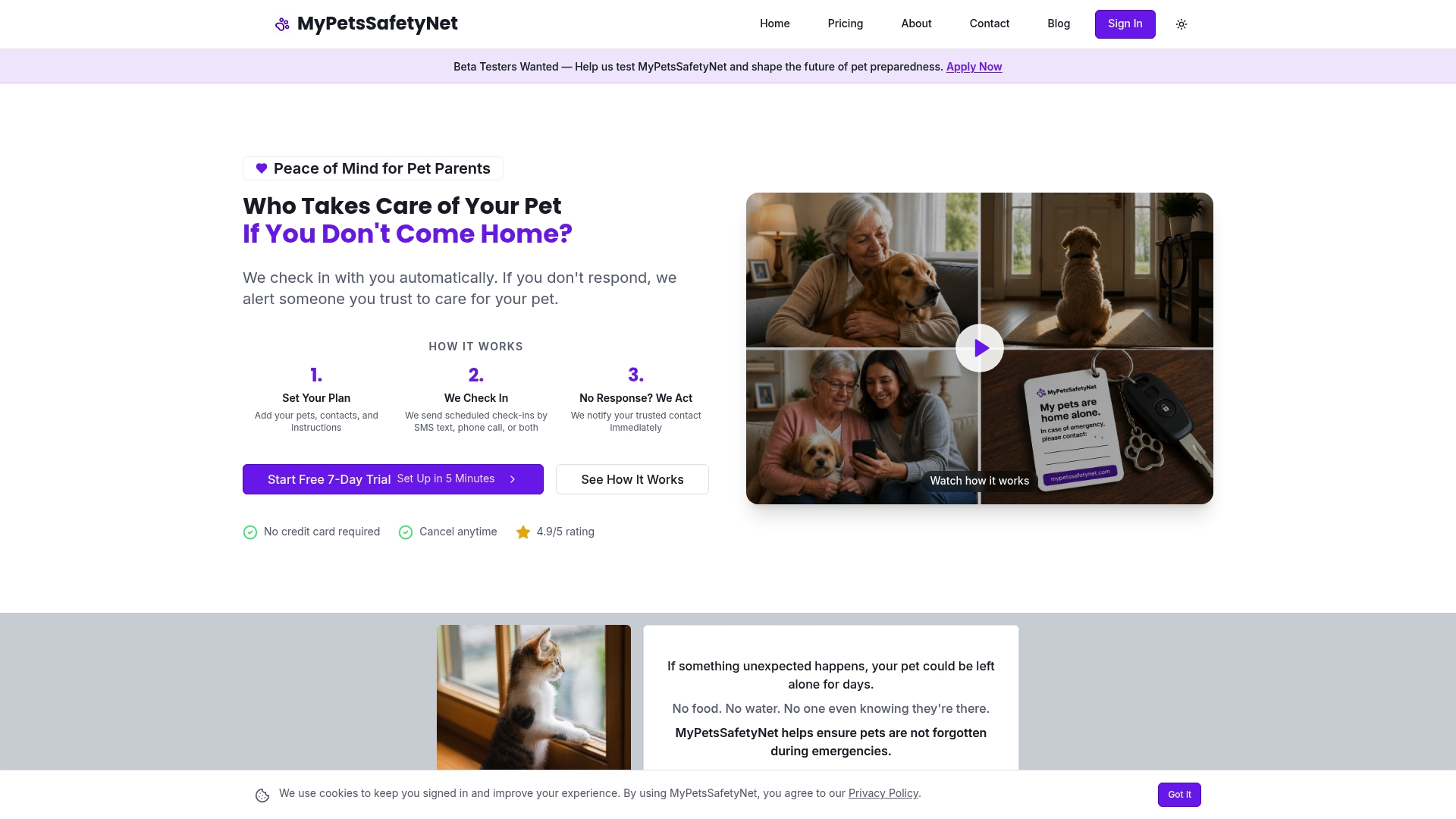
- Scheduled check-ins by SMS, phone, or email, with no smartphone required
- Notifications to your emergency contacts, with pet profiles
- A pet care instruction card generator for your paper copy
See our pricing and 7-day free trial, or start with the pet card to see how it fits your plan.
FAQ
Should I keep my pet plan on paper or digital?
Keep both. FEMA and Ready.gov recommend paper and electronic copies because each covers the other’s weakness. Paper works without power, and digital can be shared with anyone, anywhere.
What should a pet emergency-care plan include?
It should include photos, microchip and registration details, medications with exact dosages, vaccination records, vet contacts, feeding and behavior notes, and your caregivers’ names. Add a signed veterinary treatment authorization so someone can approve care when you can’t.
How do I protect my digital pet plan?
Use a strong password with an additional sign-in verification method, and share view-only links with only the people who need them. Keep an encrypted backup and review who has access whenever a caregiver changes.
How often should I update my pet plan?
Review it twice a year, checking medication and food dates, and refresh photos and vet records every 6–12 months. Run a drill once a year to confirm caregivers can open your files and find supplies.
Do I need a portable charger?
Yes. ASPCA guidance recommends one so you can reach electronic records during an outage. Save offline copies too, in case there’s no signal.
Sources
- Ready
- Prepare Your Pets for Disasters
- Disaster Preparedness Checklist for Pet Safety
- Pet disaster preparedness