A Veterinary Consent Form Keeps Your Pet Safe When You Can’t Speak Up
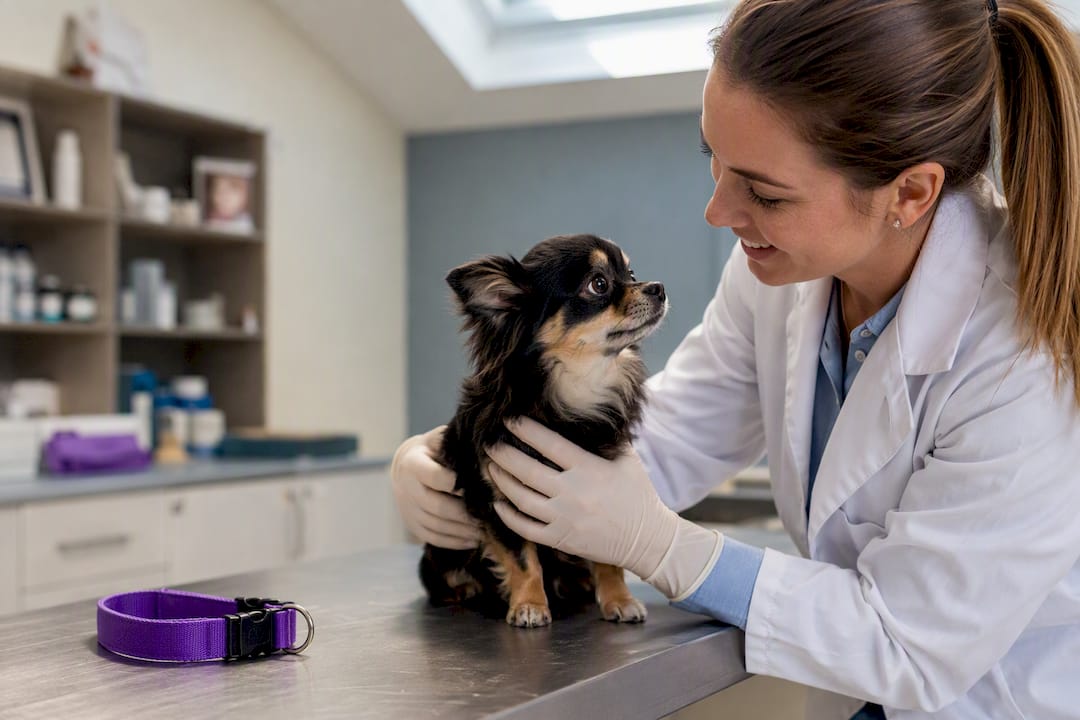
A veterinary consent form, also called an emergency veterinary authorization or caregiver consent form, lets a person you name get your pet treated if you’re incapacitated or unreachable. It gives your agent the legal footing to say yes to care and gives the clinic the documentation it needs to act without waiting on you.
The single next step matters more than the theory: fill in the critical fields, sign it, and hand a copy to your agent and your regular vet today. Don’t wait for a “someday” project weekend.
- Name at least one agent with a working phone number
- Write down your pet’s medical basics and current medications
- Set a spending limit you’re actually comfortable with
- Sign and date it, then make three copies
A free pet card from MyPetsSafetyNet can hold this contact and authorization information in one place your caregiver can pull up instantly.
Key Takeaways
A signed emergency veterinary authorization form works because it names who can act, sets clear limits, and reaches the right people before a crisis forces a guess.
| Point | Details |
|---|---|
| Sign it today | Fill critical fields, sign, and give copies to your agent and vet now, not later. |
| Name final authority | If you list multiple agents, state clearly who decides when they disagree. |
| Write exact dollar limits | Use a specific spending cap instead of vague language like “reasonable amount.” |
| Spell out euthanasia wishes | Use explicit yes or no wording; blank checkboxes create dangerous ambiguity. |
| Back it up digitally | MyPetsSafetyNet’s free pet card and wellness check-ins surface your form and agent details fast. |
Table of Contents
- What Goes On A Veterinary Consent Form
- Should You Name One Agent Or Several?
- How Do You Set A Spending Limit Clinics Will Respect?
- Why Vague Euthanasia Instructions Put Your Pet At Risk
- What Can A Vet Do Without Your Signed Consent?
- Where Should You Keep Copies Of The Signed Form?
- Copy This One-Page Emergency Authorization Checklist
- Get Your Emergency Contact Ready To Act Fast
- Why We Built This Around Solo Pet Owners
- How MyPetsSafetyNet Backs Up Your Signed Form
- Sources
What Goes On A Veterinary Consent Form
A clinic staffer scanning your form during a crisis needs specific answers, not vague reassurances. The AVMA recommends a written authorization that spells out contact details, medical conditions, spending limits, treatment preferences, and euthanasia instructions, all in one document. Here’s what belongs on it:
- Your contact info. List your cell, a secondary number, and email. Redundancy here saves time when a clinic is trying to reach you first.
- Your agent’s details. Full name, relationship to you, phone number, address, and whether they hold final authority.
- Pet identification. Name, species, breed, age, microchip or ID number, known allergies, and current medications.
- Medical history. Chronic conditions, past surgeries, and anything your vet would want flagged immediately.
- Specific authorizations. What your agent can approve (surgery, anesthesia, diagnostics) and anything you explicitly want declined.
- Financial limits. A dollar cap plus insurance information and how the bill gets paid.
- Euthanasia and aftercare wishes. Stated plainly, not left blank.
- Signature and date. Undated forms raise questions clinics don’t have time to sort out.
Pro Tip: Keep a digital photo of the signed form on your phone and in a shared cloud folder your agent can access. A crumpled paper copy in a drawer does nothing during a 2 a.m. emergency.
Should You Name One Agent Or Several?
Naming more than one agent adds backup, but it can also create confusion if two people show up with different opinions. Give one person broad authority when you trust them completely and want the clinic to move fast: “I authorize [Agent Name] to approve any treatment deemed necessary by the attending veterinarian.” Give limited authority when you’d rather they call you first for anything beyond stabilization.
If you name backups, the AVMA’s guidance is clear on one point: specify who has final decision power. Without that line, two well-meaning family members can end up disagreeing at the worst possible moment.
- State one primary agent and one or two backups, in order
- Write “Agent 1 has final authority; Agent 2 acts only if Agent 1 is unreachable”
- Avoid open-ended phrases like “either agent may decide” without a tiebreaker
Learn more about structuring these relationships in pet caretaker agreements for emergency care.
How Do You Set A Spending Limit Clinics Will Respect?
Money is where good intentions fall apart if the form is vague. You have three realistic options: a per-incident cap, a per-day cap, or “no limit” if your finances allow it. Most solo owners land on a per-incident number set at a specific dollar amount appropriate for your finances, because it forces a real conversation instead of a blank check.
- Write the cap as a specific dollar figure, not “reasonable amount”
- List your insurance provider and policy number directly on the form
- Add an estimate clause: “Contact agent for approval above [$amount]; proceed with stabilization regardless”
- Decide in advance whether additional spending needs a phone call or can be approved on the spot
Why Vague Euthanasia Instructions Put Your Pet At Risk
A checkbox left blank is the worst possible outcome for an end-of-life decision. Explicit yes or no answers protect your agent from guessing and protect the vet from acting on assumptions. Vague language like “do what’s best” sounds compassionate but leaves your agent guessing under pressure.
- “I authorize euthanasia if the attending veterinarian determines recovery is unlikely or suffering is severe.”
- “I do not authorize euthanasia without direct contact with me or my named agent.”
- “I authorize euthanasia only after [Agent Name] is consulted, if reachable within 2 hours.”
State your aftercare preferences (burial, cremation, return of remains) in the same section so your agent isn’t making that call alone, either.
Pro Tip: Discuss your euthanasia wording with your regular vet once. A five-minute conversation now prevents a devastating misunderstanding later.
What Can A Vet Do Without Your Signed Consent?
Veterinarians can and will perform life-saving stabilization in a true emergency without written consent. But for urgent, non-fatal situations, a broken leg, a blocked bladder, surgery and anesthesia generally require documented consent first, which is exactly where delays happen without a form on file.
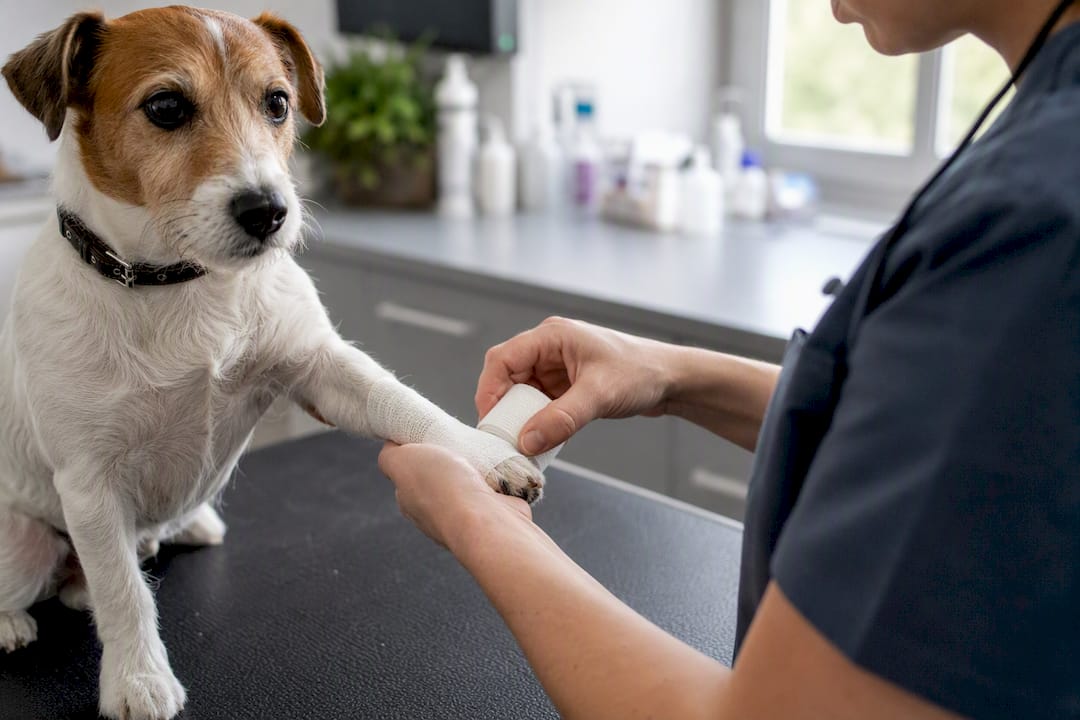
Rules on written consent vary somewhat by state, but a signed authorization helps in every jurisdiction because it proves you communicated your wishes in advance. JAVMA and AAVSB guidance treats documented informed consent as more than a formality: it’s a record of options, risks, and prognosis that protects both you and the clinic and supports continuity of care if your pet moves between facilities.
Where Should You Keep Copies Of The Signed Form?
A signed form does nothing sitting in a folder no one can find. Give a copy to your regular vet and to your preferred emergency clinic, since the AVMA specifically recommends sharing signed authorizations with both.
- Hand a paper copy to your primary agent and at least one backup
- Store a digital photo in your phone and a shared cloud folder
- Use a wallet card or a free pet card that surfaces your agent’s contact info and authorization details in seconds
Copy This One-Page Emergency Authorization Checklist
Order matters here, since clinic staff process forms fastest when the layout matches how they think.
- Owner name and multiple contact numbers
- Agent name(s), relationship, phone, and final authority statement
- Pet name, species, breed, age, microchip number
- Medical history summary and current medications
- Specific authorizations and declinations
- Spending limit: “Not to exceed $[amount] without agent approval”
- Euthanasia instruction: written out in full, no checkboxes
- Signature and date
Notarization isn’t required by most clinics, though some owners choose it when they expect a contested decision. Attach a photocopy of vaccination records or insurance cards to the back page.
Get Your Emergency Contact Ready To Act Fast
Walk your agent through the form before there’s ever an emergency, not during one.
- Explain what the clinic will ask for: ID, the signed form, and payment method
- Give them a records snapshot and payment access if you’ve agreed to that
- Tell them stabilization can happen immediately, but surgery usually needs their signature too
Why We Built This Around Solo Pet Owners
Most consent form advice assumes a spouse or roommate is nearby to make calls. We didn’t. Solo pet owners need a plan that works when no one else is home, which is why the free pet card and wellness check-ins exist alongside this template.
Use the checklist above, then put the free pet card behind it as backup.
How MyPetsSafetyNet Backs Up Your Signed Form
A signed authorization is only useful if someone reaches your agent in time to use it. That’s the gap MyPetsSafetyNet closes. Our free pet card stores your agent’s contact info, your pet’s medical basics, and your authorization details in one place a caregiver can pull up on their phone instead of digging through a filing cabinet.
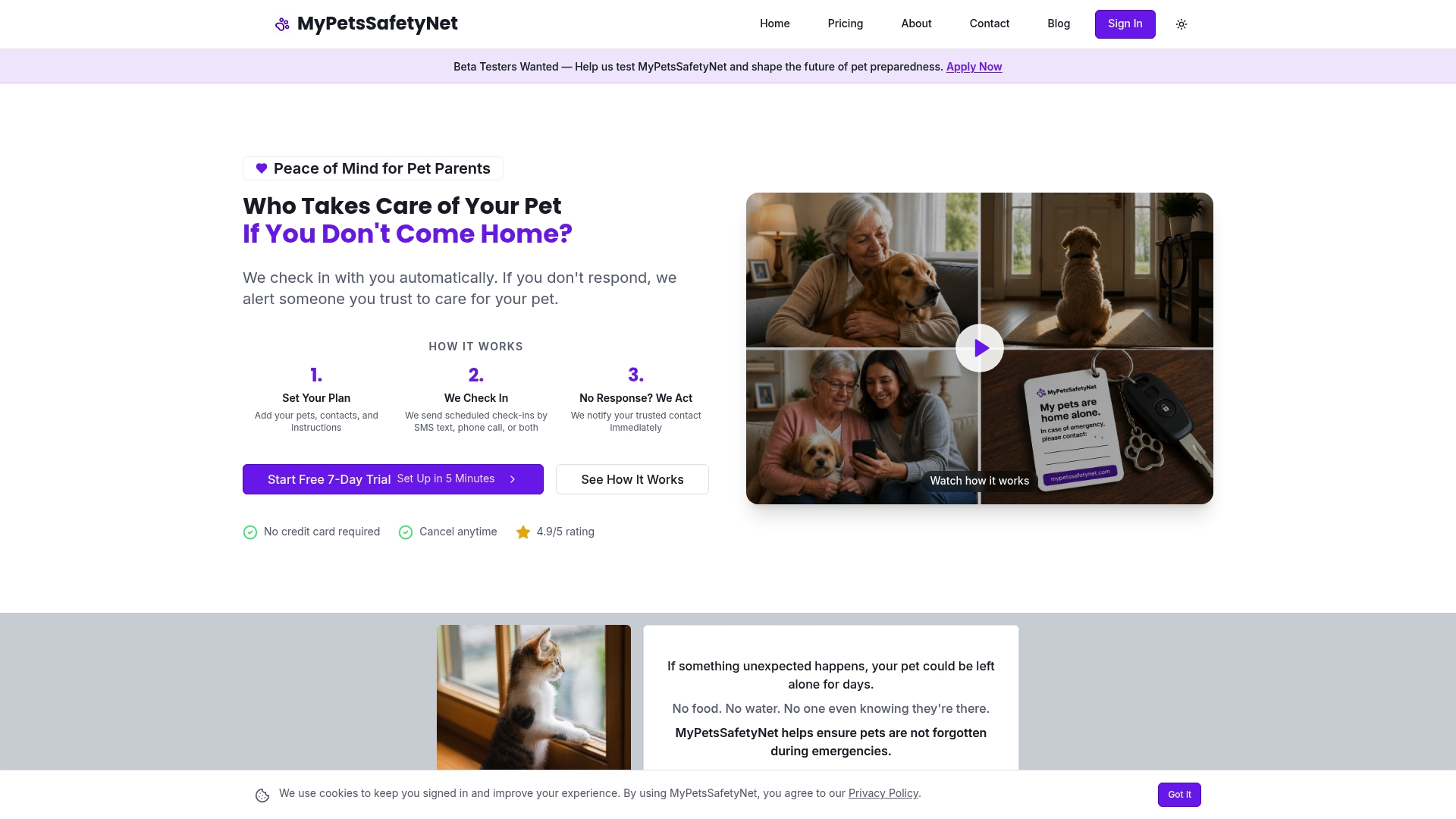
Pair that with our automated wellness check-in service: scheduled SMS, phone, or email check-ins that escalate to your named emergency contacts if you don’t respond. Instead of hoping someone notices you’ve gone quiet, the system notifies your agent directly, with your pet care details attached, so they can act on your signed form without delay. Set up your free pet card now and pair it with a wellness check-in trial to close the gap between “something happened” and “help is on the way.”
Sources
- Ensuring your pet is protected when you’re away | American Veterinary Medical Association
- How to Fill Out a Pet Care Emergency Authorization Form - LegalClarity