Solo Pet Owner Safety Planning: Your 2026 Guide
Solo pet owner safety planning is the proactive process of creating clear, documented plans and support networks to ensure your pet’s welfare if you become unable to care for them. For the millions of Americans who live alone with pets, this planning covers three core pillars: identification and records, a confirmed caregiver network, and formal legal agreements. Standards from the MSPCA, AARP, and CASE Hospital all point to the same conclusion. Without a written plan, pets face avoidable shelter surrender or worse during owner emergencies. The good news is that building this protection takes less effort than most solo pet owners expect.
What is a solo pet owner safety plan?
A pet owner safety plan is a documented set of arrangements that activates when you cannot care for your pet. It names who steps in, what they do, where your pet’s records are, and how care is funded. The term “pet owner safety plan” is the recognized framework used by veterinary and elder care professionals, while “solo pet owner safety planning” describes the specific challenge of building this system without a co-owner to share the load.
Solo pet owners face a single point of failure that partnered owners do not. If you are hospitalized, injured, or incapacitated, no one automatically knows your pet needs help. Without a plan, pets are often left behind or placed in avoidable danger during emergencies. That reality makes proactive planning not optional but necessary.

A complete plan addresses three time horizons: the immediate emergency (first 24–72 hours), the short term (days to weeks of recovery), and the long term (permanent care if you cannot return). Each horizon requires different tools and different people. Getting all three right is what separates a real safety plan from a vague hope that family will figure it out.
What identification and records does every solo pet owner need?
Redundant identification is the foundation of any emergency plan. Pets need multiple ID methods for quick reunification: a collar with your current phone number, an up-to-date microchip registration, and a waterproof photo of your pet with you stored in your emergency kit. Each layer covers a different failure mode. Collars fall off. Microchips require a scanner. Photos confirm ownership when both fail.
Centralizing all records in your name prevents delays in emergency medical treatment. Your vet account, microchip registration, and pet insurance policy must all list you as the primary contact. A caregiver who arrives at a vet clinic without proof of authorization will face barriers that cost your pet critical time.
| Record Type | What to Include | Storage Format |
|---|---|---|
| Microchip registration | Chip number, registry name, owner contact | Digital and printed copy |
| Vaccination records | All current vaccines, due dates | Vet portal and physical folder |
| Medication list | Drug names, doses, schedule, prescribing vet | Laminated card in kit |
| Vet contacts | Primary vet, emergency clinic, specialist | Phone and printed sheet |
| Pet insurance policy | Policy number, insurer phone, coverage summary | Digital and printed copy |
| Owner photo with pet | Clear image showing you and your pet together | Waterproof sleeve in kit |
Store one complete set digitally in a cloud folder your caregivers can access. Keep a second physical set in a labeled, waterproof folder at home. A third copy belongs in your emergency kit.
Pro Tip: Label your physical records folder with your pet’s name and your emergency contact’s phone number on the outside. A first responder or neighbor can hand it directly to a caregiver without opening it.
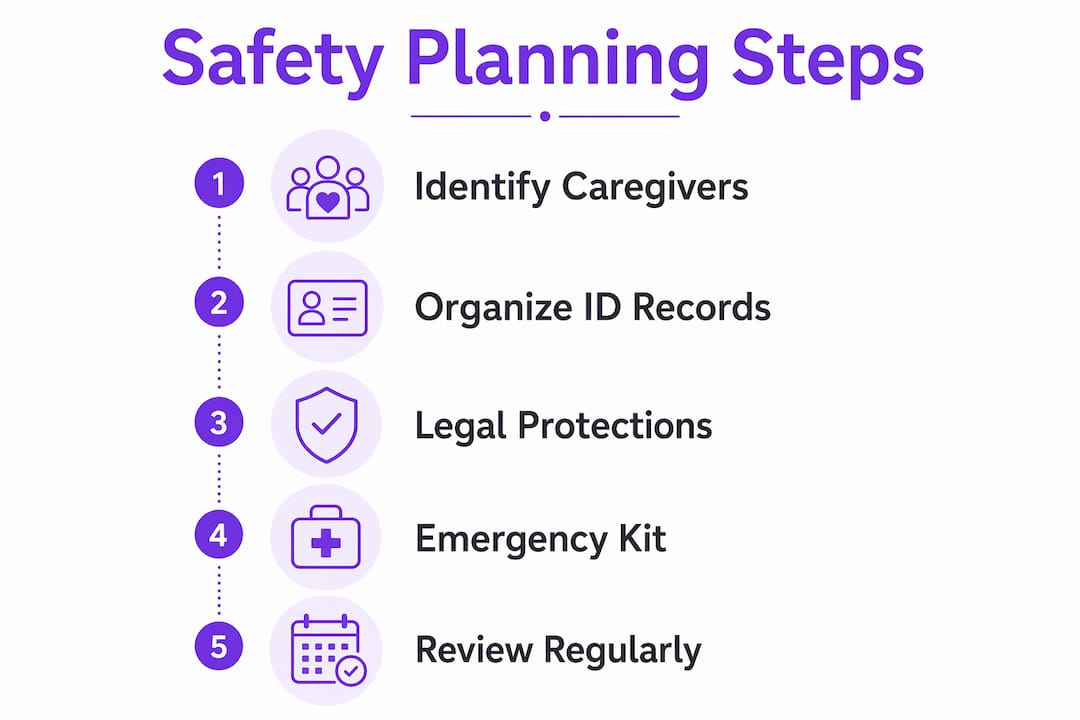
How do you build a reliable emergency caregiver network?
Solo pet owners need at least two confirmed emergency caregivers to prevent a single point of failure. One caregiver may be traveling, ill, or unreachable when you need them. Two confirmed contacts with clear agreements give your pet a real safety net.
Choosing the right caregivers matters as much as having them. Look for people who live within 30 minutes of your home, have flexible schedules, and have spent real time with your pet. A neighbor who has never met your dog is a weaker choice than a friend across town who has dog-sat before. Proximity and familiarity both reduce response time and pet stress.
Follow these steps to build and confirm your network:
- Identify candidates. List at least four people who could realistically help. Include neighbors, friends, family members, and trusted pet sitters.
- Have the conversation directly. Ask each person explicitly if they are willing to serve as an emergency caregiver. Do not assume.
- Share your pet’s details. Give each confirmed caregiver a copy of your pet’s records, your vet’s contact, and your home access plan.
- Put the agreement in writing. A written caregiver agreement defines feeding schedules, medication tasks, vet visit authority, and behavior management expectations.
- Conduct a trial run. Ask your caregiver to care for your pet for a weekend before any emergency occurs. This surfaces gaps in the plan while stakes are low.
- Confirm annually. Contact each caregiver every year to verify they are still willing and able. Life circumstances change.
Defining caregiving tasks explicitly in your agreement prevents family confusion during a crisis. Vague instructions like “take care of Max” leave too much room for error. Specific instructions like “feed Max one cup of dry food at 7:00 AM and 5:00 PM, give his heart medication with the morning meal” leave none.
Pro Tip: Invite your primary caregiver to one routine vet appointment. Your vet will recognize them, and your caregiver will understand your pet’s health baseline before any emergency occurs.
What legal and financial tools protect your pet long term?
A pet trust is a legally binding document that designates a caregiver, allocates funds for pet care, and defines the standard of care your pet should receive. Pet trusts prevent care gaps and unwanted surrender by formalizing arrangements with financial provisions that survive your incapacitation or death. All 50 U.S. states recognize pet trusts as enforceable legal instruments.
A formal written care agreement is a simpler option for owners who want documented expectations without a full trust. It names your caregiver, outlines care duties, and can specify a financial contribution from your estate. Both documents require a conversation with an estate planning attorney to be legally sound.
| Planning Option | Legally Binding | Funds Pet Care | Survives Death | Best For |
|---|---|---|---|---|
| Verbal agreement | No | No | No | Temporary, low-risk situations |
| Written care agreement | Partially | Can specify | Sometimes | Short-term or supplemental planning |
| Pet trust | Yes | Yes | Yes | Long-term, comprehensive protection |
The role of adult children in senior pet plans often involves serving as successor trustees or named caregivers in these documents. If you are a senior pet owner, collaborating with family early prevents the shelter surrenders that result from poor communication and last-minute decisions.
Pro Tip: Review your pet trust or care agreement any time your life changes significantly: a move, a new pet, a health diagnosis, or a change in your caregiver’s circumstances. Outdated documents create the same gaps as no documents at all.
How do you assemble a pet emergency preparedness kit?
A ready-to-go emergency kit reduces evacuation time and stress for your pet during any crisis. Emergency kits should include at least two weeks of food and water, all current medications, veterinary records, photo IDs, a leash or carrier, familiar comfort items, and basic first aid supplies. That two-week window covers most hospitalization scenarios and short-term disaster evacuations.
- Food and water: Two-week supply in sealed, waterproof containers. Rotate every three months.
- Medications: Full supply plus a written schedule. Include the prescribing vet’s contact.
- Veterinary records: Vaccination history, medication list, and insurance policy in a waterproof sleeve.
- Photo ID: A clear photo of you with your pet, plus your pet’s microchip number on the back.
- Leash, collar, and carrier: Sized correctly and in working condition.
- Comfort items: A familiar toy or blanket reduces anxiety during displacement.
- First aid supplies: Gauze, antiseptic wipes, a digital thermometer, and your vet’s after-hours number.
Pet-specific stickers on your doors alert first responders to the presence of animals inside your home. Place one at your front door and one at a rear entrance. Include the number and species of pets on the sticker.
Animals rely entirely on their owners during disasters. A prepared kit is the difference between a pet that evacuates safely with a trusted caregiver and one that is left behind because no one knew what to grab or where to go.
Pro Tip: Store your kit in a waterproof container near your main exit. Label it with your pet’s name, your emergency contact’s number, and your vet’s address. A caregiver who has never been to your home can find and use it without any guidance from you.
Common mistakes that put pets at risk during owner emergencies
The most dangerous assumption in pet safety planning is that family will figure it out. Vague “family will help” assumptions create care gaps that lead directly to shelter surrender. Good intentions without written agreements produce confusion, not care.
- Outdated microchip information. A microchip only works if the registry has your current phone number. Update it every time you move or change your number.
- Records scattered across multiple locations. A caregiver who cannot find your pet’s medication list at 11:00 PM will make guesses. Centralized, labeled records prevent that.
- No home access plan. Your caregiver needs a key, a door code, or a neighbor contact to get inside. Document this in your written agreement.
- Waiting until a crisis to ask for help. Asking someone to take your pet during an active emergency puts them in an impossible position. Confirmed agreements made in advance remove that pressure entirely.
- Skipping annual reviews. A caregiver who moved away or a medication that changed makes your plan outdated. Review everything once a year.
The pet care plan for living alone that works is the one you build before you need it. Every month you delay is a month your pet has no backup.
Key Takeaways
Solo pet owner safety planning requires documented identification, confirmed caregivers, and formal legal agreements to prevent shelter surrender and ensure your pet’s care during any emergency.
| Point | Details |
|---|---|
| Use redundant identification | Combine a current collar tag, registered microchip, and waterproof photo for reliable reunification. |
| Confirm two caregivers in writing | Verbal agreements fail during crises; written agreements with specific tasks protect your pet. |
| Store records centrally | Keep digital and physical copies of all vet, insurance, and medication records in your name. |
| Build a legal safety net | A pet trust legally binds care arrangements and funds them, surviving both incapacitation and death. |
| Review your plan annually | Update caregivers, records, and documents whenever your health, home, or pet’s needs change. |
Why I believe most solo pet owners underestimate this
At Mypetssafetynet, we hear from pet owners after the crisis, not before it. That pattern tells us something important: most people believe they have more time to plan than they actually do. A hospitalization does not announce itself. A fall does not wait for a convenient moment.
The owners who feel the most peace are not the ones with the most resources. They are the ones who had one honest conversation with a neighbor, wrote down their pet’s medication schedule, and confirmed that someone had a key. That is not a complicated plan. It is a complete one.
Solo pet owners often resist asking for help because independence matters to them. That instinct is understandable. But a written caregiver agreement is not a sign of dependence. It is a sign of responsibility. Your pet cannot call for help. You are the only person who can set up the system that does it for them.
Planning also strengthens relationships. The caregiver you ask becomes more invested in your pet’s life. The vet who meets your backup contact becomes a more effective partner. The plan you build is not just paperwork. It is a network of people who know your pet and are ready to show up.
Do not wait until you feel unwell to start. The best time to build this plan is when everything is fine.
— Mypetssafetynet
How Mypetssafetynet supports your pet’s safety plan
Mypetssafetynet was built specifically for solo pet owners who want to know their pets are covered if something happens to them. The service notifies your emergency contacts promptly when you miss a wellness check-in, so they can act fast for both you and your pet.
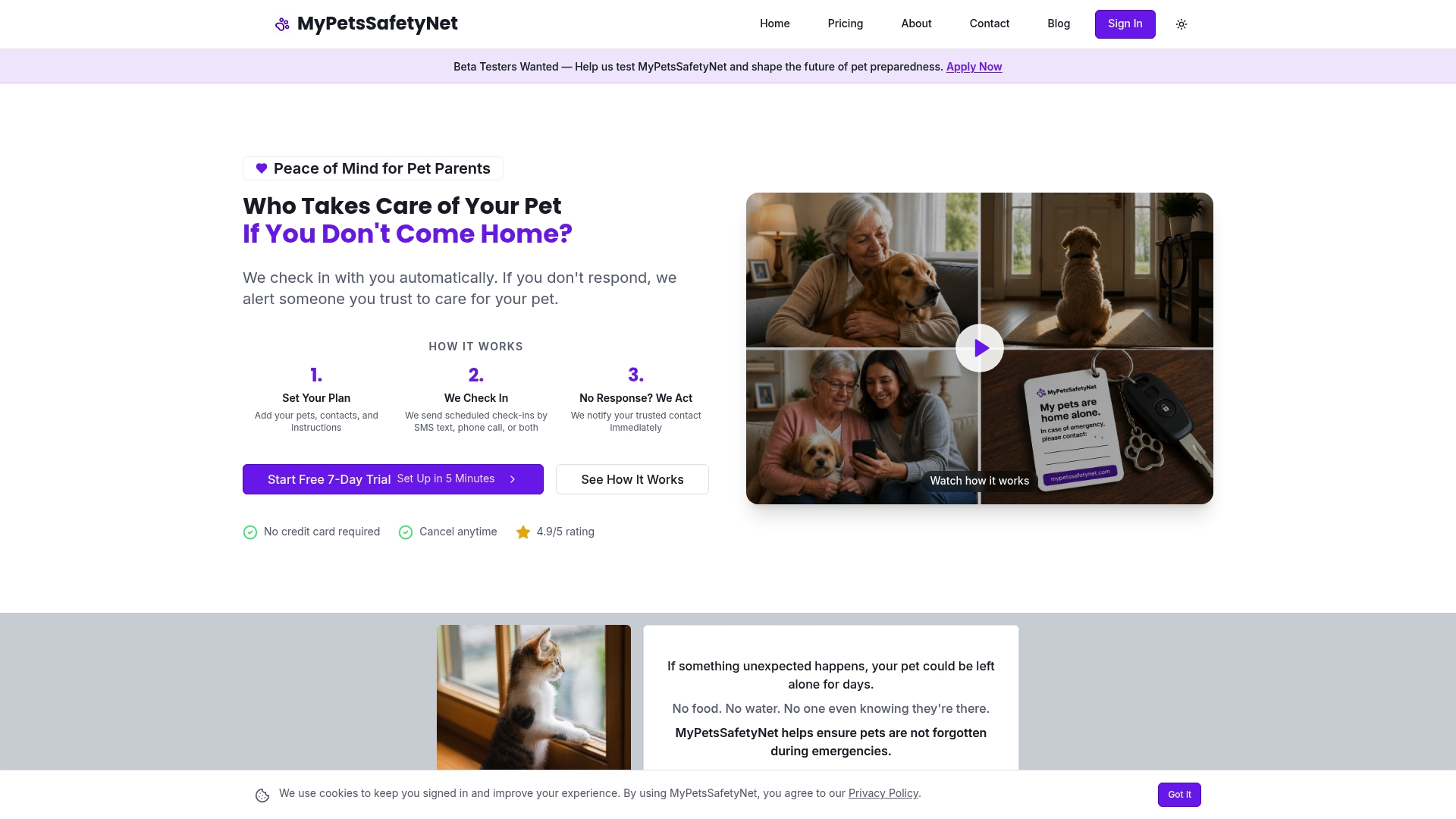
You can store your pet’s emergency contacts, caregiver details, and care instructions directly through Mypetssafetynet, so everything is organized and accessible when it matters most. The wellness check-in tool gives you a simple, reliable way to signal that you are okay every day. If you miss a check-in, your contacts are alerted automatically. For solo pet owners, that automatic notification is the backup plan that makes every other plan work.
FAQ
What is a pet owner safety plan?
A pet owner safety plan is a documented set of arrangements that names emergency caregivers, stores pet records, and outlines care instructions for use when the owner cannot provide care. It covers immediate emergencies, short-term recovery, and long-term care.
Why do pets get surrendered after owner emergencies?
Pets are surrendered when no confirmed caregiver exists and family members lack clear instructions or legal authority to act. Vague assumptions about family help, without written agreements, are the leading cause of avoidable shelter surrender.
How many emergency contacts does a solo pet owner need?
Solo pet owners need at least two confirmed emergency caregivers with written agreements. Two contacts prevent the single point of failure that occurs when one caregiver is unavailable during a crisis.
What should I store in a pet emergency kit?
A pet emergency kit should include two weeks of food and water, all current medications with a dosing schedule, veterinary records, a photo ID of you with your pet, a leash or carrier, comfort items, and basic first aid supplies.
Does a pet trust work if I am only incapacitated, not deceased?
Yes. A properly drafted pet trust activates upon incapacitation as well as death, giving a named trustee immediate legal authority and access to funds for your pet’s care. Consult an estate planning attorney to confirm the trigger language in your specific document.