The Role of Pet Caretaker Agreements in Emergency Care
A pet caretaker agreement is a legally binding document that defines care responsibilities, emergency protocols, and financial terms between a pet owner and a designated caretaker. Without one, caregivers lack the legal authority to make urgent medical decisions, and pets can be left in limbo during a crisis. The role of pet caretaker agreements goes far beyond paperwork. For elderly pet owners, disabled individuals, and solo pet parents, these agreements are the difference between a pet receiving immediate care and a pet waiting hours for someone to figure out what to do. Mypetssafetynet was built around exactly this concern.
What does a pet caretaker agreement include?
A well-drafted pet caretaker agreement covers six to ten core components, and including all of them significantly reduces disputes and separates professional arrangements from informal ones. Each element serves a specific purpose. Together, they give your caretaker the authority and information to act without hesitation.
The core components every agreement should contain:
- Emergency contact information. List your primary vet, a backup vet, and at least two personal contacts who can make decisions if you are unreachable.
- Veterinary release authorization. This written permission allows your caretaker to approve treatment. Without it, a vet may refuse to act.
- Daily care routines. Feeding schedules, medication doses, exercise needs, and behavioral notes all belong here. Vague instructions create confusion.
- Home access protocols. Specify how the caretaker enters your home, where keys or codes are stored, and any security system details.
- Payment terms and cancellation policy. Cancellation clauses protect both parties and can prevent financial losses of $500 or more per incident.
- Liability language. Clear liability clauses assign cost responsibilities and protect caregivers from bearing unexpected expenses out of pocket.
- Spending approval thresholds. Define the dollar amount a caretaker can authorize for veterinary care without calling you first.
- Backup caregiver designation. Name a secondary caretaker in case your primary contact is unavailable.
Pro Tip: Set a specific spending threshold in your agreement, such as $300 for routine care and $1,000 for emergencies. This single clause empowers your caretaker to act fast without fear of overstepping.
Emergency authority clauses with defined spending limits help caregivers act decisively while protecting them from financial risk. Without this language, caregivers often hesitate during urgent situations, and that hesitation can cost a pet its life.

How do pet caretaker agreements differ from pet trusts and guardianship plans?
These three documents are related but serve distinct purposes. Confusing them is one of the most common mistakes pet owners make in estate and care planning.
| Document | Purpose | When it takes effect | Legal enforceability |
|---|---|---|---|
| Pet caretaker agreement | Defines daily duties, emergency authority, and payment terms | Immediately upon signing | Enforceable as a contract |
| Pet guardianship plan | Detailed operational manual for long-term care | When the owner becomes incapacitated or dies | Guidance document, not always legally binding |
| Pet trust | Legal financial vehicle that funds ongoing care | Immediately upon creation | Legally binding in all U.S. states |
All U.S. states recognize enforceable pet trusts that provide immediate, funded care and prevent the misappropriation of funds. This matters because a will goes through probate, which can take months. During that time, no one may have legal authority or funds to care for your pet.
A pet trust separates financial control from physical care by appointing a trustee to manage money, a caretaker to provide daily care, and an enforcer to oversee both. This structure prevents misuse and keeps care consistent. A pet guardianship plan, by contrast, is the detailed instruction manual that tells the caretaker exactly how to care for your pet day to day.
The caretaker agreement is the operational contract that governs the relationship right now. Combining all three documents gives your pet the most complete protection. A pet trust paired with a guardianship plan provides both legal funding and practical daily care instructions, covering every scenario from a weekend hospitalization to a long-term incapacity.
Why are these agreements especially important for elderly and disabled pet owners?
Elderly and disabled pet owners face a specific risk: a sudden health event can leave a pet without care for hours or even days before anyone realizes something is wrong. A formal caretaker agreement removes that gap. It designates authorized caregivers in advance and gives them the legal power to act the moment they are needed.
Without clear, authorized guidelines, caregivers may lack legal power to make urgent medical decisions. That paralysis is not a character flaw. It is a legal reality. A signed agreement changes that reality immediately.
Key benefits for elderly and disabled pet owners:
- Designated authority. Your named caretaker can authorize veterinary treatment, access your home, and follow your pet’s care routine without waiting for family consensus.
- Financial clarity. The agreement specifies who pays for care and up to what amount, so your caretaker is never left covering costs out of pocket.
- Reduced family conflict. Written terms prevent disagreements among family members about who is responsible and what the pet needs.
- Continuity of routine. Pets, especially older animals, thrive on consistency. A detailed agreement preserves that routine even when you cannot.
- Peace of mind. Knowing your pet is covered lets you focus on your own recovery without worry.
Underestimating a pet’s lifetime financial needs is the most common pitfall in pet care planning. Experts recommend dedicated funding for both long-term care and emergency veterinary costs. For elderly owners especially, building that funding into a pet trust alongside a caretaker agreement closes the most dangerous gap in any care plan.
Pro Tip: If you live alone and have a health condition, share your signed caretaker agreement with a trusted neighbor and your primary care physician. A neighbor pet emergency agreement can be the fastest line of defense when minutes matter.
Resources like pet care help for seniors can help you identify the right caretaker candidates and understand what your agreement should cover for your specific situation.
How do you create, store, and maintain an effective pet caretaker agreement?
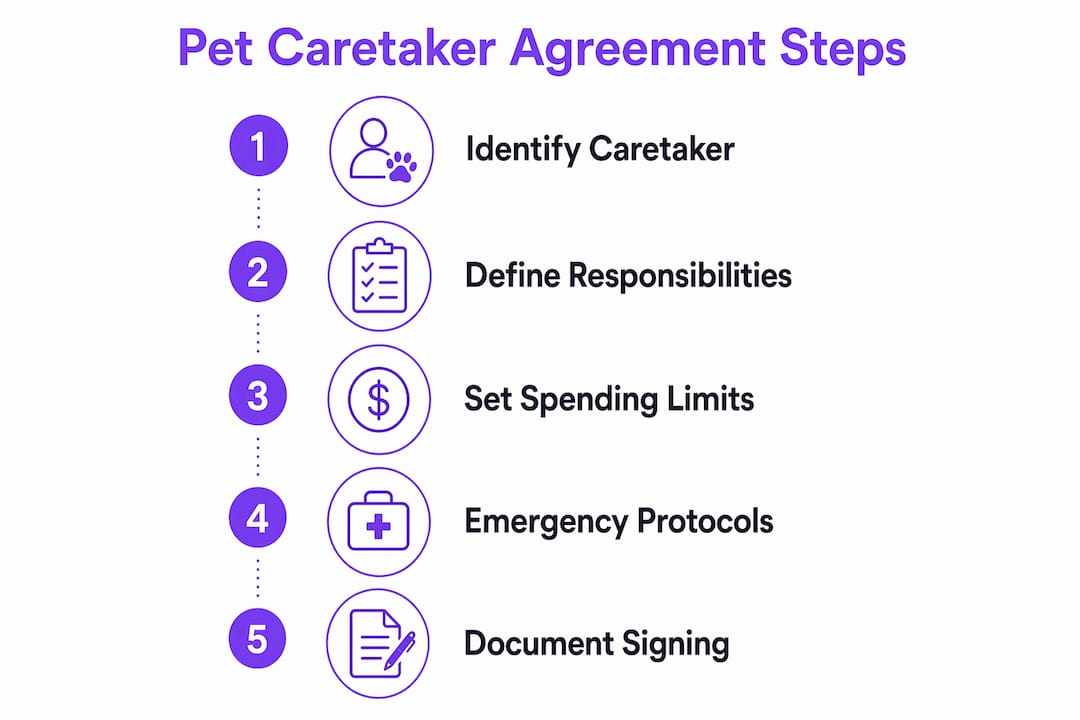
Creating a pet caretaker agreement is not complicated, but doing it correctly requires attention to detail and a commitment to keeping it current. Follow these steps:
- Consult an attorney or use a jurisdiction-specific template. Generic online forms often miss state-specific requirements. An attorney familiar with animal law can tailor the document to your location and circumstances.
- Include all core components. Use the checklist from the section above. A missing element is not just an oversight. It is a gap that will surface at the worst possible time.
- Define emergency authority clearly. Specify exactly what decisions your caretaker can make, up to what spending limit, and under what conditions.
- Use electronic signatures. Under the U.S. ESIGN Act, electronic signatures carry the same legal weight as handwritten ones. This makes it easier to finalize agreements quickly and update them remotely.
- Store the agreement digitally. Digital storage with authorized access outperforms paper documents stored in inaccessible locations. Many plans fail because emergency contacts cannot reach physical documents during a crisis.
- Share access with all named parties. Your caretaker, backup caretaker, and at least one family member should have immediate access to the document. A cloud platform with shared permissions works well for this.
- Review and update after every major life change. A new pet, a new vet, a change in your health status, or a move all require a document update. Set a calendar reminder to review the agreement every six months.
The biggest mistake pet owners make is relying on generic templates without customizing the emergency clauses. A template is a starting point, not a finished product. Your pet’s specific medical needs, your home’s access details, and your financial situation all require personalized language.
Automated check-in tools can complement your agreement by alerting emergency contacts when you miss a scheduled check-in, triggering your caretaker plan before anyone even knows something is wrong.
Key Takeaways
A pet caretaker agreement is the single most practical document a pet owner can create to protect their pet during an emergency, and no other document replaces it.
| Point | Details |
|---|---|
| Core components matter | Include emergency contacts, vet authorization, spending limits, and backup caretakers in every agreement. |
| Agreements differ from trusts | A caretaker agreement governs daily duties now; a pet trust funds long-term care legally. |
| Elderly owners face the highest risk | Sudden incapacity without a signed agreement leaves pets without authorized care for hours or days. |
| Digital storage is non-negotiable | Paper documents in inaccessible locations fail during emergencies; use cloud storage with shared access. |
| Review regularly | Update your agreement after every major life change to keep it accurate and enforceable. |
What we’ve learned from watching pet owners plan (and not plan)
At Mypetssafetynet, we talk to pet owners every day who have thought carefully about their pets’ food, their vet, their toys. But when we ask about a formal caretaker agreement, the most common answer is, “I’ve been meaning to do that.”
The uncomfortable truth is that most pet owners overestimate how much an informal arrangement protects their pet. A neighbor who has agreed to “check in” is not the same as a neighbor who holds a signed agreement with veterinary release authorization and a defined spending limit. The first is a favor. The second is a safety net.
We’ve also seen the other side. Pet owners who had agreements in place, who had shared them digitally, who had named backup caretakers. When something happened to them, their pets were cared for within hours. No confusion, no family arguments, no vet refusing to treat without authorization.
The demographic reality is that more people are living alone with pets than ever before. That means more pets depend entirely on one person. A caretaker agreement is not a pessimistic document. It is one of the most loving things you can do for an animal that depends on you completely. Start with a template, customize it, sign it electronically, and share it today. You can always refine it later. What you cannot do is go back and create it after the fact.
— Mypetssafetynet
Mypetssafetynet and your pet’s emergency care plan
Planning for your pet’s safety does not stop at a signed document. Mypetssafetynet gives pet owners a practical layer of protection by sending wellness check-in alerts to your emergency contacts when you do not respond. That alert can trigger your caretaker agreement before a crisis becomes a catastrophe.
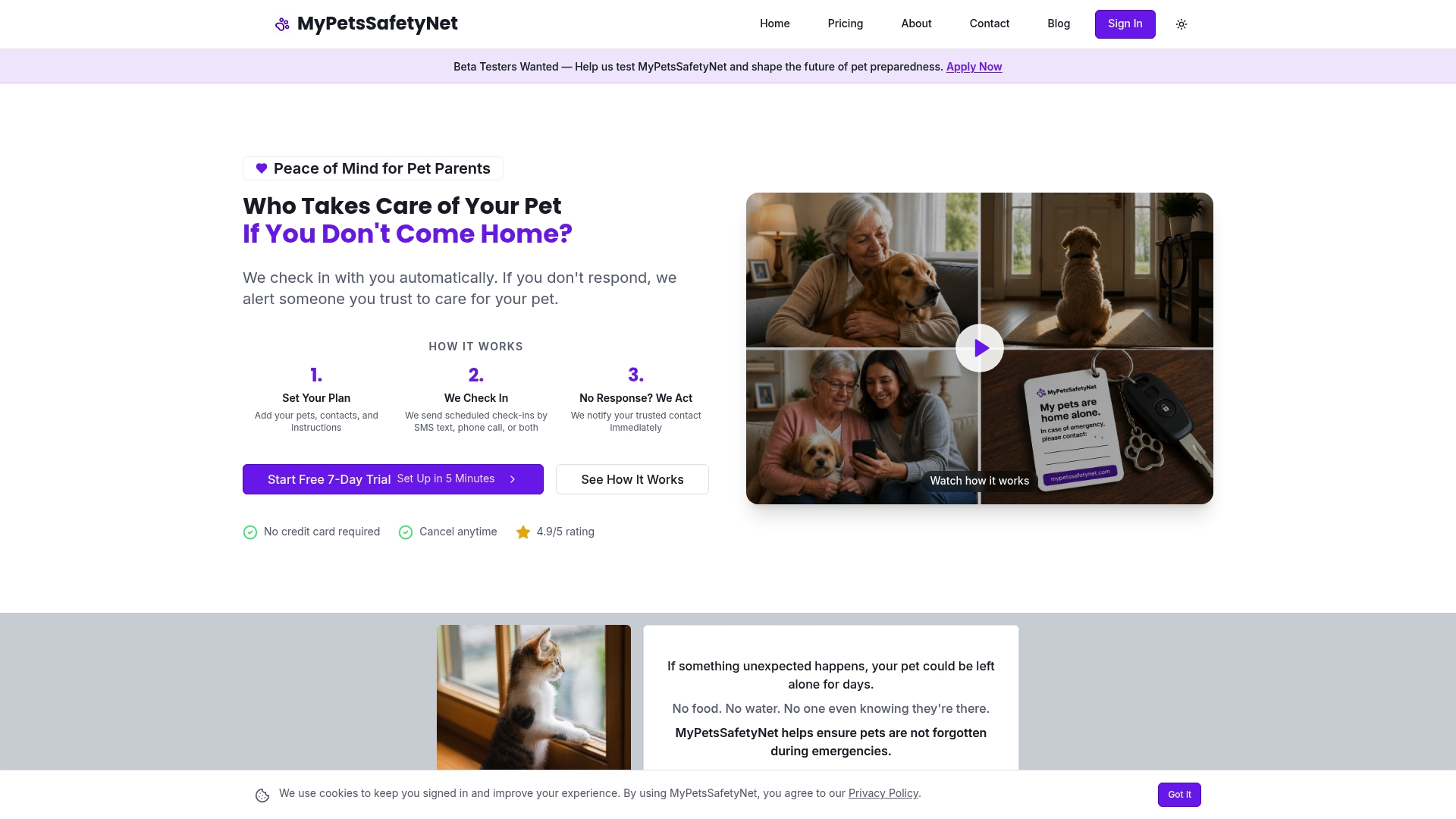
Whether you are setting up your first pet emergency plan or updating an existing one, Mypetssafetynet connects your caretaker agreement to a real-time notification system. Your named caretakers receive the alert, access your agreement, and act. If you are ready to add that layer of protection, register your emergency contacts through Mypetssafetynet and make sure your pet is never left waiting.
FAQ
What is the role of pet caretaker agreements?
A pet caretaker agreement defines the responsibilities, emergency authority, and financial terms between a pet owner and a designated caretaker. It gives caregivers the legal power to act immediately when an owner is incapacitated.
What does temporary pet guardian mean?
A temporary pet guardian is a person designated to care for a pet for a defined period, such as during a hospitalization or travel. Their authority and responsibilities should be spelled out in a signed temporary pet guardian agreement.
What is pet guardianship?
Pet guardianship is the legal and practical responsibility for a pet’s daily care, welfare, and medical decisions. It can be formalized through a guardianship plan, a caretaker agreement, or a pet trust, depending on the duration and circumstances.
What should a neighbor pet emergency agreement include?
A neighbor pet emergency agreement should include home access instructions, the pet’s daily routine, the vet’s contact information, a veterinary release authorization, and a defined spending limit for emergency care.
How is a pet trust different from a caretaker agreement?
A pet trust is a legal financial vehicle that funds ongoing care and is enforceable in all U.S. states, while a caretaker agreement is an operational contract governing daily duties and emergency authority. Both documents serve different functions and work best when used together.