Pet Care Support Group Benefits for Every Pet Owner

Pet care support groups are defined as communities where pet owners share emotional support, practical knowledge, and caregiving resources to help each other through challenges. The pet care support group benefits go far beyond simple companionship. Research tracking 21,000 dogs in the Dog Aging Project found that social support and buddy systems correlate with approximately 5 times better overall dog health than household income. That finding alone reframes what “good pet care” actually means. Mypetssafetynet sees this daily: the pet owners who plan ahead and build community around their pets consistently handle emergencies with more confidence and less panic.
1. What are the core pet care support group benefits?
Pet care support groups deliver three core advantages: emotional validation, practical caregiving help, and improved confidence. These aren’t soft benefits. They directly affect how well your pet is cared for when life gets hard. Whether you’re managing a chronically ill dog, grieving a recent loss, or worried about what happens to your pet if you have a health emergency, a support community changes your outcomes.
The term “support group” in pet care covers a wide range of formats. Some are peer-led online forums. Others are local groups organized through rescue organizations or veterinary clinics. The format matters less than the quality of the community and the psychological safety it provides.

2. What are the most important emotional benefits?
Emotional validation is the most immediate benefit pet owners report when joining a support group. When you share that you’re devastated over a sick cat or overwhelmed by a dog’s mobility decline, hearing “I felt exactly that way” removes shame and prevents isolation. Peer support prevents feelings of disproportionate grief and builds a genuine sense of belonging.
The emotional advantages of pet care communities include:
- Normalization of grief. Groups confirm that deep grief over a pet is valid, not excessive. This prevents the isolation that comes from feeling misunderstood by friends or family.
- Shared coping strategies. Members teach each other practical tools like journaling, memorial rituals, and structured routines that help process loss. Pet loss groups provide validation, reduce isolation, and offer these coping strategies directly from people who have used them.
- Reduced loneliness. Loneliness is a major stress factor for caregivers. Regular group interaction breaks that cycle.
- Peer empathy. Unlike well-meaning friends who may minimize your grief, group members understand the depth of the bond between owner and pet.
- Anonymity and access. Online groups allow members to share honestly without social consequences, and online pet loss groups normalize grief through shared rituals and continual access.
Pro Tip: If you’re new to a group, start by reading others’ posts for a week before sharing your own story. Observing how the community responds to others builds trust and helps you gauge whether the group is the right fit.
3. How do support groups provide practical advantages during emergencies?
Practical support is where pet care communities prove their value most clearly during a crisis. When your dog is diagnosed with diabetes or your cat needs daily injections, a group of owners who have already managed that condition is worth more than a generic web search. Pet owners consistently prefer community advice over static search engines because it is context-specific, real-time, and comes from people with direct experience.
The practical advantages of pet care groups include:
- Condition-specific knowledge. Members share targeted advice on medications, mobility aids, dietary adjustments, and symptom management that applies directly to your pet’s situation.
- Veterinary visit preparation. Groups help you sharpen your observations and questions before appointments. Support groups enhance members’ ability to communicate more effectively with their vet, without replacing professional medical advice.
- Buddy systems for backup care. Members organize informal coverage networks so that if you have a health emergency, someone trusted can step in. This is especially critical for solo pet owners. You can read more about backup care planning and how to set it up before you need it.
- Resource referrals. Groups point members toward condition-specific nonprofits, low-cost veterinary clinics, and financial assistance programs that most owners would never find on their own.
- Real-time problem solving. When your pet has a bad night and your vet’s office is closed, a community of experienced owners can help you decide whether to wait until morning or head to an emergency clinic.
If you’re managing a pet with ongoing health needs, the guide on pet ownership during chronic illness covers additional strategies that complement what support groups offer.
4. In what ways do support groups build caregiver confidence?
Confidence in caregiving is not automatic. It builds through repeated exposure, feedback, and the reassurance that you’re making reasonable decisions. Peer-led support groups increase members’ self-efficacy, meaning their belief in their own ability to handle complex caregiving tasks, more than they simply reduce anxiety. That distinction matters. Anxiety reduction fades. Self-efficacy compounds.
When you regularly interact with people who have navigated the same challenges you’re facing, you internalize their strategies. You stop second-guessing every decision. You start trusting your own observations. This is especially true for pet owners managing emergencies alone. For solo owners and seniors, the impact is even more pronounced. Research on aging alone with pets shows that peer support is one of the strongest predictors of sustained caregiving capacity.
For pet care professionals, the benefit extends to career sustainability. Peer backup coverage in community groups significantly reduces burnout and protects against the isolation that comes from working alone with animals every day.
Pro Tip: Track one caregiving decision per week that you made confidently because of advice from your group. After a month, you’ll have concrete evidence of your own growth, which reinforces the habit of seeking community support.
5. What features define the most effective pet care support groups?
Not all support groups deliver equal value. The most effective ones share specific structural features that prevent them from becoming sources of misinformation or conflict.
Psychological safety and skilled facilitation are the two most critical factors. A group without clear rules and a capable moderator will drift toward drama, bad advice, and member attrition. A well-run group enforces a code of conduct that keeps discussions focused and respectful.
Deliberate group composition also matters. Grouping members by grief stage helps newer members see that recovery is possible. When someone six months into grief can see a member who is two years out and doing well, it provides a realistic model for healing.
| Feature | What to look for |
|---|---|
| Moderation quality | Active moderator who enforces rules and removes harmful content |
| Code of conduct | Written rules covering respect, misinformation, and privacy |
| Member diversity | Mix of grief stages and caregiving experience levels |
| Access format | Free or low-cost, with online options for accessibility |
| Facilitation style | Peer-led with optional professional guidance, not purely advice-driven |
6. How can pet owners find or start a support group?
Finding the right group starts with identifying your primary need. Are you grieving a loss, managing a chronic illness, or preparing for emergencies? Your answer narrows the search considerably.
Places to find established groups:
- Online forums and social media. Facebook groups, Reddit communities, and dedicated pet health forums host thousands of active communities organized by species, condition, and caregiving stage.
- Local rescue organizations. Many shelters and breed-specific rescues run or know of local support groups for owners navigating loss or complex care.
- Veterinary clinics. Ask your vet directly. Many clinics maintain referral lists for condition-specific groups, particularly for cancer, diabetes, and end-of-life care.
- Community centers. Libraries and senior centers sometimes host in-person pet loss groups, which are especially valuable for older adults who prefer face-to-face connection.
Starting your own group requires three things: a clear purpose, a commitment to moderation, and a consistent meeting schedule. Begin with a small, trusted circle of five to ten people. Establish written guidelines before the first meeting. Use free platforms like Facebook Groups or Meetup to manage logistics without cost. For broader guidance on building a reliable pet care network, the pet care network best practices guide covers the foundational steps in detail.
Engagement tip: Post a weekly discussion prompt to keep the group active between crises. Questions like “What’s one thing your pet taught you this week?” maintain connection without requiring members to be in distress to participate.
Key Takeaways
Pet care support groups deliver measurable benefits across emotional health, practical caregiving, and caregiver confidence, making them one of the most underused resources available to pet owners.
| Point | Details |
|---|---|
| Social support affects pet health | Buddy systems correlate with 5 times better dog health outcomes than household income alone. |
| Emotional validation reduces isolation | Groups normalize grief and prevent shame, which are the two biggest barriers to seeking help. |
| Practical advice outperforms search engines | Community members provide real-time, context-specific guidance that generic searches cannot match. |
| Self-efficacy grows through peer interaction | Peer-led groups build caregiving confidence more effectively than anxiety reduction alone. |
| Group structure determines quality | Skilled moderation, a code of conduct, and diverse member experience define effective groups. |
What I’ve learned about pet care communities after years of watching owners navigate crises
Most pet owners wait until they’re in crisis before they look for a support group. That’s the wrong time to start. By the time you’re searching for help at 2:00 AM because your dog is in pain and you don’t know what to do, you need a community that already knows you and your pet’s history.
The owners who fare best are the ones who joined a group before they needed it urgently. They built relationships during the calm periods. When the emergency arrived, they had people to call who already understood the context. That’s not luck. That’s preparation.
Generic internet searches feel efficient, but they deliver generic answers. A community member who managed the same condition in the same breed for two years gives you something a search engine never can: judgment shaped by experience. The research confirms this. Pet owners consistently find community advice more trustworthy and useful than static search results. That preference isn’t sentimental. It’s rational.
The other thing worth saying plainly: grief over a pet is real grief. Groups that treat it as such, rather than minimizing it, produce better outcomes for their members. If you find a group that makes you feel your grief is excessive, leave it and find a better one. The right group will make you feel understood from the first post you read.
— Mypetssafetynet
How Mypetssafetynet supports pet owners between community check-ins
Community support groups are powerful, but they work best when paired with a reliable backup plan for the moments when no one is available to help.
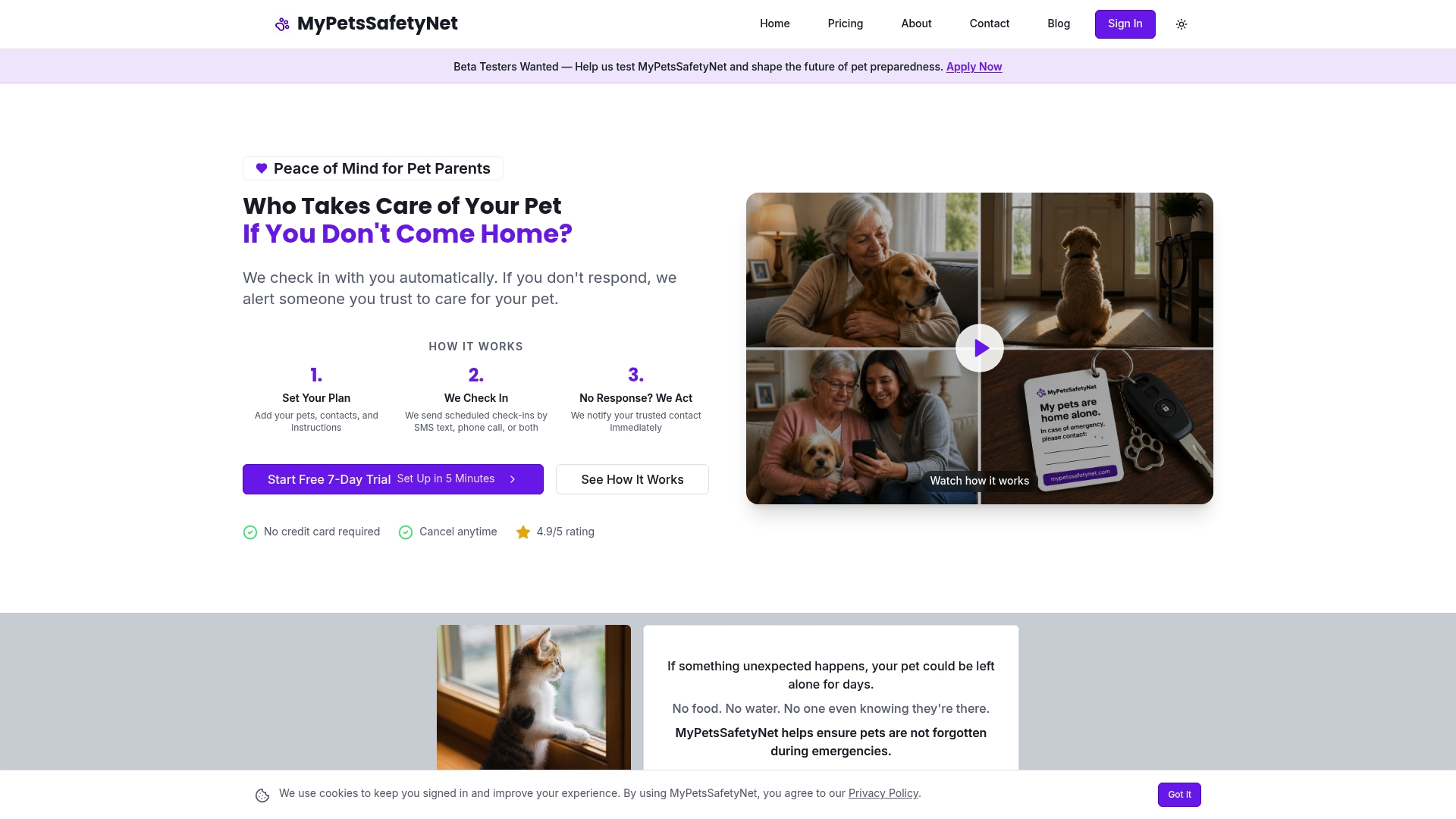
Mypetssafetynet was built specifically for solo pet owners and anyone who worries about what happens to their pets during a personal emergency. The platform’s wellness check-in tools notify your emergency contacts if you miss a check-in, so someone always knows to look in on both you and your pets. You don’t have to rely on a neighbor noticing your lights are off. You build a structured, automatic safety net that works even when your support group is offline. For pet owners who live alone or manage health concerns independently, that layer of protection is not optional. It’s the foundation everything else rests on.
FAQ
What are the main benefits of joining a pet support group?
Pet care support groups provide emotional validation, practical caregiving advice, and improved confidence in managing emergencies. Research shows peer-led groups increase self-efficacy more than they simply reduce anxiety.
How do pet care support groups help during a pet health emergency?
Groups offer real-time, condition-specific advice from members with direct experience, help you prepare better questions for your vet, and can organize backup care coverage if you’re unable to care for your pet yourself.
Are online pet support groups as effective as in-person ones?
Online groups provide anonymity and continuous access, which research from CHI Conference proceedings identifies as key factors in normalizing grief and sustaining emotional healing. In-person groups add face-to-face connection, which some owners find more meaningful.
How do I know if a pet support group is trustworthy?
Look for active moderation, a written code of conduct, and a mix of members at different stages of caregiving or grief. Groups without clear rules are more likely to spread misinformation or become sources of conflict.
What is the difference between a peer-led and a professionally facilitated group?
Peer-led groups are run by experienced pet owners who have navigated similar challenges. Professionally facilitated groups are guided by counselors or social workers. Both formats work. Peer-led groups tend to build stronger self-efficacy, while professional facilitation adds clinical structure for members dealing with complex grief.