Role of Social Workers in Senior Pet Care
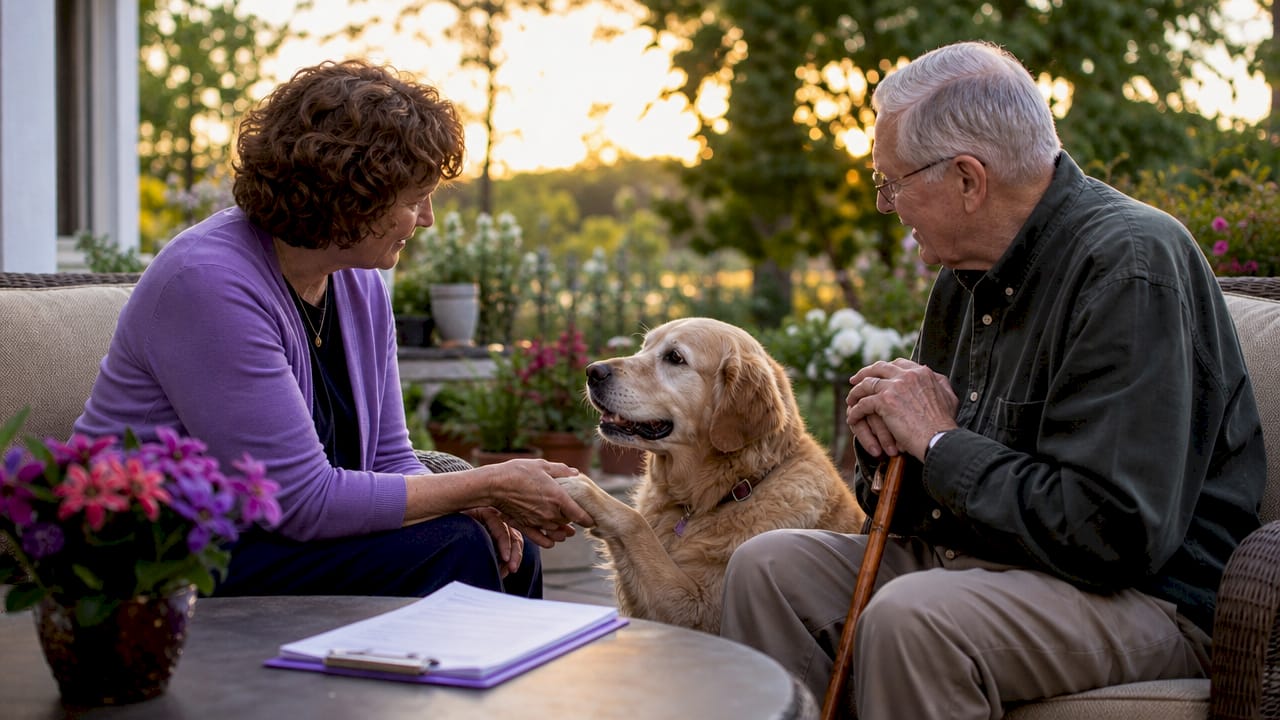
Veterinary social work is defined as a specialized field that addresses the emotional, practical, and psychosocial needs of pet owners facing health crises, end-of-life decisions, and caregiving challenges. For seniors, the role of social workers in senior pet care goes far beyond emotional support. It covers crisis intervention, care coordination, and connecting families to community resources that keep pets and their owners together. Programs like those offered through MedVet operate in cities including Chicago, Columbus, Salt Lake City, Boise, and Dallas, making this a real and growing service. If you’re a senior pet owner or a caregiver, understanding how these professionals work can change how you plan for emergencies.
How do social workers support seniors in managing pet care during medical emergencies?
Veterinary social workers provide short-term crisis intervention when a senior pet owner faces sudden hospitalization or a serious health event. Their primary job is to reduce the immediate stress of “who will care for my pet?” so the owner can focus on their own medical needs. This matters more than most people realize.
62% of healthcare providers report that pet guardians delay needed medical treatment because no one has arranged care for their animals. That delay can turn a manageable health issue into a serious one. Social workers step in to break that cycle.
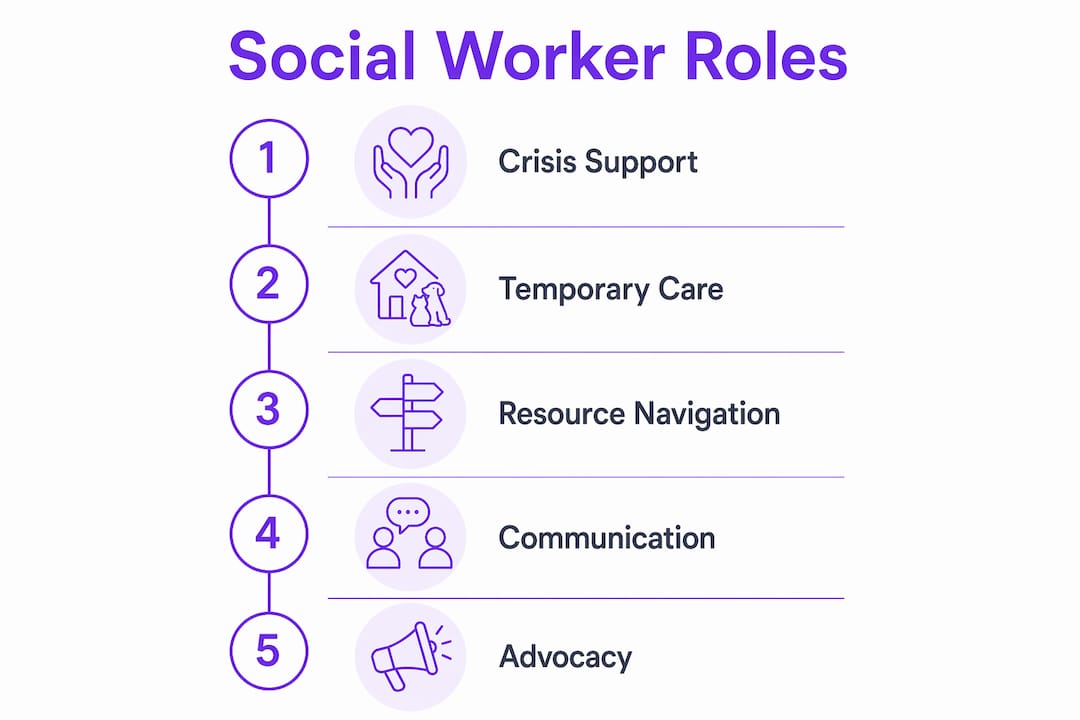
Here is what social workers do during a medical emergency involving a senior pet owner:
- Arrange temporary pet care. They connect seniors with foster networks, pet-sitting services, or family members who can step in during a hospital stay.
- Provide emotional support. Seniors often experience anticipatory grief when a pet’s health declines alongside their own. Social workers help process those feelings without clinical therapy.
- Support end-of-life decisions. When a senior faces a terminal diagnosis and worries about what happens to their pet, social workers help plan for the animal’s future care.
- Assist with discharge planning. A senior leaving the hospital may not be able to walk a dog or clean a litter box. Social workers identify those gaps before discharge and arrange support.
- Reduce caregiver fatigue. For seniors caring for a chronically ill pet, the emotional toll builds over time. Social workers recognize the signs and address them before burnout sets in.
Pro Tip: If you or a loved one is admitted to a hospital, ask the admissions team directly whether a social worker is available to help coordinate pet care. Many hospitals have social work staff on site, and pet care concerns fall within their scope.
Veterinary social workers typically manage about 12 open cases weekly, focusing on short-term intervention rather than ongoing therapy. That means their support is targeted and practical, not open-ended. You get help when you need it most.
What challenges do seniors face in pet care amid health crises?
Seniors face a specific set of barriers when a health crisis disrupts their ability to care for a pet. These barriers are not just inconvenient. They directly affect medical decisions and health outcomes.
22–24% of hospitalized pet owners face difficulty securing pet care during hospital admissions. That difficulty leads to delayed procedures, shortened stays, and discharges against medical advice. Pets function as social determinants of health, meaning their care affects the owner’s willingness to seek and accept treatment.
Common challenges seniors face include:
- Caregiver fatigue. Managing a pet’s chronic illness while dealing with one’s own health issues creates compounding stress. Signs include exhaustion, withdrawal from social activities, and neglecting personal health appointments.
- Financial barriers. Fixed incomes limit access to pet boarding, veterinary care, and in-home pet support services.
- Housing instability. Seniors moving to assisted living or rehabilitation facilities often face pet restrictions that force difficult choices about keeping their animals.
- Lack of a support network. Seniors who live alone may have no one to call in an emergency. Without a plan, a pet can go unattended for days.
- Limited awareness of available resources. Most seniors do not know that veterinary social work services exist or that they are often offered at no cost.
“To best support pet caregivers, especially seniors, a care plan must consider the caregiver’s wellbeing as well as the animal’s needs.” — Wilson’s Health
Social workers address these challenges through advocacy and resource navigation. They work across issues like poverty, housing, and social isolation to keep pets and owners together. Their goal is not to separate families from their animals. It is to remove the barriers that make separation feel inevitable.
How do social workers collaborate with veterinary and medical teams?
Social workers in veterinary and medical settings serve as communication facilitators. They sit between the veterinary team, the medical team, the family, and the patient, making sure everyone understands what is happening and what the options are.

Veterinary social workers do not provide medical advice. They help families process and clarify complex veterinary information so they can make informed decisions. That distinction matters. A family overwhelmed by a terminal diagnosis for their pet needs someone to help them understand the choices, not add more clinical detail.
This interdisciplinary collaboration works across several settings:
- Specialty and emergency veterinary hospitals. Social workers are embedded in these settings to support families during high-stress visits, including sudden illness, trauma, and euthanasia decisions.
- Human hospitals and rehabilitation centers. Medical social workers increasingly recognize pet care as a discharge planning issue and coordinate with community resources accordingly.
- Community organizations. Social workers connect seniors to local programs offering pet food banks, low-cost veterinary care, temporary foster care, and transportation to vet appointments.
- Long-term care facilities. Social workers advocate for pet-inclusive policies and help families navigate the transition when a senior moves into a care facility.
The table below shows how social work support fits across different care settings:
| Setting | Social worker’s primary role |
|---|---|
| Emergency veterinary hospital | Crisis support, grief counseling, family communication |
| Human hospital | Discharge planning, pet care coordination |
| Community organization | Resource navigation, financial aid referrals |
| Long-term care facility | Advocacy for pet access, transition planning |
43% of patients in one study received a social work consultation during their hospital stay. Those with documented pet care challenges were significantly more likely to receive that consultation. That connection shows that social workers are already identifying pet care as a health issue. The system just needs to do it more consistently.
What practical steps can seniors and caregivers take to include social work support?
Proactive planning is the most effective way to make sure social work support is available when you need it. Waiting until a crisis hits means fewer options and more stress.
Here are concrete steps you can take now:
- Ask your veterinarian. At your next appointment, ask whether the practice has a social worker or can refer you to one. Awareness of these services is limited, so raising the question during intake improves your access.
- Contact your hospital’s social work department. If you have a chronic condition or upcoming procedure, call the hospital’s social work team in advance. Explain that you are a solo pet owner and ask what support is available.
- Build a written pet care plan. Document your pet’s feeding schedule, medications, veterinarian contact, and emergency contacts. Share it with at least two people who can act quickly if you are hospitalized. Resources like what happens to your pets if you’re hospitalized offer a practical starting point.
- Identify your backup caregivers now. A social worker can help you think through who is realistically available and willing. Do not assume a neighbor or family member will step up without a direct conversation.
- Register with a wellness check-in service. Services designed for solo pet owners notify your emergency contacts if you miss a check-in, so your pet is never left unattended.
Pro Tip: There are only about two dozen veterinary social workers across the U.S. and Canada as of early 2026. Because access is limited, ask about availability early, not during a crisis.
The role of caregivers in pet welfare extends beyond daily feeding and walks. It includes planning for the moments when you cannot be there. Social workers help you build that plan before you need it.
Key Takeaways
Social workers are a practical, often overlooked resource that directly improves health outcomes for seniors by removing pet care as a barrier to medical treatment.
| Point | Details |
|---|---|
| Veterinary social work is a real specialty | Services exist in select hospitals across the U.S., often at no cost to the patient. |
| Pet care affects medical decisions | 22–24% of hospitalized pet owners face care gaps that delay treatment or cause early discharge. |
| Social workers facilitate, not prescribe | They help families understand options and connect to resources without offering clinical advice. |
| Access is limited but growing | Fewer than two dozen veterinary social workers practice in the U.S. and Canada; ask proactively. |
| Planning ahead reduces crisis stress | Building a written pet care plan and registering with a wellness check-in service protects both you and your pet. |
Why the human-animal bond deserves more support in healthcare
At Mypetssafetynet, we work with seniors and solo pet owners every day who have never heard of veterinary social work. That gap is not their fault. The field is genuinely small, and most healthcare systems have not built pet care into their standard discharge planning process.
What we have seen is this: seniors who have a pet care plan in place before a health crisis are calmer, more willing to seek treatment, and more likely to follow through with medical recommendations. The pet is not a complication. The pet is part of what keeps that person going. Treating pet care as a social determinant of health, the way housing and food security are treated, changes how we support vulnerable people.
The uncomfortable truth is that most seniors will face a health event that disrupts their ability to care for their pet. The question is not whether it will happen. It is whether there is a plan in place when it does. Social workers, wellness check-in services, and written emergency plans are not overcaution. They are the practical tools that keep people and their pets together when it matters most.
— Mypetssafetynet
Mypetssafetynet is here when you need a safety net
Planning for a health emergency is one of the most caring things you can do for your pet. Mypetssafetynet was built specifically for seniors and solo pet owners who want to know their animals will be looked after if something happens.
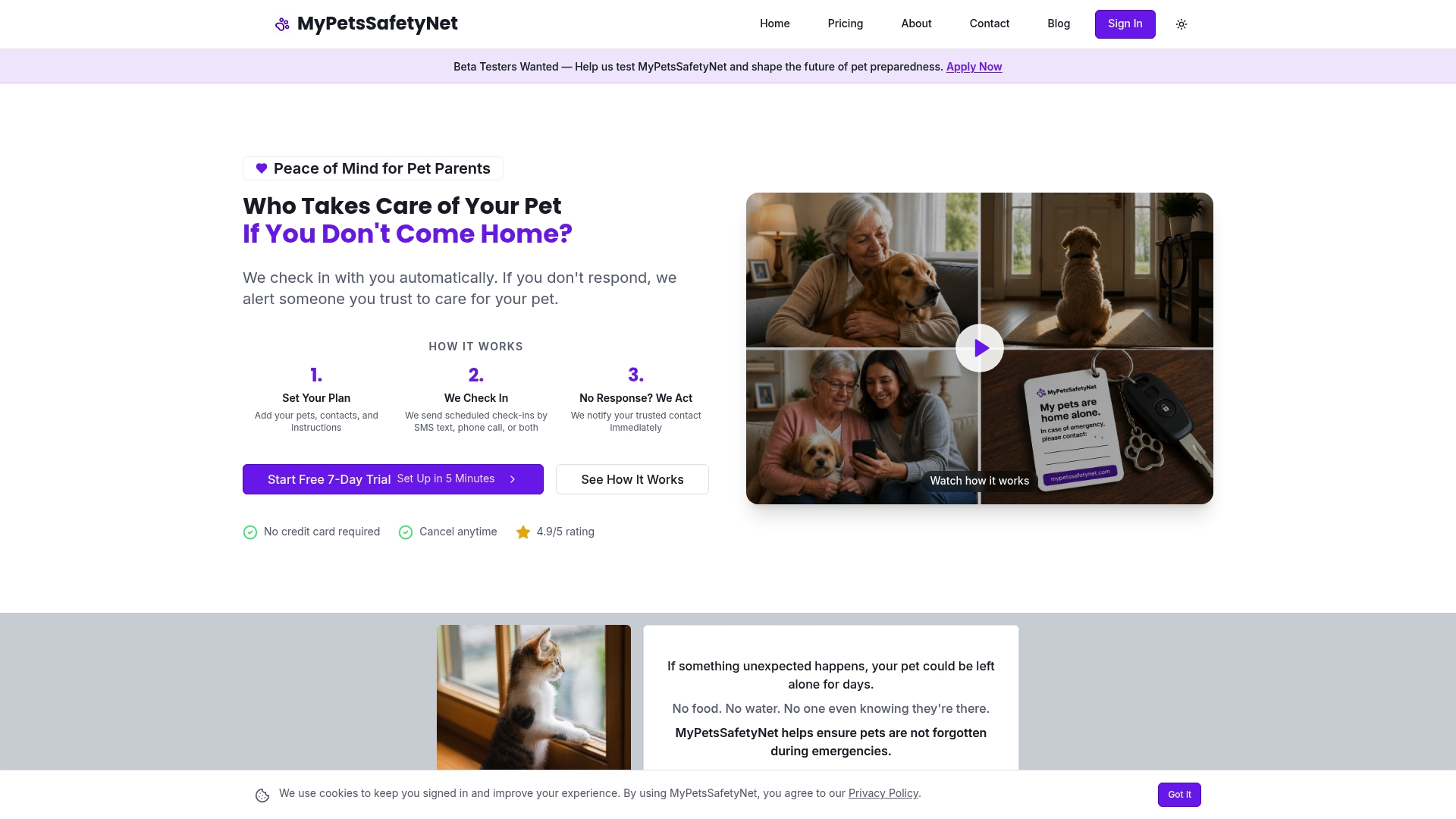
The Mypetssafetynet wellness check-in notifies your emergency contacts if you miss a scheduled check-in, so your pets are never left alone and waiting. You set the contacts, the schedule, and the instructions. The service does the rest. Whether you are managing a chronic condition or simply want peace of mind, setting up your wellness check-in plan takes only a few minutes and gives you lasting reassurance. Your pet depends on you. Mypetssafetynet makes sure someone is always ready to step in.
FAQ
What is veterinary social work?
Veterinary social work is a specialty that provides emotional support, crisis intervention, and resource navigation for pet owners facing complex medical or end-of-life situations. Services are typically offered at no cost in select specialty and emergency veterinary hospitals.
How do social workers help seniors with pet care during hospitalization?
Social workers help arrange temporary pet care, support discharge planning, and connect seniors to community resources so their pets are cared for while they receive medical treatment. 62% of healthcare providers report that pet care concerns cause seniors to delay or refuse needed treatment.
How many veterinary social workers are there in the U.S.?
There are approximately two dozen veterinary social workers practicing across the U.S. and Canada as of early 2026. Because access is limited, seniors and caregivers should ask about availability during routine veterinary or medical appointments, not during a crisis.
Can a social worker help if I am worried about my pet during a health crisis?
Yes. Social workers in both veterinary and medical settings address pet care as part of their support role. They can help you identify backup caregivers, connect you to local pet support programs, and assist with planning so your pet is protected if you are hospitalized.
What is the difference between a veterinary social worker and a pet therapist?
A veterinary social worker focuses on the human side of pet care, providing crisis support, grief counseling, and resource navigation for pet owners. A pet therapist, or animal-assisted therapy practitioner, uses animals as part of therapeutic interventions to improve human mental and physical health outcomes.