The Role of Home Aides in Pet Care for Seniors
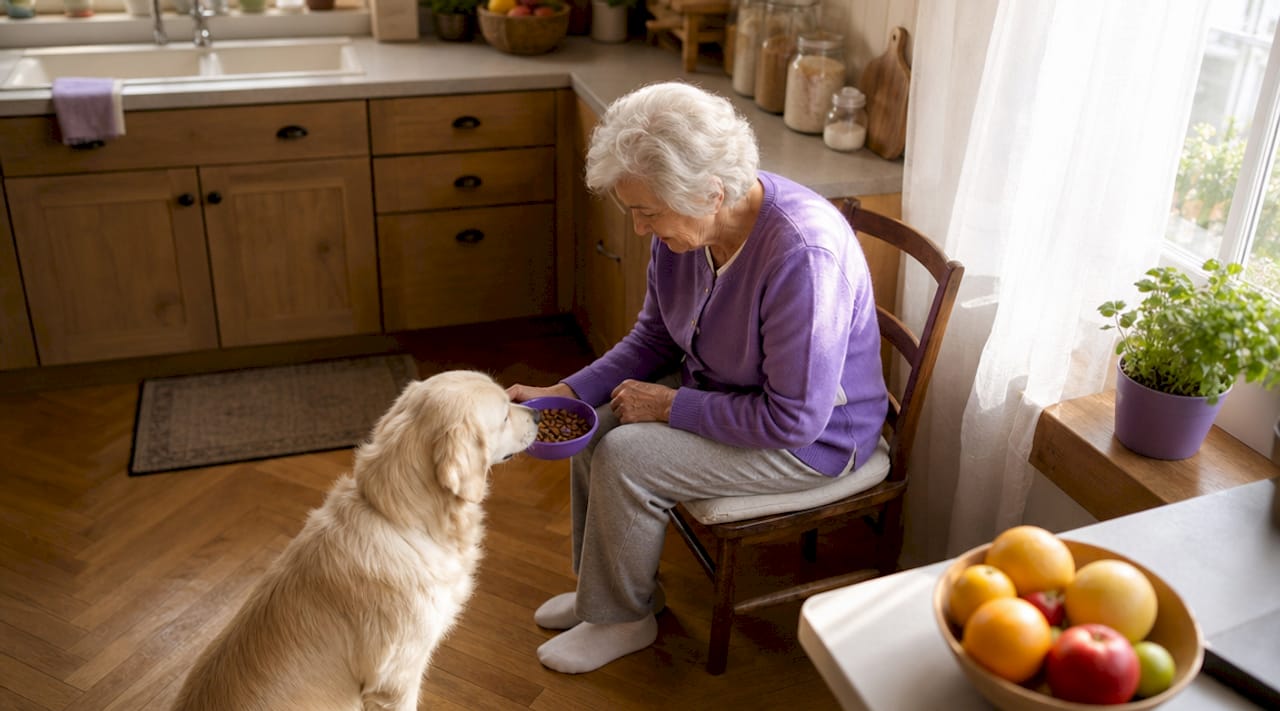
Home aides are defined as trained caregivers who assist pet owners with the physical and logistical demands of daily pet care when illness, aging, or limited mobility makes those tasks unsafe or impossible. The role of home aides in pet care extends well beyond simple household help. They manage heavy supplies, maintain feeding and medication schedules, and actively preserve the bond between owners and their animals. For seniors aging in place and pet owners managing chronic conditions, this support is often the difference between keeping a beloved pet and giving one up.
What specific pet care tasks do home aides perform?
Home aides handle the physical pet care responsibilities that create the greatest risk for owners with limited mobility. Homemaker services routinely manage heavy pet food bags weighing 15–40 lbs and disinfect water bowls to prevent biofilm buildup, both of which reduce fall risk and protect pet health. That combination of physical labor and hygiene maintenance is something many owners simply cannot sustain alone.
The specific tasks home aides perform include:
- Transporting and storing pet food. Lifting and carrying large bags of dry food is a leading cause of falls among older adults. Aides take over this task entirely.
- Cleaning pet areas. Litter boxes, water bowls, feeding stations, and sleeping areas require regular disinfecting. Aides handle scrubbing and sanitizing to prevent bacterial growth.
- Administering or reminding about pet medications. Many senior pets require daily pills, topical treatments, or supplements. Aides follow written schedules to keep dosing consistent.
- Grooming assistance. Brushing coats, wiping paws, and coordinating professional grooming appointments fall within the scope of services provided by home aides when owners lack the dexterity or strength to manage them.
- Walking and exercise. Professional pet care aides often provide 30-minute daily visits specifically for walking dogs and facilitating high-energy play, which owners with mobility challenges cannot safely do.
Pro Tip: Ask your aide agency to document every pet task in writing before care begins. This prevents any assumption that pet-related duties fall outside the aide’s scope.
How do home aides support pet routines and well-being?
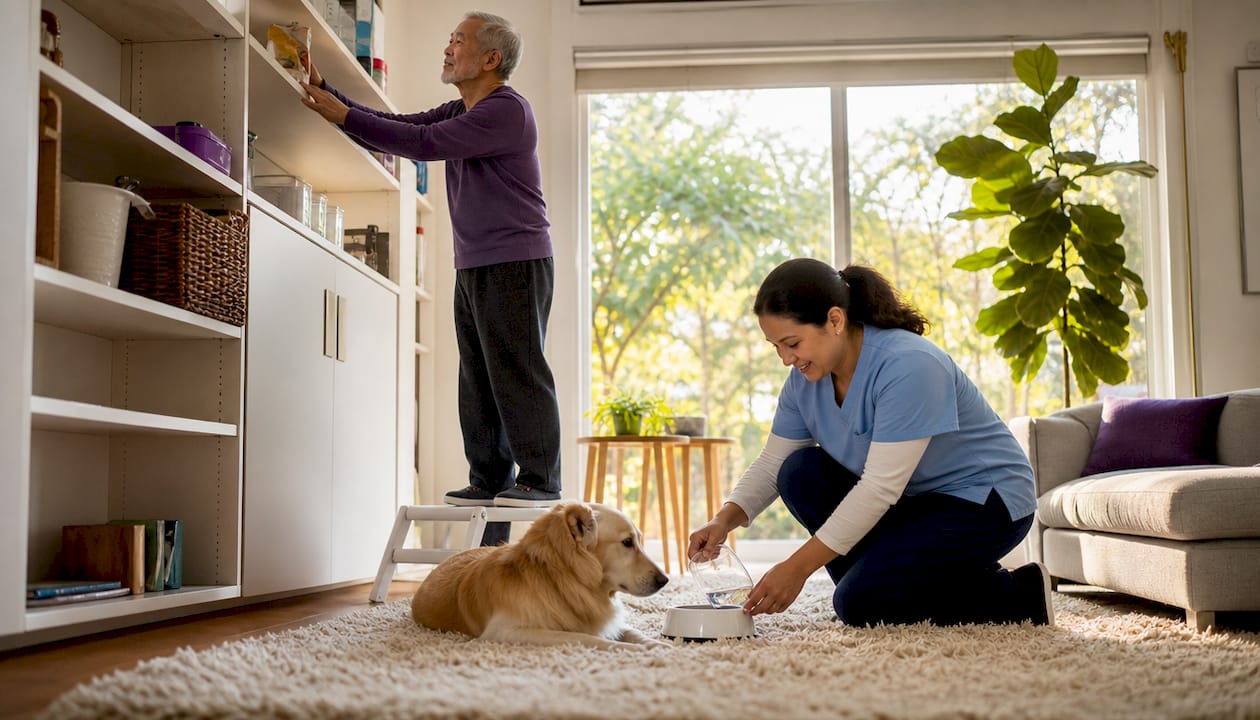
Consistent routines are the foundation of good pet health, and home aides are the people who protect those routines when owners cannot. Home care agencies increasingly integrate pet care add-ons like daily walking, medication assistance for senior pets, and vet appointment logistics into personalized care plans. This shift reflects a growing recognition that pet care is inseparable from owner well-being.
A well-structured aide-supported pet care routine covers five core areas:
- Feeding schedules and portion control. Aides prepare meals at consistent times and measure portions according to veterinary guidance, preventing overfeeding or missed meals.
- Exercise and companionship. Daily walks and play sessions keep pets physically healthy and mentally stimulated, even when owners cannot participate directly.
- Veterinary logistics. Aides transport pets to appointments, communicate with clinic staff, and relay instructions back to owners. This keeps preventative care on track.
- Home environment safety. Aides remove hazards like loose cords, slippery rugs near pet areas, and unsecured cleaning products that could harm both pets and owners.
- Care documentation. A formal pet care plan as part of the home care agreement ensures duties are clear, consistent, and never assumed to be out of scope.
The table below shows how aide-supported tasks map to specific pet health outcomes:
| Aide Task | Pet Health Outcome |
|---|---|
| Consistent feeding schedule | Stable weight and digestion |
| Daily walks | Reduced anxiety and healthy joints |
| Medication reminders | Controlled chronic conditions |
| Clean living areas | Lower infection and parasite risk |
| Vet appointment support | Up-to-date preventative care |
What are the emotional benefits of home aides helping with pet care?
Pets are proven emotional stabilizers for older adults, and home aides are the people who keep that relationship functioning when owners face illness or grief. The human-animal bond requires owners to meet comprehensive care responsibilities, including specialized diets, enrichment, and preventative health. When physical limitations threaten that capacity, aides step in to preserve it.
The emotional benefits of aide-supported home care for pets include:
- Reduced loneliness. Pets provide daily social interaction. Aides who maintain pet routines keep that interaction alive, especially for owners who live alone.
- Mental health continuity. Caring for a pet gives owners a sense of purpose. Aides preserve that sense by keeping owners involved in decisions, even when the physical work shifts.
- Support through grief and illness. Companion aides help widowed seniors maintain pet routines to prevent chronic isolation, gently encouraging re-engagement rather than forcing it.
- Prevention of pet rehoming. Hiring part-time aides for physical support is a direct strategy to avoid rehoming pets due to physical limitations alone.
“Many owners delay seeking aide help out of fear of failing as pet owners. Experts affirm that aide support preserves bonds and prevents rehoming due to physical limits. Asking for help is not a failure. It is responsible ownership.”
The fear of being seen as incapable stops many owners from getting help early. That delay often leads to the very outcome they feared: losing their pet. Aides make it possible to stay connected to an animal that provides daily comfort and structure.
How do you integrate a home aide into your pet care routine?
Successful integration of a home aide into your pet care routine depends on clear communication and a written plan from day one. Continuity of care by dedicated staff is critical for pet comfort. Pets react poorly to unfamiliar visitors in their territory, so requesting consistent caregiver assignments is a best practice that reduces pet stress and improves outcomes.
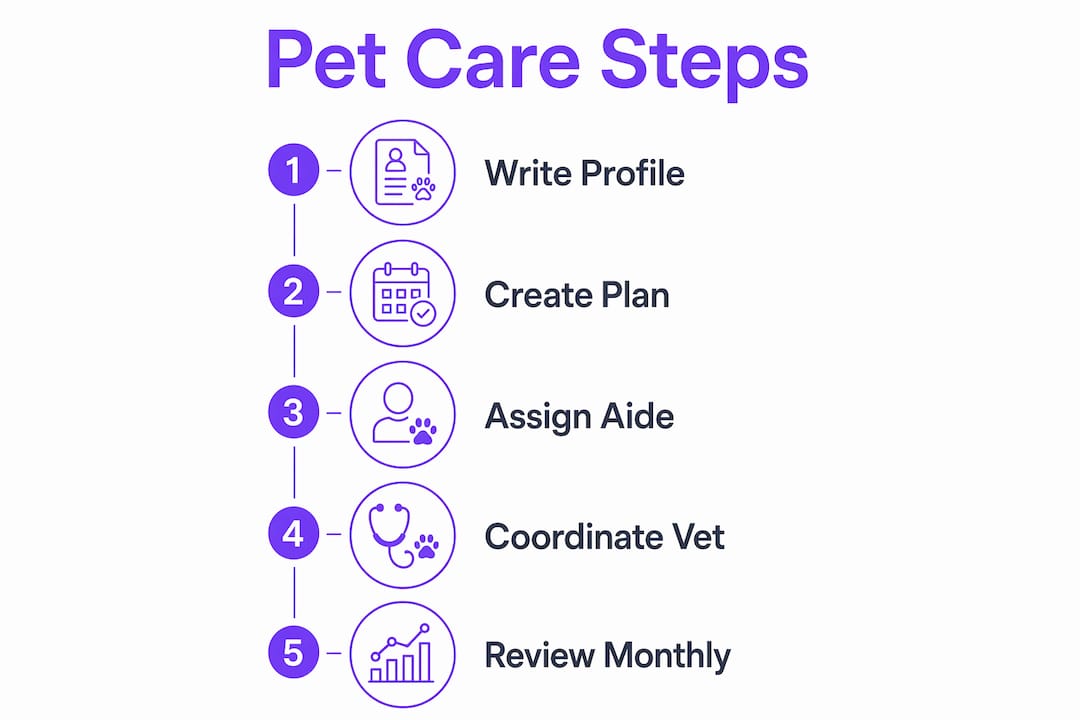
Follow these steps to set up a working system:
Step 1: Write a detailed pet profile. Include your pet’s name, breed, age, medical conditions, medications, feeding schedule, behavioral quirks, and emergency vet contact. Leave nothing to assumption.
Step 2: Create a formal pet care plan. This document becomes part of your home care agreement. It specifies which tasks the aide performs, how often, and what the escalation process is if a pet shows signs of illness.
Step 3: Request a consistent aide assignment. Ask your agency to assign the same caregiver whenever possible. Familiarity reduces pet anxiety and builds trust between the aide and your animal.
Step 4: Involve your veterinarian. Coordinating with veterinarians for pet-specific mobility aids like front-clip harnesses or elevated feeding stations reduces physical strain on both owners and aides. Your vet can recommend tools that make daily care safer and more sustainable.
Step 5: Review and adjust regularly. Schedule a monthly check-in with your aide to update the pet care plan as your pet’s needs change.
Pro Tip: Keep a laminated one-page pet summary on your refrigerator. In an emergency, any caregiver or first responder can find critical pet information immediately.
The table below compares two approaches to aide integration:
| Approach | Outcome |
|---|---|
| Verbal instructions only | Inconsistent care, missed tasks, aide confusion |
| Written pet care plan with formal agreement | Consistent care, clear accountability, better pet outcomes |
Key Takeaways
Home aides are the most direct solution for pet owners who face physical or cognitive barriers to daily pet care, and a written care plan is the single most important tool for making that support work.
| Point | Details |
|---|---|
| Physical task coverage | Aides handle heavy lifting, cleaning, and medication to reduce owner fall risk. |
| Routine consistency | Written feeding and exercise schedules keep pet health stable and predictable. |
| Emotional preservation | Aide support prevents rehoming and maintains the human-animal bond during illness or grief. |
| Caregiver continuity | Requesting the same aide reduces pet stress and builds long-term trust. |
| Veterinary coordination | Vets can recommend ergonomic tools that make aide-supported care safer for everyone. |
Why getting help early is the most responsible thing you can do
At Mypetssafetynet, we’ve seen one pattern repeat itself: owners wait too long to ask for help. They manage through pain, skip vet visits, and quietly reduce their pet’s care quality because they don’t want to admit they need support. By the time they reach out, the situation is already harder to fix.
The owners who do best are the ones who bring in an aide before the crisis hits. They treat it as a practical decision, not an admission of failure. Their pets are calmer, better cared for, and more connected to them because the physical burden has been lifted. The owner can focus on the relationship rather than the logistics.
What surprises most people is how quickly pets adapt to a trusted aide. Dogs that initially barked at a new visitor become comfortable within a few visits. Cats that hid under the bed start appearing at feeding time. The key is consistency. The same person, the same schedule, the same approach. That predictability is what pets need, and it’s what a well-structured aide arrangement delivers.
If you’re aging alone with pets or managing a chronic condition, the question isn’t whether you need support. The question is how soon you’ll put that support in place.
— Mypetssafetynet
How Mypetssafetynet supports pet owners and their caregivers
Pet owners who work with home aides still face one gap: what happens if something goes wrong when the aide isn’t there? Mypetssafetynet fills that gap with a wellness check-in service built specifically for solo pet owners and those aging in place.
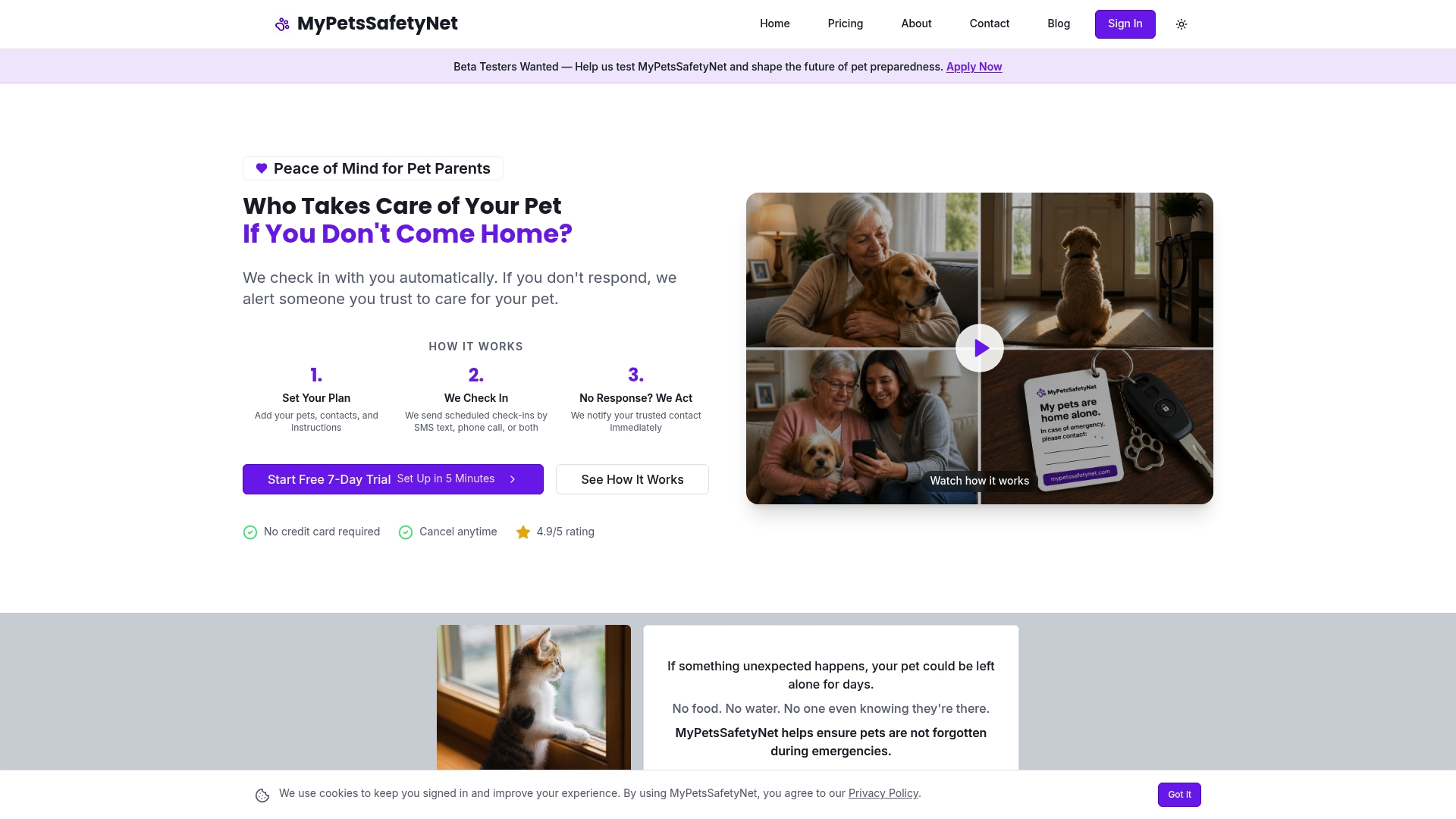
When you register with Mypetssafetynet, your emergency contacts are notified promptly if you miss a check-in. That means your pets are never left unattended, even between aide visits. The service works alongside your existing home care plan, adding a layer of protection that covers the hours your aide is not present. For pet owners who want full peace of mind, signing up takes minutes and requires no special equipment.
FAQ
What tasks do home aides perform for pet care?
Home aides handle physically demanding tasks including lifting heavy pet food bags, cleaning litter boxes and water bowls, administering pet medications, assisting with grooming, and walking dogs. These services reduce fall risk for owners and maintain consistent pet health routines.
Can a home aide take my pet to the vet?
Yes. Many home care agencies include vet appointment logistics as part of personalized care plans, covering transportation, communication with clinic staff, and relaying instructions back to the owner.
How do I make sure my aide knows how to care for my pet?
Create a written pet care plan that includes your pet’s feeding schedule, medications, behavioral notes, and emergency vet contact. Documenting these details in the home care agreement prevents gaps and keeps care consistent.
Will my pet accept a home aide?
Most pets adapt to a trusted aide within a few visits when the same caregiver is assigned consistently. Requesting a dedicated caregiver from your agency is the single most effective step for reducing pet stress during the transition.
How does Mypetssafetynet work alongside home aide care?
Mypetssafetynet provides wellness check-ins that alert your emergency contacts if you miss a scheduled check-in. This covers the hours between aide visits, so your pets are never left without a plan if something unexpected happens to you.