Automated Alerts for Deaf Pet Owners, No Smartphone, Contacts Notified

Automated wellness-check services send you scheduled messages by text, call, or email, and if you don’t respond, they notify the emergency contacts you’ve named, along with the pet-care instructions those contacts need. We built MyPetsSafetyNet around exactly this need: no smartphone required, just a working phone number and a plan your contacts can follow the moment they’re alerted.
TL;DR:
- Automated systems retry missed check-ins before notifying emergency contacts, with contacts receiving pet-specific care instructions, not just alerts.
- Setup involves gathering vaccination records, signing treatment authorizations, updating microchip info, and storing a waterproof emergency dossier.
- Support for basic phones, SMS, and calls makes these services accessible for landline users and helps bridge the gap when no one is physically present.
- Regular testing and updating of contact and pet details are essential to ensure the system functions reliably during actual emergencies.
- Pet-specific escalation features outperform generic medical alerts by providing detailed care instructions and supporting multiple pets within one account.
Table of Contents
- How automated wellness check-ins and escalation workflows work
- Setup checklist: what to prepare so contacts can act
- How to choose the right alert service for solo, elderly, or disabled pet owners
- What to expect after you sign up: onboarding, testing, and maintenance
- Why pet-focused alerts matter more than generic personal alarms
- How MyPetsSafetyNet puts this plan into action
- FAQ
- Sources
How automated wellness check-ins and escalation workflows work
The system runs on a simple rhythm: it sends you a prompt at scheduled times, you confirm you’re okay, and the cycle repeats. When a prompt goes unanswered, the service doesn’t panic and call 911. It waits through a response window, tries again, and only escalates once retries fail. This structure matters because research on automated monitoring systems describes exactly this pattern: scheduled intervals, missed-response triggers, and escalation to pre-designated contacts carrying shared details.
Here’s what typically happens during escalation:
- A missed check-in triggers one or more automatic retry attempts within a short window.
- If retries fail, the service contacts your named emergency contacts in a set order.
- Contacts receive pet-care instructions, not just a generic alert that something’s wrong.
- Services built for accessibility support SMS, phone calls, and email, so no smartphone or app is required.
This flexibility matters for readers who rely on landlines or basic phones. A peer-reviewed look at personal alarm services for people living alone found that roughly 35% of users could reach a phone during an emergency, while 46% had someone physically present. That leaves a real gap where automated systems act as a bridge when neither option is available.
On privacy, expect any legitimate service to store your pet dossier and contact list securely and share it only during an active alert, not continuously with third parties.

Setup checklist: what to prepare so contacts can act
An alert is only as useful as what your emergency contact can do once they get it. Before you rely on any service, assemble the documents and details that let someone else step in without guessing; for guidance on which records and certificates to include, see our detailed Pet Health Certificate Travel resource.
- Gather current vaccination and medical records, including proof of rabies vaccination, which many boarding facilities and clinics require before accepting a pet.
- Sign a veterinary treatment authorization form naming an authorized agent who can approve care on your behalf, along with any financial limits you’re comfortable setting.
- Confirm your pet’s microchip registration is current and add emergency contact cards or door stickers so anyone entering your home knows a pet is inside.
- Build a waterproof emergency dossier containing records, instructions, and contact information, then store a digital copy with your alert service and a physical copy somewhere a contact or responder would find it.
The American Veterinary Medical Association recommends this exact combination: vaccination records, veterinarian contacts, and a signed authorization form, because clinics routinely require written consent before treating a pet for someone other than its registered owner. Readers planning this step by step may find our guide to pet care when you can’t get home useful for working through the authorized-agent piece in detail.
Pro Tip: Keep one printed copy of your emergency dossier in a resealable bag taped inside a visible kitchen cabinet, where both your emergency contact and any first responder would think to look.

How to choose the right alert service for solo, elderly, or disabled pet owners
Not every personal safety service is built with pets in mind, and that distinction shapes what you should look for. A generic medical alert might summon paramedics, but it won’t tell anyone your dog needs insulin twice a day or that your cat hides under the bed when strangers arrive.
Look for these features before you commit to a plan:
- Escalation tiers that try multiple contacts in order, rather than stopping after one failed attempt.
- Pet-profile fields detailed enough to cover medications, feeding schedules, and behavioral notes.
- Support for multiple pets under one account, since many households have more than one animal depending on them.
- An instruction-card generator that turns your pet’s details into something a contact can read in seconds.
- No-smartphone workflows: voice calls and SMS options that work with any phone, not just app-based alerts.
- Clear trial terms, visible support hours, and a plain-language privacy and cancellation policy.
Treat a few patterns as warning signs: services that only route to 911 with no pet-specific information, vague descriptions of how escalation actually works, or no clear path to update your pet’s details once you’ve signed up. Our piece on telehealth and disabled pet owner support goes deeper into what accessible setup should look like in practice.
What to expect after you sign up: onboarding, testing, and maintenance
Setting up your account usually takes a few minutes: add your pets, add up to three emergency contacts, choose a check-in schedule, and confirm how you’d like to be reached. Once that’s done, run a test cycle immediately, before you need the system to work for real.
A reliable maintenance routine looks like this:
- Run a test check-in right after setup to confirm your contacts receive the alert correctly.
- Update pet and contact details after every vet visit or any change in medication.
- Re-verify microchip registration annually, since outdated records are a common reunification failure point.
- Recheck emergency contact numbers monthly, since a disconnected number defeats the entire system.
A missed check-in typically plays out like this: a prompt goes out at your scheduled time, a retry follows within the hour, and if there’s still no response, your first contact receives a message naming your pet, the care instructions on file, and a request to check on you. Peer-reviewed research on these systems points to outdated contact information and skipped test runs as the most common, and most avoidable, reasons these workflows fail when they’re actually needed. Our wellness check-in guide for solo pet owners walks through a sample test script you can run monthly.
Why pet-focused alerts matter more than generic personal alarms
A standard medical alert tells someone you’re in trouble. It says nothing about who feeds your cat or where your dog’s anxiety medication is kept. Pet-focused escalation closes that gap by handing contacts a plan, not just a notification.
There’s also an independence argument worth making directly. Automated check-ins let you avoid the daily phone calls from worried family that so many solo and elderly pet owners find intrusive, while still giving everyone peace of mind that someone will act if something actually goes wrong. For more on building that plan, see our pet care guide for living alone.
— MyPetsSafetyNet
How MyPetsSafetyNet puts this plan into action
We built MyPetsSafetyNet specifically around the gap between personal safety alerts and pet-specific care instructions, because knowing someone will check on you isn’t the same as knowing your pet will actually be fed, walked, and medicated on schedule.
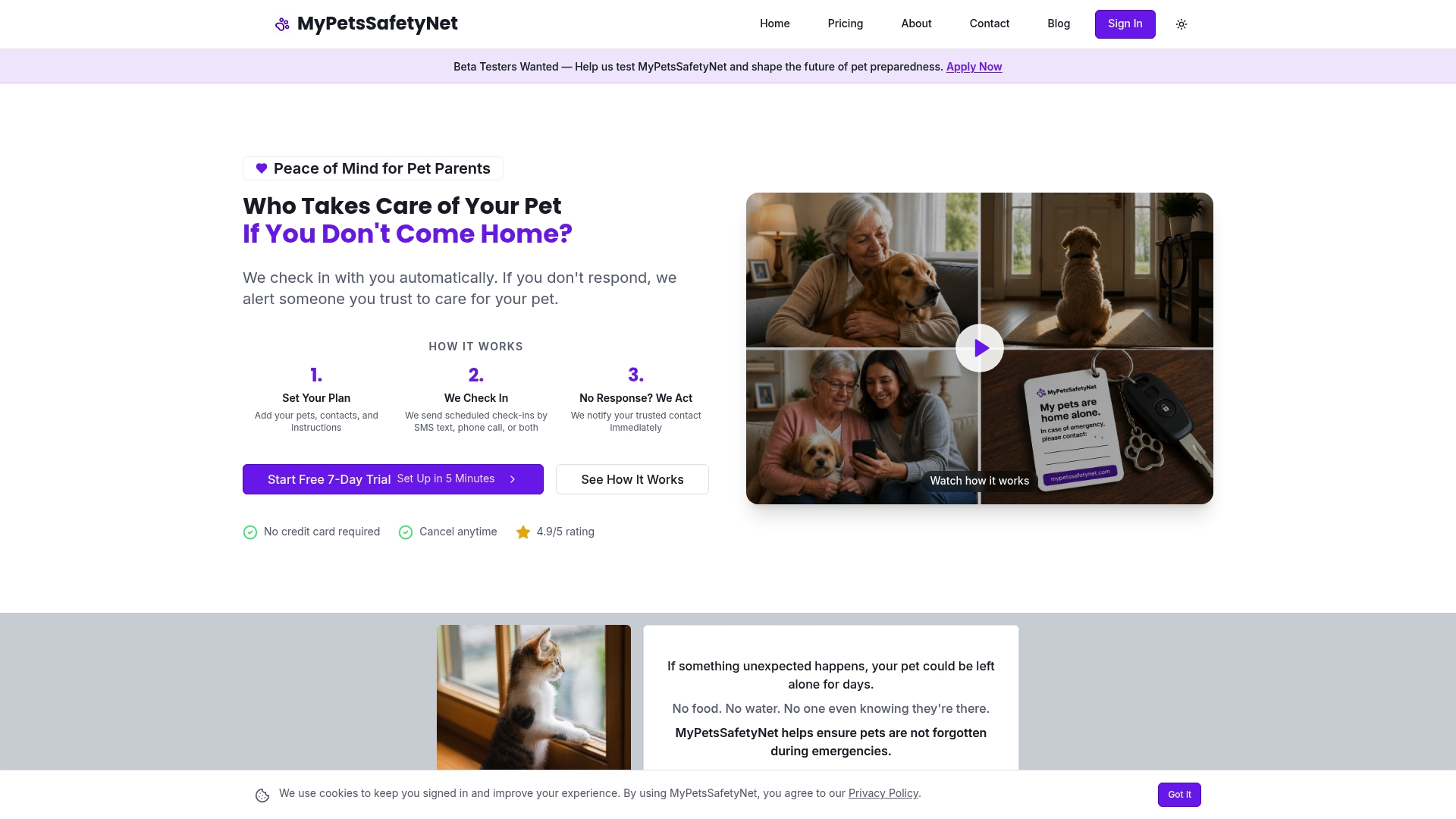
Our service covers the full checklist above in one place:
- No smartphone required: check-ins work by SMS or phone call.
- Customizable countdown intervals and escalation to named emergency contacts.
- Pet-care instruction cards generated from pet profiles, covering multiple pets per account.
- Setup that is quick and straightforward.
Getting started takes three steps: add your pets and their care details, add your emergency contacts, and run a test check-in to confirm everything works. We offer a 7-day free trial with no credit card required, and our Monthly plan runs $6.99 per month after that. If you’d rather start with something smaller first, our free pet emergency card is a good first step while you decide whether ongoing check-ins make sense for your household.
FAQ
What happens if I don’t respond to a wellness check-in?
The service retries a set number of times within a short window, and if you still don’t respond, it notifies your named emergency contacts in order along with your pet’s care instructions. This is the core workflow automated monitoring research describes: scheduled prompts followed by escalation when a response is missed.
Do I need a smartphone to use a pet wellness check-in service?
No. MyPetsSafetyNet works with any phone capable of receiving a call, text, or email, so a basic landline or flip phone is enough to stay enrolled. This matters most for elderly or disabled pet owners who may not use smartphone apps regularly.
What should I include in a pet emergency dossier?
Include current vaccination records with rabies proof, your veterinarian’s contact information, a signed treatment authorization form, and clear feeding and medication instructions. The AVMA’s disaster planning guidance recommends this same combination so an authorized agent can get your pet veterinary care without delay.
How much does MyPetsSafetyNet cost?
The Monthly plan costs $6.99 per month, and new users can try the service free for 7 days with no credit card required. Pricing covers up to five pets and three emergency contacts on one account.
How often should I test my pet alert system?
Test your check-in flow right after setup, then again any time you update a contact or your pet’s medical details. Routine monthly testing is widely considered the single most effective habit for keeping escalation systems reliable when they’re actually needed.
Sources
- Study on emergency situations for individuals living alone (PMC)
- Pets and disasters | American Veterinary Medical Association
- MDPI article on automated monitoring systems (2023)