Services That Notify Others If You Can’t Care for Your Pet
Pet care notification services are automated systems that alert your designated emergency contacts when you fail to check in, so your pets receive timely care even if you’re incapacitated. These services solve one of the most urgent problems facing solo pet owners: the gap between when something goes wrong and when someone finds out. Automated wellness check-ins reduce anxiety for pet owners living alone by enabling early responses from trusted contacts. The question of which services notify others if I can’t care for my pet has a clear answer: dedicated emergency notification platforms built specifically around daily check-in triggers and multi-contact alerts. Mypetssafetynet is one such service, designed for pet owners who live independently and want a reliable safety net for their animals.
Delayed notification is the greatest risk to pets in solo-owner households. That single fact explains why technology-driven alert services have become the gold standard for independent pet parents. When every hour matters for a pet without food, water, or medication, a system that acts automatically is far more reliable than hoping a neighbor notices something is wrong.
How do pet care notification services work to alert others?
Pet care notification services operate on a simple but powerful trigger: a missed check-in. Each day, the system sends you a wellness prompt by SMS or email. If you don’t respond within a set window, the service automatically contacts your emergency contacts with a pre-written alert.

Emergency notification systems like AssureOkay can notify up to 5 designated contacts via SMS or email when a user misses a daily wellness prompt. That contact limit matters because it gives you enough coverage without overwhelming your network. You can include a neighbor, a family member, a trusted friend, and a backup caretaker, all in one plan.
The alert itself can carry more than just a warning. Most services let you attach care instructions directly to the notification. Your contacts receive your pet’s feeding schedule, medication details, your vet’s phone number, and any behavioral notes they need to act confidently. This removes the guesswork from an already stressful situation.
Here is how a typical notification flow works:
- You receive a daily wellness check-in prompt by SMS or email at a scheduled time.
- You confirm you’re okay by responding or tapping a button.
- If you miss the prompt, the system waits for a short grace period before escalating.
- Your emergency contacts receive an alert with your pet’s care instructions attached.
- Contacts can then check on you and your pet without delay.
Pro Tip: Review and update your emergency contact list every three months. Phone numbers change, people move, and availability shifts. A contact who can’t be reached is no contact at all.
What features should I look for in a pet care notification service?
The right pet care notification service does more than send a single text. The best platforms combine reliable alert mechanics with practical pet health tools that make your emergency contacts genuinely prepared to help.
These are the features worth prioritizing:
- Automated check-in frequency. Daily check-ins are the minimum. Some services offer adjustable schedules so you can set morning and evening prompts if your health situation warrants closer monitoring.
- Multi-contact alerts. A service that notifies only one person creates a single point of failure. Look for platforms that alert multiple contacts simultaneously or in a sequence.
- Customizable care instructions. Your contacts need specific information, not a generic alert. The service should let you store feeding schedules, medication lists, vet contacts, and behavioral notes.
- Ease of use. If the daily check-in feels like a chore, you’ll stop doing it. The best services use a single SMS reply or a one-tap button to confirm your wellness.
- Health record integration. Some platforms go further by storing your pet’s medical records alongside the alert system. Pet 24-7 combines health records, vaccination reminders, and live vet support with notification capabilities. That kind of integration means your contacts have everything they need in one place.
- AI-powered health monitoring. More advanced services use AI to flag changes in your pet’s routine or health patterns. The LOKI app provides AI-driven daily check-ins and refill reminders alongside health tracking, which adds a proactive layer to standard alert services.
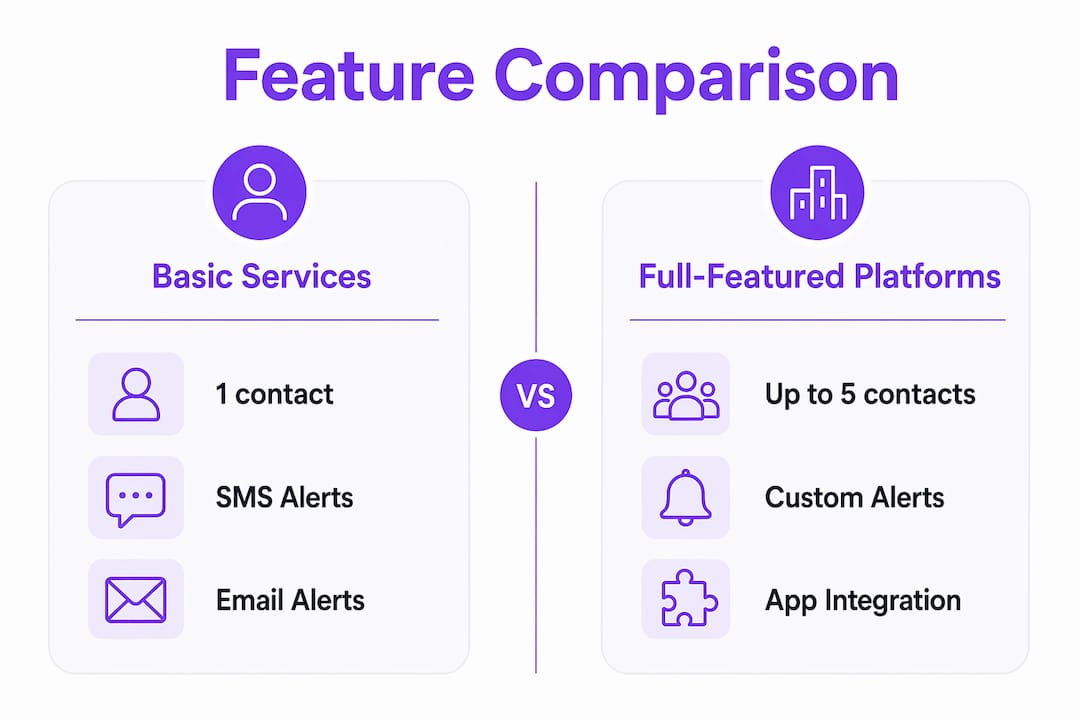
| Feature category | Basic services | Full-featured platforms |
|---|---|---|
| Alert contacts | 1 contact | Up to 5 or more contacts |
| Check-in method | Email only | SMS, email, and app push |
| Care instructions | Not included | Attached to every alert |
| Health records | Not included | Stored and shareable |
| AI health monitoring | Not available | Available on select platforms |
The table above shows the practical gap between entry-level alert tools and full-featured platforms. For solo pet owners, the full-featured option is worth the added setup time.
How to prepare a comprehensive emergency plan alongside notification services
A notification service is your first line of response, not your entire plan. The technology alerts your contacts. Your emergency plan tells them exactly what to do when they arrive.
Emergency plans must be actively maintained, including up-to-date Emergency Care Kits with medication lists, vet contacts, and access instructions. A plan you built two years ago and never updated is nearly as dangerous as no plan at all. Medications change, vets change, and your pet’s needs evolve.
Your emergency plan should include two components: a digital record stored in your notification service and a physical kit kept somewhere accessible in your home.
Your physical Emergency Care Kit should contain:
- Your pet’s current medications with dosage instructions and refill dates
- Your vet’s name, clinic address, and after-hours emergency number
- A copy of your pet’s vaccination records and any chronic health conditions
- Feeding instructions, including brand, portion size, and meal times
- A spare key or door code for your home, given to at least one trusted contact
- A signed letter authorizing your designated caretaker to make veterinary decisions
Your digital record should include:
- The same information as your physical kit, stored in your notification service
- Updated contact details for all emergency contacts
- Notes on your pet’s temperament and any behavioral triggers your contacts should know about
Pro Tip: Tell your emergency contacts where your physical kit is kept. An alert that sends contacts to your home is only useful if they can find the information they need once they get there.
Designating a trusted caretaker goes beyond adding a name to a list. That person needs to know your pet, understand the care routine, and feel confident acting without you. A brief in-person walkthrough once a year makes a real difference in how quickly they can respond.
What are common challenges and best practices for using these services effectively?
The most common failure point in pet care notification services is not the technology. It is the human setup around it. Outdated contact information, vague care instructions, and untested plans create gaps that no alert system can close on its own.
Emergency contact designation and briefing are critical for effective pet care responses. Sending an alert to someone who doesn’t know your pet’s name, diet, or vet is only marginally better than no alert at all. Your contacts need context, not just a notification.
These best practices keep your plan reliable over time:
- Audit your contact list every quarter. Confirm that each person is still reachable, willing to help, and physically able to get to your home quickly.
- Test your check-in system monthly. Skip a check-in intentionally to confirm your contacts actually receive the alert and know what to do with it.
- Sync your service with local pet welfare resources. Know the name and number of your nearest 24-hour emergency vet clinic. Add it to your care instructions so your contacts don’t have to search in a crisis.
- Use shared care tools when possible. Apps like FLUTO Pet Care Tracker allow shared management of pet care routines within a family or care network, which reduces the chance of missed caregiving tasks.
- Keep your care instructions specific. “Feed twice a day” is not enough. “Feed one cup of dry food at 7 a.m. and 6 p.m., no table scraps, and keep water bowl full” is what your contacts actually need.
- Brief new contacts in person. A phone call is not enough. Walk your primary caretaker through your home, show them where supplies are kept, and introduce them to your pet before an emergency happens.
Pet owners with chronic illness or heightened health risk benefit most from combining daily check-in discipline with a fully briefed contact network. The technology handles the alert. The preparation handles everything that comes after.
Key takeaways
Pet care notification services are the most reliable way to protect your pet when you cannot care for them, but only when paired with a current emergency plan and briefed contacts.
| Point | Details |
|---|---|
| Automated alerts are the gold standard | Missed check-ins trigger immediate SMS or email alerts to up to 5 emergency contacts. |
| Care instructions belong in every alert | Contacts need feeding schedules, vet numbers, and medication details to act without delay. |
| Plans must be actively maintained | Update your Emergency Care Kit and contact list at least every three months. |
| Human preparation matters as much as technology | Brief your emergency contacts in person so they can act confidently when an alert arrives. |
| Test your system regularly | Skip a check-in monthly to confirm your contacts receive alerts and know how to respond. |
Why notification services changed how I think about pet safety
Most pet owners assume their social circle will notice if something goes wrong. That assumption is the gap that puts pets at risk. A neighbor who sees your lights on, a friend who expects a text but doesn’t send one when it doesn’t arrive. These informal safety nets fail quietly, and pets pay the price.
What I’ve seen working with solo pet owners is that the emotional barrier to setting up a notification service is almost always higher than the actual effort involved. People delay because it feels like planning for the worst. But the daily check-in habit quickly becomes routine, and the peace of mind it creates is immediate and real.
The most overlooked part of any notification plan is the briefing conversation with your contacts. Technology sends the alert. People make the decisions. A contact who has met your pet, knows where the food is kept, and has your vet’s number saved in their phone will respond faster and more effectively than one who receives an alert cold. That conversation is the most valuable 20 minutes you can spend on your pet’s safety.
Redundancy is not paranoia. Having two or three briefed contacts, a physical kit, and a digital record is not excessive. It is the minimum that gives your pet a real chance if something happens to you unexpectedly.
— Mypetssafetynet
Mypetssafetynet: built for pet owners who live independently
Mypetssafetynet was created specifically for pet owners who live alone or manage their health independently and want a reliable system behind them.
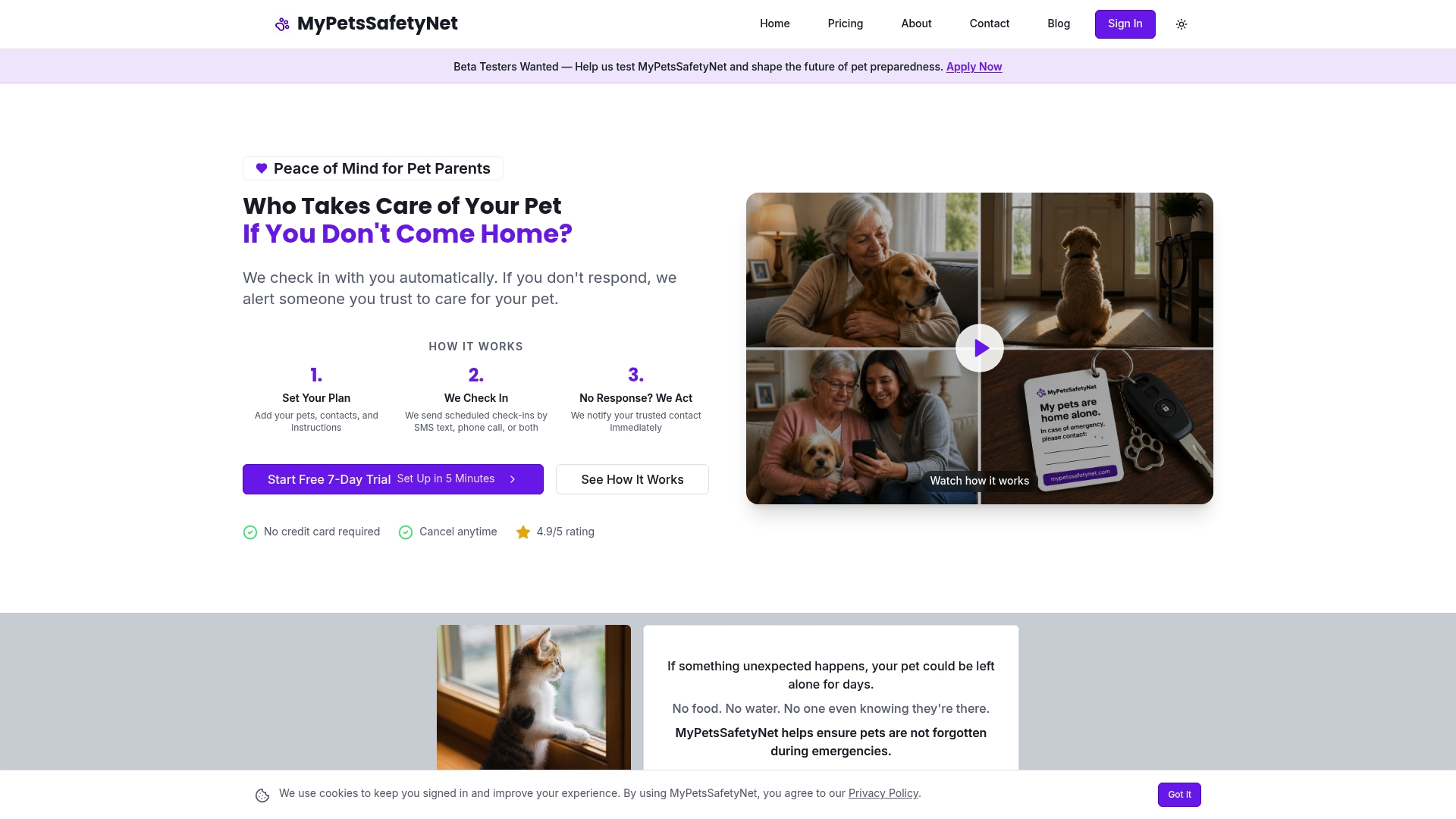
The service sends you a daily SMS wellness check-in. If you don’t respond, your emergency contacts receive an alert so they can check on both you and your pets. You can store your pet’s care instructions directly in the platform, so your contacts arrive prepared. Setup takes minutes, and the daily check-in takes seconds. For pet owners who want genuine peace of mind, Mypetssafetynet offers a straightforward, reliable way to make sure your animals are never left without care. You can also review the SMS consent details to understand exactly how contact notifications are managed.
FAQ
What services notify others if I can’t care for my pet?
Pet care notification services like Mypetssafetynet send automated alerts to your emergency contacts when you miss a daily wellness check-in. These services notify contacts by SMS or email and can include your pet’s care instructions in the alert.
How many contacts can a pet care notification service alert?
Systems like AssureOkay can notify up to 5 contacts simultaneously via SMS or email when a check-in is missed. Having multiple contacts reduces the risk of a single point of failure in your emergency plan.
What information should I include in my pet emergency plan?
Your plan should include your pet’s feeding schedule, current medications with dosages, your vet’s contact information, and a spare key or access code for your home. Actively maintaining this information with regular updates is what makes the plan effective in a real emergency.
Do I need to brief my emergency contacts before an emergency happens?
Yes. Briefing your contacts in advance is critical because an alert alone does not tell them where supplies are kept or how your pet behaves. An in-person walkthrough once a year significantly improves how quickly and confidently they can respond.
Can pet care notification apps also manage my pet’s health records?
Some platforms combine alert capabilities with health record storage, vaccination reminders, and vet access. This integration means your emergency contacts have complete care information available the moment they receive an alert.