No Smartphone Required: Landline Pet Alerts for Solo Pet Owners

Landline pet alerts are automated wellness check calls that ring your phone on a schedule, wait for a voice or keypress confirmation, and notify your named caregivers with pet-care instructions if you never answer. No smartphone or internet connection is required. If you own a pet and live alone, the immediate step is simple: set up a daily check-in and name at least two caregivers, with one holding a key to your home.
TL;DR:
- Landline pet alerts are reliable during power outages and do not depend on internet or smartphone connectivity.
- Configurable retry and grace period settings help prevent false alarms and alert fatigue by accommodating normal delays.
- Preparing detailed pet and caregiver information, including access plans and emergency instructions, is crucial for system effectiveness.
- Regular testing and updating caregiver contact details ensure the system remains functional and trustworthy over time.
- The monthly cost is typically under $7, with setup taking less than 30 minutes and no smartphone needed for operation.
Table of Contents
- How Do Landline Pet Alerts Actually Work?
- What Should You Prepare Before Setting Up Alerts?
- Which Phone Setups Work Best for Landline Alerts?
- How Do You Avoid False Alarms and Alert Fatigue?
- How Fast Do Alerts Actually Reach Someone?
- What Does a Landline Pet Alert Service Cost?
- What Should You Do When a Check-In Call Fails?
- Landline Alerts vs. Cellular and Wi-Fi Pet Devices
- Is Your Personal Information Safe With These Systems?
- How Often Should You Test and Maintain the System?
- Why We Built Landline Pet Alerts Around Solo Owners
- Set Up Your Pet’s Safety Net Today
- Sources
- FAQ
How Do Landline Pet Alerts Actually Work?
Every landline pet alert system runs on the same basic logic: reach out, wait, confirm, and escalate if nothing happens. The call itself can be automated or human-staffed, and the difference matters more than most people assume.
An automated call typically asks you to press a key, like “press 1,” or speak a short phrase to confirm you’re okay. A human-staffed check-in can pick up on hesitation or distress in your voice, but it costs more and usually means fewer check-ins per day. Most solo pet owners do fine with automated calls, since the goal isn’t a conversation. It’s confirmation.
The typical flow looks like this:
- A scheduled call goes out at the time you set, once or several times a day.
- You get a response window, usually a few minutes, to answer and confirm.
- If you don’t answer, the system retries the call after a short pause.
- After the configured number of missed retries, it escalates to your first designated contact.
- If that contact doesn’t respond either, it moves down your caregiver list, and in some setups, can loop in 911 if you’ve turned that option on.
You control most of this: the check-in window, how many retries happen before escalation, whether daytime and nighttime rules differ, and the order your caregivers get called. That configurability is what separates a daily check-in service from a wearable pendant. A pendant only helps if you can press a button. A scheduled call reaches out to you, which matters if a fall, a stroke, or a medical event leaves you unable to act on your own.
What Should You Prepare Before Setting Up Alerts?
A landline alert system is only as useful as the information behind it. Caregivers who show up to an unlocked door with no idea what your dog eats or where the leash is waste precious time. Work through this list before your first check-in call ever goes out.
- Pick at least two caregivers. One should have a spare key or a way to get in without breaking a window; the other serves as backup if the first is unreachable.
- Confirm access with each caregiver directly. A key sitting in a drawer nobody knows about does nothing. Walk each person through exactly how they’d get inside.
- Build a one-page pet emergency info card. Include feeding schedule, medications and dosages, your vet’s name and number, and where supplies like food, leashes, and carriers are kept. A pet emergency plan for solo owners built around this kind of card is what turns a missed check-in into a same-day pet visit instead of a days-long gap.
- Post that card somewhere obvious. Taped inside the front door or on the refrigerator works. Responders shouldn’t have to search.
- Add caregivers to your alert system’s escalation chain, in the order you want them contacted.
- Set your grace period and retry count, and decide whether emergency dispatch is something you want enabled.
- Run a test check-in and actually walk your caregivers through what the alert looks and sounds like on their end.
Pro Tip: Schedule the test call for a time your caregivers are already expecting it, so the first “emergency” alert they ever get isn’t a false alarm that makes them doubt the system later.
Which Phone Setups Work Best for Landline Alerts?
A traditional copper landline, the kind that runs on the phone company’s own power grid, is the most dependable option because it usually keeps working even during a power outage. VoIP-based home phone service, by contrast, depends on your internet router and home electricity, so if the power goes out, so does your phone line. If you rely on VoIP, a battery backup for your router is worth the cost.
A few practical details make a real difference in reliability:
- Keep your cordless phone base near an outlet that isn’t on a switch you might accidentally flip off, and check the handset battery monthly.
- Require a keypress or spoken confirmation rather than just “answering,” since an answering machine or voicemail can pick up the call and trick the system into thinking you responded when you didn’t. This is one of the most common causes of false negatives in automated check-in setups.
- Turn off “answer and screen” features on your machine during check-in windows, or set the system to require a specific keypress that voicemail greetings can’t trigger.
- Build in redundancy: a neighbor who checks on you visually, a second phone number, or a caregiver who also gets a text if you have any mobile phone at all, even a basic one.
- If you use a medical alert pendant or another device, treat it as a second layer, not a replacement. A check-in service is proactive and reaches out to you, while a pendant only works if you’re able to press it.
For older or disabled owners, look for services that offer human-staffed callback options or longer response windows. A rushed 90-second confirmation window isn’t realistic if you move slowly or have trouble reaching the phone in time.
How Do You Avoid False Alarms and Alert Fatigue?
The fastest way to make a landline pet alert system useless is to set it too aggressively. If every 10-minute delay in answering the phone triggers a call to your daughter or neighbor, people start ignoring the alerts, or worse, start dreading them.
Configurable retries and grace periods exist for exactly this reason, and using them well makes the difference between a system you trust and one you eventually turn off. A reasonable middle ground uses a grace period long enough to cover normal delays, like being in the shower or outside with the dog, paired with two or three retries before anyone gets escalated to.
Keep these habits in mind:
- Limit shared pet and vet information to what your caregivers actually need. There’s no reason to hand out your full medical history alongside your dog’s feeding schedule.
- Review your contact list every few months. People move, change numbers, or become unavailable, and an outdated caregiver list defeats the entire purpose.
- Decide deliberately whether to allow automatic 911 dispatch. Many solo pet owners prefer a family-first approach, since a caregiver arriving to check on both you and the pet often resolves things faster than an emergency response aimed only at you.
- Schedule periodic drills, and update spare keys, caregiver availability, and pet supplies whenever something changes.
Pro Tip: Set a recurring reminder every three months to double check the phone numbers on your escalation list. A single outdated number can silently break the entire chain.
How Fast Do Alerts Actually Reach Someone?
Response speed depends entirely on how you configure the grace period and retries, and can vary broadly from a shorter time frame to several hours from missed check-in to caregiver notification. That range isn’t a flaw. It’s the whole point of making these settings adjustable.
A tighter setup might use a 10 minute response window with two retries five minutes apart, meaning a caregiver gets notified roughly 20 minutes after the original call if you never answer. A looser setup, better suited to someone with mobility limits, might allow 30 minutes per attempt with three retries, stretching total time to over an hour before anyone is alerted. Neither is wrong. The right choice depends on your health, your mobility, and how anxious you want your caregivers to be about brief delays.
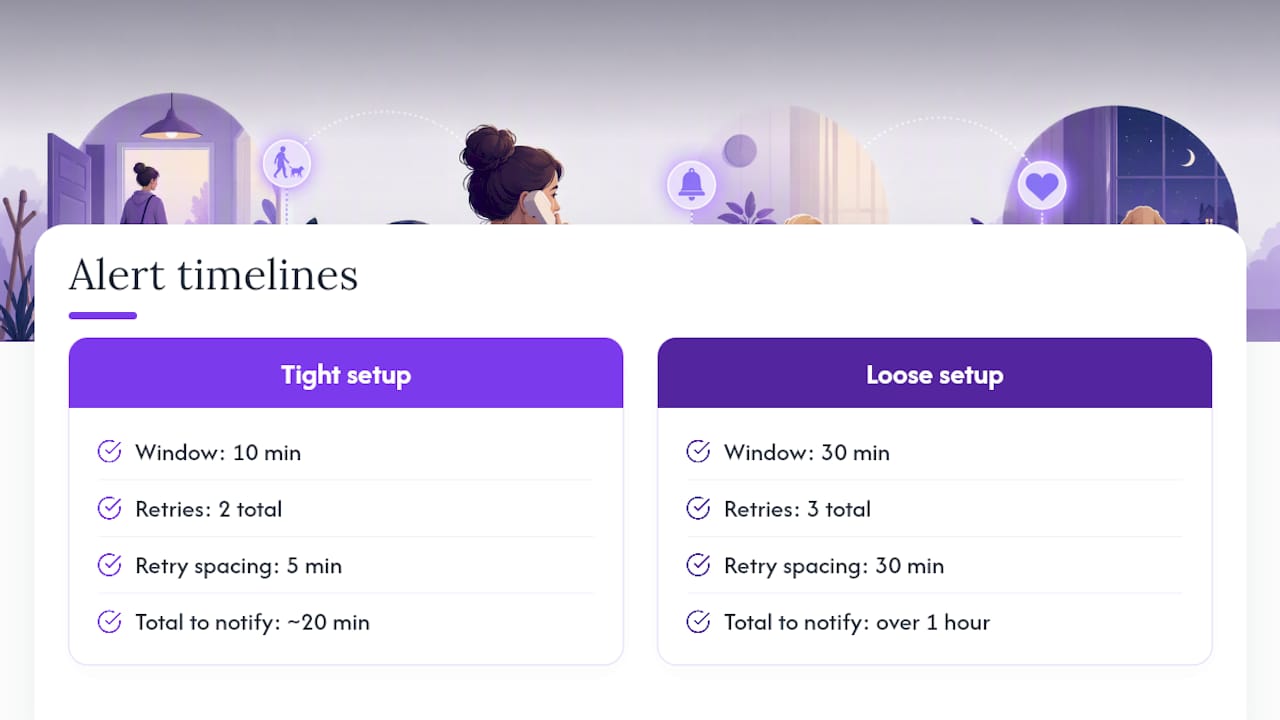
Day and night rules matter too. Many owners set shorter grace periods during waking hours and longer ones overnight, since a missed 2 a.m. call is far more likely to mean you’re simply asleep than in trouble. Building that distinction into your schedule avoids waking up a caregiver over nothing.
Whatever numbers you land on, write them down somewhere your caregivers can see, so they know roughly how long to expect between a missed call and their phone ringing. Nobody should be left guessing whether the system is even working.
What Does a Landline Pet Alert Service Cost?
Pricing for automated wellness check services generally runs as a simple monthly subscription rather than a one-time purchase, since the value comes from an ongoing daily call, not a single setup. Setup itself is usually fast. Most services ask for your schedule, your caregiver list, and basic pet details, and the whole process takes well under half an hour for most people.
Expect to spend a few minutes entering pet information like feeding times, medications, and vet contacts, since that’s what actually gets sent to your caregivers if you miss a check-in. The technical setup, meaning connecting your landline or phone number to the service, is typically the fastest part. Most of your time goes into deciding your escalation order and writing down instructions clearly enough that someone unfamiliar with your routine could follow them.
There’s no reason to overthink the cost side. A service that charges a flat, predictable monthly fee is easier to budget for than one with confusing tiers or add-on charges for basic features like multiple pets or multiple contacts.
What Should You Do When a Check-In Call Fails?
Even a well-configured system occasionally misfires, and knowing the common causes saves you from unnecessary panic or unnecessary calls to tech support.
Start with the phone line itself. If your cordless handset wasn’t charged or was left too far from the base, the call may have gone to voicemail without you ever hearing it ring. Check the battery and keep the handset within a normal range of the base station.
Next, check for voicemail or answering machine interference. If your machine picks up before you do, the system may register that as a non-response, which is exactly what it should do, since a machine can’t press a key or speak a confirmation phrase. If this keeps happening, adjust the number of rings before your machine activates, or disable it during your scheduled check-in window.
Confirm your caregiver contact numbers are current. A number that’s been disconnected or reassigned will silently break the escalation chain, and you often won’t know until a real emergency exposes the gap.
Finally, if calls aren’t coming through at all, verify your phone service is active and that any call-blocking or spam-filter features aren’t screening out the check-in number. Landlines rarely have this issue, but VoIP and some mobile carriers sometimes flag automated calls incorrectly.
Landline Alerts vs. Cellular and Wi-Fi Pet Devices
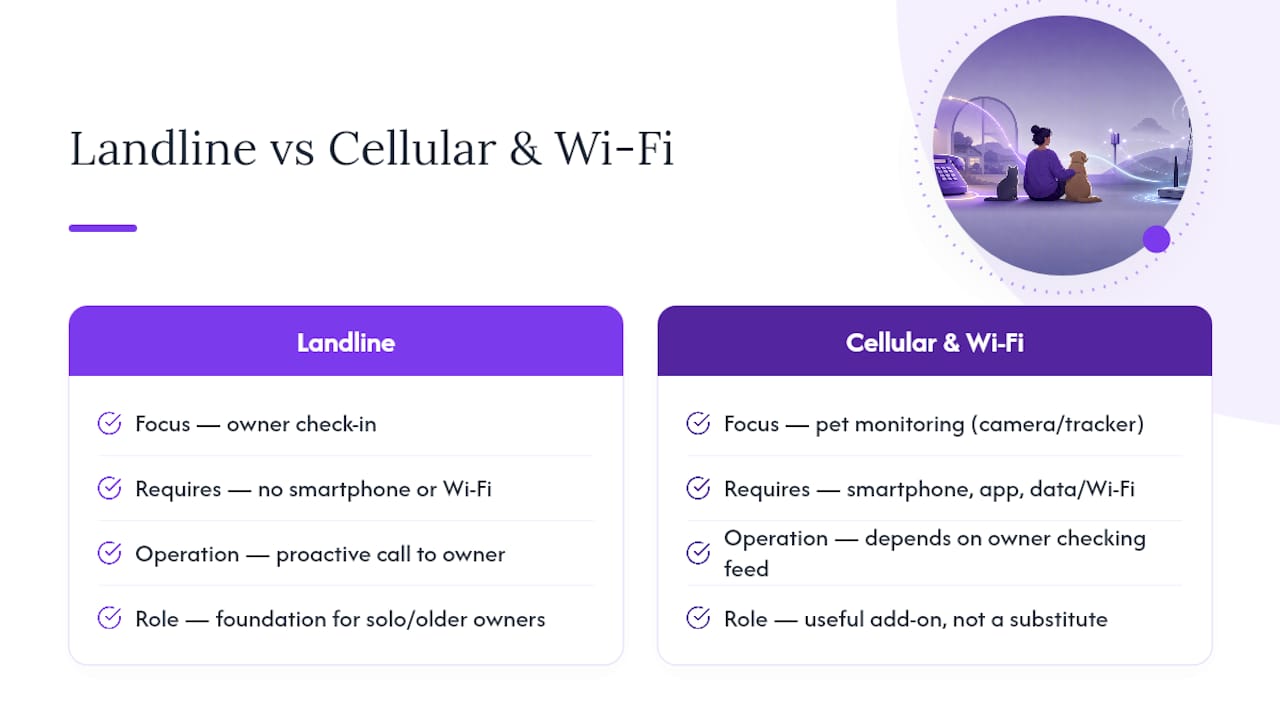
Landline-based systems and newer cellular or Wi-Fi-connected pet devices solve different problems, and understanding the difference helps you pick the right layer of protection instead of assuming one replaces the other.
A landline pet alert focuses on you, the owner, and whether you’re able to respond to a scheduled call. It doesn’t require a smartphone, a data plan, or a home Wi-Fi network, which makes it a dependable choice if you don’t use or want smart technology. Wi-Fi pet cameras and cellular trackers, by contrast, focus on the pet directly, showing you where your dog is or what your cat is doing on camera, but they depend on you being able to check an app, which assumes you’re already capable of using a smartphone.
That’s the real gap. A camera can show a worried family member that a dog is pacing by the door, but it does nothing if you’re the one who’s incapacitated and nobody’s watching the feed. A proactive check-in service reaches out on its own, rather than waiting for someone to log in and look.
For most solo pet owners, especially those who are older or living with a disability, the landline call is the foundation, and a Wi-Fi camera or cellular tracker is a nice add-on layer, not a substitute. If you already use one of those devices, keep it, but don’t let it replace the human notification chain that a check-in service builds around your pet’s care.
Is Your Personal Information Safe With These Systems?
Landline pet alert services collect a modest amount of personal information: your phone number, your caregivers’ contact details, and basic pet care instructions like feeding schedules and medications. That’s a narrower footprint than most smart home devices, which often track location, video, and usage patterns continuously.
Still, it’s worth being deliberate about what you share. Only include information your caregivers genuinely need to act. A vet’s phone number and your dog’s medication schedule matter; your full medical history generally doesn’t need to sit in the same profile.
Ask any service you’re considering how contact information is stored and whether it’s shared with third parties beyond the caregivers you’ve named. A service built specifically around pet-care emergencies should be sending your information to the people you chose, and nowhere else.
Review your caregiver list and pet details periodically, both for accuracy and to remove anyone who’s no longer a good fit to be on that list. An outdated caregiver isn’t just a privacy loose end. It’s a broken link in the chain that’s supposed to protect your pet.
How Often Should You Test and Maintain the System?
A landline pet alert system that’s never tested is a system you’re only assuming works. Treat it the way you’d treat a smoke detector: functional in theory means nothing until you’ve actually heard it go off.
Run a full test check-in at setup, and walk each caregiver through exactly what the alert looks like on their end, whether that’s a call, a text, or both. Repeat this test every few months, since phone carriers change, numbers get reassigned, and settings occasionally reset after a service update.
Check your cordless phone’s battery and base placement monthly if you rely on one, and confirm your landline or VoIP connection is active after any power outage or internet disruption. Update your pet emergency info card whenever medications, feeding schedules, or vet information changes, since a stale card can send a caregiver down the wrong path in a real emergency.
Finally, revisit your escalation order and grace periods at least twice a year. Caregiver availability shifts, health needs change, and what worked last year might not fit your situation today.
Why We Built Landline Pet Alerts Around Solo Owners
Some safety technology assumes you have a smartphone, a data plan, and the ability to log into an app during an emergency. Solo pet owners, especially older adults and people with disabilities, often don’t fit that assumption, and their pets shouldn’t pay the price for it.
That’s why some services include alerts and check-in options built specifically around pet care, not general safety. Run through the setup checklist above, then actually test it with your caregivers. A system nobody’s practiced with is a system nobody trusts when it matters.
— MyPetsSafetyNet
Set Up Your Pet’s Safety Net Today
Some services are built for pet owners who don’t want to depend on a smartphone to keep their animals safe. They work with any phone, landline included, through voice calls or SMS, with customizable escalation order, grace periods, and settings for multiple pets and emergency contacts, all from a setup designed to be quick.
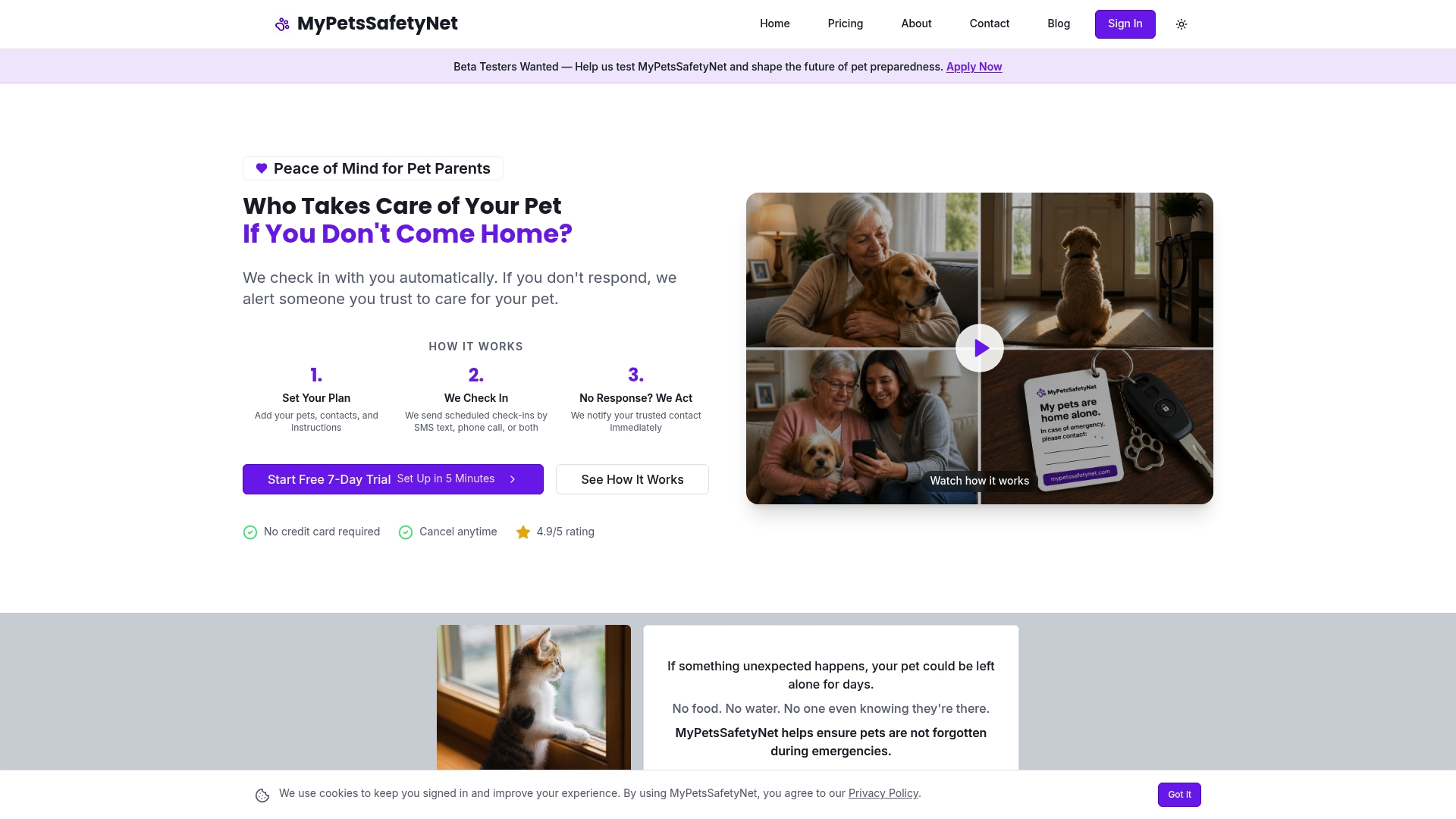
Instead of hoping a general safety app happens to notice you’ve gone quiet, Mypetssafetynet is built around one specific outcome: making sure your pets get fed, walked, and cared for if you can’t do it yourself. You name the caregivers, write the instructions once, and let the system handle the calling and the alerting from there.
If you’ve been putting off building this kind of plan because it sounded complicated, it isn’t. Start a 7-day free trial with no credit card required, or head straight to the Monthly plan pricing page for $6.99 a month to see exactly what’s included before you commit.
Sources
For readers who want to dig deeper into the mechanics behind these systems, the ConfirmOk guide to automated check-in services covers retry logic and landline compatibility in detail, while Snug Safety’s pet owner safety plan offers a practical checklist pairing. For an emergency-contact template you can adapt for pets, see Equibets’ animal emergency contact guide.
- Automated Check-in Services in 2026: The Complete Guide | ConfirmOk
- Daily Check-In Services for Seniors: How They Work
- Safety Plan for Pet Owners Who Live Alone — Snug Safety
- Safety for Pet Owners Living Alone: Protect Yourself and Your Pet | I’m Alive
FAQ
Do Landline Pet Alerts Work Without a Smartphone?
Yes. These systems are built to work with any basic landline or standard mobile phone, using voice confirmation or a keypress rather than an app. Mypetssafetynet specifically markets itself as requiring no smartphone at all, working entirely through calls, SMS, or email.
How Much Does a Landline Pet Alert Service Cost?
Mypetssafetynet’s Monthly plan costs $6.99 per month and includes a 7-day free trial with no credit card required. Setup for most services typically takes well under 30 minutes once you have your caregiver list and pet details ready.
What Happens if I Miss a Check-In Call?
The system retries the call a set number of times within your configured grace period, then notifies your first designated caregiver if you still haven’t responded. Missed check-ins can alert a care circle who then simultaneously check on both the owner and the pet, according to I’m Alive’s safety guide.
Can These Systems Call 911 Automatically?
Most services let you enable optional 911 integration, but many owners prefer a family-first escalation instead. Routing to named caregivers first often resolves the situation faster and avoids unnecessary emergency dispatch for what turns out to be a missed alarm or a slow morning.
How Is This Different From a Medical Alert Pendant?
A medical alert pendant is reactive. It only helps if you’re able to press the button yourself. A landline check-in service is proactive, meaning it calls out to you on a schedule rather than waiting for you to ask for help, which matters if you’re incapacitated and unable to act.