Apartment Pet Access Plan: Alerts for Solo and Disabled Owners

Yes, you should build a short apartment access pet plan now: name a caregiver with access, prepare authorizations and an emergency kit, and use automated check-ins to notify and escalate if you become unreachable. We recommend setting up MyPetsSafetyNet as the automation layer that alerts your caregivers the moment you miss a scheduled check-in.
TL;DR:
- Choose someone who can reach your building within an hour, is available during daytime emergencies, and can calmly handle your pet; name a backup.
- Confirm building rules before relying on concierge access, since staff may require a signed release and caregiver identification even when they have a key.
- Keep signed veterinary consent with your clinic and in the kit, including treatment limits and payment instructions, so your caregiver can approve urgent care.
- Keep 7 to 14 days of food and medication, identification records, and signed consent in an emergency kit near the exit.
- Set two to four emergency contacts in alert order, attach care instructions, and choose SMS, phone, or email notifications; no smartphone is required.
Table of Contents
- At-a-glance 6-step apartment access pet plan
- Choose and prepare a trusted caregiver
- Arrange apartment access: keys, codes, and concierge procedures
- Medical and legal authorizations your caregiver will need
- Pack an emergency pet kit and organize your documents
- How automated wellness check-ins speed notification and escalation
- Practice, test, and maintain the plan
- How to communicate the pet access plan to building management and neighbors
- Recommended frequency and procedures for updating emergency contacts and access details
- Guidelines for selecting reliable emergency caregivers beyond just naming them
- Why a short plan now beats a scramble later
- Set up your first check-in with MyPetsSafetyNet
- FAQ
- Sources
At-a-glance 6-step apartment access pet plan
Most of this plan comes together in a single weekend, and each step closes a specific gap that apartment living creates.
- Designate a caregiver (15 minutes): pick someone who lives close enough to reach your unit quickly.
- Grant access (30 minutes to a few days, depending on your building): arrange a key, code, or concierge authorization.
- Sign a vet authorization (20 minutes): your caregiver cannot approve treatment without one.
- Assemble your kit and documents (1 to 2 hours): food, meds, records, and ID in one place.
- Schedule automated check-ins (under 10 minutes): this is what actually triggers the alert.
- Test the plan (1 afternoon): confirm every piece works before you need it to.
Skipping any one of these leaves a gap: a caregiver with no key, a key but no authorization to treat, or a kit nobody can find.
Choose and prepare a trusted caregiver
The right caregiver is not necessarily your closest friend. It is the person most likely to show up fast and handle your pet calmly.
- Lives nearby or can reach your building within an hour.
- Available during the day, when most emergencies get discovered.
- Comfortable handling your pet’s species, size, and temperament.
- Reliable enough to follow through without reminders.
Get written confirmation that they understand the role, and check in with them every few months to reconfirm they are still willing and able. Name a backup in case your first choice is unreachable too, and store emergency contacts where your caregiver and your automated check-in system can both reach them.
Pro Tip: If you list more than one caregiver, name a single final decision-maker so nobody hesitates during a medical emergency, a step the AVMA specifically recommends.
Arrange apartment access: keys, codes, and concierge procedures
Apartments add a layer that houses don’t have: buildings, front desks, and sometimes keyless entry systems your caregiver has never used. Decide now how they will actually get inside.
- Spare key: simple and reliable, but it needs a backup location if your caregiver loses it.
- Lockbox: convenient for frequent access, though it requires periodic code rotation to stay secure.
- Concierge authorization: fast if your building allows it, but your caregiver needs to be on a pre-approved list with ID ready.
- Shared door code: quick entry, but only safe if you change the code after each use.
For each method, write down exactly who to call, what ID to show, and the precise steps to get in, including elevator or buzzer quirks. Limit the number of people with access, and keep a simple log of who holds a key or code.
Medical and legal authorizations your caregiver will need
A caregiver who can get into your apartment still cannot authorize veterinary treatment without your written permission. A signed veterinary medical treatment authorization form fills that gap, and the AVMA recommends keeping one on file for exactly this reason.
Your form should spell out:
- The caregiver’s full name and their scope of authority to approve treatment.
- Any limits on consent, such as a dollar cap or a requirement to call you first for anything beyond routine care.
- Payment instructions: pet insurance details, a card on file with your vet, or a written reimbursement agreement.
Keep a signed copy with your vet’s office and another in your emergency kit so your caregiver never has to search for it under pressure.
Pack an emergency pet kit and organize your documents
Your caregiver needs supplies and paperwork within reach the moment they walk in, not a scavenger hunt through your apartment.
- A 7 to 14 day supply of food and any medications, following Ready emergency kit guidance, plus bulk supplies like pet hygiene wipes and pads can be ordered affordably from bulk wholesale suppliers to keep your kit well stocked.
- A carrier or leash sized for your pet, plus basic first-aid and sanitation supplies.
- Vaccination records, microchip number, and recent photos for identification.
- A completed emergency contact sheet and the signed vet authorization.
Keep the physical kit near your exit, somewhere a caregiver would spot it without needing a tour of your apartment. Back up the documents in a shared cloud folder, and leave a second paper copy with your caregiver directly, plus one with property management if your building allows it.
How automated wellness check-ins speed notification and escalation
A caregiver with a key and a signed authorization still needs to find out something is wrong. That is the gap automated check-ins close. We built MyPetsSafetyNet so a missed check-in triggers an alert and a clear escalation path instead of leaving your pet waiting on luck.
The flow works like this: you confirm a scheduled check-in by SMS, phone call, or email. Miss it, and the countdown window starts. Miss the follow-up too, and the system notifies your named caregivers in order, each one arriving with your pet’s care instructions attached.
To set it up:
- Create a profile for each pet, up to five.
- Upload care instructions and any medical notes your caregiver will need.
- Add two to four emergency contacts in the order you want them alerted.
- Set your check-in cadence and confirm the escalation sequence.
No smartphone is required, since the system runs on any phone through SMS or calls, and setup takes less than 10 minutes.
Pro Tip: Add your caregiver’s instructions for sitter access directly to their check-in alert so they have everything they need the moment they’re notified.
Practice, test, and maintain the plan
A plan only works if every piece still functions when you actually need it, so build testing into your routine rather than treating this as a one-time task.
- Run a full test every 3 to 6 months, or sooner after a move, a new medication, or a new caregiver.
- Confirm the key, code, or concierge authorization still works exactly as documented.
- Run a simulated check-in to make sure alerts reach your caregivers correctly.
- Verify your vet can still accept your signed authorization on file.
- Replace any expired medications or food in your kit.
Log the date of each test and update your emergency contact sheet right after, so the paper trail always matches reality instead of what you set up months ago.
How to communicate the pet access plan to building management and neighbors
Your caregiver’s access plan works a lot better when the people around your apartment already know it exists. Start with building management: ask whether they allow concierge-based access for emergency contacts, and if so, get your caregiver added to any approved visitor or authorization list. Some buildings require a signed release before front desk staff can let anyone into your unit, even with a key, so confirm this before you count on it.
Let a neighbor or two know about your plan as well, especially if you live alone. A neighbor who knows your caregiver’s name and number can let them into the building if a buzzer malfunctions, or notice something is wrong faster than anyone else. The ASPCA recommends a visible notice, such as a door or window sticker listing the pets inside, so both neighbors and emergency responders can act quickly without guessing.

Keep this communication simple: a short note to your building office, a quick conversation with the neighbor across the hall, and a sticker on your door cover most of what you need. None of this requires detailed personal information, just enough for the right people to recognize your caregiver and know access has been pre-approved.
Recommended frequency and procedures for updating emergency contacts and access details
Treat your emergency contact sheet and access details as living documents, not a one-time form you fill out and forget. Update them any time a caregiver moves, changes their phone number, or tells you they can no longer commit to the role, since an outdated contact is often worse than having none at all.
Beyond those trigger events, reconfirm caregiver availability on a regular schedule, every few months is reasonable for most apartment dwellers. Use that same check-in to verify access codes still work, since many buildings rotate them periodically for security, and to confirm your caregiver still has a current key or concierge authorization on file.
Keep one master version of your contact sheet, ideally the same one linked to your automated check-in profile, so you are never updating multiple scattered copies. After any update, share the new version with your caregiver and store a fresh copy in both your physical kit and your cloud backup.

Guidelines for selecting reliable emergency caregivers beyond just naming them
Naming a caregiver is the easy part. Confirming they will actually follow through when it matters takes a bit more work.
Start by asking directly whether they are comfortable with the responsibility, including the possibility of handling a stressed or sick pet and dealing with a vet’s office. A caregiver who hesitates when you ask is telling you something important before an emergency does. Confirm they have reliable transportation or live close enough to walk, since a willing caregiver who cannot physically get there fast is still a gap in your plan.
Ask about their schedule honestly: someone who travels frequently or works unpredictable hours may need a backup paired with them. Reconfirm their willingness periodically rather than assuming a yes from a year ago still holds, since circumstances change quietly. Finally, walk them through your pet’s specific needs, feeding schedule, medication timing, and any behavioral quirks, so they are not learning this for the first time during a crisis.
Why a short plan now beats a scramble later
Most apartment pet owners put this off because none of it feels urgent until it suddenly is. We’ve found the gap isn’t effort, it’s momentum: naming a caregiver takes fifteen minutes, yet that fifteen minutes is the single step most people never get to.
The plan doesn’t need to be perfect on day one. It needs a caregiver, a key, and a way for someone to find out you need help. Start with one piece today.
— MyPetsSafetyNet
Set up your first check-in with MyPetsSafetyNet
Once you’ve named a caregiver and packed your kit, the piece that ties it all together is the one that notifies someone when something goes wrong. That’s what we built MyPetsSafetyNet to do.
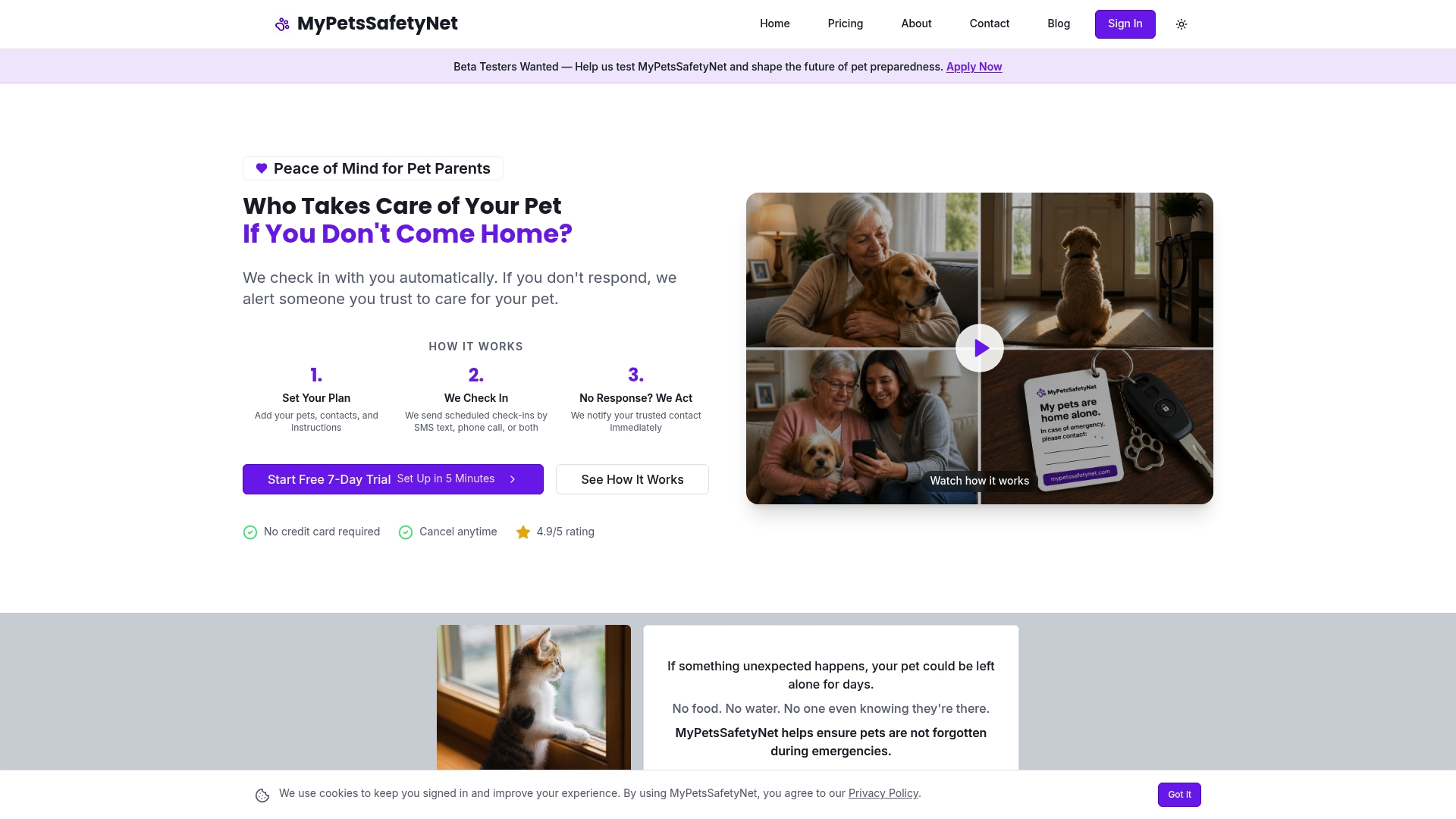
Getting started takes a few minutes: visit our pricing page to start your 7-day free trial, no credit card required, then create a profile for each pet, add two to four emergency contacts, and upload basic care instructions. From there, scheduled check-ins run automatically by SMS, call, or email, so no smartphone is required on your end. Miss a check-in, and we escalate to your named caregivers with your pet’s care details already attached.
Plans run $6.99 per month on our Monthly plan, and setup takes less than 10 minutes. If you’d rather keep a simple printed backup on hand too, our free pet card is a good companion to carry in your wallet.
FAQ
What is an apartment access pet plan?
An apartment access pet plan is a short written arrangement that lets a trusted caregiver get into your apartment and care for your pet if you become unreachable during an emergency. It typically includes a designated caregiver, access instructions, a signed veterinary authorization, and an emergency kit.
Who should I choose as my pet’s emergency caregiver?
Choose someone who lives close enough to reach your apartment quickly, is available during the day, and is comfortable handling your specific pet. Confirm their willingness in writing and reconfirm periodically, since the ASPCA recommends this kind of buddy system for apartment dwellers living alone.
Do I need a signed vet authorization form?
Yes. A signed veterinary medical treatment authorization lets your caregiver approve urgent care on your behalf, and the AVMA recommends keeping one on file with your vet and in your emergency kit.
How does MyPetsSafetyNet help with apartment pet emergencies?
MyPetsSafetyNet sends you scheduled check-ins by SMS, call, or email, and if you miss one, it automatically notifies your named caregivers with your pet’s care instructions attached. Setup takes under 10 minutes and works without a smartphone, with plans starting at $6.99 per month on our Monthly plan.
How often should I test my pet’s emergency access plan?
Test your full plan every 3 to 6 months, or sooner after a move, a new medication, or a change in caregiver. Confirm your keys or codes still work, run a simulated check-in, and replace any expired kit supplies after each test.