Set Blind Pet Owner Alerts in 10 Minutes for Solo Owners

Blind pet owner alerts are automated wellness check-ins that escalate missed responses to your named emergency contacts, delivering pet care instructions so a trusted person can care for your animals if you can’t respond. If you live alone with pets, the immediate step is to set up a routine check-in schedule and name at least two emergency contacts today. MyPetsSafetyNet is one purpose-built way to get this running quickly.
TL;DR:
- Setting up a routine check-in schedule with at least two emergency contacts is crucial for reliable pet safety, especially for solo, elderly, or disabled owners.
- Using a system that escalates alerts after a 15 to 60-minute grace period helps ensure prompt caregiver response if someone becomes incapacitated or unresponsive.
- A clear pet care instruction packet should be stored both physically and digitally, including vet info, vaccination records, medication details, and emergency access keys.
- Regularly testing the system with deliberate missed check-ins confirms that escalation chains work efficiently and helps adjust the grace periods as needed.
- MyPetsSafetyNet offers an easy, low-cost setup supporting up to five pets and three contacts, working through calls or texts without requiring a smartphone.
Table of Contents
- How automated wellness check-ins and missed-check escalations work
- Who benefits most from this kind of safety net
- Setting up your check-in schedule, contacts, and costs
- Building a pet care instruction packet caregivers can use fast
- Recruiting neighbors, buddies, and local backup
- Testing your system and keeping it current
- A missed check-in, a phone call, and a fed cat
- Getting started with MyPetsSafetyNet
- Sources
- FAQ
How automated wellness check-ins and missed-check escalations work
A wellness check-in system contacts you on a schedule you choose, and you confirm you’re okay with a quick reply. If you don’t respond within a set window, the system moves to the next step: alerting the people you’ve named, with your pet care instructions attached.
This absence-detection approach differs from a traditional personal emergency response system, or PERS, which waits for you to push a button. Absence detection flips that model. It reaches out to you instead of waiting for you to reach out, which matters if you’re incapacitated and can’t press anything.
Confirmation methods vary by service, but most keep it simple:
- Reply to a text with a single word or number.
- Press “1” on a phone call to confirm you’re fine.
- Respond to a short code prompt by email or text.
Grace periods commonly range from 15 to 60 minutes before escalation begins, according to guidance on daily scheduled check-in services. Once that window closes, the system contacts your first emergency contact, then moves down your list if no one responds.
Who benefits most from this kind of safety net
Solo pet owners are the obvious audience, but the need runs deeper for elderly adults living alone and disabled people who value independence but face higher risk of a sudden health event going unnoticed. For these groups, a missed check-in isn’t just an inconvenience. It’s often the first sign that something has gone wrong.
A controlled trial period of about 7 days helps build the check-in habit, and many users report meaningful reassurance within that first week, according to research on check-in benefits. That reassurance isn’t abstract. Knowing someone will be notified if you go quiet tends to ease the background worry that comes with living alone, and it can support better sleep and more confidence doing everyday things.
The practical upside matters just as much: a faster path from “something’s wrong” to a caregiver actually reaching your pets, instead of hours or days passing before anyone notices.

Setting up your check-in schedule, contacts, and costs
Getting this running takes less time than most people expect. Work through these steps in order:
- Pick a daily check-in time tied to something you already do, like morning coffee, and keep the grace period short enough to catch trouble early without triggering false alarms.
- Name 2 to 4 emergency contacts, including at least one person who lives close enough to physically check on your pets and one remote coordinator who can make calls and manage logistics from a distance.
- Choose your channels: SMS, phone call, or email. If you don’t use a smartphone, confirm the service supports plain calls or texts, since accessibility matters as much as features.
- Review the subscription details before committing, including whether a free trial is available, so you know exactly what you’re signing up for.
Pro Tip: Start with a shorter grace period than you think you need. You can always extend it once you see how the system fits your routine.
Choosing contacts thoughtfully makes the biggest difference here. A guide to selecting emergency contacts walks through how to balance proximity, reliability, and availability when you’re deciding who goes first on your list.
Building a pet care instruction packet caregivers can use fast
When a caregiver gets that alert, they need clear information immediately, not a scavenger hunt. Keep a printed copy in a labeled, waterproof folder near your pet supplies, and a digital copy attached to your check-in profile. Your packet should cover:
- Your veterinarian’s name and a 24-hour emergency contact number.
- Proof of rabies vaccination and a current vaccination record.
- Microchip number and registration details.
- A medication list with exact doses and timing, plus feeding schedule and behavior notes.
- Written authorization letting your named caregiver seek veterinary care and make short-term decisions on your behalf.
- Location of keys, food, carriers, and a pet “go-bag” with extra food, medication, and a couple of recent photos.
The CDC’s guidance on pet emergency kits recommends keeping at least a two-week supply of food and medication on hand, along with veterinary records and microchip information stored where a caregiver can find them fast.
Recruiting neighbors, buddies, and local backup
You need two different kinds of help: someone close enough to walk over and physically check on your pets, and someone remote who can coordinate calls, contact your vet, or drive over if the nearby person can’t. Ready.gov’s pet preparedness guidance recommends building this kind of buddy system as a core part of any pet emergency plan.
When you brief a neighbor or buddy, give them:
- A spare key and clear permission to enter your home.
- A written copy of your pet’s care instructions.
- Your emergency contact card with vet and backup contact numbers.
It’s also worth recording contact information for your local animal shelter, animal control office, and organizations such as RedRover, in case your named contacts aren’t reachable.
Testing your system and keeping it current
Set up a monthly test where you deliberately let a check-in lapse to confirm escalation actually works. Combine that with an initial 7-day trial period when you first set things up, since committing to a full week helps the habit stick and gives you a real sense of how the schedule fits your day.
- Run a controlled missed-check test using two different contacts, and confirm both receive the alert in the correct order.
- Time how long it takes between the missed check and the contact notification, and adjust your grace period if it feels too long or too short.
- Update your records immediately after any move, vet change, new medication, or new pet.
Pro Tip: Treat your monthly test like a fire drill. It only takes a minute, and it’s the difference between assuming the system works and knowing it does.
A missed check-in, a phone call, and a fed cat
A woman living alone with her cat missed her scheduled morning check-in after a fall left her unable to reach her phone. Within the hour, her nearby neighbor got an alert and a copy of her care instructions. The neighbor let herself in with the spare key, fed the cat, and called for help. What could have stretched into a day of uncertainty was resolved before lunch, using the same contacts and instruction packet described above.
— MyPetsSafetyNet
Getting started with MyPetsSafetyNet
MyPetsSafetyNet was built around the exact checklist above: scheduled SMS, phone, or email check-ins, automatic escalation to your named contacts, and pet profiles that store the care details a caregiver needs on the spot. It works without a smartphone, so a plain phone call or text is enough.
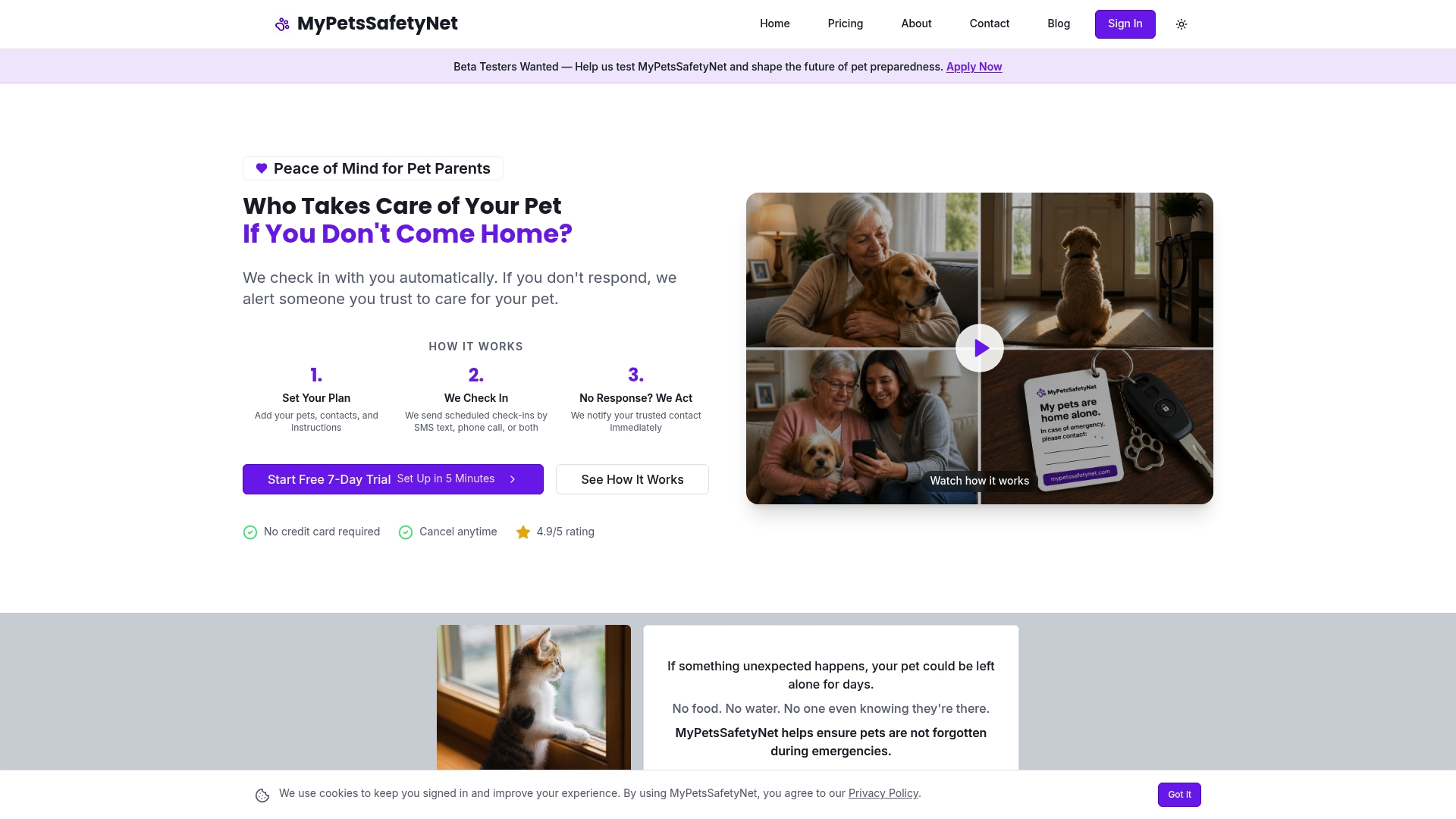
Setup takes less than 10 minutes, according to MyPetsSafetyNet, and you can manage up to 5 pets and 3 emergency contacts from one account. A 7-day free trial with no credit card required lets you test the whole system before you commit.
- Customizable check-in schedules and grace periods.
- Escalation chain that notifies contacts in order until someone responds.
- Pet care instruction card generator built into your profile.
- No smartphone required, so calls or texts work fine.
If you want to try it, start your free trial for $6.99 a month, or generate a free pet care card first to see what the instruction packet looks like in practice.
Sources
For deeper guidance, see the CDC’s pet emergency kit checklist, Ready.gov’s pet disaster preparedness guide, and, for owners planning travel with pets, this pet-friendly Gulf Shores guide.
- Emergency preparedness for pets — CDC
- Ready
- Safety for Pet Owners Living Alone: Protect Yourself and Your Pet — I’m Alive
FAQ
What happens if I miss a scheduled check-in?
The system waits out your grace period, typically 15 to 60 minutes, then contacts your first named emergency contact with your pet care instructions. If that person doesn’t respond, it moves to the next contact on your list until someone confirms.
How many emergency contacts should I set up?
Most guidance recommends naming at least two contacts: one who lives nearby and can physically check on your pets, and one remote coordinator who can make calls and manage next steps. Ready.gov’s preparedness guidance supports this two-tier approach for pet safety planning.
Do I need a smartphone to use a check-in service?
No. Services like MyPetsSafetyNet work through plain phone calls or text messages, so any phone can handle check-ins and confirmations without an app or wearable device.
How much does MyPetsSafetyNet cost?
MyPetsSafetyNet’s Monthly plan costs $6.99 per month, and a 7-day free trial is available with no credit card required.
What should I keep in my pet’s emergency instruction packet?
Include your vet’s name and 24-hour contact number, current vaccination records, microchip details, a medication and feeding schedule, and written authorization for your caregiver to seek veterinary care. The CDC recommends keeping at least a two-week supply of food and medication alongside these records.