Common Concerns for Disabled and Solo Pet Owners
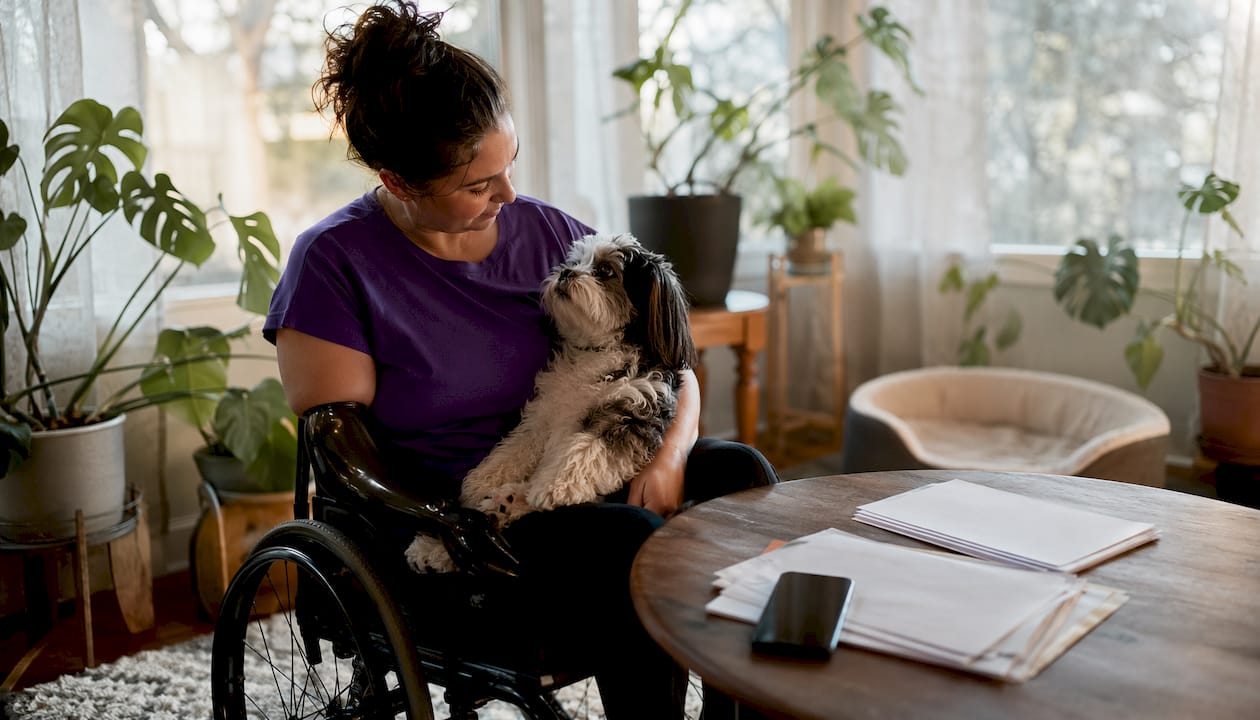
If you live alone or have a disability, the single most protective step you can take right now is setting up an automated daily wellness check paired with a documented emergency plan. A daily check-in service can shrink the 24–48 hour undetected emergency window down to hours, which is the difference between your pet getting care the same day and going without food, water, or medication for days.
Three things you can do in the next 60 minutes:
- Sign up for a free trial of an automated wellness check-in service (Mypetssafetynet offers one with no commitment required).
- Print a fridge sheet with your pet’s name, medications, feeding schedule, vet contact, and emergency contact names.
- Designate one emergency contact who has a spare key and knows where your pet’s supplies are kept.
That’s the foundation. Everything else in this article builds on it.
Table of Contents
- Why disabled and solo pet owners face a different kind of risk
- What are the most common safety concerns for disabled solo pet owners?
- How do automated wellness check-in services actually work?
- Why Mypetssafetynet is a strong fit for this audience
- A weekend plan: how to get emergency-ready in a few hours
- What should you ask before choosing a wellness check-in service?
- What does this cost, and how long does setup really take?
- U.S. accessibility, consent, and legal steps you need to know
- Key takeaways
- Planning is an act of care, not a sign of limitation
- Mypetssafetynet gives your pets a safety net you can actually rely on
- Useful sources and further reading
Why disabled and solo pet owners face a different kind of risk
Solo pet ownership creates a single point of failure: there is no household fallback if you’re incapacitated. A partner or roommate would notice something was wrong within hours. When you live alone, no one may check on you for a full day or more, and your pet has no way to signal distress to the outside world.
There’s also an emotional barrier that doesn’t get discussed enough. Disabled pet owners frequently report internalized ableism: a fear that adapted routines make them “bad” owners. They’re not. Pacing yourself during play, using adaptive gear, or resting between care tasks doesn’t reduce the quality of your bond or your pet’s welfare. Planning around your actual capacity is responsible ownership, not a compromise.
What are the most common safety concerns for disabled solo pet owners?
These are the issues that come up most often, along with practical fixes you can put in place today.
- Missed medication doses: Pre-fill pill pockets for the week and store them in a labeled container in the fridge. Your emergency contact can administer them without any guesswork.
- Food and water when you’re down: An automatic feeder and water fountain removes the daily lifting burden and keeps your pet fed if you have a bad day.
- Getting to the vet: Pre-sign a vet authorization letter so your emergency contact can authorize and pay for treatment without you present. Telehealth vet services are also worth adding to your plan.
- Mobility and transfer risks: Elevated feeding stations, hands-free leash attachments, and long-handle grabbers reduce daily friction for wheelchair users and others with limited mobility.
- Escape risk: Keep your pet’s microchip registration current with your phone number and a secondary contact’s number.
- Behavior changes you might miss: A daily check-in routine prompts you to observe your pet’s mood and appetite, catching health changes early.
- Caregiver burnout: Pet supply delivery subscriptions eliminate weekly store trips. Schedule them to auto-renew so you’re never scrambling.
- Cost and insurance barriers: Research documents that disabled owners face real financial and access barriers to veterinary care. A CareCredit account or a dedicated pet emergency fund can reduce the decision delay when your pet needs urgent treatment.
- Housing restrictions: Know your lease terms. If you have a service or assistance animal, document that status in writing with your landlord.
Pro Tip: Set a daily phone calendar alert at the same time as your automated wellness check-in. If you’re having a rough day and almost forget to respond, the double reminder catches it before the escalation timer starts.
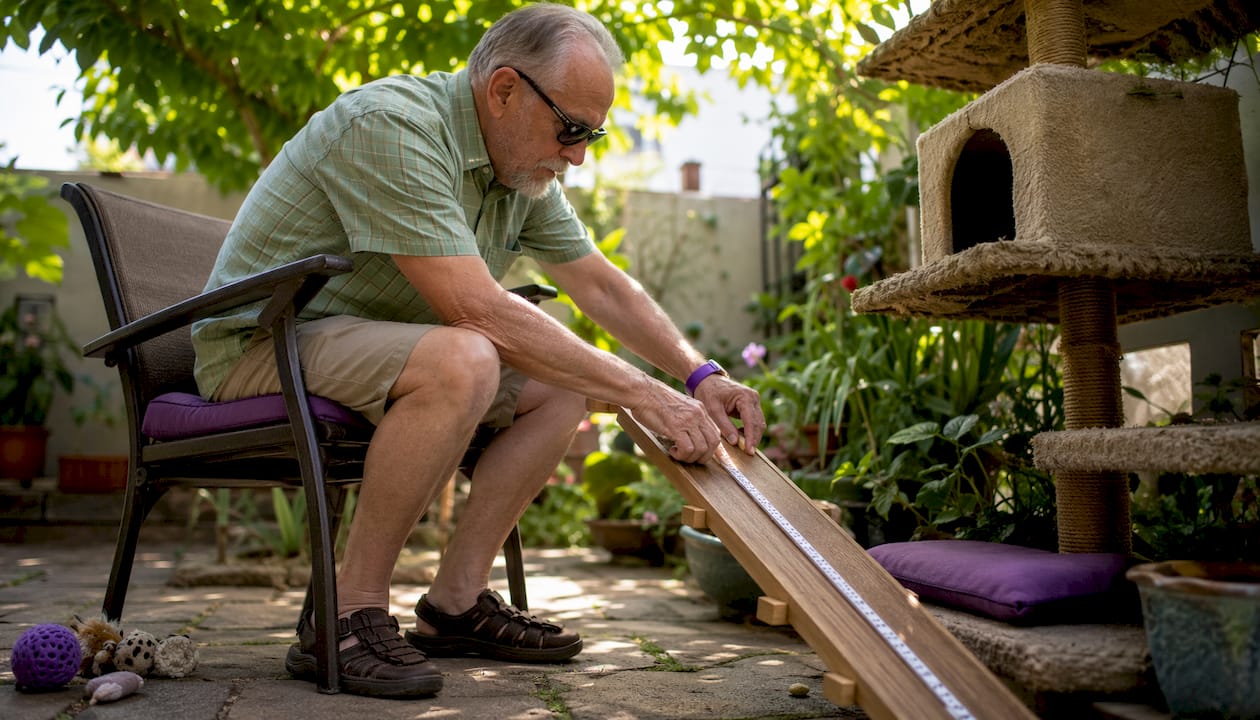
For accessible furniture ideas, a cat ramp guide is a practical starting point for reducing jump-related injuries and making your home safer for both of you.
How do automated wellness check-in services actually work?
The core workflow is straightforward. You set a daily check-in window. The service sends you an SMS, phone call, or email. You respond to confirm you’re okay. If you don’t respond within your chosen interval, the system escalates automatically to your designated emergency contacts, sending them your pet’s full care profile: feeding instructions, medications, vet contact, and any special needs.
| Feature | Why it matters for disabled/solo owners |
|---|---|
| Multi-channel check-ins (SMS, phone, email) | Accommodates different accessibility needs and device types |
| Customizable escalation intervals | Lets you set a window that fits your routine, not a generic default |
| Pet profiles with medications and vet info | Emergency contacts arrive informed, not guessing |
| Up to 3 emergency contacts | Redundancy if the first contact doesn’t answer |
| Pet care instruction card generator | Produces a printable fridge sheet automatically |
| Free trial availability | Lets you test the escalation workflow before committing |
One honest limitation: the system depends on your emergency contacts being reachable and having physical access to your home. A digital alert is only as useful as the person who receives it. That’s why a spare key and a briefed contact are non-negotiable parts of the plan, not optional extras.
Why Mypetssafetynet is a strong fit for this audience
Mypetssafetynet was built specifically for solo pet owners and people living independently with health concerns. The service sends automated SMS, phone, or email wellness checks on a schedule you control. If you miss a check-in, it escalates to up to three emergency contacts and delivers your pet’s full care profile to them automatically.
“Because your pets depend on you, and we want to make sure they’re never left alone.” — Mypetssafetynet
The features that matter most for disabled and solo owners are all included: accessible notification methods, a pet care instruction card generator, support for up to five pets, and a free trial so you can run a test escalation before you commit. The Mypetssafetynet blog also covers hospitalization scenarios, chronic illness planning, and final wishes for pets, so the resource goes well beyond the check-in itself.
A weekend plan: how to get emergency-ready in a few hours
You don’t need a full day. Most of this takes under three hours total.
- Gather records (30 min): Collect your pet’s vaccination records, current medications, microchip number, and vet contact info.
- Print your fridge sheet (15 min): Use Mypetssafetynet’s pet care instruction card generator or a simple document. Include feeding times, medications, behavioral notes, and emergency contacts. Tape it to the fridge.
- Pre-sign a vet authorization letter (15 min): Write a signed letter authorizing your named contact to approve and pay for veterinary treatment. Give a copy to your vet and one to your contact. See the pet hospitalization guide for a template.
- Brief your emergency contact (20 min): Walk them through the fridge sheet, show them where supplies are kept, and give them a spare key.
- Sign up for automated check-ins (15 min): Set your check-in window and escalation interval. Add your emergency contacts and pet profiles.
- Run a test escalation within 48 hours: Miss a check-in intentionally. Confirm your contact receives the alert and the pet care details arrive correctly. Fix anything that doesn’t work.
Pro Tip: Schedule a 15-minute annual review every January to update medications, contact numbers, and vet records. An outdated plan is almost as risky as no plan.
For a fuller planning template, the solo pet owner safety guide walks through each step in more detail.
What should you ask before choosing a wellness check-in service?
Not all services are built the same. Use this checklist when evaluating your options.
- Does it offer SMS, phone call, and email check-ins, or only one channel?
- How customizable is the escalation interval? Can you set it to two hours or eight?
- Does it support multiple emergency contacts, and what happens if the first one doesn’t respond?
- Can you store full pet profiles including medications, microchip numbers, and dietary needs?
- Does it include a document or fridge sheet generator?
- Is there a free trial that lets you test the escalation workflow end-to-end?
- What is the privacy policy for your pet’s health data?
Ask the provider directly: “What happens if my emergency contact doesn’t answer?” A good service has a secondary escalation path. Also ask whether the check-in interface works with screen readers or TTY devices if those are relevant to your accessibility needs.
What does this cost, and how long does setup really take?
| Item | Typical cost | Time to complete |
|---|---|---|
| Automated check-in subscription | Monthly subscription fee (varies by provider) | 15–20 min to set up |
| Pre-signed vet authorization letter | Free (self-drafted) or attorney fee if notarized | 15–30 min |
| Pet trust or named guardian in will | Varies by attorney | Days to weeks |
| Auto feeder and water fountain | One-time purchase | — |
| Pet supply delivery subscription | Ongoing, per order | — |
The paperwork takes an afternoon. Lining up a reliable emergency contact may take a few days of conversation. The subscription runs monthly after your trial ends. The 24–48 hour discovery gap documented in aging-in-place research is the clearest argument for not waiting: the cost of a monthly subscription is small compared to the risk of your pet going unattended for 24 to 48 hours.
U.S. accessibility, consent, and legal steps you need to know
Vet authorization letters are the most commonly missing document in emergency plans. A signed letter allows your emergency contact to authorize treatment and pay the vet bill without you present. Give one copy to your vet’s office and one to your contact.
Pet trusts are legally enforceable in all 50 U.S. states. A pet trust names a guardian and can set aside funds for your pet’s ongoing care after your death. It’s the most reliable long-term protection available. For guidance on naming a guardian and drafting final wishes, the final wishes planning guide covers the key steps.
Housing: If you have a service animal or emotional support animal, document that status in writing with your landlord and keep a copy. The Fair Housing Act provides protections, but documentation speeds up any dispute.
Medical ID: Add a note to your phone’s emergency screen or carry a wallet card that alerts first responders to your pets at home. Many first responders will contact a neighbor or emergency contact on your behalf if they know animals are waiting.
This article is general information, not legal or veterinary advice. Confirm current rules and document requirements with a qualified attorney or your veterinarian for your specific situation.
Key takeaways
Disabled and solo pet owners can close the 24 to 48 hour emergency gap with a daily automated check-in, a printed fridge sheet, a pre-signed vet authorization, and at least one briefed emergency contact with key access.
| Point | Details |
|---|---|
| Set up a daily check-in | An automated wellness check shrinks the undetected emergency window from days to hours. |
| Print a fridge sheet | Keep feeding schedules, medications, and emergency contacts on the fridge for any responder to find. |
| Pre-sign vet authorization | A signed letter lets your emergency contact approve treatment without you present. |
| Run a test escalation | Confirm your contacts receive the alert and pet care details before you need it to work for real. |
| Use Mypetssafetynet | Mypetssafetynet automates check-ins, escalates to emergency contacts, and generates your pet care instruction card. |
Planning is an act of care, not a sign of limitation
The hardest part of this kind of planning isn’t the paperwork. It’s overcoming the quiet voice that says you shouldn’t need help, or that asking for backup means you’re not capable. That voice is wrong. Adapted routines, automated check-ins, and named emergency contacts are what responsible, prepared pet owners build. They’re not a concession to disability; they’re a practical response to a real risk that affects anyone living alone.
The pet owners who worry most about their animals are usually the ones who plan best. If you’re reading this, you’re already doing the right thing. The fridge sheet, the vet authorization, and the daily check-in aren’t about what might go wrong. They’re about making sure your pet is cared for no matter what.
Mypetssafetynet gives your pets a safety net you can actually rely on
Peace of mind for your pet starts with one concrete step: a daily automated check-in that escalates to your emergency contacts if something happens to you. Mypetssafetynet handles the escalation workflow, stores your pet profiles with full care instructions, and generates a printable fridge sheet your contacts can use the moment they walk through the door.
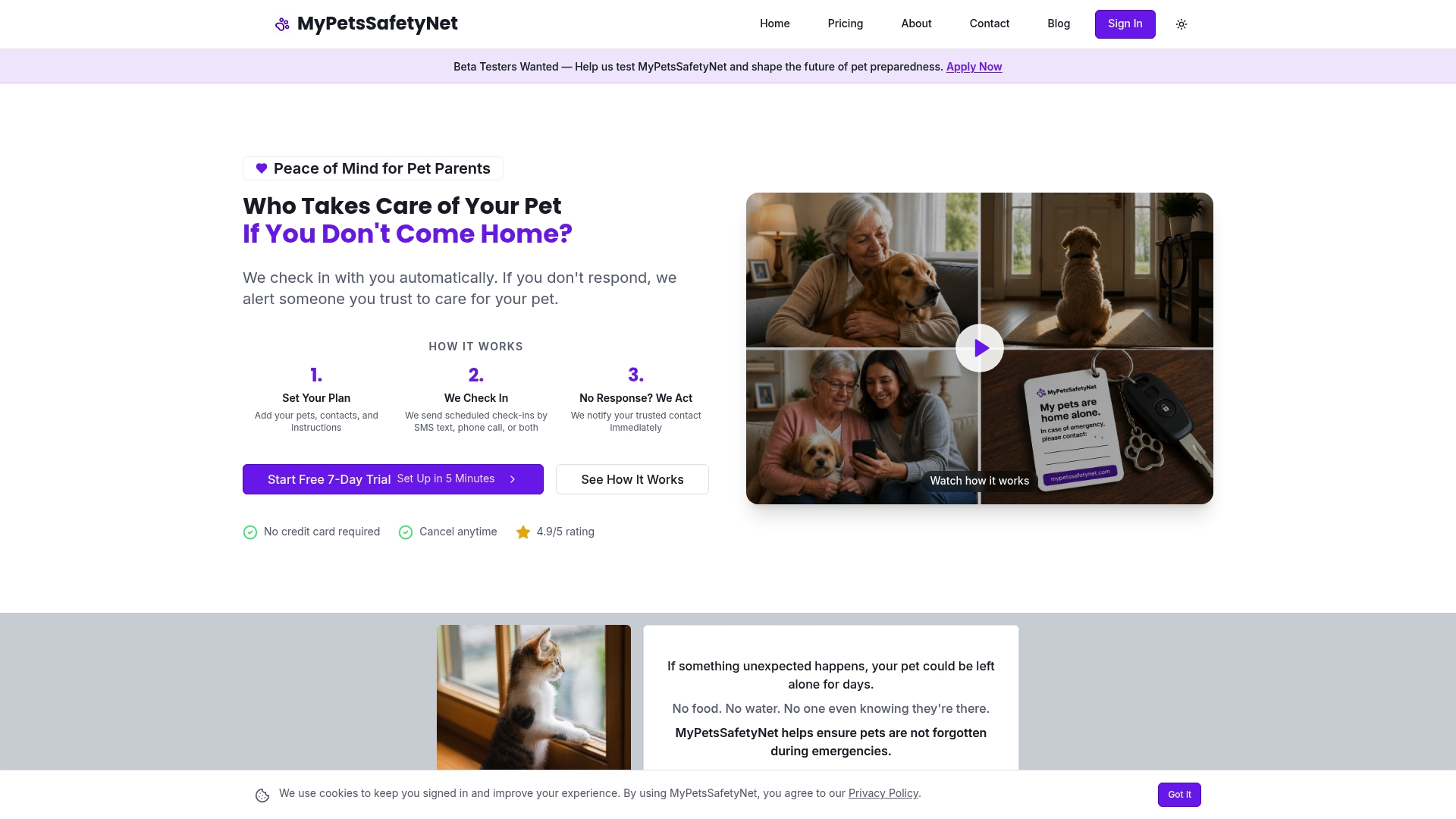
The free trial lets you test the full system, including a live escalation, before you pay anything. Setup takes under 20 minutes. Within 48 hours, you can confirm your contacts received the alert, your pet’s care details arrived correctly, and your plan actually works. Start your free trial and run your first test escalation this weekend.
Useful sources and further reading
These are the primary sources used to build this guide. Each one is worth bookmarking if you want to go deeper on a specific topic.
- Pet Safety for Solo Agers: Protect Your Pet If Something Happens to You — Covers the 24–48 hour discovery gap, vet authorization letters, pet trusts, and fridge sheet best practices. The most comprehensive single resource on this topic.
- Caring for Pets When You Are Disabled — Rare Youth Revolution — First-person perspective on internalized ableism and adapted care routines. Reassuring and practical for anyone who has felt judged for doing things differently.
- Getting a Pet as a Single Person: What to Plan For From Day One — Pawsettle — Explains the single point of failure risk and why automation and formal backup plans are non-negotiable for solo owners.
- Affordability, Feasibility, and Accessibility: Companion Animal Guardians with (Dis)Abilities — MDPI Animals — Peer-reviewed research documenting financial and access barriers to veterinary care for disabled owners during COVID-19. Useful for understanding systemic gaps.
- How to Manage Pets as a Wheelchair User — New Mobility — Practical adaptive gear and habit recommendations from the wheelchair-user community.
- Wags and Wheels: Dog Care Tips for Wheelchair Users — Wheel:Life — Community-sourced product recommendations including automatic feeders, delivery subscriptions, and mobility aids for pet care.
- Mypetssafetynet Blog — Guides on solo pet owner planning, chronic illness, hospitalization scenarios, and final wishes for pets.