Automated Check In + 72 Hour Backup for Solo Pet Owners After Surgery
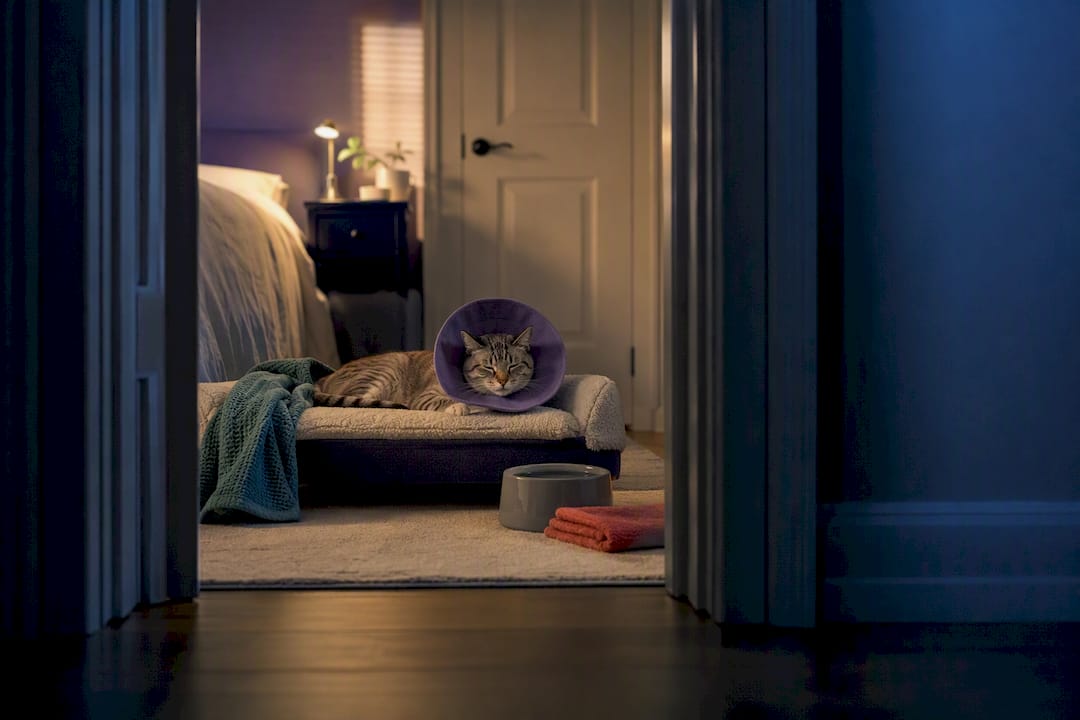
Protect your pets by pairing a written emergency plan with a daily automated check-in that escalates to a tiered response network if you miss it. That combination closes the gap between “something happened to me” and “someone is caring for my dog.” The sections ahead walk through building your helper network, preparing legal and financial authorizations, setting up the check-in itself, and testing the whole system so it works when you actually need it.
TL;DR:
- A daily check-in system can alert emergency contacts within hours of a missed response, greatly reducing detection lag and ensuring prompt care for pets.
- Building a three-tier response network with explicit agreements and pre-approved caregivers ensures rapid hands-on care, medical oversight, and payment authorization when needed.
- Proper documentation, including vet authorization, payment arrangements, and a comprehensive pet care dossier, prevents delays during emergencies.
- Regular testing of the plan every three months and updating contact details help maintain its reliability and effectiveness when an emergency occurs.
- Automated check-ins combined with detailed pet records and clear escalation protocols create a faster, more reliable alternative to relying solely on human observation.
Table of Contents
- Why a Daily Check-In Matters for Pet Surgery Recovery at Home
- How Do You Build a 72-Hour Response Network for Your Pet?
- What Documents and Payment Authorizations Do You Need?
- How to Set Up an Automated Daily Check-In and Escalation Workflow
- Pet Care Dossier: What to Include and Where to Keep It
- How Often Should You Test and Update Your Emergency Plan?
- What MyPetsSafetyNet Gets Right About the Emergency Gap
- Ready to Put Your Plan Into Motion?
- Sources
Why a Daily Check-In Matters for Pet Surgery Recovery at Home
A missed phone call doesn’t sound dangerous. For a pet locked inside with no food and no way to signal for help, it can be fatal within days. This is detection lag: the space between when you become unable to respond and when anyone realizes something is wrong. A neighbor might not notice for a week. A family member across the country might not call until Sunday.
Ready recommends including pets in any preparedness plan precisely because they can’t call for help themselves. The AVMA echoes this, urging owners to name a trusted decision-maker before a crisis hits, not during one.
A daily check-in solves the timing problem by converting silence into a signal. If you don’t respond, the system doesn’t wait and wonder. It acts.
- No response by the deadline triggers an alert to your emergency contacts.
- Contacts receive your pet’s care details immediately, not after a search.
- The clock starts within hours, not days.
According to AloneAssist’s research on senior pet emergency planning, a structured daily check-in that notifies contacts the moment it’s missed closes the single most dangerous gap in pet emergency plans: the delay before anyone even knows to look.
How Do You Build a 72-Hour Response Network for Your Pet?
Detection is only step one. Once someone knows you’re unresponsive, your pet needs hands-on care fast, and that care usually escalates through layers rather than landing on one person. AloneAssist’s model breaks this into three practical tiers.
- Tier 1: the same-day neighbor or close contact. Someone within a few minutes of your home who holds a key, knows your pet’s basic routine, and can check in within hours of an alert. This person buys you time, not a permanent solution.
- Tier 2: a pre-approved sitter or boarding facility. For coverage lasting more than a day or two, line up a sitter or facility in advance so no one is cold-calling around during an actual emergency. Pre-registering with a boarding facility means they already have your pet’s information on file and won’t turn you away at the door.
- Tier 3: your vet clinic or an emergency boarding option. If your pet needs medical supervision, whether from an underlying condition or the stress of disruption, this tier keeps them under professional care until you or a guardian can take over.
For each tier, get explicit agreement, not a vague “sure, I could probably help.” Experts on emergency pet planning recommend a written confirmation, even a simple text reply, so there’s no confusion when the moment actually arrives. Name a backup for every tier in case your first choice is unreachable.
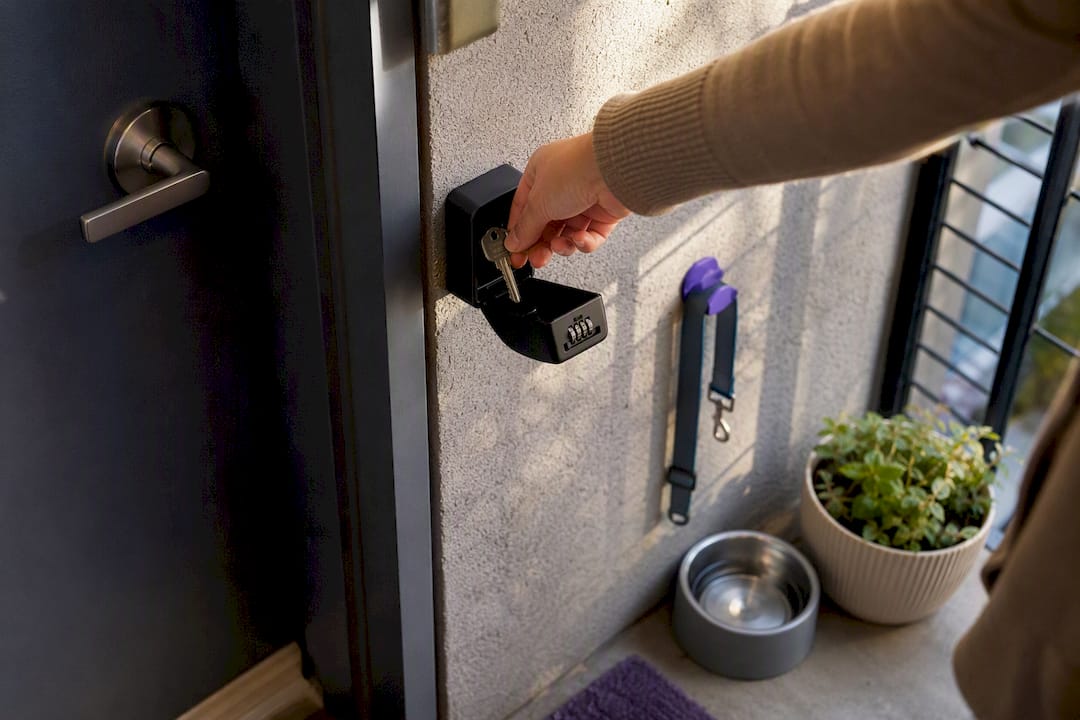
Pro Tip: Give your Tier 1 contact a spare key now, not during a crisis. A key that only shows up when something goes wrong is a key nobody can find in time.
What Documents and Payment Authorizations Do You Need?
Willing helpers still hit walls without paperwork. Clinics and boarding facilities routinely require written proof that someone other than the owner has authority to make decisions and pay for care.
A vet authorization letter on file with your clinic names who can approve treatment in your absence. Veterinary practices often require this explicit written authorization before treating an animal when the owner can’t be reached, so filing it before you need it avoids delays at the worst possible moment.
Payment arrangements matter just as much:
- Pre-authorized card on file. Fast, but requires trust in whoever holds the authorization.
- Standing vet account. Keeps billing simple if your clinic offers one.
- Dedicated emergency fund. A set-aside amount specifically for pet care, separate from daily accounts.
- Pet insurance. Covers larger medical costs but rarely handles boarding or day-to-day care.
A prepaid account or authorized card on file prevents the kind of payment delay that can otherwise stall urgent care entirely. For longer-term planning, especially if you’re concerned about permanent guardianship, a pet trust or dedicated pet fund is worth discussing with an estate attorney, since enforceability and fund management vary by state.
How to Set Up an Automated Daily Check-In and Escalation Workflow
Building the network and paperwork is half the job. The other half is making sure the system actually notices when something’s wrong and tells the right people, in the right order, with the right information attached.
- Pick your cadence and response window. Daily check-ins with a short countdown, a few hours rather than a full day, catch problems faster than weekly or “as needed” check-ins ever could.
- Set your escalation order deliberately. Decide who physically checks on your pet first (Tier 1) versus who has authority to approve payment or medical decisions (often a different person). Don’t assume one contact can do both.
- Attach your pet care dossier and vet authorization directly to the alert. A responder scrambling to find feeding instructions wastes time you don’t have. If the alert delivers the information, they can act immediately.
- Handle consent and verification up front. Contacts should know exactly what they’ll receive and why, and SMS or notification consent settings let you control what information goes out without oversharing personal details beyond what’s needed.
Pro Tip: Keep the response window short enough to matter but long enough to avoid false alarms. A four-to-six-hour countdown after a missed check-in strikes a workable balance for most solo owners.
Pet Care Dossier: What to Include and Where to Keep It
Your dossier is what turns a willing stranger or half-familiar neighbor into someone who can actually care for your pet correctly. Emergency pet care plans should include written instructions, vet contacts, authorization language, and a designated caregiver so nobody has to guess.
- Feeding schedule, including brand, amount, and timing
- Medication names, doses, and administration times
- Vet and emergency clinic contact information
- Microchip number and registry details
- A recent, clear photo of your pet
- Insurance policy number or payment authorization details
- Behavior notes: fears, triggers, favorite hiding spots
| Copy location | Best use |
|---|---|
| Wallet card | First responders checking your ID |
| Refrigerator folder | Neighbors or family entering your home |
| Digital file shared with contacts | Vet clinics and boarding facilities |
Storing both physical and digital copies, and sharing them with primary and backup caregivers, means a visible printed copy on the fridge helps a first responder move fast without waiting on a phone call. For a ready-made structure, a pet care emergency document guide and a feeding schedule template can save you from building these from scratch.
How Often Should You Test and Update Your Emergency Plan?
A plan you never test is a guess dressed up as a plan. Run a live check-in test with every contact once a quarter, not just to confirm phone numbers work but to confirm people actually respond within your target window.
- Do a quarterly walk-through with Tier 1 and Tier 2 contacts.
- Update the dossier the moment medication, vet, or contact details change, and again after any move.
- Track two numbers from each test: time to first human contact, and time to physical eyes on your pet.
Measuring these two intervals tells you whether to tighten your check-in window or swap out a contact who’s too slow to respond. Add an annual review of your legal and financial authorizations to the calendar too.
Pro Tip: Schedule your quarterly test for the same week as another recurring task, like a birthday or a bill due date, so it doesn’t quietly slip off your radar.
What MyPetsSafetyNet Gets Right About the Emergency Gap
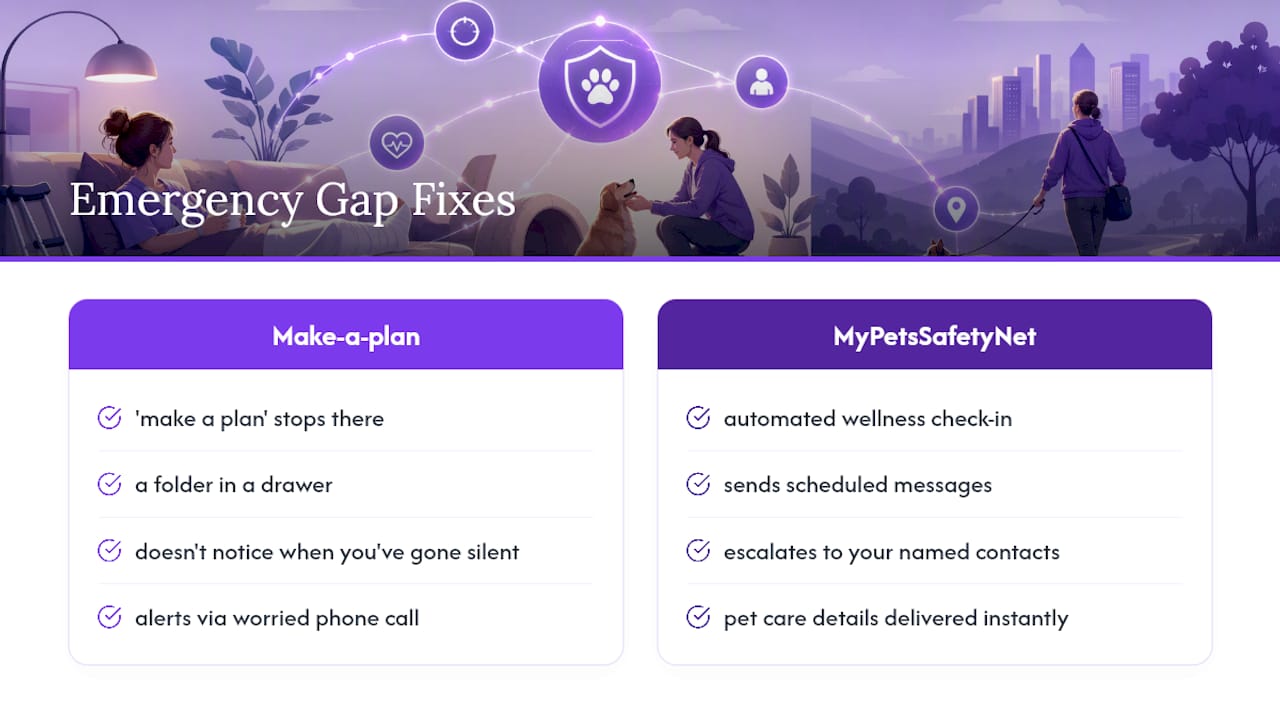
Most pet emergency advice stops at “make a plan,” which is a little like telling someone to install a smoke detector without mentioning it needs batteries. A folder in a drawer doesn’t notice when you’ve gone silent. Mypetssafetynet was built around that exact blind spot: an automated wellness check-in that sends scheduled messages and escalates to your named contacts, complete with pet care details, the moment you fail to respond.
What that means in practice is faster alerts than a worried phone call from someone who “hadn’t heard from you in a while,” instructions delivered instantly instead of searched for under stress, and a system that doesn’t depend on someone happening to notice. If you’re building out your dossier now, our guide on hospitalization arrangements for pets and our breakdown of what happens if you’re hospitalized pair well with the steps above.
— MyPetsSafetyNet
Ready to Put Your Plan Into Motion?
Everything above works better with a system quietly running in the background instead of living entirely on your own memory. Mypetssafetynet turns the plan you just built into an active safeguard: scheduled check-ins by text, call, or email, with your pet’s care details ready to hand off the moment you miss one.
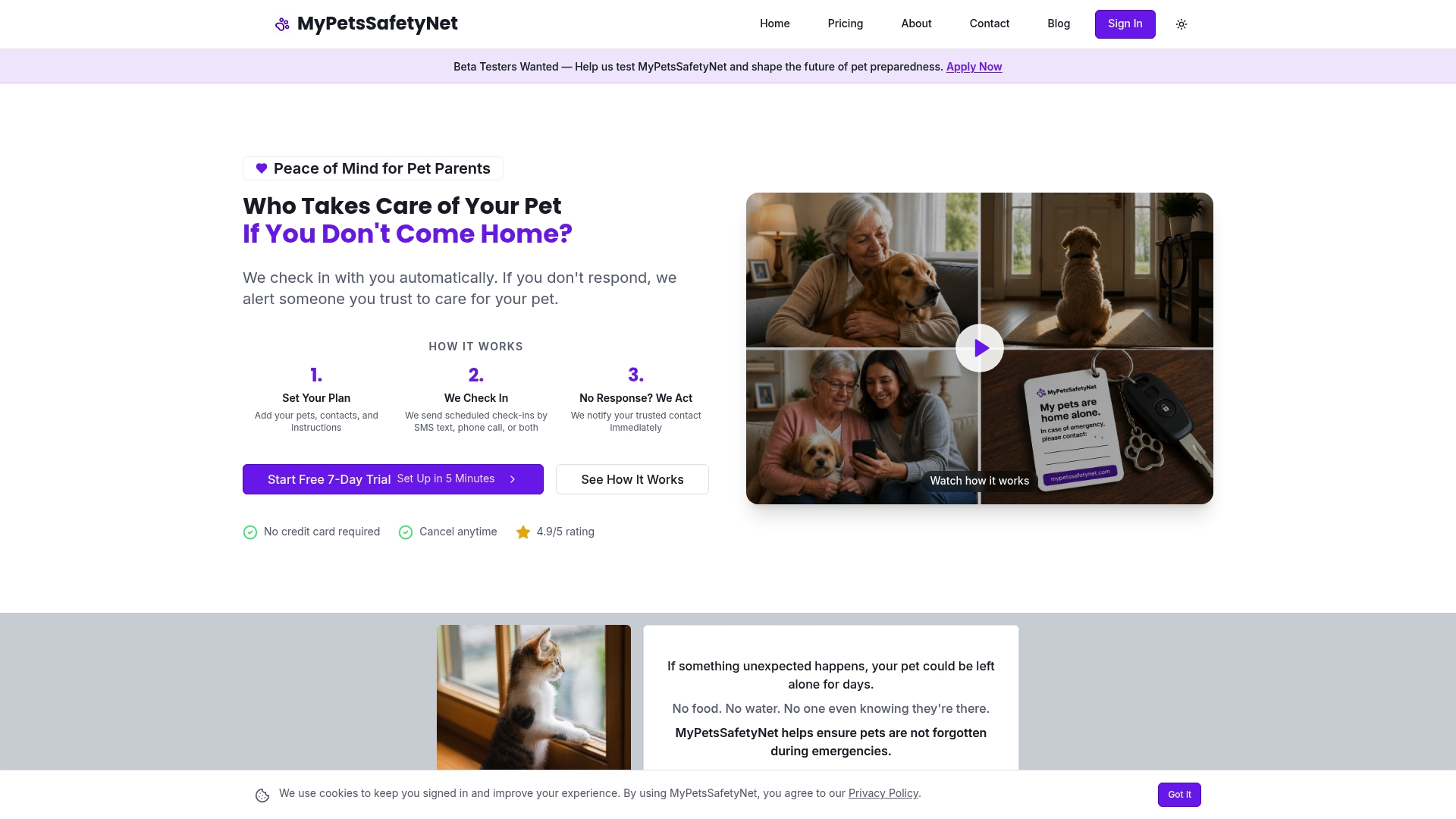
Before you sign up, gather what you’ll need: your pet care dossier, up to three emergency contacts, and your vet’s information for up to five pets. The setup takes less time than writing out the dossier itself, since you’re plugging in details you’ve already prepared. Start with the free pet card to organize your pet’s essentials, then run an immediate test check-in through Mypetssafetynet to see the escalation chain in action before you actually need it.
This article is general information, not a substitute for advice from a qualified doctor. Consult a qualified healthcare professional about your own circumstances before acting on anything here.
Sources
- Ready
- AVMA — Who’s charge your animal’s care while you’re away
- AloneAssist — The Complete Pet Emergency Plan for Seniors Living Alone
- PetNPrep — Emergency pet care plan