Pet Care Costs and Senior Fixed Income: 2026 Guide

Balancing pet care costs and senior fixed income is genuinely manageable in 2026, thanks to a growing network of assistance programs, community resources, and practical budgeting strategies. Retirees who own at least one pet face significant annual veterinary expenses, averaging $1,400 per year as of 2026—a figure that has increased 27% over the past decade, outpacing general inflation. The good news: you do not have to face those costs without help.
Here is a quick look at what is available right now:
- Pet food assistance: Meals on Wheels local programs and community food banks provide free pet food to homebound seniors
- Low-cost vet care: Nonprofit clinics like Anicira and Pets In Need offer vaccinations, wellness visits, and spay/neuter services at significantly reduced prices
- Payment flexibility: Many clinics accept payment plans, and telemedicine vet services can cut the cost of routine consultations
- Medication savings: Generic pet medications filled at human pharmacies cost a fraction of what veterinary offices charge
- Grants and subsidies: Local humane societies and national organizations offer financial assistance programs specifically for seniors
- Community support: Senior centers, AARP chapters, and volunteer networks connect older adults with grooming help, transportation to vet appointments, and more
The sections below cover each of these areas in detail, with specific programs, eligibility guidance, and budgeting steps you can act on today.
1. Pet food assistance programs available to seniors
Food is the most consistent pet expense you face every month, and it is also one of the easiest costs to offset with the right programs. Several national and local organizations specifically target seniors on fixed incomes.
Meals on Wheels is the most widely available starting point. Hundreds of local Meals on Wheels programs include pet food delivery alongside senior meal services, recognizing that a pet’s hunger is just as urgent as its owner’s. Eligibility generally mirrors the senior meal program: you must be homebound or have limited mobility, and income verification is typically required. Contact your local chapter directly at mealsonwheelsamerica.org to confirm whether pet food support is available in your area.
Beyond Meals on Wheels, several other programs are worth knowing:
- Pets of the Homeless (petsofthehomeless.org): Provides pet food and veterinary care for pets belonging to people experiencing housing insecurity, including many seniors
- Save-A-Cat pet food banks (saveacat.org): Maintains a directory of pet food banks across the country, searchable by zip code
- Local humane societies: Many run their own food pantries open to low-income residents regardless of age; call yours directly to ask
- Anicira’s pet food pantry: This nonprofit veterinary organization provides food to families in financial need alongside its clinical services
- Community food banks: A growing number of general food banks now stock pet food; ask your local food bank coordinator
Eligibility criteria vary by program, but most require proof of income (a Social Security award letter or tax return works), proof of address, and sometimes a brief application. Processing times range from a few days to a few weeks, so apply before you are in a crisis.
Pro Tip: Call 211, the national social services helpline, and ask specifically about pet food assistance in your county. Many local programs are not listed online but are well known to 211 operators.
2. Reduced-cost veterinary care and vaccinations for seniors
Affordable veterinary care is more available than most seniors realize. The key is knowing which types of organizations to look for and what questions to ask before you book an appointment.

Nonprofit veterinary clinics are the most reliable source of reduced-cost care. Anicira, accredited by the American Animal Hospital Association (AAHA), holds a distinction fewer than 15% of animal hospitals in the U.S. achieve. That accreditation means Anicira meets over 900 standards for safety, cleanliness, surgery, and pain management, all at prices well below most private practices. Pets In Need launched its Community Veterinary Clinic in 2024 and offers wellness consultations at $85, rabies vaccines at $35, and heartworm prevention starting at $8 per month. The Arizona Humane Society operates two clinics in the Phoenix area with financial assistance application forms available online for seniors who qualify.
When looking for reduced-cost care near you, focus on these options:
- Nonprofit and AAHA-accredited clinics: Search the AAHA hospital locator and filter for nonprofits in your area
- Humane society clinics: Many offer low-cost vaccine clinics and spay/neuter services open to the public
- Veterinary school teaching hospitals: Accredited programs at universities provide care at reduced rates under faculty supervision
- Mobile vaccine clinics: The Arizona Humane Society, for example, runs mobile units offering low-cost vaccinations and microchipping at rotating community locations
- Rural clinics: Urban vet prices run 20–50% higher than rural counterparts, so if you have transportation options, a clinic outside the city center can mean real savings
For financial assistance applications, most clinics ask for proof of income, a government-issued ID, and your pet’s basic medical history. Apply in advance. Most low-cost aid programs require advance eligibility verification to avoid delays during an urgent situation.
Pro Tip: Ask your vet for a written prescription for any ongoing medications. Generic versions of common drugs for arthritis or thyroid conditions can be filled at retail pharmacies at a fraction of the in-office price.
3. Other affordable pet care resources and services for seniors
Veterinary bills and food are the biggest line items, but grooming, transportation, and day-to-day care add up too. A range of community-based options can cover these costs, often at no charge.

Home aide programs are an underutilized resource. Many senior home care agencies include light pet care tasks, such as feeding, walking, and litter box cleaning, as part of their service scope. If you already receive home aide support, ask your coordinator whether pet care tasks can be added. The role home aides play in senior pet care is expanding as more agencies recognize the health benefits of pet ownership for older adults.
Here are additional resources worth exploring:
- Volunteer grooming programs: Some humane societies and senior centers organize volunteer grooming days where basic bathing and nail trims are provided free of charge
- Senior pet care clubs: Local senior centers sometimes run informal pet owner groups that share resources, coordinate vet transportation, and provide companionship for both owners and animals
- Social workers: A hospital or community social worker can connect you with local grants and subsidies you may not find through a standard internet search. The role of social workers in senior pet care is specifically designed for this kind of navigation
- Best Friends Animal Society: Maintains a national database of financial assistance programs at bestfriends.org covering over 100 organizations that help pet owners who cannot afford vet bills
- Breed-specific rescues: Many rescues offer ongoing support, including food and vet referrals, for pets adopted through their programs
For grooming specifically, preventive care at home reduces the need for professional appointments. Regular brushing, ear cleaning, and nail trimming between visits can extend the time between paid grooming sessions significantly.
Pro Tip: Search for grants through your state’s Area Agency on Aging. Some states fund small pet care grants for low-income seniors as part of broader elder care initiatives, but these programs rarely advertise widely.
4. Planning and budgeting for pet care on a fixed income
The single biggest financial mistake senior pet owners make is treating pet expenses as variable costs rather than fixed ones. Financial advisors recommend treating pet care as essential, on the same level as housing and transportation, to prevent emergency credit card use when a health crisis hits.
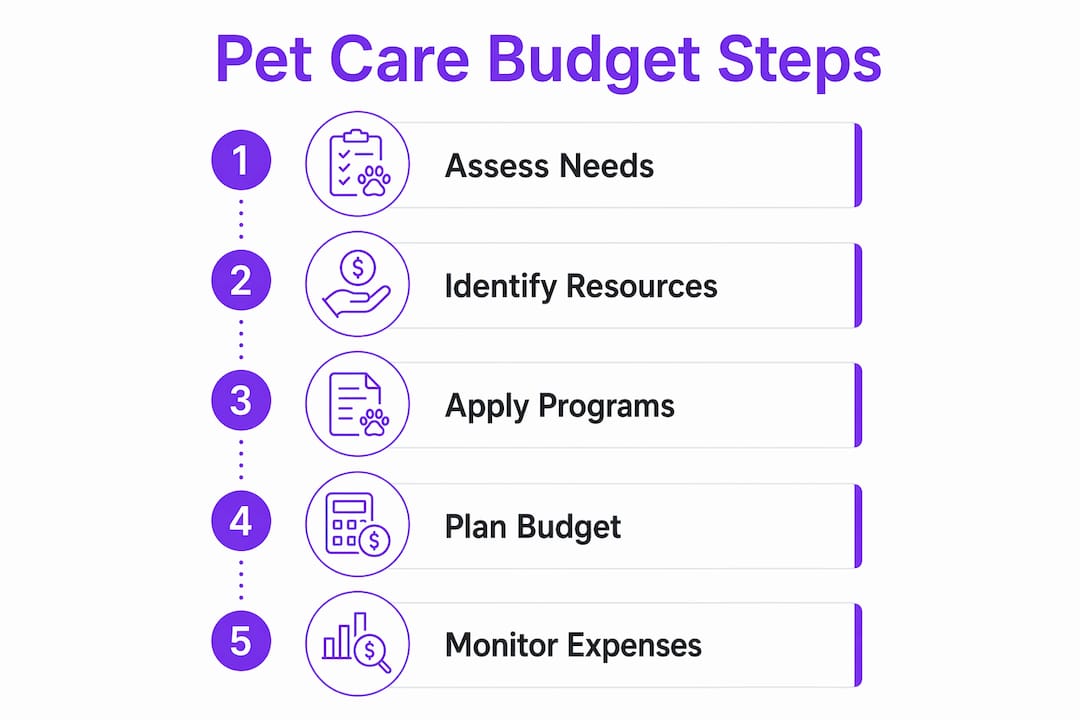
Start by building a dedicated pet care budget line with these steps:
- Calculate your baseline annual cost: Add up food, routine vet visits, medications, grooming, and supplies from the past 12 months
- Add an emergency buffer: Many older pet owners underestimate costs by half; a dedicated fund covering $1,500–$3,000 per incident is the recommended target
- Set aside monthly contributions: Divide your annual estimate plus emergency buffer by 12 and treat that amount as a non-negotiable monthly expense
- Open a separate savings account: Keeping pet funds separate from general savings prevents accidental spending and makes the balance visible
- Plan for end-of-life costs: Palliative care, hospice, and euthanasia services carry costs that catch many seniors off guard. A pet care plan for living alone should include a specific allocation for these final stages
On pet insurance: it sounds appealing, but the math often does not work for older pets. Premiums increase sharply after age 10, most policies exclude pre-existing conditions, and benefit caps can leave you with large out-of-pocket balances anyway. Before purchasing a policy, compare it against simply building a dedicated savings fund. For a thorough look at the options, a vet insurance comparison of current alternatives can help you decide whether a policy or self-funded reserve makes more sense for your pet’s age and health profile.
When unexpected costs arise, payment plans and telemedicine vet services are practical tools. Many clinics now offer 0% interest payment plans for established clients, and a telemedicine consultation for a minor concern costs far less than an in-person visit.
5. How to find and access assistance programs for pet care
Knowing programs exist is one thing. Actually getting enrolled before you need them urgently is another. The process is straightforward when you follow a clear sequence.
Step-by-step approach to finding local assistance:
- Call 211 and ask for pet care assistance programs in your county. This is the fastest way to surface local resources that are not indexed online.
- Contact your local Area Agency on Aging. These federally funded agencies maintain resource directories and can refer you to pet-specific aid.
- Visit your nearest senior center. Staff often know about informal community programs, volunteer networks, and local grants that are not widely advertised.
- Check with your veterinarian. Many clinics maintain lists of assistance programs and can refer you directly or write a letter supporting your application.
- Search the Humane Society’s resource page at humanesociety.org for a national directory of financial aid options organized by state.
- Connect with AARP. AARP’s community resources and local chapters can point you toward senior-specific pet care subsidies and financial counseling services.
- Apply early. Do not wait for a health crisis. Most programs require income documentation, a completed application, and sometimes a waiting period before benefits begin.
A few questions seniors commonly ask during the application process:
- Do I need to prove my pet’s vaccination status? Some programs require it; have your pet’s records on hand.
- What income threshold qualifies me? Most programs use 200% of the federal poverty level as a cutoff, but thresholds vary. Ask each program directly.
- Can I apply to multiple programs at once? Yes. Stacking food assistance, vet care subsidies, and grooming help from different organizations is both allowed and encouraged.
AARP also offers financial counseling through its AARP Foundation that can help you map out a pet care budget alongside your broader retirement finances. If you are aging alone with pets, connecting with a social worker through your local senior center adds another layer of support for navigating these systems.
6. Choosing cost-effective pets and using preventive care to save money
Not every pet carries the same financial weight, and choosing the right companion at the right stage of life can make a real difference in your monthly budget. Seniors who are considering a new pet should think carefully about long-term care costs, not just adoption fees.
Lower-cost pets for retirees tend to share a few traits: they require less frequent veterinary intervention, eat less, and need minimal grooming. Cats generally cost less to maintain annually than dogs of equivalent size. Small dogs cost less than large breeds in food, medications dosed by weight, and boarding. Fish, birds, and small mammals like guinea pigs carry lower vet costs but still provide meaningful companionship.
Preventive care is where the biggest long-term savings come from, regardless of which pet you have:
- Annual wellness exams: Catching a problem early almost always costs less than treating it after it progresses.
- Dental cleanings: Skipping dental care leads to painful infections and secondary health costs that far exceed the price of a routine cleaning
- Weight management: Overweight pets develop joint problems, diabetes, and heart disease at higher rates, all of which are expensive to treat
- Parasite prevention: Monthly heartworm and flea prevention costs far less than treating an active infestation or infection
- Vaccinations on schedule: Keeping core vaccines current prevents diseases that would require costly hospitalization.
For senior pets already showing signs of age-related conditions, palliative nutrition can slow disease progression and reduce the frequency of emergency vet visits. Discussing a senior-specific diet with your veterinarian at the annual wellness exam is a practical, low-cost step that pays off over time.
Community-focused clinics that prioritize preventive care maintain standard quality while keeping prices accessible. Affordable does not mean cutting corners; it often means a clinic that has built its entire model around keeping pets healthy before problems escalate.
Key Takeaways
Managing pet expenses on a fixed income is possible with the right combination of assistance programs, preventive care, and deliberate budgeting. The resources exist; the goal is finding and using them before a financial crisis forces your hand.
| Point | Details |
|---|---|
| Budget pet care as a fixed expense | Treat annual pet costs the same as housing or transportation to avoid emergency debt. |
| Build an emergency fund | Set aside $1,500–$3,000 per incident to cover unexpected veterinary crises. Many older pet owners underestimate costs by half, so this range is the recommended target for emergencies. |
| Use food and vet assistance programs | Meals on Wheels, Anicira, and Pets In Need offer real, accessible relief for seniors. |
| Preventive care saves money long-term | Dental cleanings, annual exams, and parasite prevention cost far less than treating advanced illness. |
| Mypetssafetynet supports emergency preparedness | Mypetssafetynet notifies your emergency contacts if something happens to you, so your pets are never left without care. |
Why senior pet owners deserve more credit than they get
Senior pet owners are often portrayed as financially vulnerable, and while the cost pressures are real, that framing misses something important. Older adults consistently show remarkable commitment to their animals, finding creative ways to maintain care even when budgets tighten. The emotional bond between a senior and a pet is not a luxury; for many people living alone, it is a daily anchor.
What concerns me more than the cost of food or routine vet visits is the gap in planning for the unexpected. End-of-life pet care, emergency hospitalization, and the question of who cares for a pet if the owner has a health crisis are the scenarios that cause the most financial and emotional damage, precisely because they arrive without warning. Most seniors have thought carefully about their own medical directives but have never written down what happens to their dog or cat if they are hospitalized for a week.
The financial tools covered in this guide, from Meals on Wheels pet food support to nonprofit vet clinics to dedicated savings accounts, are genuinely useful. But the deeper preparation is making sure someone knows your pet exists and knows what to do. That kind of planning costs nothing and protects everything.
Mypetssafetynet gives your pets a safety net when you need one most
For seniors living independently, the hardest part of pet ownership is not the monthly food bill. It is the quiet worry: what happens to my pet if something happens to me?

Mypetssafetynet was built specifically for that concern. If you have a health emergency and live alone, the service notifies your designated emergency contacts promptly so they can check on both you and your pets. No pet gets left behind because no one knew to look.
Key features that matter for senior pet owners:
- Emergency contact notification: Your chosen contacts are alerted immediately if you need help
- Care continuity: Your pets’ care details are on record so responders know exactly what your animals need
- Peace of mind for solo seniors: Designed for people who live independently and want a reliable backup plan
Getting started takes only a few minutes. Visit the Mypetssafetynet wellness check-in page to set up your profile and emergency contacts today. Your pets depend on you, and Mypetssafetynet makes sure they are never left without someone looking out for them.