Cut Emergency Boarding Cost for Seniors: 10 min Setup, No Smartphone
A subscription that automatically checks in on you and alerts your named caregivers with pet care instructions is available at a variety of price points, with many full-featured plans usually costing a moderate monthly amount. That covers scheduled check-ins, escalation to your emergency contacts, and stored instructions for feeding, medication, and vet details. If you’re comparing options, start with a free trial before committing to anything.
TL;DR:
- Automated plans without live escalation generally cost $2 to $6 monthly, while adding human follow-up and multi-channel alerts can raise the price to $10–$25.
- Supporting more pets, multiple contacts, and custom care profiles increases subscription fees, especially if live calls or concierge services are included.
- Annual prepayment can reduce the monthly cost by 15–20%, and household or multi-person discounts may be available for shared plans.
- A basic plan supporting up to five pets with three contacts costs $6.99 per month, with setup taking around 10 minutes to complete.
- Emergency boarding costs can be 20–50% higher than planned stays and are usually a last resort, best avoided by timely caregiver notification through an alert service.
Table of Contents
- What Affects the Cost of an Emergency Pet-Care Subscription
- How Much Should You Budget Each Month?
- Affording Protection Without Overspending
- Choosing and Setting Up Your Plan: A Short Checklist
- MyPetsSafetyNet: What We Offer and How Our Pricing Works
- What Emergency Pet Boarding Actually Costs When You Need It Fast
- What Drives the Price Up or Down for Urgent Boarding
- Emergency Boarding vs. Regular Boarding and Pet Sitting
- Finding Affordable Emergency Boarding When You Need It
- Payment Terms, Deposits, and Cancellations for Emergency Boarding
- Author Perspective: Why Alerts Plus Named Caregivers Matter
- Start Your Free Trial with MyPetsSafetyNet
- Sources
- FAQ
What Affects the Cost of an Emergency Pet-Care Subscription
Price differences come down to how much the service actually does when you don’t answer. A basic automated text or email reminder costs far less than a plan that escalates through multiple channels and adds a live human check.
The features that push a subscription toward the higher end of the price range include:
- Live-call escalation, where a real person tries to reach you or your contacts instead of relying only on automated texts
- Number of pets supported, since some plans charge more once you go beyond one or two animals
- Multi-channel alerts that combine phone calls, SMS, and email so a caregiver doesn’t miss the notification
- Custom pet profiles, covering diet, medication schedules, and vet contact information stored for instant access
- Printable pet care cards that caregivers can grab and use without logging into an app
- Concierge add-ons, such as a service rep who helps coordinate care during an actual emergency
Automated-only plans, where the system simply prompts you and notifies contacts if you miss a check-in, are the cheapest tier. Plans that add live human verification or multi-step escalation workflows cost more because they involve real staff monitoring responses.
Billing structure matters too. Monthly plans give you flexibility to cancel anytime, while annual prepay usually knocks a percentage off the effective monthly rate. Some providers also offer household or multi-person discounts if more than one person in your home needs coverage.
Pro Tip: Before comparing prices, list exactly which channels you need (call, text, email) and how many pets you’re covering. Providers often bundle these into tiers, so knowing your minimum requirements first keeps you from overpaying for features you won’t use.
How Much Should You Budget Each Month?
Real-world pricing on emergency pet-alert subscriptions spans a wide range, and knowing where each tier sits helps you avoid overpaying or underbuying protection.
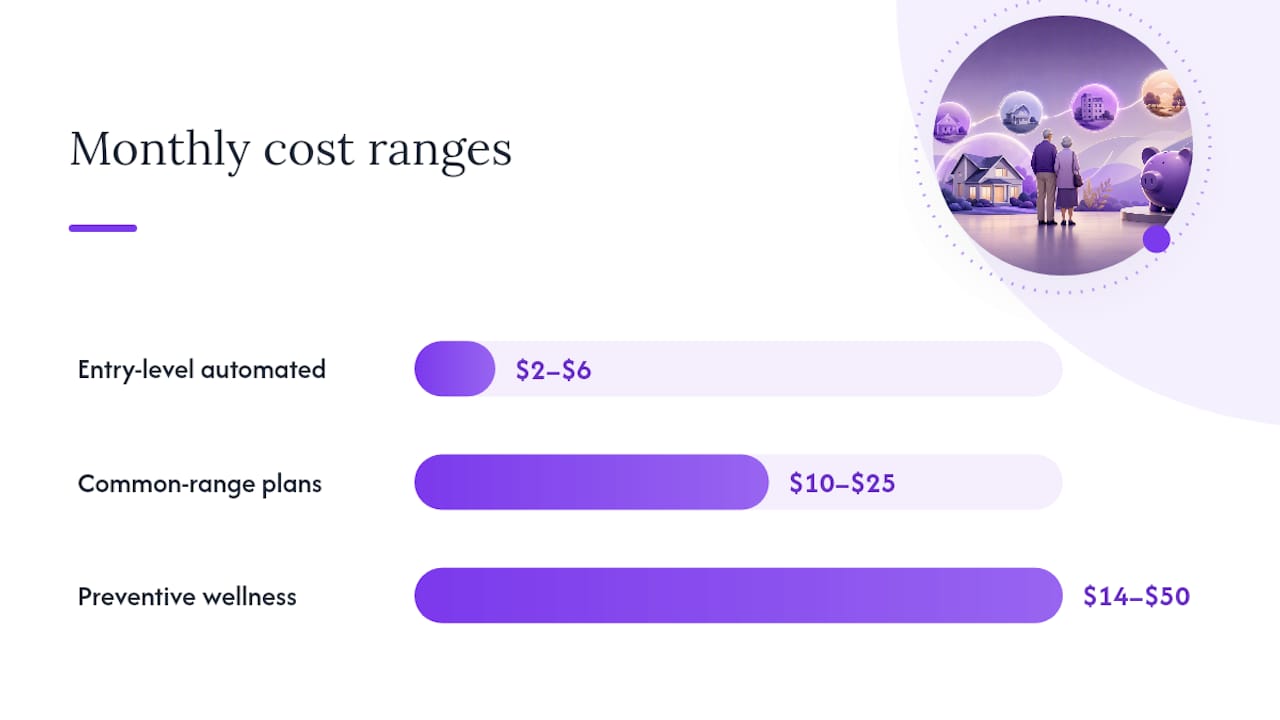
- Entry-level automated plans: roughly $2 to $6 per month. One example in the market prices its basic automated alerting around $2.99 per month or $19.95 annually, covering unlimited pets under a single household profile with simple check-in prompts.
- Common-range plans: about $10 to $25 per month. This tier usually supports multiple pets, customizable escalation timing, and phone-based alerts in addition to text and email.
- Premium plans: higher monthly rates that add human follow-up calls, concierge coordination, or several tiers of escalation if the first round of contacts doesn’t respond.
For comparison, a preventive pet wellness plan commonly costs $14 to $50 per month, covering routine vet visits and vaccines rather than emergency alerting. That’s a different budget line entirely, but it’s worth knowing the range if you’re weighing where your pet care dollars go.
Annual prepay is the most reliable way to lower your effective monthly cost, often shaving 15 to 20% off compared to paying month to month. Household discounts, where available, work similarly if you’re sharing a plan with a partner or roommate who also wants coverage for their own pet.
Affording Protection Without Overspending
Staying protected doesn’t require the priciest plan. A few adjustments can keep your subscription affordable without leaving gaps in coverage.
- Run the numbers on annual vs. monthly billing. Even a modest annual discount adds up over a year, especially on a fixed income.
- Use the free trial fully before paying anything. Test the check-in schedule, confirm your contacts receive alerts, and only upgrade features you’ll actually use.
- Skip premium add-ons you don’t need. If you only have one pet and two reliable contacts, a concierge tier probably isn’t worth the extra cost.
- Ask local senior centers, disability resource offices, or animal welfare nonprofits about short-term help. Some community programs offer stipends or partnerships for pet-related safety tools.
- Look at wellness plan bundles if your vet clinic offers one; a preventive wellness plan can reduce routine costs elsewhere in your budget, freeing up room for an alert subscription.
- Build a simple household safety net. Put together one pet emergency info pack, rotate two or three volunteer caregivers so no single person is overburdened, and keep one trusted neighbor with a spare key.
Choosing and Setting Up Your Plan: A Short Checklist
Picking the right service comes down to matching features to your actual situation, not chasing the lowest price tag. Before you subscribe, run through this checklist:
- Confirm pricing is transparent. You should see the exact monthly cost, what’s included, and whether there’s a cancellation fee, all before entering payment information.
- Check multi-channel alert support. A plan that only sends email is risky if your contacts don’t check inboxes often.
- Verify how many pets and contacts are included. Some plans cap you at one pet or one emergency contact on lower tiers.
- Look for customizable pet instructions. You want fields for medication dosages, feeding times, and your vet’s phone number, not just a generic note field.
- Ask if a test mode exists. You should be able to trigger a practice alert without waiting for a real missed check-in.
Once you’ve picked a service, setup should take well under an hour:
- Build your pet profile first, listing diet, medication schedule, vet name and phone number, and any behavior notes a caregiver needs to know.
- Add two to four emergency contacts, and tell each one exactly where a spare key or entry code is located.
- Leave physical access instructions somewhere a caregiver can find them, whether that’s with a neighbor or in a lockbox.
- Run a missed-check test and confirm every contact actually receives and responds to the alert.
Before subscribing, ask support directly how escalation timing works, what happens if a contact doesn’t respond, and how cancellation works. Red flags include vague answers about escalation windows, a confusing cancellation process, or no free trial at all.
Pro Tip: Test your contacts twice a year, not once. People change phone numbers, move, or become less reliable over time, and a stale contact list defeats the entire purpose of the subscription.
MyPetsSafetyNet: What We Offer and How Our Pricing Works
Mypetssafetynet runs on a straightforward Monthly plan priced at $6.99 per month, with a free trial so you can test everything before paying a cent. The service covers up to 5 pets and 3 emergency contacts, sends automated wellness check-ins by call, text, or email, and works without a smartphone. That last part matters if you or someone you’re setting this up for relies on a basic phone.
Setup takes about 10 minutes: build pet profiles, add contacts, and set your check-in schedule. Pricing stays visible and simple, no hidden tiers or surprise fees, which matters most for people managing a fixed income. If you’re helping a parent or older relative get set up, the short setup time means you can do it together in one sitting.
What Emergency Pet Boarding Actually Costs When You Need It Fast
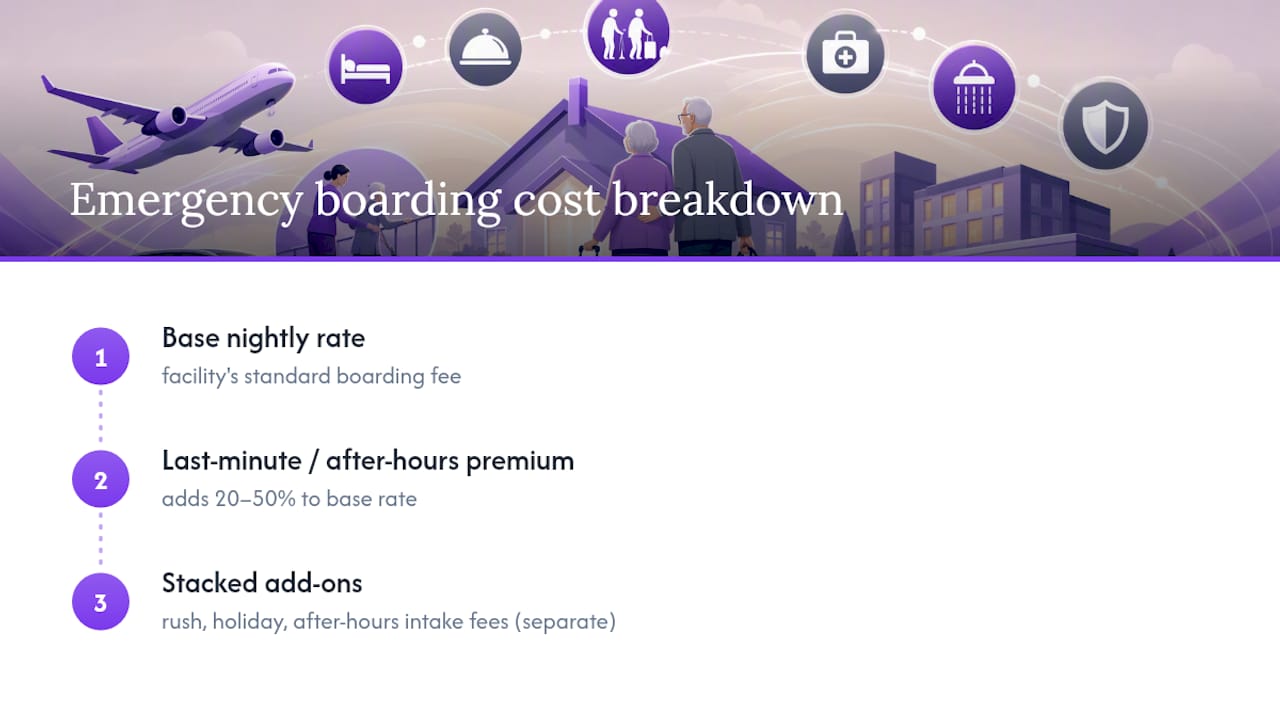
Separate from a monthly alert subscription, actual emergency boarding, the kind where a kennel or sitter takes your pet in on short notice, runs on a different pricing model entirely. Most facilities charge a nightly rate that jumps 20 to 50% above their standard boarding fee for last-minute or after-hours placement. Rush fees, holiday surcharges, and after-hours intake fees stack on top of the base rate.
The point of an alert subscription isn’t to pay for that boarding itself. It’s to make sure a named caregiver gets notified fast enough that boarding may never become necessary, or that whoever steps in already has the instructions they need to make a good decision about care. A subscription costing $7 to $15 a month is a fraction of even a single emergency boarding stay, which is part of why framing it as inexpensive protection against a worse outcome makes sense for readers on a tight budget.
What Drives the Price Up or Down for Urgent Boarding
Pet size affects cost directly, since larger dogs often require bigger kennel space and more staff attention, which many facilities price higher per night. Duration matters just as much: a one-night emergency stay costs more per night than a planned week-long booking, because facilities price short, unpredictable stays at a premium.
Add-on services push the total higher fast. Medication administration, special diet accommodations, extra walks, or one-on-one attention for anxious pets typically carry per-service fees on top of the nightly rate. Facilities without availability planning ahead of time may also charge intake or assessment fees just to accept a pet on short notice.
This is exactly where advance preparation pays off. A caregiver who already has your pet’s medication schedule and vet information on hand can sometimes avoid formal boarding altogether by stepping in directly, cutting out per-night fees entirely.
Emergency Boarding vs. Regular Boarding and Pet Sitting
Regular, planned boarding is priced for predictability. Facilities know the dates, staff accordingly, and pass those savings on to you. Emergency boarding strips away that predictability, and the premium you pay reflects the facility scrambling to make space and staff available on no notice.
Pet sitting, by comparison, usually costs less per day than boarding, whether planned or emergency, because there’s no kennel overhead. But emergency pet sitting carries its own premium if you’re calling someone last minute rather than booking weeks ahead, and availability is far less reliable in a true crisis.
This is the core argument for having named caregivers already briefed and ready: a friend or neighbor who already knows your pet’s routine can step in at no cost at all, compared to any paid boarding or sitting option, emergency or otherwise.
Finding Affordable Emergency Boarding When You Need It
Start by calling your regular vet clinic first. Many keep a short list of trusted boarding partners or overflow arrangements for existing clients, sometimes at a lower rate than a cold call to an unfamiliar kennel.
A few other ways to keep the cost down:
- Call multiple facilities before committing. Emergency rates vary widely between providers, even within the same town.
- Ask about daytime-only or partial-day rates if you only need coverage for a few hours rather than an overnight stay.
- Check if your homeowner’s or renter’s insurance includes any pet-related emergency benefit, which some policies quietly include.
- Look into local rescue organizations, which sometimes offer short-term foster placements during a genuine crisis at little or no cost.
The best long-term fix is avoiding the need for paid boarding altogether by having a reliable local contact ready to step in immediately.
Payment Terms, Deposits, and Cancellations for Emergency Boarding
Most boarding facilities require a deposit for emergency intake, often 25 to 50% of the estimated total stay, charged at drop-off. Full payment is typically due at pickup, and many facilities require a credit card on file specifically for last-minute bookings since they can’t verify availability in advance the way they can for planned stays.
Cancellation terms tend to be stricter for emergency bookings than standard reservations. Some facilities won’t refund a deposit at all if you cancel within a few hours of the scheduled drop-off, since they turned away other business to hold the space. Always ask directly what the refund policy is before handing over payment, since terms vary a lot between independent kennels and larger chains.
Author Perspective: Why Alerts Plus Named Caregivers Matter
This service is a communication bridge, not a medical responder. It won’t call 911 for you. What it does is make sure someone who knows your pet gets the message fast enough to act. Test your contacts regularly, keep pet details current, and know that living alone, older, or managing a disability doesn’t mean your pet has to face unnecessary risk.
— MyPetsSafetyNet
Start Your Free Trial with MyPetsSafetyNet
Boarding facilities and last-minute sitters solve the problem after it happens. Mypetssafetynet is built to prevent it from getting that far, by getting a named caregiver your pet’s instructions the moment you miss a check-in.
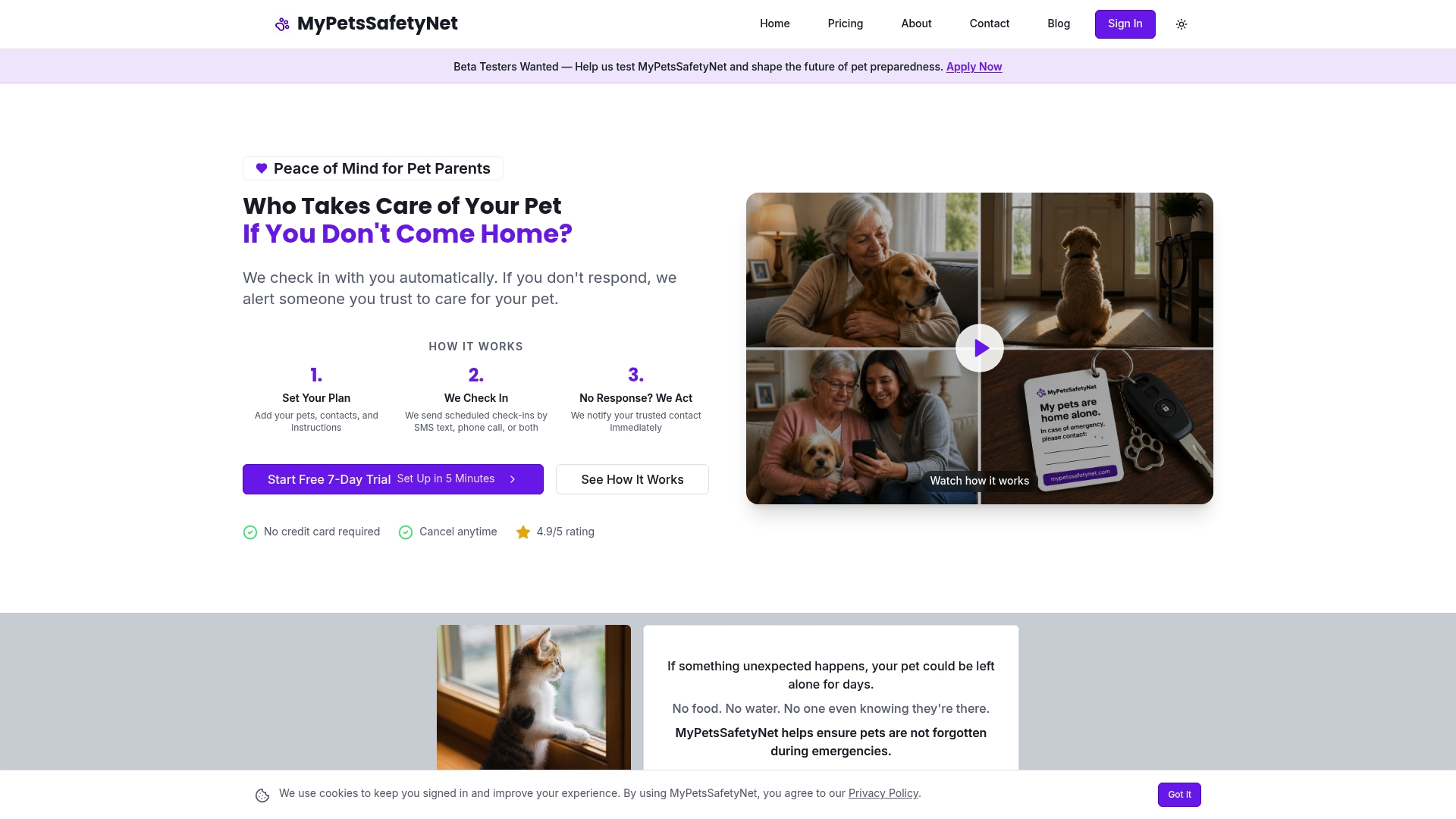
At $6.99 per month, the Monthly plan covers up to 5 pets and 3 contacts, works over SMS or phone calls with no smartphone required, and takes about 10 minutes to set up. Start with the free trial, build your pet profile, and confirm your contacts respond before you need them to. If you want a no-cost starting point while you decide, grab the free pet emergency card first and build from there.
Sources
- Are pet wellness plans worth the money? — Money
- VCA CareClub® Pet Wellness Plans | VCA Animal Hospitals
- Pet Guardian Protocol | Peace of Mind for Pet Parents
FAQ
How Much Does an Emergency Pet Alert Subscription Cost?
Most automated check-in and caregiver alert subscriptions run between $3 and $25 per month, depending on features. Mypetssafetynet’s Monthly plan costs $6.99 per month and includes a free trial before you pay anything.
What’s the Difference Between an Alert Subscription and Pet Insurance?
An alert subscription notifies your named caregivers if you miss a scheduled check-in, while pet insurance covers unexpected veterinary treatment costs. They solve different problems and often make sense together rather than as substitutes.
Does Emergency Pet Boarding Cost More Than Regular Boarding?
Yes, emergency or last-minute boarding typically costs 20 to 50% more per night than standard planned boarding, since facilities charge a premium for accommodating unplanned stays. Having a briefed local caregiver ready can help you avoid that cost altogether.
How Many Emergency Contacts Should I Set Up?
Most pet owners should name two to four emergency contacts who live nearby and have access to your home. Mypetssafetynet supports up to 3 emergency contacts per account alongside profiles for up to 5 pets.
Will the Service Call 911 If I Miss a Check-In?
No, these services act as a communication bridge to your personal contacts rather than dispatching emergency responders directly. The goal is getting a trusted person your pet’s care instructions fast, not replacing emergency medical services.