Solo Owners: Set Automatic Pet Care Instructions Without a Smartphone

An automatic pet care instructions system checks in with you on a schedule and, if you don’t respond, sends your pet’s care details straight to the people you’ve named to help. The result is a faster handoff: a trusted contact gets clear, specific instructions instead of guessing what your pet needs. Ready and organizations like the ASPCA have long recommended this kind of buddy system, and services like MyPetsSafetyNet build it into an automated tool you can set up once and trust.
TL;DR:
- Schedule confirmations once daily for healthy pets or twice daily for medical needs, set a response window, and test alerts with every contact.
- List medication names, doses, and times; feeding amounts and restrictions; veterinary contacts; access details; and signed treatment authorization with a financial limit.
- Name two or three willing, capable nearby contacts in escalation order, confirm them every few months, and retest alerts after any contact changes.
- Keep records, labeled medications, and 7 to 10 days of supplies accessible; arrange transport and a destination that accepts pets, since many shelters do not.
Table of Contents
- What an automated check-in system actually does
- Build an effective pet-care instruction profile
- Choose and confirm emergency contacts
- Set, test, and maintain your check-in schedule
- Pack and document what caregivers need on arrival
- When alerts aren’t enough: access, transport, and destination planning
- Why regular review beats one-off planning
- How MyPetsSafetyNet helps you get started
- FAQ
- Sources
What an automated check-in system actually does
At its core, this kind of system runs on a simple loop: it asks if you’re okay on a schedule you choose, waits for your response, and starts a countdown if you don’t answer. When that countdown runs out, it escalates, reaching out to your named contacts in order and handing them your pet’s care instructions.
A few features make this work well in practice:
- Flexible delivery channels. SMS, phone calls, and email mean the system works for people without smartphones, which matters for older adults and anyone who relies on a basic phone.
- Adjustable response windows. You decide how long the system waits before it treats a missed check-in as a real concern.
- Ordered escalation. Contacts are alerted in a sequence you set, so the first available person hears from the system first.
- Structured pet profiles. Fields for contacts, authorizations, medications, vet information, and microchip numbers travel with every alert.
This setup operationalizes the same buddy-system idea that Ready.gov and the ASPCA describe, just with automation doing the watching instead of a neighbor remembering to check in.
Build an effective pet-care instruction profile
A good profile is short, specific, and ready to hand to someone who has never met your pet. Build it in this order:
- Owner and pet basics. Pet’s name, breed, photo, microchip number, and your primary and secondary vet contacts.
- Medication list. Drug name, dose, time, and administration method, written exactly as you’d say it to a vet tech.
- Feeding instructions. Amount, food brand, and feeding times, plus any allergies or restrictions.
- Behavior and handling notes. How your pet responds to strangers, leash habits, or crate preferences.
- Veterinary authorization. A signed statement allowing a named caregiver to approve treatment, with a stated financial limit.
- Access instructions. Where keys, collars, leashes, and food are kept.
Paste-ready wording helps here. For feeding, something like: “Feed 1 cup dry food at 7 AM and 6 PM. No table scraps, chicken allergy.” For authorization: “I authorize [caregiver] to approve veterinary care up to $500 and contact [vet name] at [phone].” The FDA’s emergency pet planning guidance specifically recommends a signed authorization with a financial limit for exactly this scenario, when the owner can’t be reached.
Pro Tip: Write every instruction as if you won’t be there to clarify it. If a sentence needs follow-up questions, rewrite it shorter.
Choose and confirm emergency contacts
The contacts you list only help if they can actually act. Before you add anyone to your profile, check for a few things:
- Willingness. Ask directly, don’t assume. “Can I list you as my emergency pet contact?” is a fair, simple question.
- Capability. Can they drive, lift a carrier, or handle your pet’s temperament?
- Distance. Someone 20 minutes away is more useful than someone across the country for same-day needs.
- Pet experience. A contact who has cared for animals before will move faster under stress.
Once someone agrees, write it down and confirm it again every few months, since circumstances change. The FEMA caregiver preparedness guide recommends documenting communication needs and practicing your support network regularly, not just setting it up once.
Naming two or three contacts in escalation order, rather than one, lowers the chance that nobody answers. If you want a deeper walkthrough on prioritizing contacts, our guide on choosing pet emergency contacts covers it step by step. Once contacts are set, run a test check-in so everyone sees what the alert looks like, and walk each person through where your spare key is kept.
Set, test, and maintain your check-in schedule
Your cadence should match your pet’s needs. A healthy adult cat might only need a once-daily check-in, while a dog on insulin or a senior pet with health issues may warrant twice-daily confirmations.
- Pick a countdown interval. A few hours is common for high-need pets; once a day fits lower-risk situations.
- Decide what each escalation message includes. Your name, your pet’s name, the fact that you missed a check-in, and a link or summary of the care profile.
- Run an acceptance test right after setup so you know contacts actually receive alerts.
- Rehearse monthly or quarterly, and retest immediately after any contact change.
A significant portion of U.S. households experience some kind of disaster-related disruption that separates them from pets, according to patterns documented across Ready.gov’s pet preparedness guidance, which is part of why the agency recommends keeping contact information and care plans current rather than set once and forgotten.
Build a short maintenance checklist: confirm medications are current, vet records are up to date, microchip registration matches your address, and every contact still agrees to the role.
Pack and document what caregivers need on arrival
An alert only helps if the person who shows up can act right away. Keep a physical kit ready alongside your digital profile.
Documents to gather:
- Vaccination records and a signed veterinary authorization
- Current medication list with prescriptions
- Microchip number and registration confirmation
- A recent, clear photo of your pet
Supplies to pack:
- 7 to 10 days of food and water
- Medications, labeled with dose and timing
- Bowls, leash or carrier, and a basic first-aid kit
Store these in a waterproof folder near the door, and consider a visible rescue-alert sticker so first responders know a pet is inside. The ASPCA’s pet planning checklist recommends exactly this combination of records and supplies, plus a printable emergency contact card. For a full breakdown of what to gather, our pet care emergency document guide walks through each item.
When alerts aren’t enough: access, transport, and destination planning
A notification tells someone you need help, but it doesn’t move your pet anywhere. Many public shelters and evacuation sites don’t accept animals, so the CDC’s emergency preparedness guidance recommends arranging a pet-friendly destination in advance, whether that’s a boarding kennel, a relative’s home, or your veterinarian’s office.
Plan transport too: a carrier that fits your pet, a vehicle someone can use, or a standing agreement with a boarding facility or vet clinic. If your pet ever needs to travel across state lines for boarding or care, a health certificate may be required.
For owners with mobility or disability needs, build in extra access points: a spare key with a trusted neighbor, a Smart911 profile noting pets in the home, or a standing arrangement with a nearby contact who can act without waiting for you to explain anything.

Why regular review beats one-off planning
Most failures in a system like this don’t come from missing contacts. They come from contacts who agreed once, years ago, and never confirmed again, or instructions too long for someone to read under stress.
Short, action-first templates work better than detailed narratives when someone is anxious and short on time. Automation only closes the gap between a missed check-in and real care when it’s paired with contacts who stay current and instructions that stay usable. Re-confirming both, on a regular schedule, is the part most plans skip.
— MyPetsSafetyNet
How MyPetsSafetyNet helps you get started
We built our system around the exact gap this guide describes: a wellness check-in that escalates to your named contacts with your pet’s care details already attached, no smartphone required since it works over SMS or phone calls too. Setup takes a short time, and you can add multiple pets and emergency contacts with a custom schedule and escalation order.
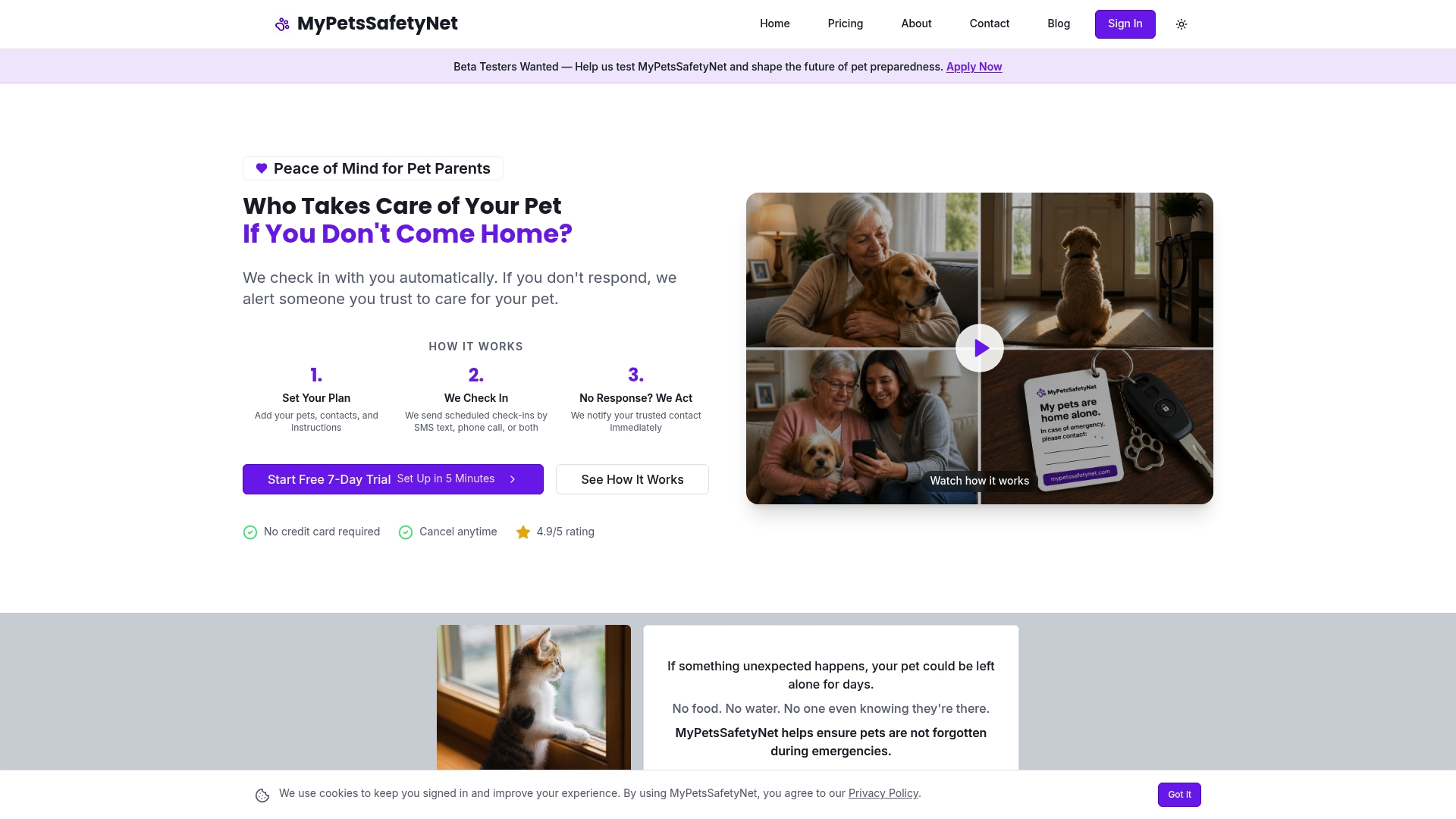
If you want to start simply, here’s where to go:
- Try the free pet card to build your first instruction profile without any commitment, available at our free pet card tool.
- Start a 7-day free trial, no credit card required, and test your own check-in cadence.
- Check our Monthly plan, priced at $6.99 per month, once you’re ready to keep your safety net running.
If you have a disability or health condition that makes backup planning especially important, our disability pet care plan guidance walks through the specifics.
FAQ
What is an automatic pet care instructions system?
It’s a service that checks in with you on a schedule and, if you miss a response, sends your pet’s care details to your named emergency contacts. MyPetsSafetyNet runs this through SMS, phone calls, or email, so it works without a smartphone.
How often should I schedule check-ins?
It depends on your pet’s needs: once daily works for most healthy pets, while twice-daily check-ins suit pets with medical needs like insulin schedules. Ready.gov recommends keeping your plan and contact information current regardless of frequency.
What should I include in a pet care instruction profile?
Include your pet’s photo, microchip number, vet contacts, medication list, feeding instructions, and a signed veterinary care authorization with a financial limit. The FDA’s pet emergency guidance specifically recommends this authorization for caretakers acting in your absence.
How many emergency contacts should I name?
Two or three contacts in a set order lowers the risk that nobody responds when you need help. Choose people who are nearby, willing, and capable of handling your pet, and confirm with them directly before listing them.
Why can’t I just rely on a shelter if something happens to me?
Many public shelters and evacuation sites don’t accept pets, which is why the CDC recommends planning a pet-friendly destination in advance, such as boarding, a vet clinic, or a friend’s home. An alert gets someone’s attention, but you still need a place for your pet to actually go.
Sources
- Ready
- Making a plan for your pet | ASPCA
- Healthy Pets, Healthy People: Emergency preparedness | CDC
- Take care of your pets before disaster strikes | FDA