Two Hours to a Disability Pet Care Plan That Alerts Contacts
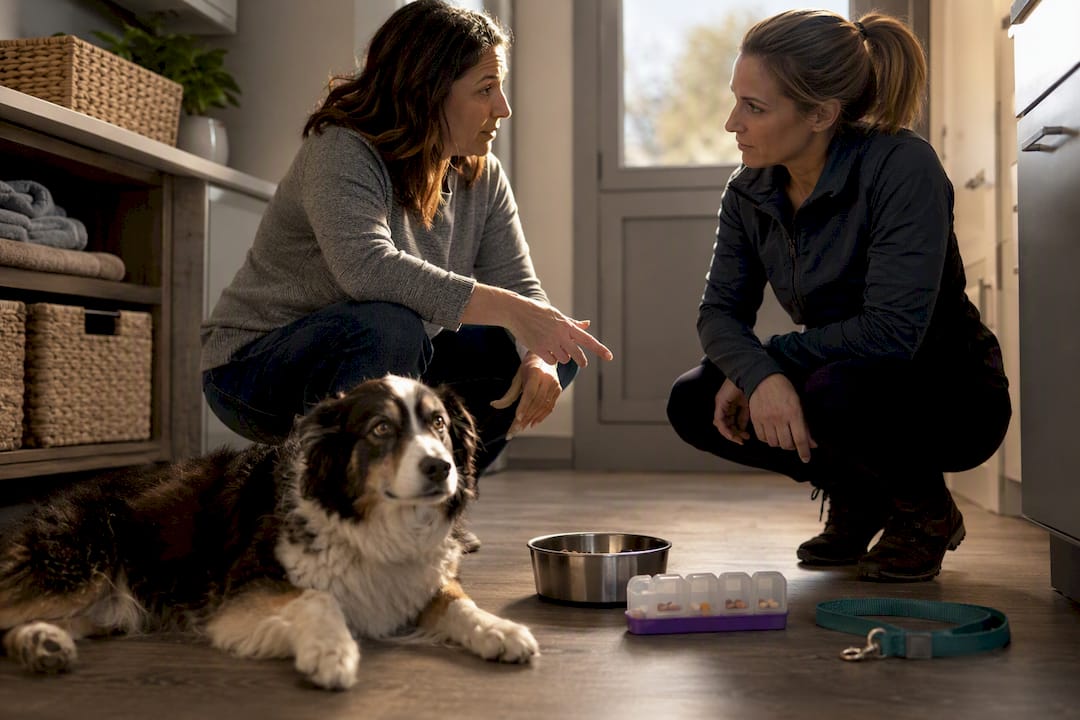
A working disability pet care plan rests on three things: an automated daily check-in that triggers an alert if you don’t respond, a named backup caregiver who already has access to your home, and a printed care sheet anyone could follow without calling you. Skip any one of these, and the plan is just good intentions. A tool like MyPetsSafetyNet exists specifically to run that check-in and alert your contacts automatically, because the gap between “something happened” and “someone knew” is where pets get hurt.
TL;DR:
- A comprehensive pet care plan requires automated daily check-ins, designated backup caregivers, and clear printed instructions to prevent pets from being stranded.
- Naming two caregivers and establishing written access and communication protocols ensures someone is always reachable and prepared to help in emergencies.
- Pet instruction sheets must include feeding schedules, medications, vet contacts, microchip info, and emergency authorization language to facilitate prompt care.
- Regular testing and updating of the plan every three months help identify potential vulnerabilities, such as lost keys or outdated contact information.
- Automation services like MyPetsSafetyNet enhance safety by managing scheduled check-ins, contact escalation, and easy access to pet care details for quick responses.
Table of Contents
- Quick-Start Checklist: 8 Things To Set Up Today
- How Do You Choose And Brief A Backup Caregiver?
- What Should Written Pet Care Instructions Include?
- How Do Daily Check-Ins Catch Trouble Early?
- What Legal And Financial Safeguards Do You Need?
- What Belongs In A Pet Go-Bag For Accessibility?
- How Often Should You Test And Update The Plan?
- MyPetsSafetyNet Perspective: Why Automation Plus Human Backups Save Time
- Get Your Daily Check-In And Escalation Plan Running Today
- Authoritative Resources To Back This Plan
- Sources
- FAQ
Quick-Start Checklist: 8 Things To Set Up Today
You don’t need weeks to build a real disability pet care plan. You need about two hours and this list.
- Name two caregivers, primary and backup, and share access (key, lockbox code, or entry instructions).
- Turn on a daily check-in service with escalation contacts loaded in.
- Write a one-page pet instruction sheet and print three copies.
- Make a wallet alert card and leave a signed authorization letter with your vet and your caregiver.
- Pack a 7 to 14 day go-bag with medications, food, and records.
- Label collars, confirm your microchip registration, and post a door or window sticker.
- Save vet and emergency clinic numbers in five places: phone, wallet, fridge, go-bag, and with each caregiver.
- Set a quarterly reminder to run a practice drill and update anything that’s changed.
Each item takes minutes. Together, they close the gaps that leave pets stranded when an owner can’t respond.
How Do You Choose And Brief A Backup Caregiver?
You need two people, not one. A single backup caregiver might be traveling, sick, or simply not pick up the phone, and pets don’t wait well for a second option to materialize. Naming a primary and secondary caregiver means someone is almost always reachable.
Access matters as much as willingness. Common options include:
- A spare key left with a trusted neighbor or friend
- A coded lockbox mounted near your entry
- Authorized building access arranged through a property manager or front desk
- A neighbor handoff plan where a nearby resident holds keys and checks in physically
Document the arrangement in writing. A signed note, even a simple one, plus a text message confirming they agree, turns a verbal favor into something you can point to under pressure. Follow up with an actual practice run: hand them the key, walk through your pet’s routine, and have them repeat it back.
Be specific about limits. A caregiver should know how to feed, medicate, and comfort your pet, but they shouldn’t attempt anything medical beyond that scope.
Pro Tip: Ask your backup caregiver to text you “got it” after reading your care instructions, not just “OK.” Vague replies mean they skimmed it.
What Should Written Pet Care Instructions Include?
Anyone stepping in cold, a neighbor, a responder, a stranger from your building, needs an instruction sheet that answers every question before they think to ask it. The AVMA recommends naming someone authorized to approve veterinary treatment specifically to avoid delays when you can’t be reached, and that authorization belongs on the same sheet as your feeding schedule.
| Field | What To Include |
|---|---|
| Feeding | Exact food brand, amount, and times per day |
| Medications | Name, dose, storage location, and administration notes |
| Vet contact | Clinic name, phone, address, and after-hours line |
| Microchip | Chip number and registry name |
| Behavior notes | Handling quirks, safe restraint, and transport steps |
| Authorization | A line stating the caregiver is authorized to approve emergency vet care |
Keep printed copies on the fridge, inside the pet carrier, and near your front door. The ASPCA’s pet planning guidance recommends a compact “pet portfolio” for exactly this reason: paper doesn’t need a password.
For authorization language, something as simple as “I authorize [caregiver name] to approve emergency veterinary treatment for my pet(s) in my absence” covers most situations, though this isn’t formal legal advice. An attorney can help if you want something more binding.
How Do Daily Check-Ins Catch Trouble Early?
The single most important piece of a disability pet care plan is the early-warning trigger: a daily “are you OK?” message that, if unanswered, automatically notifies your emergency contacts. Without it, a missed day can stretch into a missed week, and by the time anyone notices, your pet has gone without food, water, or medication for far too long. With a daily trigger, that window shrinks from days to hours, giving caregivers a real chance to act before serious harm.
Build the escalation sequence with layers, not a single alert:
- An initial text or automated call, sent if you haven’t confirmed you’re OK
- A follow-up call to your secondary contact 30 to 60 minutes later if the first goes unanswered
- A “come now” message to your primary caregiver if no one has responded within your set window
Test the system regularly, not just the day you set it up. Check that response logs are actually recording, confirm your alternate numbers still work, and verify your caregivers know where the spare key lives.
This is exactly the workflow a specialized pet safety check-in service can provide: scheduled check-ins by text, call, or email, contact management for emergency contacts, and a place to store pet care instructions so they reach your caregiver when needed.

Pro Tip: Set your countdown window shorter than feels necessary at first. You can always extend it, but a missed medication dose is measured in hours, not days.
What Legal And Financial Safeguards Do You Need?
Two low-cost steps protect your pet immediately, before you arrange anything formal. Carry a wallet pet alert card listing your pet’s name, your vet, and your emergency contact. Pair it with a signed authorization letter, one copy with your caregiver and one with your vet, stating who can approve treatment in your absence.
For longer-term protection, pet trusts generally outperform a simple mention in a will. A will only takes effect after probate, which can take weeks or months, while a pet trust can be structured to release funds and care instructions immediately.
- Wallet pet alert card with vet and emergency contact info
- Signed authorization letter held by your caregiver and your vet
- A small pre-authorized fund or shared account earmarked for emergency vet costs
- A documented spending limit so a caregiver knows what they can approve without calling you first
If you want something enforceable, talk to an estate attorney. Ask specifically about pet trust structures, funding options, and how quickly a trustee can access funds after an emergency.
What Belongs In A Pet Go-Bag For Accessibility?
Pack a go-bag that covers 7 to 14 days without a shopping trip: food, medications, bowls, a carrier, a harness or leash, copies of vet records, and a recent photo of your pet in case of separation.
- Store supplies where you can reach them without help, not on a high shelf
- Use pictorial instructions with photos or icons for caregivers who need a quick visual reference
- Keep one copy of instructions in the carrier, one on the fridge, one in your vehicle, and a cloud-based copy with shared caregiver access
- Note that service animals carry different legal protections under the ADA than pets, which matters if a responder questions access during an evacuation
Preparedness guidance for people with disabilities specifically recommends visible door or window stickers noting a pet is inside, since first responders often can’t check a phone or laptop for details during a crisis.
How Often Should You Test And Update The Plan?
Run a drill once per quarter, not once a year.
- Simulate a missed check-in and confirm your escalation contacts actually receive the alert.
- Have your caregiver demonstrate they can access your home and locate the go-bag, medications, and carrier.
- Verify vet contact numbers, microchip details, and medication doses are still current.
- Confirm your caregiver’s availability hasn’t changed since the last drill.
If a drill fails, don’t panic, fix it. A caregiver who can’t find the spare key or forgot the feeding amount just showed you exactly where to focus before a real emergency does.
MyPetsSafetyNet Perspective: Why Automation Plus Human Backups Save Time
Most pet safety plans we see fail quietly. Solo owners write a thorough instruction sheet, then never tell anyone where it’s kept. Disabled pet parents name a caregiver but skip the early-warning trigger, so no one knows to check until days have passed. Automation isn’t a replacement for a good caregiver. It’s the missing piece that tells your caregiver when to show up. Set up one check-in today. Everything else in this plan works better once that alarm exists.
— MyPetsSafetyNet
Get Your Daily Check-In And Escalation Plan Running Today
Building the plan on paper is only half the job. These services turn your written instructions into an active safety net: scheduled check-ins by text, call, or email, automatic escalation to emergency contacts, pet instruction storage your caregiver can access when it matters, and a wallet-card generator so your pet’s essentials are always on hand.
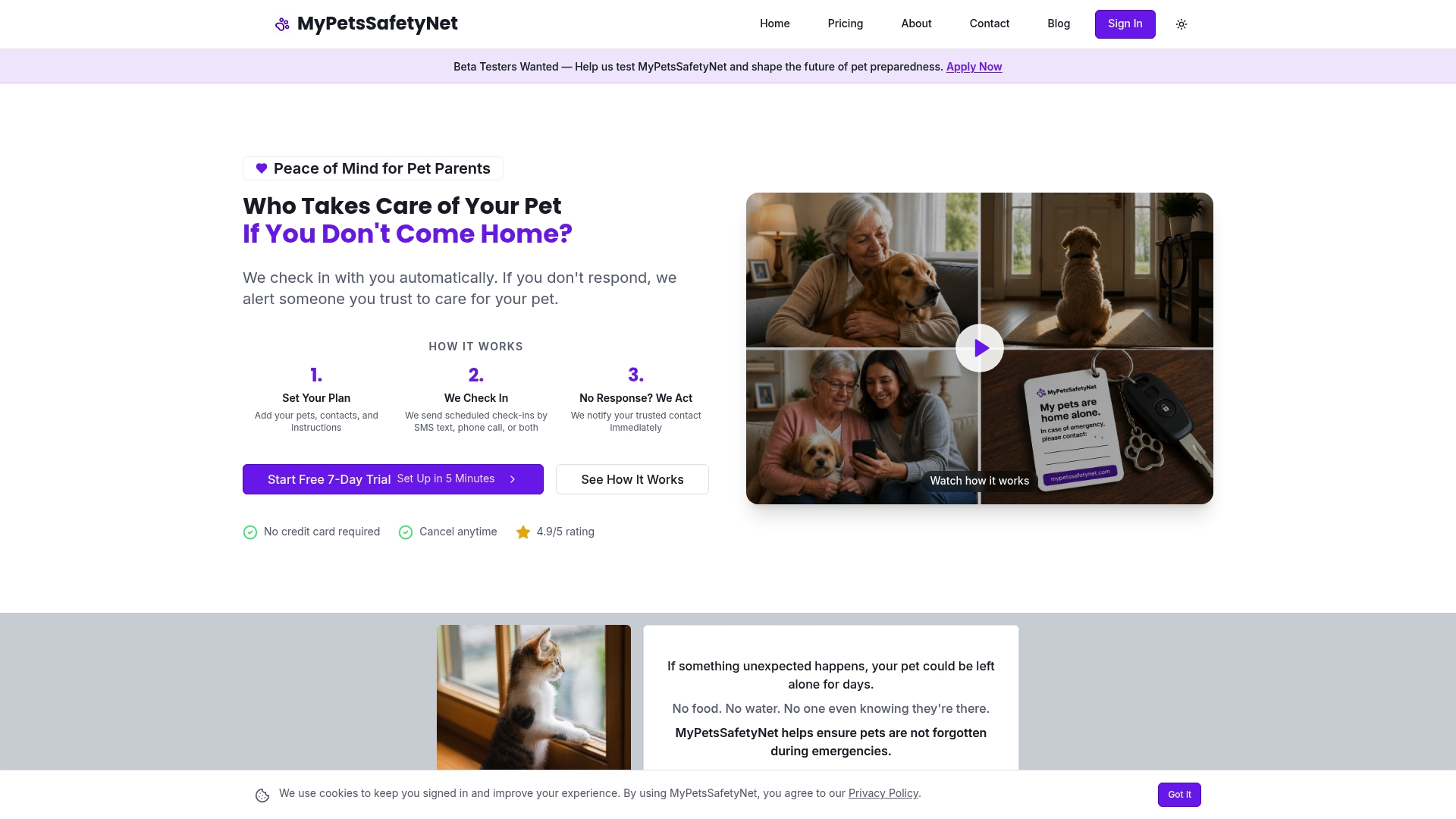
This solution fits solo and disabled pet owners best, since the whole point is removing effort from a system that has to work even when you can’t manage it yourself. If you already have a caregiver lined up but no way to alert them automatically, that’s the exact gap this closes. Start with the free pet alert card to get your pet’s information documented in minutes, then set up your scheduled check-ins so your first escalation contact gets notified the moment you miss a response.
Authoritative Resources To Back This Plan
- AVMA: Who’s in charge of your animal’s care while you’re away?
- ASPCA: Making a plan for your pet
- Disaster readiness tips for owners of pets and service animals
- How to create a pet emergency contact list
Sources
- AVMA — Who’s in charge of your animal’s care while you’re away?
- ASPCA — Making a plan for your pet
- National Organization on Disability / Maryland — Disaster readiness tips for owners of pets and service animals
- Animal Hospital Clinic — How to create a pet emergency contact list (2025)
FAQ
What Is A Disability Pet Care Plan?
It’s a written, testable system that names backup caregivers, provides care instructions, and includes an automated check-in that alerts contacts if you become unresponsive.
How Do I Authorize Someone To Approve Vet Care?
Write a short signed letter naming the caregiver and stating they can approve emergency treatment, then leave copies with your vet and your caregiver. The AVMA recommends this specifically to avoid treatment delays.
How Often Should I Update My Pet’s Emergency Information?
Review and update it quarterly, including medications, vet contacts, microchip details, and caregiver availability.
Is A Pet Trust Better Than Including My Pet In A Will?
Generally yes, because a pet trust can release funds and instructions immediately, while a will only takes effect after probate, which can take weeks.
Can MyPetsSafetyNet Handle My Daily Check-In Automatically?
Yes. MyPetsSafetyNet sends scheduled check-ins by text, call, or email and notifies your emergency contacts with pet care details if you don’t respond.