Solo Pet Owners Are Vulnerable: Protect Your Pet Now
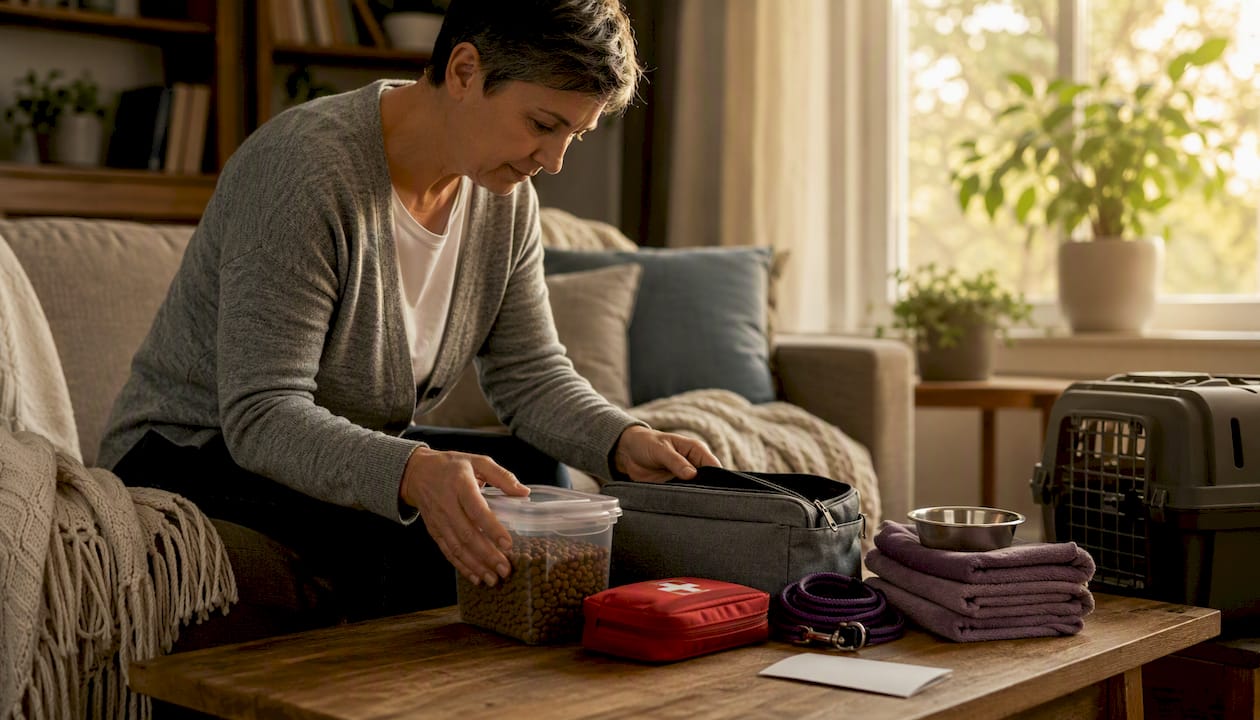
Single pet owners are vulnerable because no one notices quickly when something goes wrong. If you live alone and suffer a fall, stroke, or sudden hospitalization, your pet can go 12–72 hours without food, water, or medication before anyone realizes you’re unreachable. That window is the real risk. Three things you can do right now to close it:
- Set up an automated daily check-in service that alerts your emergency contacts if you miss a response.
- Name a nearby emergency caregiver who has a key or access code to your home.
- Carry an emergency care card with your pet’s name, feeding schedule, medications, and your vet’s number.
Census data, approximately 34.75 million single-person households existed in the United States as of 2019. That’s tens of millions of pets whose entire safety net is one person.
Key Takeaways
Solo pet owners are vulnerable because detection lag creates a care gap of 12–72 hours, and closing that gap requires a daily check-in trigger, a named caregiver with access, and lifetime-effective legal instruments.
| Point | Details |
|---|---|
| Detection lag is the core risk | Pets can go 12–72 hours without care before anyone notices an owner is unreachable. |
| Wills don’t cover incapacity | A will only takes effect after death; a pet trust or durable POA protects pets during incapacitation. |
| All 50 states recognize pet trusts | Every U.S. state has a statute allowing pet trusts, making them an enforceable and practical legal tool. |
| A tiered response plan is required | Name a same-day caregiver, a short-term boarding backup, and a long-term guardian for complete coverage. |
| Mypetssafetynet automates the trigger | Daily check-ins alert up to 3 emergency contacts with your pet’s full care profile if you miss a response. |
Table of Contents
- Why single pet owners face a time-sensitive care gap
- Why a will alone won’t protect your pet during incapacitation
- Immediate steps you can take in under 30 minutes
- How automated wellness check-ins close the detection gap
- A step-by-step emergency plan you can put in place this week
- What to include in your pet’s emergency profile
- Legal and financial tools that protect your pet long-term
- Common barriers and realistic ways to get past them
- Why veterinarians and attorneys both emphasize closing the detection gap
- Mypetssafetynet gives your pet a safety net that activates automatically
- Sources
Why single pet owners face a time-sensitive care gap
The vulnerability isn’t about love or commitment. It’s about detection lag. When you live with someone, a missed meal or an unusual silence triggers concern within hours. When you live alone, nothing triggers that concern automatically.
Consider these scenarios:
- A fall at home. You slip in the bathroom and can’t reach your phone. Your cat has food for today, but not tomorrow.
- A stroke or loss of consciousness. You’re found by a neighbor two days later. Your dog hasn’t been outside.
- Sudden hospitalization. You’re admitted through the ER and sedated. No one thinks to ask about your pets.
- A travel incident. Your flight is diverted, your phone dies, and your bird’s medication schedule is missed.
- A natural disaster. You’re evacuated to a shelter that doesn’t allow pets, and your emergency contacts don’t know where your animals are.
Pets can’t call for help. Mail piling up, an unanswered phone, or a car that hasn’t moved are the only signals neighbors might notice, and those signals take days to register. LA Animal Services guidance notes that pets sometimes enter shelters because owners are suddenly unable to care for them, a pathway that planning can prevent.
Why a will alone won’t protect your pet during incapacitation
A will takes effect after death. It does nothing for your pet during the hours or days you’re unconscious in a hospital. This is the most common misconception solo pet owners carry, and it leaves a dangerous gap.
Under U.S. law, pets are classified as personal property. Without a specific legal instrument naming a caregiver and allocating funds, a court or estate administrator has no duty to prioritize your pet’s welfare during estate processing. Probate can take months. Your pet cannot wait months.
Pro Tip: Attorney Eileen Kerlin Walsh of Kerlin Walsh Law recommends using lifetime-effective instruments — a pet trust or a durable power of attorney scoped to pet care — combined with an active early-warning system. These tools work while you’re alive but incapacitated, not just after death.
The practical combination is: a pet trust or durable POA for legal authority, plus a daily check-in service as the operational trigger that puts that authority into motion.
Immediate steps you can take in under 30 minutes
You don’t need a lawyer to reduce your pet’s risk today. Start here:
- Create an emergency care card. Write your pet’s name, feeding schedule, medications (name, dose, frequency), vet name and phone number, and your emergency contact’s name. Laminate it or keep it in your wallet.
- Confirm a primary and secondary caregiver. Call them now. Make sure they have a key, a door code, or know where a lockbox is. Walk them through exactly what they’d do if they got an alert about you.
- Leave written instructions at home. A printed one-page sheet near your front door covers feeding, medications, and your vet’s after-hours number.
- Set up a dedicated pet care fund. Even a small savings account earmarked for emergency boarding gives a caregiver the ability to act without waiting for reimbursement.
- Sign up for a daily check-in service. This is the trigger that turns your plan from a document into a response.
Pro Tip: Make access easy and documented. A combination lockbox on your door handle costs under $30 and means your caregiver never needs to track down a spare key in a crisis. Record the code with your check-in service and give it to your emergency contacts.
For a full planning checklist, the solo pet owner safety planning guide covers legal setup, neighbor coordination, and printable templates in one place.
How automated wellness check-ins close the detection gap
A daily check-in system closes the detection gap by alerting designated contacts when an owner fails to respond, activating the emergency care chain within hours rather than days. That’s the core function. Everything else is built around it.
When evaluating a check-in service, prioritize these features:
- Escalation speed: How quickly does the system notify contacts after a missed check-in?
- Contact capacity: Can you name more than one emergency contact?
- Contact methods: Does it use SMS, phone calls, and email, or only one channel?
- Pet profile storage: Can caregivers access feeding schedules, medications, and vet info through the alert?
- Configurable countdown: Can you set the response window to match your routine?
- Trial period: Is there a free trial so you can test the workflow before committing?
Pro Tip: Test your check-in flow before you need it. Miss a check-in deliberately, then time how long it takes your emergency contacts to receive an alert and reach your home. That test reveals gaps faster than any planning document.
A step-by-step emergency plan you can put in place this week
A structured pet emergency plan includes a named guardian, a funded pet trust, a 72-hour response network, and a daily check-in that triggers the chain when something goes wrong. Here’s how that unfolds in practice:
Hour 0: You miss your daily check-in, and the system begins its countdown.
Hour 1: Your primary emergency contact receives an alert via SMS, phone, and email.
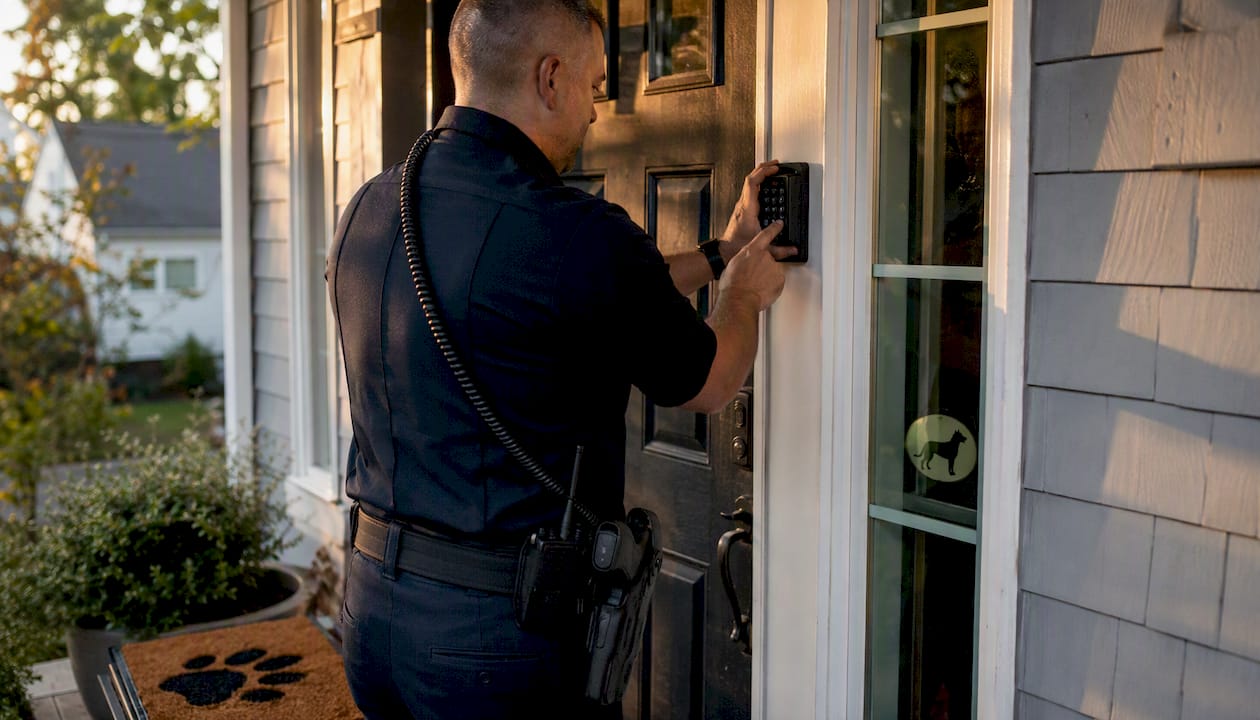
Hours 1–6: Your primary contact goes to your home, uses the lockbox code, checks on you and your pet, and contacts emergency services if needed.
Hours 6–24: If your primary contact can’t reach you or manage care, your secondary contact or a pre-arranged boarding facility takes over.
Day 2 and beyond: Your named long-term guardian or pet trust trustee is notified and assumes responsibility.
To prepare this chain:
- Name a primary and secondary emergency contact with written instructions.
- Give both contacts your lockbox code and your vet’s number.
- Pre-arrange short-term boarding at a local facility and keep the confirmation on file.
- Fund a small emergency account your caregiver can access or be reimbursed from.
- Review and test the plan quarterly. Call your contacts, confirm they still have access, and update any changed information.
For disaster scenarios, the plan shifts: identify a pet-friendly evacuation shelter in advance, keep a 72-hour go-bag for your pet, and make sure your check-in service has an out-of-area contact who won’t be affected by the same event.
What to include in your pet’s emergency profile
A pet profile must let anyone act within minutes, without calling you for clarification. Store it in three places: your wallet, your front door, and your check-in service’s profile system.
Core items to document:
- Pet name, species, breed, age, and a current photo
- Feeding schedule (amount, brand, frequency, any food restrictions)
- Medications: name, dose, frequency, and where they’re stored
- Veterinarian name, clinic address, and phone number (including after-hours)
- Microchip number and registration service
- Behavior notes (fear triggers, aggression history, how to handle)
- Allergies and known health conditions
- Preferred boarding facility and your account number there
- End-of-life wishes and any advance directives for veterinary care
- Emergency contact names, phone numbers, and their relationship to you
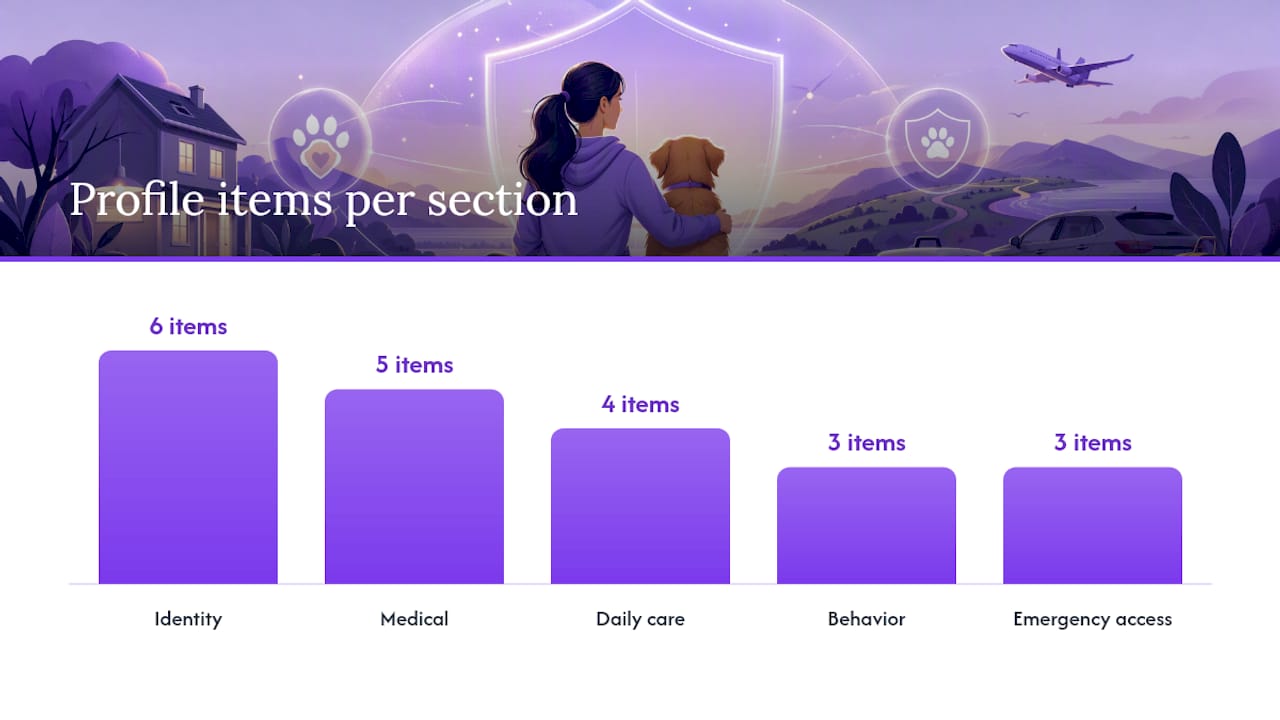
| Profile section | What to include |
|---|---|
| Identity | Name, species, breed, age, photo, microchip number |
| Daily care | Feeding schedule, food brand, water needs, exercise routine |
| Medical | Medications, doses, frequency, storage location, vet contact |
| Behavior | Triggers, handling notes, socialization history |
| Emergency access | Lockbox code, boarding facility, caregiver names and numbers |
Post a pet alert sign on your front door or window so first responders know animals are inside. The emergency pet care plan guide includes a printable template you can complete and laminate today.
Legal and financial tools that protect your pet long-term
The durable legal foundation for your pet’s safety combines two instruments: a pet trust and a durable power of attorney scoped to pet care.
All 50 U.S. states and Washington, D.C. now recognize pet trusts by statute. A pet trust lets you name a trustee to manage funds and a separate caregiver to provide daily care, with your written instructions governing both. Critically, a trust can be written to activate while you’re alive but incapacitated, not only after death.
When speaking with an estate planning attorney, ask:
- Can this trust activate during incapacity, not just at death?
- Who serves as trustee, and what are their powers?
- How are funds distributed, and at what intervals?
- What happens if my named caregiver can’t serve?
- Do you have experience drafting pet trusts specifically?
Funding options to consider:
- A dedicated savings account with a named authorized signatory
- Pet insurance that covers emergency veterinary costs
- Periodic trust funding through automatic transfers
- Pre-paid boarding agreements with a local facility
For guidance on selecting a long-term guardian, the final wishes for pets planning guide walks through trustee selection, state-specific considerations, and how to document your wishes clearly.
Common barriers and realistic ways to get past them
The most common objections are cost, reluctance from family or friends, and anxiety about formal legal steps. All three are solvable.
If cost is the barrier:
- Start with a free emergency care card and a low-cost daily check-in subscription. That alone closes the detection gap.
- A small dedicated savings account of even a few hundred dollars gives a caregiver the ability to act immediately.
- Pet insurance with emergency coverage is often less expensive than a single unplanned boarding stay.
If family or friends are reluctant:
- Be specific about what you’re asking. “Would you be willing to check on my dog if you got a text alert saying I hadn’t checked in?” is easier to say yes to than a vague request.
- Offer to cover any expenses they’d incur: gas, boarding fees, vet visits.
- Give them everything they need in writing so they never feel unprepared.
If legal steps feel overwhelming:
- Start with the operational layer (check-in service, care card, caregiver with a key) and add the legal layer (trust, POA) as budget and time allow.
- Local humane societies, veterinary clinics, and senior services programs sometimes offer referrals to attorneys who work with pet owners. The pet care resources for seniors guide lists community programs that can help with temporary care and legal referrals.
Pro Tip: Veterinarians and clinic staff can be a starting point. Ask your vet at your next visit whether they keep emergency contact information on file and whether they’d be willing to hold a copy of your pet’s care instructions.
Why veterinarians and attorneys both emphasize closing the detection gap
The reason practitioners in both fields prioritize this issue is straightforward: animal suffering and emergency shelter surrender are the direct outcomes when no one finds out quickly. Veterinary guidance consistently notes that many solo and elderly pet owners lack a plan for incapacitation scenarios, and that the gap between a good intention and an actual plan is where pets get hurt.
Attorney Eileen Kerlin Walsh’s position on this is clear: wills are frequently mistaken for sufficient protection, and they aren’t. Lifetime instruments, specifically a pet trust or a durable power of attorney, are what cover the incapacity scenario. Combined with a daily check-in that triggers the response chain, they form a complete system rather than a partial one.
The operational insight that experienced practitioners share is consistent: everything else in a pet emergency plan works, if someone finds out quickly. Detection lag is the single point of failure. Fix that first, then build the legal and financial layers around it.
Mypetssafetynet gives your pet a safety net that activates automatically
Solo pet owners need more than a plan on paper. They need a system that acts when they can’t. Mypetssafetynet sends scheduled SMS, phone, and email check-ins to you each day. If you don’t respond within your chosen countdown window, your emergency contacts receive an alert with your pet’s full care profile attached, so they know exactly what to do and where to go.
The service supports up to 5 pets and 3 emergency contacts, includes an escalation workflow, lets you configure countdown intervals, and generates a printable emergency care card from your pet profile. There’s no long-term contract and no complicated setup. A free trial lets you test the full workflow before you commit to a subscription.
If you’ve read this far, you already know the risk is real. Start your free trial at Mypetssafetynet and give your pet the backup plan they deserve.
Sources
- Incapacity Planning and Pets
- When the unexpected happens: ensuring a future for your clients’ pets
- The Complete Pet Emergency Plan for Seniors Living Alone
- Planning for Pets if you can’t be there for them | Los Angeles Animal Services