Pet Care Network Best Practices: Your 2026 Guide

A pet care network is defined as a coordinated group of caregivers, veterinary contacts, and documented protocols that protect your pet’s health and safety when you cannot. Pet care network best practices combine proactive emergency planning, preventive health routines, and clear communication to create a system your pets can depend on. The American Animal Hospital Association (AAHA) and the Pet Care Partnership Code of Conduct both set standards that form the backbone of any reliable network. Mypetssafetynet builds on these standards to help solo pet owners and caregivers establish a safety net before a crisis ever arrives.
1. What are documented emergency plans and why are they essential?
A documented emergency plan is the single most critical element of any pet care network. Without written instructions, caregivers face delays, make wrong calls, and put your pet at risk during the moments that matter most.
Professional pet care documentation must include your veterinarian’s contact information, proof of current business insurance, and a valid Local Authority Licence where your jurisdiction requires one. These three elements are not optional extras. They are the baseline for legally compliant and trustworthy care.
Your emergency plan should also contain a Pet Emergency Dossier. This document goes beyond vet contacts. It covers your pet’s vaccination records, medications, feeding schedule, behavioral quirks, and any known allergies. Caregivers who receive this level of detail can act confidently without calling you for every decision.
- Veterinarian contact: Primary vet name, phone, address, and after-hours emergency clinic
- Insurance proof: Current policy number and provider contact
- Licensing: Copy of any required Local Authority Licence for boarding or day care
- Medical summary: Diagnoses, current medications, dosage schedule
- Behavioral notes: Fear triggers, favorite commands, socialization history
- Feeding instructions: Brand, portion size, meal times, and dietary restrictions
Pro Tip: Store a digital copy of your Pet Emergency Dossier in a cloud folder shared with at least two trusted caregivers. Update it every time your pet’s medication or diet changes.
2. How does clear caregiver identification improve emergency response?
Clear identification tells any caregiver or first responder exactly who to call and what to do. Without it, even a well-meaning neighbor cannot help your pet effectively.
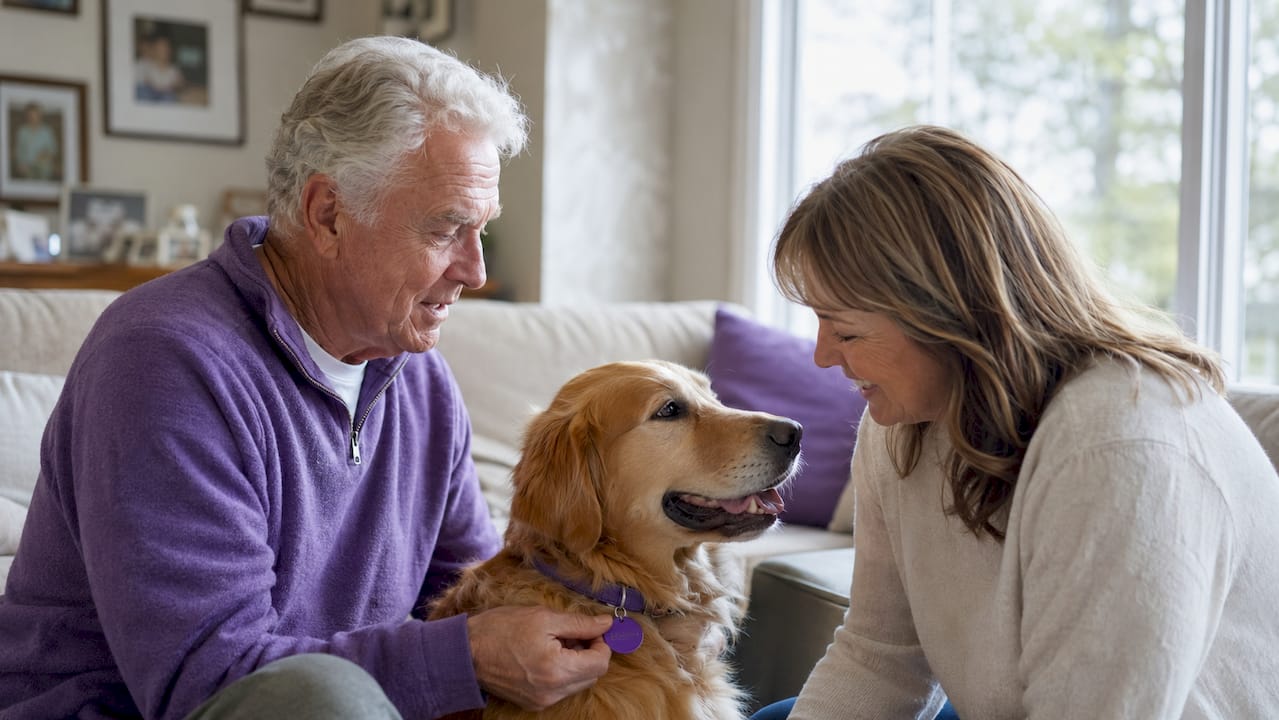
The industry best practice is dual identification: a registered microchip combined with a physical ID tag. The microchip provides a permanent, scannable record. The physical tag delivers immediate, visible information when a scanner is not available.
Your pet’s ID tag should state more than just your name and phone number. It should include a secondary emergency contact and, if space allows, a note such as “Medical needs on file.” This small addition signals to anyone who finds your pet that there is a care plan in place.
- Microchip: Register with a national database and update your contact details after every move or phone number change
- Physical tag: Include your name, primary phone, a secondary emergency contact number, and your pet’s name
- Collar condition: Check the collar and tag monthly for wear, fading, or damage
- Backup contact: Choose someone who lives nearby and can respond within one to two hours
Passive identification methods like tags alone fail when a tag falls off or becomes unreadable. A microchip with an updated registration solves that gap. Together, these two methods minimize your pet’s stress and speed up the care response.
3. Which preventive health routines support a dependable pet care network?
Preventive care is the foundation that keeps your pet healthy and keeps your caregivers informed. A pet with up-to-date records is far easier to care for in an emergency than one whose history is unknown.
Adult pets require at least one annual wellness exam. Senior pets, generally defined as those seven years and older, need biannual screenings to catch age-related changes early. These visits generate the medical records that caregivers rely on when you are not available to answer questions.
Vaccination schedules follow the 2022 AAHA and AAFP frameworks. Puppies and kittens complete their core series up to 16 weeks of age, receive a booster at one year, then follow a three-year interval for core vaccines. Keeping these records current and accessible is a non-negotiable part of any pet health network.
| Pet Life Stage | Wellness Exam Frequency | Core Vaccine Booster Interval |
|---|---|---|
| Puppy or kitten (0–16 weeks) | Series of visits per vet schedule | Initial series, then 1-year booster |
| Adult (1–6 years) | Annual | Every 3 years after 1-year booster |
| Senior (7+ years) | Biannual | Every 3 years, reviewed by vet |
Consistent veterinary records do more than track health. They empower caregivers with accurate medical facts, reducing guesswork and stress during emergencies. A caregiver who can show a vet your pet’s full history gets faster, better treatment.
Pro Tip: Ask your vet to email you a summary after every visit. Save each summary in your Pet Emergency Dossier folder so caregivers always have the most recent health snapshot.
4. What are effective communication and documentation strategies?
Clear communication between caregivers prevents missed doses, skipped feedings, and dangerous gaps in care. A well-organized workflow with defined roles is the difference between a network that functions and one that falls apart under pressure.
Digital scheduling and task monitoring keep every caregiver accountable. When roles are written down and tasks are tracked, no one assumes someone else handled the evening feeding. This structure reduces errors and keeps your pet’s routine consistent.
The most reliable communication systems follow a clear sequence:
- Centralize all information. Store vet contacts, medication schedules, and emergency instructions in one shared digital location that every caregiver can access.
- Assign specific roles. Name a primary caregiver and at least one backup. Write down who handles what, including feeding, medication, and vet transport.
- Use automated alerts. Digital tools and services like Mypetssafetynet send notifications to caregivers when your health status changes, removing the need for manual calls.
- Create a check-in schedule. Set regular times for caregivers to confirm your pet has been fed, medicated, and exercised.
- Document every update. When your pet’s diet or medication changes, update the shared records immediately and notify all caregivers.
Digital Pet-Safety-Vaults store emergency instructions and alert caregivers the moment your health status changes. This removes the delay that comes from waiting for a manual notification. Speed matters when your pet depends on insulin, heart medication, or a strict feeding schedule.
5. How do situational factors shape your choice of caregivers?
The right caregiver for your pet depends on your pet’s specific needs, your personal circumstances, and the legal requirements in your area. A one-size approach does not work here.
Start by defining your emergency triggers in writing. Clear written criteria prevent two equally bad outcomes: a caregiver who steps in too early and disrupts your pet’s routine, or one who waits too long and leaves your pet without care. A hospitalization lasting more than 24 hours is a standard trigger. An unplanned absence with no check-in after a set window is another.
Failing to define these triggers causes either caregiver overreach or inaction. Clarity empowers timely intervention and protects both your pet and your caregiver from making judgment calls they are not equipped to make.
- Pet compatibility: Choose caregivers your pet already knows and responds well to. A stranger in a crisis adds stress to an already difficult situation.
- Geographic proximity: Your primary caregiver should be able to reach your home within one to two hours. Distance is a real barrier in emergencies.
- Legal compliance: If you use a boarding facility or day care service, verify that the provider holds a valid Local Authority Licence and current insurance. Insurance and licensing are legal requirements, not optional credentials.
- Backup layers: Name at least two backup caregivers in case your primary contact is unavailable. A network with a single point of failure is not a network.
Pet owners managing chronic illness or living alone face a higher risk of gaps in care. Reviewing your caregiver plan with the guidance in pet ownership during chronic illness resources helps you identify blind spots before they become emergencies.
6. How do you keep your pet care network current over time?
A pet care network is not a document you write once and forget. It requires regular review to stay accurate and effective.
Schedule a network review every six months. Use your pet’s biannual or annual vet visit as the trigger. Update caregiver contact details, refresh medication lists, and confirm that all caregivers still agree to their roles. People move, change phone numbers, and take on new commitments. Your network needs to reflect reality.
Test your communication chain at least once a year. Send a practice alert to your caregivers and confirm they receive it and know what to do. This simple exercise reveals gaps you would never notice otherwise. A caregiver who has practiced the response is far more effective than one reading instructions for the first time during a real emergency.
Review your emergency triggers annually as well. Your health, your pet’s health, and your living situation all change. A trigger that made sense two years ago may need adjustment today. Keep the criteria specific, written, and shared with every caregiver in your network.
Key Takeaways
A dependable pet care network requires documented emergency plans, dual identification, current veterinary records, and clearly defined caregiver roles to protect your pet under any circumstance.
| Point | Details |
|---|---|
| Document everything | A Pet Emergency Dossier with vet contacts, medications, and behavioral notes prevents caregiver confusion. |
| Use dual identification | A registered microchip plus a physical ID tag with emergency contacts gives first responders immediate guidance. |
| Maintain preventive care | Annual exams for adults and biannual screenings for seniors keep medical records accurate and caregivers informed. |
| Define emergency triggers | Written criteria for when caregivers should act prevent both overreach and dangerous delays. |
| Automate communication | Digital alerts and centralized records remove the risk of manual notification failures during a crisis. |
Why most pet care networks fail before they are ever tested
Most pet owners build their network around good intentions rather than written plans. That gap between intention and documentation is where pets get hurt.
At Mypetssafetynet, we have seen this pattern repeatedly. An owner has a trusted neighbor, a regular vet, and a general sense that “someone will figure it out.” Then a hospitalization happens. The neighbor does not know the vet’s name. The vet does not know who has permission to pick up the pet. The pet goes without medication for 36 hours.
The fix is not complicated. It is documentation, practiced communication, and a system that does not rely on anyone remembering to make a phone call. Digital tools change the reliability of a network entirely. When an automated alert reaches three caregivers the moment a check-in is missed, the response time drops from hours to minutes.
The other mistake owners make is treating their network as finished. A network that was accurate 18 months ago may have a caregiver who moved, a vet who retired, or a pet whose medication changed. Regular reviews are not bureaucratic overhead. They are the reason your network works when you need it.
Build the plan. Test it. Update it. Your pet cannot advocate for itself in a crisis. That responsibility belongs to the network you build today.
— Mypetssafetynet
How Mypetssafetynet helps you build a network that works
Building a pet care network is straightforward when you have the right tools behind you. Mypetssafetynet centralizes your veterinary contacts, emergency instructions, and caregiver details in one secure location that is accessible anytime.
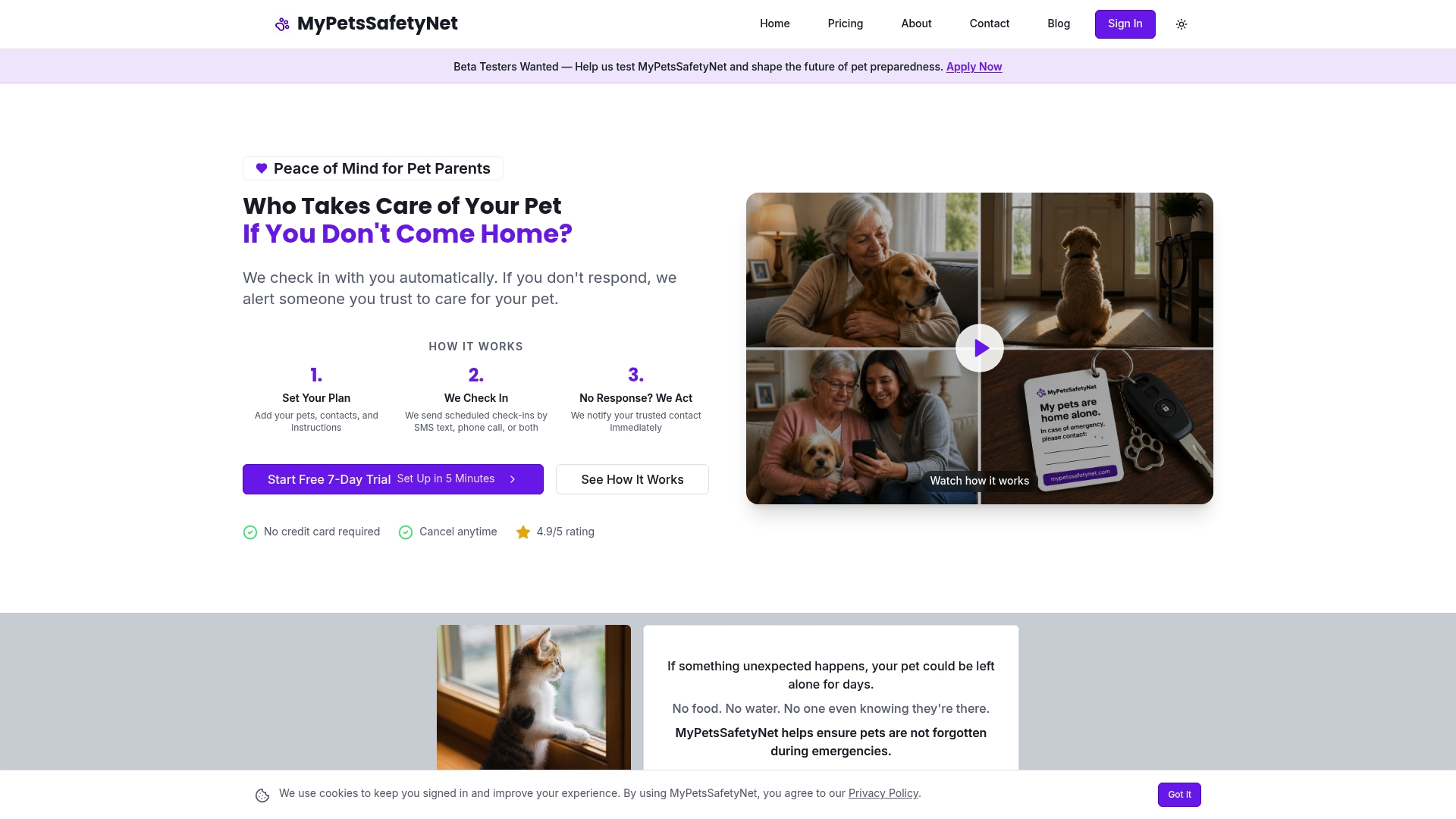
When your health status changes, Mypetssafetynet sends automated notifications to your designated caregivers so they can act immediately, without waiting for a manual call. The wellness check-in service gives solo pet owners and caregivers the peace of mind that comes from knowing the system will work even when you cannot. You can also review SMS consent and notification options to set up automated alerts that keep your entire network informed and ready.
FAQ
What should a pet emergency plan include?
A pet emergency plan must include your veterinarian’s contact information, current medications and dosages, feeding instructions, behavioral notes, and the names and phone numbers of at least two designated caregivers. A Pet Emergency Dossier with this detail gives caregivers everything they need to act without delay.
How often should I update my pet care network?
Review your network every six months, ideally timed with your pet’s wellness exam. Update caregiver contacts, medication lists, and emergency triggers whenever your pet’s health or your personal circumstances change.
What is the best identification method for pets in emergencies?
Dual identification is the industry standard: a registered microchip combined with a physical ID tag listing your name, primary phone number, and a secondary emergency contact. Keep the microchip registration current after any address or phone number change.
How do I know when my caregiver should step in?
Write down specific emergency triggers, such as a hospitalization lasting more than 24 hours or a missed check-in after a defined window. Clear written criteria prevent both caregiver hesitation and overreach.
How does Mypetssafetynet support pet care networks?
Mypetssafetynet centralizes emergency instructions and automates caregiver notifications when your health status changes. The service removes the risk of manual notification failures and keeps your pet care network ready to respond at any time.