Automated Check Ins Move Roommates’ Pet Care Plans From Days to Hours

A roommates pet care plan is an automated wellness check-in that alerts prechosen contacts and hands them a pet dossier, and emergency funding details the moment you stop responding. The trigger is a scheduled check-in, not a hunch or a worried phone call three days later. Build one around a daily or scheduled check-in, a ready care circle, and a documented pet dossier, and you close the gap between “something happened to me” and “someone is feeding my dog.” A service like MyPetsSafetyNet exists specifically to automate that trigger and the alert chain that follows.
TL;DR:
- The pet care plan relies on a scheduled check-in trigger that alerts contacts within hours if the owner becomes incapacitated, preventing days of neglect.
- It requires a care circle of nearby, willing contacts and a documented pet dossier with essential information stored securely and shared only with trusted individuals.
- Setting up involves choosing communication methods, sharing access safely, configuring alert timings, and testing the system during a low-stress moment to ensure reliability.
- Funding options include an emergency fund, pet trusts, life insurance, and clear instructions to ensure financial and legal support under emergency conditions.
- Regular review and practice, at least quarterly, are necessary to keep contact information, pet details, and response workflows current and effective.
Table of Contents
- What Goes Into a Roommates Pet Care Plan Checklist?
- How Do You Set Up an Automated Check-In and Response Plan?
- What Are the Funding and Legal Options for Pet Emergencies?
- How Often Should You Test and Update Your Plan?
- Why We Built This Around the Check-In, Not the Checklist
- Get Your Free Pet Card and Start a Check-In Trial
- Templates and Guides Worth Bookmarking
- Sources
- FAQ
What Goes Into a Roommates Pet Care Plan Checklist?
A dependable plan rests on five pieces working together. Miss one, and the whole chain can stall right when your pet needs it most.
A daily check-in that triggers a response chain closes the detection lag that leaves pets unattended for days when an owner living alone becomes incapacitated. Without that trigger, nobody even knows to look for you, let alone your cat.
- Detection trigger: a daily or scheduled wellness check-in by call, text, or app that flags a missed response within hours, not days.
- Care circle: a primary contact who lives close enough to respond fast, plus one or two backups who can step in if the first person is unreachable.
- Pet dossier: feeding schedule, medications, vet name and phone number, behavioral quirks, and microchip number, kept both on paper at home and saved digitally.
- Secure access: a lockbox code, spare key location, or door code shared only with your named contacts, so nobody has to break a window to reach your pet.
- Supply map: where food, leash, carrier, and medication live, written down clearly enough that a stranger could follow it.
- Short-term emergency fund: cash or a card set aside specifically for vet visits or boarding, with instructions on where to find it.
Every contact you name needs two things: physical proximity and the willingness to actually show up. A sibling three states away is a fine emotional backup but a poor first responder.
How Do You Set Up an Automated Check-In and Response Plan?
Setting this up takes less time than most people expect, usually under an hour once you gather contact information and pet details.
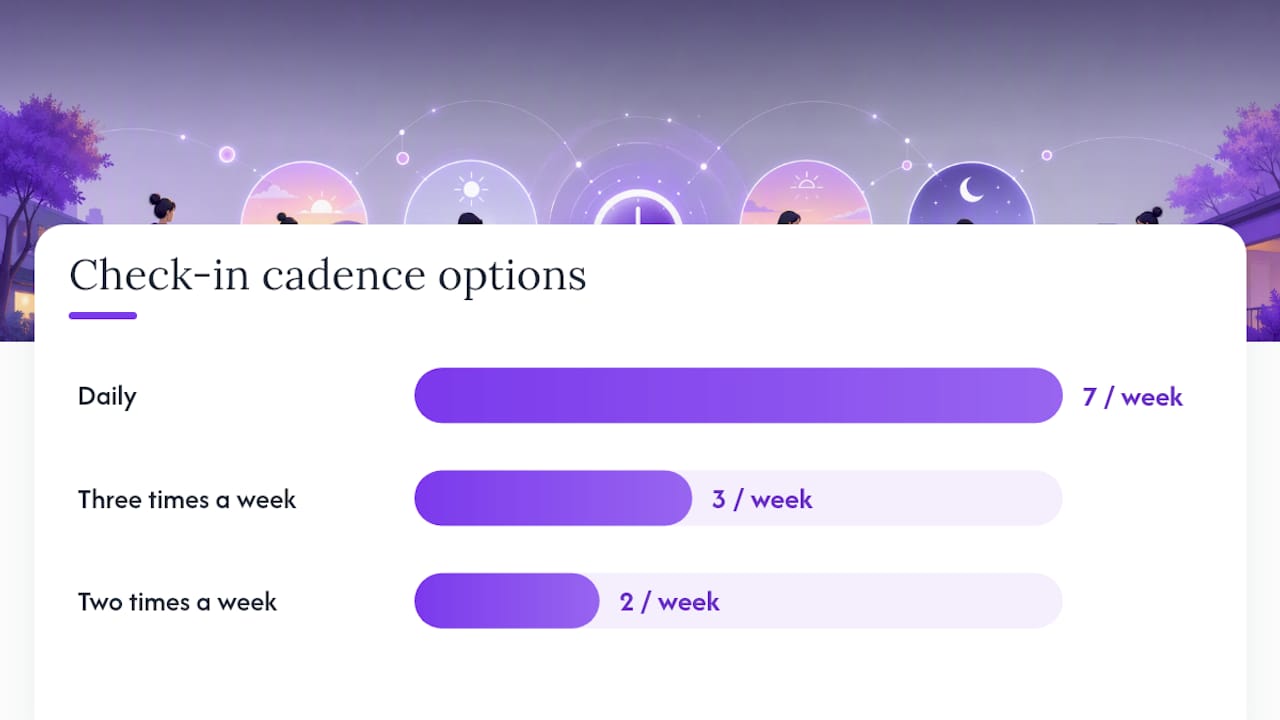
- Pick your cadence and method first. Daily check-ins suit anyone with health concerns or living alone; two or three times a week can work if you have regular contact with someone nearby. Choose call, SMS, or an app-based check-in based on what you will actually respond to without fail.
- Add and brief your contacts. Enter your primary and backup contacts into your check-in service, then walk each one through what a missed check-in alert will look like and what you expect them to do with it.
- Share access safely. Give your care circle the pet dossier, lockbox code, or key location through a secure method, not a text message that sits in your phone forever.
- Set escalation timing. Configure how long a missed check-in waits before alerts fire, and instruct contacts on the order to act: primary contact first, backup second, then a pre-registered boarding option if nobody answers.
- Run a test. Simulate a missed check-in on a day you know you will be reachable, confirm the alert actually reaches your contacts, and fix any gaps in phone numbers, timing, or instructions.
Pro Tip: Test your plan on a Sunday morning when your contacts are likely to be home and relaxed. If the alert reaches them fast and they know exactly what to do, you have a plan that works under pressure, not just on paper.
A layered response network with a tiered primary and backup person, plus pre-registered boarding options, minimizes the gaps that show up when a single point of contact fails to respond.
What Are the Funding and Legal Options for Pet Emergencies?
Money stops more rescues than distance ever does. A neighbor who would gladly feed your dog for a week may hesitate the moment a vet bill shows up, so setting aside funds specifically for veterinary or boarding costs makes it far more likely someone follows through.
- Emergency fund: keep a cash or card amount set aside specifically for pet care, and write down exactly where it is and how to access it.
- Pet trust: a legal document naming a trustee and a caretaker separately, so the person managing funds isn’t necessarily the person feeding your pet daily; funding it before you need it avoids probate delays.
- Life insurance or beneficiary designation: some policies let you name a pet care fund as a beneficiary, giving longer-term caregivers a funding source beyond your immediate emergency stash.
- Written instructions: a one-page note stating exactly how funds should be used and where documentation lives, so a caregiver never has to guess.
Common pitfall: naming a trustee and caretaker as the same overwhelmed relative. Split those roles when you can.
How Often Should You Test and Update Your Plan?
A plan only works if it still matches your life. Practice walk-throughs and scheduled reviews keep a pet emergency plan reliable instead of theoretical.
- Review contacts and dossier details every quarter, checking phone numbers and medication lists haven’t gone stale.
- Run a quiet, no-stakes test of your check-in workflow twice a year to confirm alerts still reach the right people.
- Re-evaluate transport needs, new medications, or a caregiver’s availability whenever your pet’s health changes.
- Trigger a full plan review after a move, a new pet, or a change in your own health status.
Why We Built This Around the Check-In, Not the Checklist
Most pet emergency guidance stops at a checklist: write down your vet’s number, tell a friend where the food is. That’s necessary, but it misses the actual failure point. Checklists sit in drawers. Nobody consults a checklist unless something has already tipped them off that a problem exists. MyPetsSafetyNet exists because the missing piece was always the trigger, the mechanism that notices you’ve gone quiet and acts on it automatically.
We built this service around scheduled check-ins and an escalation workflow because a pet dossier without a detection trigger is just a document waiting for someone to think to open it. Pair the emergency pet care checklist with an automated check-in, and the plan stops depending on luck.
— MyPetsSafetyNet
Get Your Free Pet Card and Start a Check-In Trial
This service is built specifically around the mechanism this article just walked through: the automated check-in that catches a missed response before it turns into days of an unfed pet. Instead of hoping a roommate or neighbor notices something is wrong, you get scheduled SMS, phone, or email check-ins that escalate to multiple emergency contacts with full pet care details the moment you don’t respond.
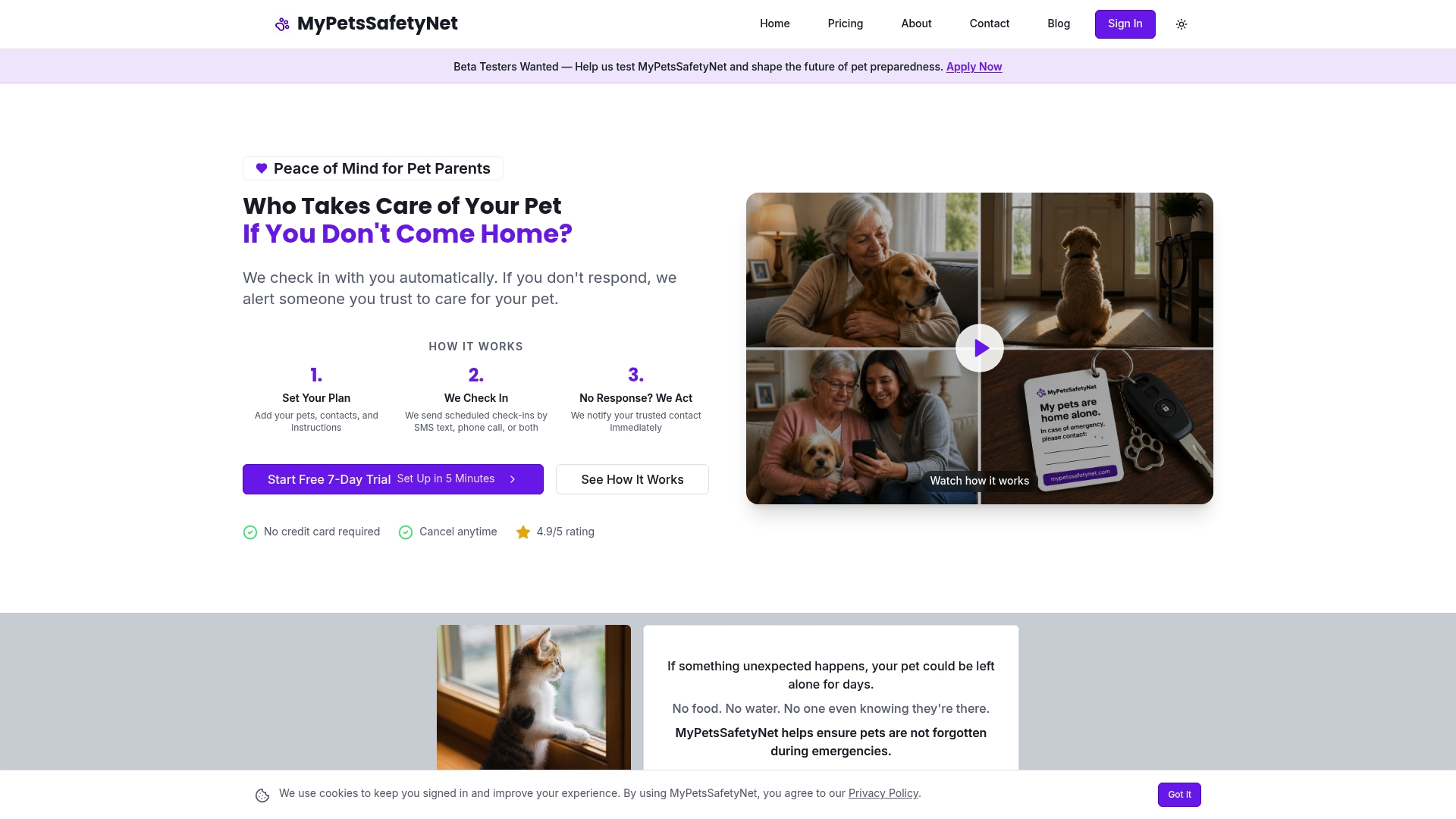
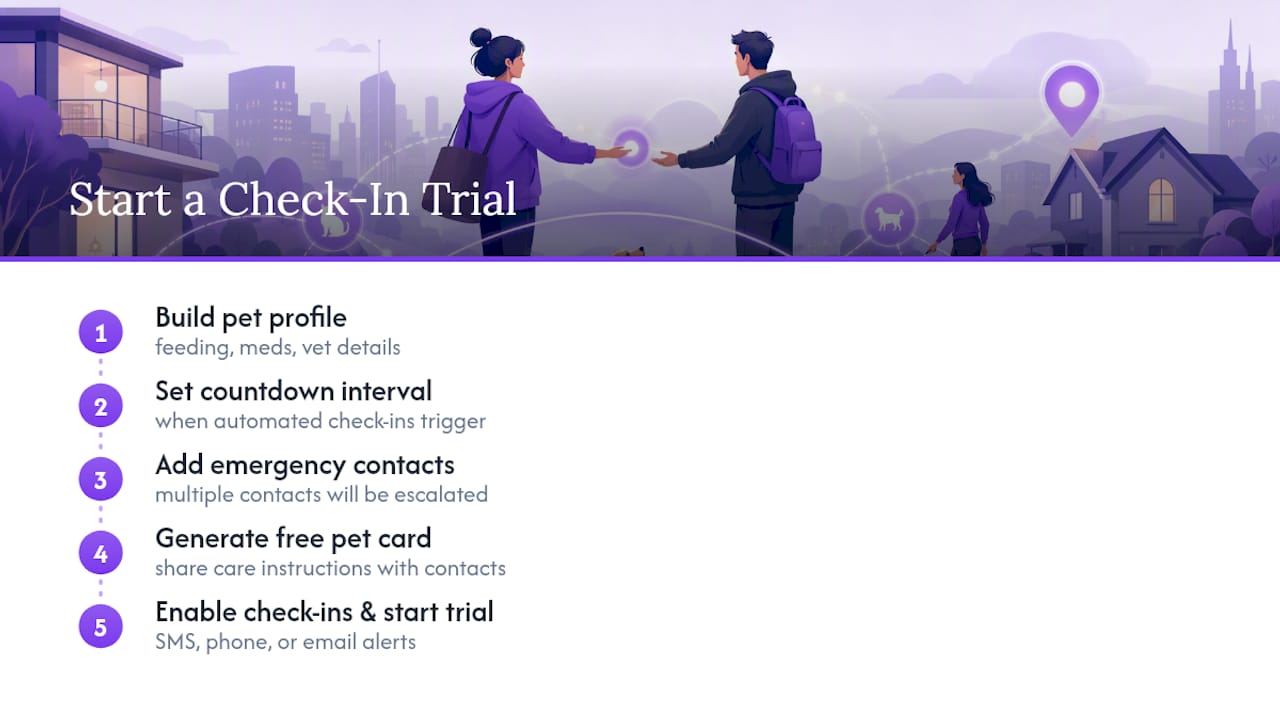
Setup takes minutes: build a pet profile, set your countdown interval, and add your emergency contacts. Signing up includes access to a free pet care instruction card generator, so your care circle has feeding, medication, and vet details in hand before they ever need them. If you’re planning to use phone or text check-ins, review how SMS consent and alerts work before you start.
Get your free pet card and start a trial today, and put the detection trigger in place before you need it.
Templates and Guides Worth Bookmarking
Build your plan faster with these resources:
- ASPCA’s pet planning packet for wallet card and home emergency sheet templates.
- AARP’s pet estate planning guide for pet trust basics geared toward older adults.
- Includes pet care emergency document guide and hospitalization checklist for printable templates.
- StokdUp’s emergency kit guidance for adapting a household kit to include pet supplies.
Sources
- Making a Plan for Your Pet | ASPCA
- Why pet estate planning is a must for older adults
- A pet care backup plan for older adults — All Seniors Foundation
- Emergency funds and budgeting for veterinary care
FAQ
What triggers the alert in a roommates pet care plan?
A missed scheduled check-in, whether by call, text, or app, triggers the alert chain, which notifies your primary contact first and escalates to backups if nobody responds.
How many emergency contacts should I name?
Most plans work well with a primary contact and one or two backups; The service supports up to three emergency contacts per account.
Do I need a pet trust if I already have an emergency fund?
An emergency fund covers short-term costs, but a pet trust protects longer-term care and avoids probate delays if something happens to you permanently, so the two serve different purposes.
How often should I test my check-in plan?
Run a quiet test of your check-in workflow at least twice a year, and review your contacts and pet dossier every quarter.
What should I keep in a pet dossier?
Include feeding schedules, medications, your vet’s contact information, behavioral notes, and microchip details, stored both on paper at home and saved digitally where your care circle can reach it.