Pet Care Planning for When You Face Cognitive Decline

If you’re a solo pet owner and you’re concerned about what happens to your pets if your own health changes, the most important thing you can do today is this: enroll in an automated daily wellness check-in service with a configured escalation workflow, print a pet care dossier for your fridge, and confirm at least two named caregivers who have your keys and your vet’s contact information.
Automated check-in systems detect a missed response within hours and immediately notify your designated contacts, rather than letting days pass before anyone realizes something is wrong. That detection window is the difference between your pet being fed that evening and going without care for two or three days.
Start this afternoon:
- Sign up for an automated wellness check-in service and set your escalation intervals
- Create a printed pet care dossier and post it on your fridge
- Name a primary local responder and at least one backup guardian, then confirm both in writing
Pro Tip: Set your first check-in for tomorrow morning so you can verify the escalation workflow fires correctly before you rely on it.
Table of Contents
- How do you build a pet-care safety plan you can trust?
- What legal steps protect your pet if you lose capacity?
- Why do automated wellness check-ins matter so much?
- How Mypetssafetynet covers every step of this plan
- What should your fridge dossier and wallet card contain?
- How do you ask family and friends to be caregivers?
- What does this plan cost, and how long does it take?
- Key Takeaways
- Why we built Mypetssafetynet
- Start your free trial with Mypetssafetynet today
- Useful sources and next steps
How do you build a pet-care safety plan you can trust?
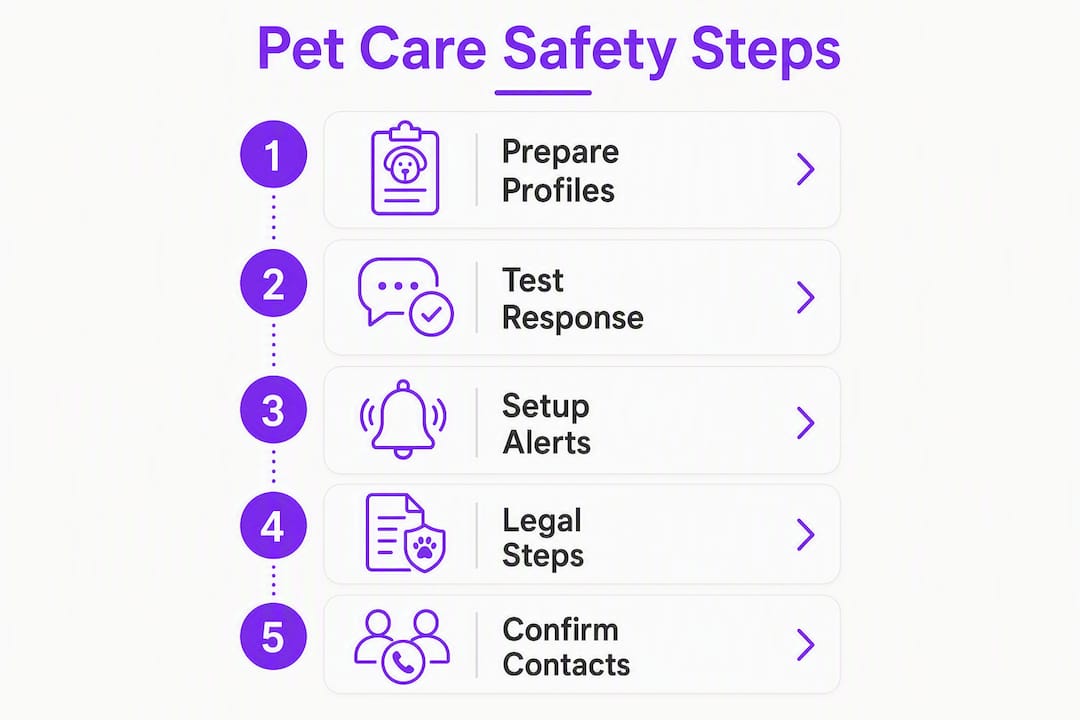
A reliable plan has four layers: an automated trigger, tiered caregivers, a complete dossier, and a small emergency fund. Work through these steps in order.
- Register for an automated wellness check-in service. Configure your check-in frequency and escalation countdown so your primary contact is notified within hours of a missed response.
- Identify tiered caregivers. Assign a same-day local responder (neighbor, nearby friend), a short-term sitter or boarding facility for days 1–3, and a long-term guardian for extended or permanent care.
- Prepare your pet care dossier and wallet card. Your dossier should include:
- Pet name, species, breed, age, and microchip number
- Veterinarian name, clinic address, and phone number
- Current medications, dosages, and feeding schedule
- Behavioral notes (fears, triggers, favorite routines)
- Pet insurance policy number and insurer contact
- Pre-approved boarding facility name and confirmation of established-client status
- A signed veterinary authorization letter naming your emergency contacts
- Locations of physical and digital copies
- Create a pet emergency fund. Set aside funds in an account your named caregiver can access, or arrange a prepaid boarding credit.
Simple immediate steps like printed pet profiles and posted emergency contacts protect your pets right now at no cost, even before any legal documents are in place.
Run a test drill. Simulate a missed check-in and time how long it takes each contact to respond. Confirm that your lockbox code works, your building manager has written authorization to grant access, and your boarding facility has your pet’s records on file.

| Task | Time to Complete | Cost |
|---|---|---|
| Wellness check-in signup and configuration | — | Monthly subscription |
| Dossier and wallet card creation | 1–2 hours | Low/no cost |
| Caregiver conversations and key handoff | — | No cost |
| Boarding trial stay | 1–2 days | Boarding rate |
| Attorney visit and document execution | 1–4 weeks | Varies by attorney |
What legal steps protect your pet if you lose capacity?
Act now, while you still have legal capacity. Experts advise executing estate instruments as soon as a health risk is identified, because waiting can make these protections impossible to put in place later.
The law treats pets as personal property. Informal family promises are not enforceable; only specific legal documents guarantee your standards of care. Here’s what to consider:
- Pet trust. A properly drafted and funded pet trust is the strongest tool for long-term, enforceable oversight. It specifies care instructions, funding, and the roles of trustee and caregiver.
- Caretaker agreement — A written agreement with your designated caregiver sets out responsibilities, compensation, and care standards.
Separate the caretaker from the trustee. The person who provides daily care should not be the same person who controls the funds. Keeping these roles separate reduces the risk of misuse and creates a check on how money is spent.
Pro Tip: Bring these three questions to your estate planning attorney: (1) Does my state recognize statutory pet trusts? (2) Should my POA explicitly name pet care authority? (3) How do I fund the trust without over-capitalizing it?
For a plain-language overview of pet trust types and legal requirements, the Legal Information Institute at Cornell Law School is a reliable starting point.
Why do automated wellness check-ins matter so much?
The core problem for solo pet owners is the detection gap: if you become incapacitated at home, no one may know for hours or days. Automated check-in systems close that gap by notifying escalation contacts within hours, not days, the moment you miss a scheduled response.
Here’s how a well-configured escalation timeline works:
- Same day (within hours): Your primary local contact receives an alert and goes to check on you and your pet.
- 24–48 hours: If the primary contact can’t provide ongoing care, your short-term sitter or pre-registered boarding facility is activated.
- 72+ hours: Your designated long-term guardian takes over, with full access to the dossier and legal authority to authorize veterinary care.
A tiered 72-hour response network that moves from a same-day neighbor to short-term boarding to a long-term guardian fills every gap between sudden incapacity and permanent placement. The hours matter because pets can’t ask for help, and a missed feeding or missed medication can become a medical emergency quickly.
The system also creates a record: each confirmed check-in is logged, so caregivers and family members can see that the plan is active and functioning.
How Mypetssafetynet covers every step of this plan
Mypetssafetynet combines scheduled wellness prompts, configurable escalation workflows, pet profile storage, and contact management so your plan activates within hours of a missed check-in.
What the service includes:
- Scheduled check-ins via SMS, phone call, or email, at intervals you set
- Custom countdown timers that trigger escalation if you don’t respond
- Up to 3 emergency contacts, each notified in sequence
- Pet profiles storing vaccination records, medications, microchip numbers, and feeding instructions
- A pet care instruction card generator your contacts receive automatically
- Support for up to 5 pets in a single account
Getting started takes under an hour. Create your account, enter your pet profiles, add your emergency contacts with their preferred contact method, and set your escalation countdown. Mypetssafetynet offers a free trial so you can run a test simulation before you commit to a subscription.
What should your fridge dossier and wallet card contain?
A fridge-mounted pet care dossier and a wallet card are two of the highest-impact, lowest-cost steps you can take. First responders and neighbors know to look on the fridge; your wallet card signals that pets are home and who to call.
Fridge dossier fields:
- Pet name, photo, species, breed, and microchip number
- Vet clinic name, address, phone, and after-hours emergency line
- Current medications and dosing schedule
- Feeding routine and any dietary restrictions
- Behavioral notes and comfort items
- Primary and backup caregiver names and phone numbers
- Boarding facility name and your established-client confirmation number
- Location of signed veterinary authorization letter
Wallet card fields: Your name, a note that pets are at home, primary caregiver name and phone number, and your vet’s number.
Store a digital copy in a shared cloud folder (Google Drive or iCloud) and share the link with all caregivers. Leave a spare key in a lockbox at your door, and give your building manager written authorization to grant access to named contacts.
Pro Tip: Without a signed veterinary authorization letter on file, clinics may refuse to let a non-owner authorize treatment, even in an emergency. File one with your vet today and keep a copy in the dossier.
How do you ask family and friends to be caregivers?
Ask directly and document the agreement. Verbal promises feel solid in the moment but are not a reliable substitute for written confirmation. Once someone agrees, send a follow-up message summarizing the role, share the dossier, and arrange a key handoff.
Sample scripts:
- Tier-1 neighbor ask: “I’m setting up an emergency plan for my pets. If I ever miss a check-in and you get a call from my alert service, would you be willing to come by and check on them? I’ll give you a key and a one-page care sheet.”
- Long-term guardian ask: “I want to ask you something important. If I’m ever unable to care for my pets long-term, would you be willing to take them? I’m putting together a full care plan and a small fund to cover costs.”
- Vet authorization confirmation: “I’m filing a letter with my vet that names you as authorized to approve treatment for my pets. Can I confirm your full legal name and phone number for the form?”
Clarify roles clearly. Your same-day checker is not automatically your long-term adopter. Discuss payment expectations, and arrange a short trial boarding stay so your pet and the caregiver are familiar with each other before an emergency occurs. A caretaker agreement that spells out responsibilities and compensation removes ambiguity for everyone.
What does this plan cost, and how long does it take?
Most of the plan can be completed in a few hours to several weeks. Legal steps take longer but are worth scheduling promptly.
| Item | Time Required | Estimated Cost |
|---|---|---|
| Wellness check-in signup and dossier | A few hours | Monthly subscription fee |
| Caregiver conversations and key handoff | Several days | No cost |
| Boarding trial stay | A couple of days | Boarding rate |
| Veterinary authorization letter | About a day | Low or no cost |
| Simple POA or caretaker agreement (attorney) | Several weeks | Varies |
| Pet trust (attorney-drafted) | Several weeks | Varies |
- The dossier and wallet card cost nothing beyond printing.
- A signed veterinary authorization letter is typically prepared by your vet at no charge or minimal cost.
- Attorney fees for a simple durable POA or caretaker agreement vary by state and attorney; contact a local estate planning attorney for a quote.
- Pet trust fees vary based on complexity and funding structure; the ASPCA’s pet trust overview is a useful starting reference.
- For budgeting guidance on pet care costs on a fixed income, Mypetssafetynet’s resource guide covers practical options.
Key Takeaways
Cognitive decline pet care planning works when you combine an automated check-in trigger, a printed dossier, confirmed caregivers, and legal documents executed while you still have capacity.
| Point | Details |
|---|---|
| Act while legally competent | Execute your POA, pet trust, or caretaker agreement before a diagnosis makes it impossible. |
| Automated check-ins close the gap | A missed response triggers escalation within hours, not days, protecting your pet immediately. |
| Fridge dossier and wallet card | Post pet details and caregiver contacts on the fridge; carry a wallet card noting pets are home. |
| Tiered caregivers cover every window | Assign a same-day local responder, a short-term sitter, and a long-term guardian as three separate roles. |
| Mypetssafetynet activates your plan | Mypetssafetynet’s scheduled check-ins, escalation workflow, and pet profile storage connect every step of this plan. |
Why we built Mypetssafetynet
Solo pet owners face a specific, practical problem that most emergency planning tools ignore: the gap between when something goes wrong and when anyone finds out. We built Mypetssafetynet because that gap is entirely preventable. A daily automated check-in, a clear escalation sequence, and a complete pet profile on file mean your pets are never waiting on chance. The legal steps, the dossier, the caregiver conversations — those matter enormously. But none of them activate without a reliable trigger. That’s what Mypetssafetynet provides: a system that watches for the missed response and starts the chain immediately, so the plan you’ve built actually works when it needs to.
Start your free trial with Mypetssafetynet today
Your pets deserve a plan that works the moment something goes wrong, not one that depends on someone noticing days later. Mypetssafetynet gives solo pet owners a concrete safety net: scheduled daily check-ins, a configurable escalation workflow, and pet profiles your emergency contacts receive automatically.
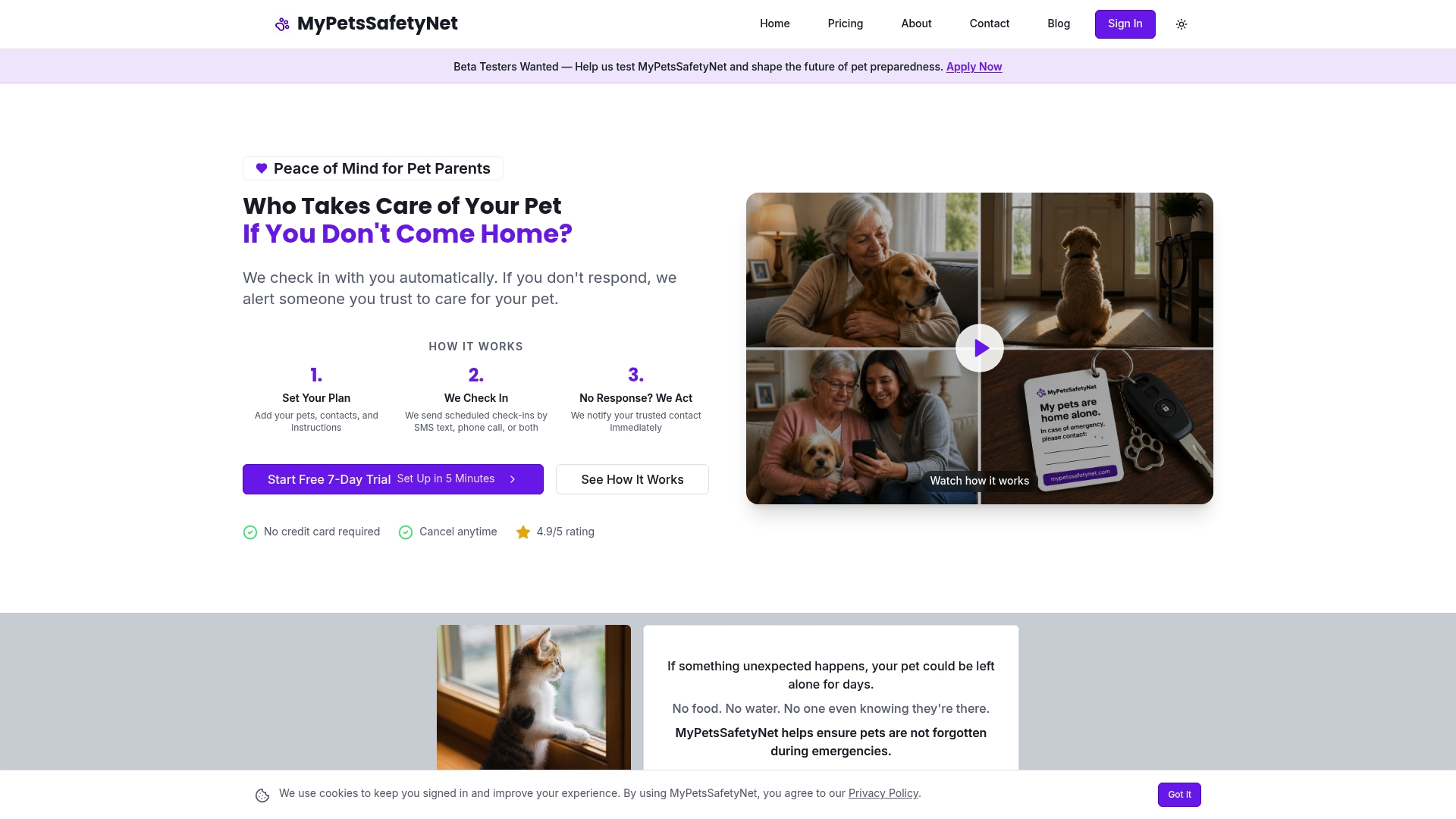
Setup takes under an hour. Create your account at Mypetssafetynet, enter up to 5 pet profiles and 3 emergency contacts, set your countdown interval, and run a test simulation within 48 hours to confirm the escalation fires correctly. A free trial lets you verify the system before your subscription begins. If you’re ready to put your plan in motion, start your free trial now.
Useful sources and next steps
Use these resources to help complete your legal documents, templates, and registrations:
- Pet Trusts: A Primer (American Bar Association) — guidance on drafting enforceable pet trusts, trustee and caregiver roles, and funding
- Pet Trust Overview (ASPCA) — plain-language explanation of pet trust types and how to set one up
- Pet Trust Definition (Cornell Law LII) — legal definitions of honorary, traditional, and statutory pet trusts
- You, Your Pet, and the Future (APLB) — practical planning guide covering immediate steps, legal instruments, and timing
- Planning Ahead: Pet Estate (AARP) — overview of legal options and why informal promises fall short
- Pet Care Help Resources for Seniors (Mypetssafetynet) — resource hub covering legal arrangements, community services, and planning tools for older adults
Review and update your plan every 1–2 years, or whenever your health, living situation, or caregivers change. A plan that’s accurate today may need adjustments as circumstances shift.
This article provides general information, not legal or medical advice. Consult a licensed estate planning attorney in your state and your veterinarian to confirm current rules and document requirements for your specific situation.