5–30 Minute Pet Escalation Chain Examples for Solo Owners
If you live alone with a pet, here are three copyable escalation chains you can set up today: a Quiet Overnight Chain (SMS initially, repeat SMS after some time, voice call after longer delay, fallback caregiver after further delay), a Daytime Active Chain (SMS initially, voice call after a moderate interval, second caregiver voice call after another interval), and a Medical Alert Chain (immediate voice call, fallback caregiver shortly afterward). Every chain ends the same way: a named human, not an app notification, who agrees in advance to check on your pet.
TL;DR:
- Escalation chains should be tailored to your risk profile, pet needs, and daily routine to ensure timely help while minimizing false alarms.
- The quiet overnight chain delays escalation steps to avoid waking caregivers unnecessarily, typically waiting up to a few hours before reaching out.
- The daytime active chain uses shorter intervals, escalating from SMS to voice calls quickly, suitable when missed check-ins suggest immediate concern.
- For pets with health issues or medication needs, starting with a direct voice call and including detailed care instructions enhances response accuracy.
- Regular testing, including monthly live checks and quarterly full runs, ensures the chain remains effective and up-to-date with current contacts and details.
Table of Contents
- What Are Practical Escalation Chain Examples for Different Situations?
- How Do You Build and Configure an Automated Escalation Chain?
- What Should Escalation Messages and Caregiver Instructions Say?
- How Do You Test and Maintain an Escalation Chain?
- Why MyPetsSafetyNet Recommends These Timings and Contact Limits
- Let MyPetsSafetyNet Automate Your Escalation Chain for You
- Sources
- FAQ
What Are Practical Escalation Chain Examples for Different Situations?
Not every solo pet owner needs the same rhythm of alerts. Your risk profile, your pet’s needs, and your daily routine should all shape how fast your chain escalates from a quiet text to a loud phone call. Below are three named examples, each built around a different situation.
-
The Quiet Overnight Chain. Designed for owners who sleep through the night and don’t want a false alarm waking a caregiver at 2 a.m. over a missed check-in that was really just a deep sleep. Step one: an SMS check-in prompt at the scheduled time. Step two: a repeat SMS after some time if there’s no reply. Step three: a voice call after a longer wait. Step four: fallback to a named caregiver by voice call and email after a further waiting period. This wide spacing cuts down on unnecessary caregiver disruptions while still reaching help within two hours.
-
The Daytime Active Chain. Built for owners who are up and moving, where a missed check-in during waking hours is a stronger signal that something is wrong. Step one: SMS initially. Step two: voice call after a moderate interval. Step three: a second caregiver’s voice call after another interval. The tighter intervals reflect the idea from Failover, which recommends progressing quiet to loud but keeping total wait time short when the missed signal is more likely to mean real trouble.
-
The Medical Alert Chain. Best for owners managing a chronic condition, recent surgery, or a fall risk. Step one skips SMS entirely and goes straight to a voice call. If unanswered, the chain jumps to a caregiver’s voice call and email within a short timeframe, along with detailed triage instructions for your pet’s feeding schedule and medication.
Your choice depends on a few concrete factors: whether you take medications with side effects that impair response, your mobility, how many pets rely on you, and whether your pets have time-sensitive needs like insulin shots. An owner with one low-maintenance cat has very different urgency than an owner with two dogs on staggered medication schedules.
How Do You Build and Configure an Automated Escalation Chain?
Setting up a reliable chain is mostly a matter of filling in the right fields correctly the first time, then testing that the logic behaves the way you expect. Here’s what to gather and configure before you turn anything on.
- Pet summary: name, species, breed, age, and any behavioral notes a stranger checking on your pet should know.
- Medication details: drug name, dose, and exact timing, especially for insulin, seizure medication, or anything time-critical.
- Key locations: where a spare key, garage code, or lockbox combination is kept.
- Vet contact: your preferred veterinary clinic’s name, phone number, and address.
- Owner mobility notes: anything a caregiver needs to know about your health status that affects how they should approach you, not just your pet.
Order your channels from quiet to loud: SMS first, a repeat SMS if there’s no reply, then a voice call, then email or a final caregiver fallback. This sequencing matches the incident-response pattern described in failover.io’s guide to alert escalation, which stresses waiting for an explicit acknowledgment before advancing.
Set the acknowledgment action clearly, whether that’s a text reply, a link click, or a voice-call keypress, because an unacknowledged step should always be the trigger that moves the chain forward. Limit your list to 2 to 4 caregivers. Beyond that, coordination gets confusing and nobody feels truly responsible. A solo pet owner’s guide to naming emergency contacts breaks down why that range works best.
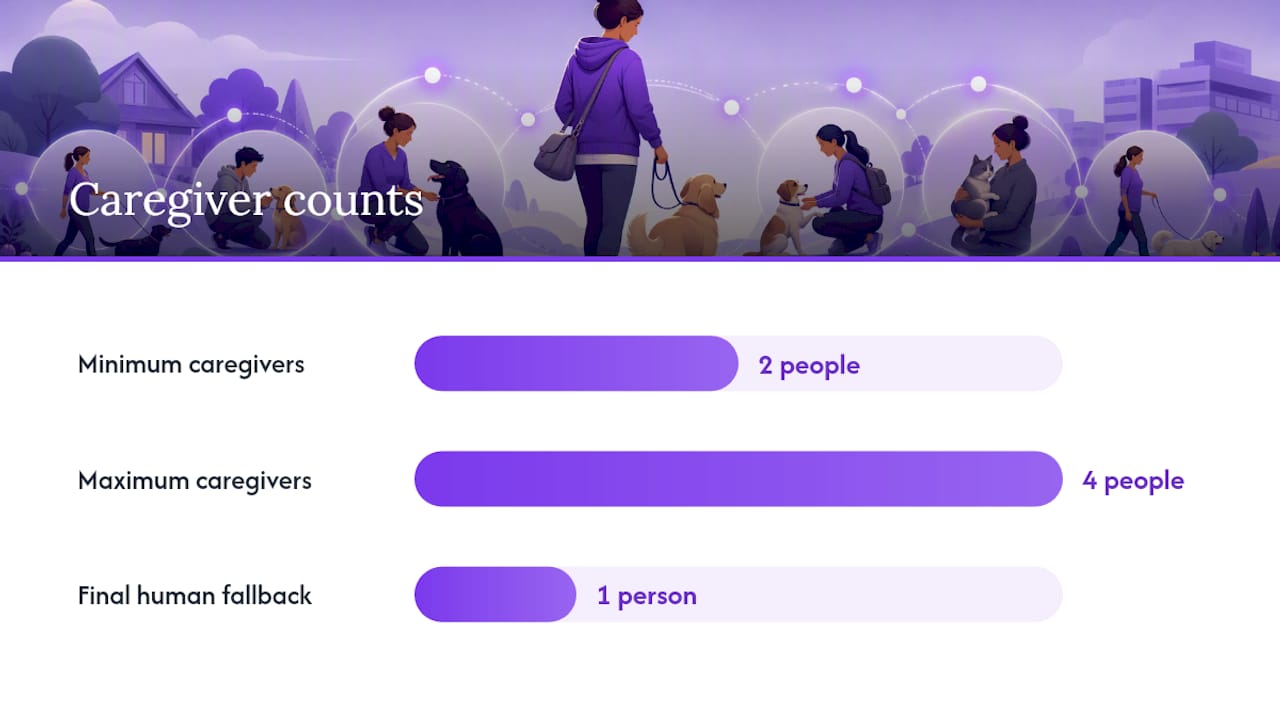
Pro Tip: Always designate one final human fallback who isn’t just another notification recipient, but someone who has explicitly agreed to physically check on your pet if nobody else responds.
What Should Escalation Messages and Caregiver Instructions Say?
Your caregivers need to know exactly what to do within seconds of reading a message, not after a phone call to figure out what’s going on. Clear, standardized scripts remove that guesswork.
SMS templates:
- First check-in: “Hi, this is your scheduled pet check-in. Reply OK if you’re fine.”
- Reminder: “We haven’t heard from you. Reply OK or call [number] if you need help.”
- Urgent escalation: “No response received. [Caregiver name] has been notified to check on you and [pet name].”
Voice script for caregivers: “This is an automated alert. [Owner name] has not responded to a scheduled check-in. Please go to [address] to check on them and their pet, [pet name]. A spare key is located at [location].”
Your caregiver instruction card should include the pet’s name, medications with dose and timing, where to find keys or a carrier, your preferred vet’s name and number, known allergies, and any handling notes, such as a dog that bites when scared. Proper pet identification, such as using safety breakaway collars with bells and ID, can also help caregivers quickly recognize your pet in an emergency. Standardizing this kind of empathetic, specific communication is exactly what boarding facilities rely on for their own emergency protocols.
Build in a referral trigger for suspected poisoning. After-hours veterinary triage services route ingestion cases directly to the ASPCA Animal Poison Control Center rather than leaving a caregiver to guess, and your card should list that number alongside your vet’s.
How Do You Test and Maintain an Escalation Chain?
An escalation chain you’ve never tested is a guess, not a safety net. Two kinds of checks keep it honest.
- Monthly live checks. Trigger a real check-in and confirm you can acknowledge it correctly at every step.
- Quarterly full-ignore tests. Deliberately don’t respond and let the chain run all the way to your final caregiver fallback, timing how long each step actually takes to fire.
During each test, verify phone numbers are current, confirm that acknowledgment truly stops the escalation, check that message wording still makes sense, and note whether caregivers responded quickly. Documenting each test, even in a simple notes app, gives you a record of when the chain last worked as designed, a practice failover.io recommends for any critical alert system.
Check your phone’s battery habits and update the chain whenever your medications, pets, or address change.
Pro Tip: Write the date of your last successful full-ignore test somewhere you’ll actually see it, like a sticky note by your pet’s food, so you’re reminded when a new test is due.
Why MyPetsSafetyNet Recommends These Timings and Contact Limits
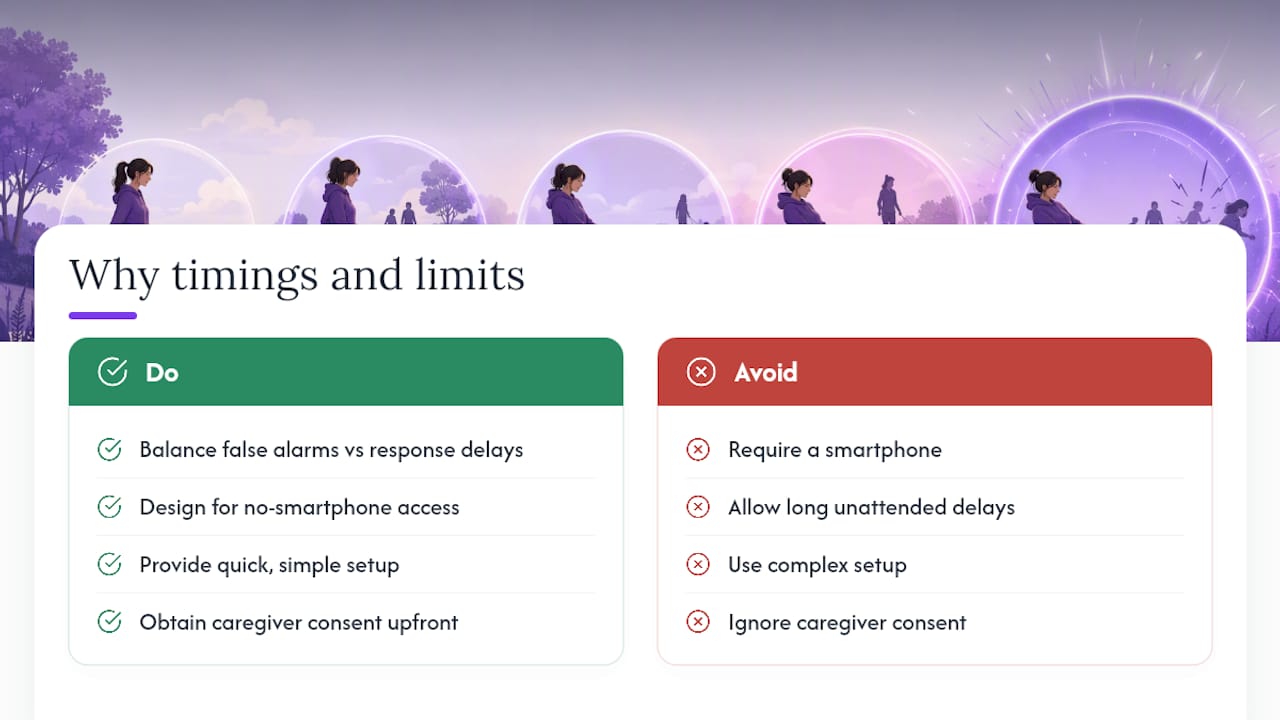
Escalation timings typically balance the risk of false alarms against delays that might leave a pet uncared for for hours. The approach also considers accessibility limits such as not requiring a smartphone, providing quick setup, and handling caregiver consent upfront.
Let MyPetsSafetyNet Automate Your Escalation Chain for You
MyPetsSafetyNet is built specifically to run the chains described above without you managing timers, scripts, or contact lists by hand. It automates scheduled check-ins by SMS, voice call, or email, escalates on your own timing between quiet and loud steps, and notifies your named caregivers with the exact pet care details they’d need, medications, vet contact, key location, all in one message.
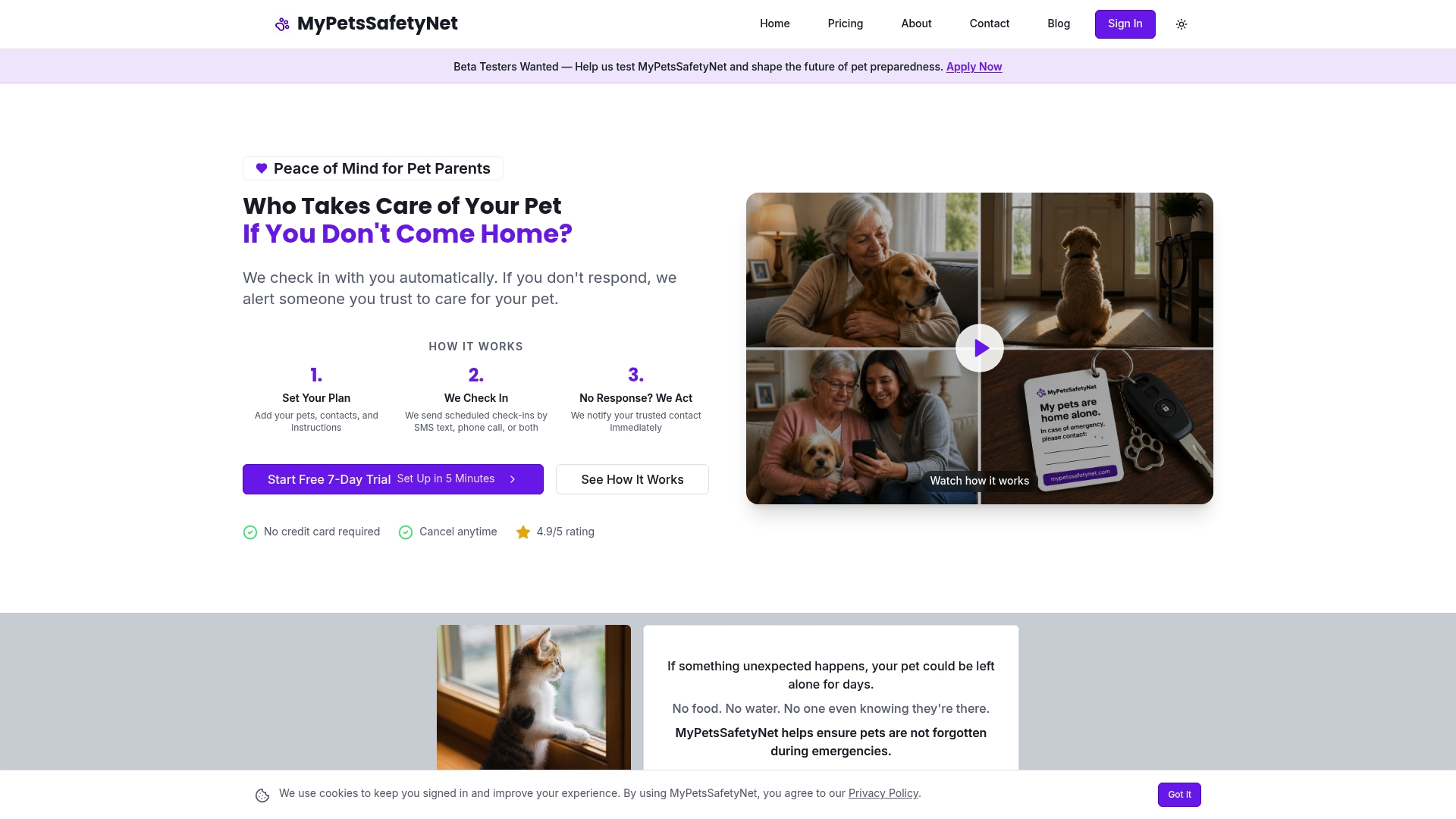
Setup takes under 10 minutes, and no smartphone is required since everything runs through standard calls and texts. You can manage multiple pets and emergency contacts, with a free trial and no credit card needed to start. If you want to try the concept first, build a free pet care instruction card in a few minutes. When you’re ready to automate the full chain, the Monthly plan runs $6.99 a month and gets your escalation sequence live today.
Sources
For deeper reading on the principles behind these examples, failover.io’s alert escalation guide covers quiet-to-loud sequencing for solo operators. Animalo’s boarding emergency protocols explain standardized vet communication. The ASPCA Animal Poison Control Center referral process is covered in Instanexus’s triage script breakdown. For contact list sizing, see MyPetsSafetyNet’s guide to naming emergency contacts and emergency pet care plan guide.
FAQ
How Many Caregivers Should Be in an Escalation Chain?
Most solo pet owners do best with 2 to 4 named caregivers, enough for redundancy without creating confusion over who’s responsible for the final check.
Will an Escalation Chain Call Caregivers in the Middle of the Night?
Only if you’re on a quiet overnight chain and the final fallback step is reached, which is why wider wait intervals overnight help avoid unnecessary late-night calls.
What Stops an Escalation Chain Once It Starts?
An explicit acknowledgment, whether a text reply, a link click, or a voice-call keypress, is what halts the chain at any step, a principle drawn from standard alert escalation practices.
When Should a Caregiver Card Reference Animal Poison Control?
Any time ingestion of a toxic substance is suspected, the card should direct caregivers straight to the ASPCA Animal Poison Control Center rather than waiting for a vet callback.
Does MyPetsSafetyNet Require a Smartphone to Work?
No. MyPetsSafetyNet works with any phone through standard SMS or voice calls, and setup takes under 10 minutes according to the company.