Pet Emergency Alert Cost for Solo Owners: A Few Dollars to $20/Month

Most pet emergency alert subscriptions run a few dollars to around twenty dollars a month, with annual billing reducing the effective monthly cost. Basic check-in plans are generally less expensive, while multi-pet, voice-escalation plans tend to cost more. Many providers, including MyPetsSafetyNet, offer a free or low-cost trial so you can test the escalation workflow before paying anything. Your actual bill depends on how many pets you’re covering and how your contacts get notified.
TL;DR:
- The monthly cost for pet emergency alert subscriptions generally ranges between a few dollars and twenty dollars, with annual billing offering lower effective rates.
- Plans vary from basic check-ins for one pet to multi-pet, voice escalation, and extra emergency contacts, with prices affected by check-in frequency, escalation complexity, and hardware integration.
- Voice-call escalation and phone alert features tend to increase costs but provide higher reliability, particularly for older or less tech-savvy contacts.
- Testing the service during trial periods is crucial to ensure escalation workflows work with your contacts before committing to a long-term plan.
- Confirm if voice escalation is included in the base price and consider shared household rates to avoid overpaying for multiple pets.
Table of Contents
- How Much Does a Pet Emergency Alert Subscription Cost?
- What Actually Drives Your Monthly Price?
- How Do You Compare Plans Without Overpaying?
- What Does This Look Like in Real Numbers?
- Why MyPetsSafetyNet Backs This Guidance
- Is the Subscription Worth It for a Tight Budget?
- Try MyPetsSafetyNet Before You Commit to a Plan
- Sources
How Much Does a Pet Emergency Alert Subscription Cost?
Pricing in this category almost always follows a familiar software pattern: a free or discounted trial, then a monthly fee, with an annual option that knocks down the effective per-month rate. You’ve likely seen this exact structure with fitness apps or password managers. Pet wellness check-in services just apply it to a more personal problem: making sure someone checks on your dog or cat if you don’t check in yourself.
Annual billing typically costs less per month than paying month to month, often by a meaningful margin, since providers reward the upfront commitment with a lower blended rate. That tradeoff matters if you’re not yet sure the service fits your routine, which is exactly why testing first before committing to a year matters.
Plans usually break into three rough tiers:
- Basic tier: Scheduled check-ins only (SMS or email), typically for a single pet, with no escalation beyond one contact.
- Standard tier: Check-ins plus a real escalation workflow, meaning multiple contacts get notified in order if you don’t respond.
- Premium tier: Multi-pet support, voice-call escalation, extra emergency contacts, and sometimes integration with a dedicated alert phone.
What’s bundled versus billed separately varies by provider. Some include a set amount of SMS or voice-call credits in the base price; others charge those as usage add-ons once you exceed a threshold. Extra pets beyond the plan’s default count are often an add-on too, so check that before assuming a quoted price covers your entire household.
Trial periods vary from a few days to two weeks, and they almost always convert automatically to a paid plan unless you cancel. Treat the trial as your actual product test, not just a formality. Run a real escalation drill during it so you know the workflow will work when it counts.
What Actually Drives Your Monthly Price?
Two households can use the same service and pay very different amounts. The gap usually comes down to five factors:
- Number of pets on the account. A single-cat household needs far less than a home with three dogs and a bird, and providers price accordingly.
- Check-in frequency and response channel. Daily SMS check-ins cost less than voice calls, since phone-based alerts require telephony infrastructure that SMS doesn’t.
- Escalation complexity. A plan that pings one contact costs less than one that escalates through three contacts in a set order, especially if it includes no-app links so non-tech contacts can respond without installing anything.
- Hardware or device integration. Linking a medical device alert or a dedicated alert phone to your check-in system can add a setup or hardware cost on top of the subscription.
- Billing cadence. Monthly billing costs more over a year than annual billing, and some providers charge per-message fees if you exceed included SMS or call volume.
Pro Tip: Before you subscribe, ask directly whether voice escalation is included in the base price or billed as a per-call add-on. This single detail explains most of the price gap between similarly named plans.
Voice check-ins and phone escalation tend to raise the price because they’re more reliable for contacts who aren’t glued to their phones. That reliability is often worth paying for, especially if your emergency contacts are older relatives or friends who won’t reliably see a text.
How Do You Compare Plans Without Overpaying?
Price alone tells you almost nothing until you know what’s actually included. Run every plan through the same short checklist before you hand over a credit card number.
Start with features:
- Does the plan cover all your pets, or does it charge per pet beyond a default limit?
- Is escalation ordered (contact one, then two, then three) or does it blast everyone at once?
- Can your emergency contacts respond without downloading an app?
Then check the fine print:
- What’s the trial length, and does it auto-renew into a paid plan?
- Is cancellation self-service, or does it require a call or email?
- Are SMS and voice-call credits included, or metered separately?
Finally, test the part software can’t fake: your contacts. A check-in system is a communication conduit, not a rescuer. It only works if the people on your list are reachable and know what to do when they get the alert. Before you finalize a plan, ask customer support how escalation timing works, whether you can run a test alert during the trial, and how they handle your data and your pet’s care details. Then actually run that test with a real contact, not a hypothetical one.
What Does This Look Like in Real Numbers?
Concrete scenarios make the pricing tiers easier to picture than percentages ever will.
- Basic, single-pet household: A month-to-month basic plan with SMS check-ins only lands at the lower end of the monthly range, no escalation frills.
- Standard, annual billing: Paying annually for a plan that adds phone escalation for one backup contact brings the effective monthly cost down compared to paying that same tier month to month.
- Premium, multi-pet household: Add a second or third pet, voice-call escalation, and extra emergency contacts, and you land at the top of the monthly range, since each added feature stacks onto the base price.
A few budgeting moves keep costs down without sacrificing the safety net:
- Choose annual billing once you’re confident in the service. Trial-then-commit is a reliable sequence for avoiding buyer’s remorse.
- Reserve voice-call escalation for your highest-priority contact rather than every contact on the list.
- Check whether the plan supports a shared household rate instead of pricing every pet separately.
Some providers advertise short paid trials or discounted intro periods, and entry-level tiers in this category often start low before scaling up for multi-pet and voice features. Treat any number you see in marketing copy as a starting point. Always confirm live pricing directly with the provider before budgeting around it.
Why MyPetsSafetyNet Backs This Guidance
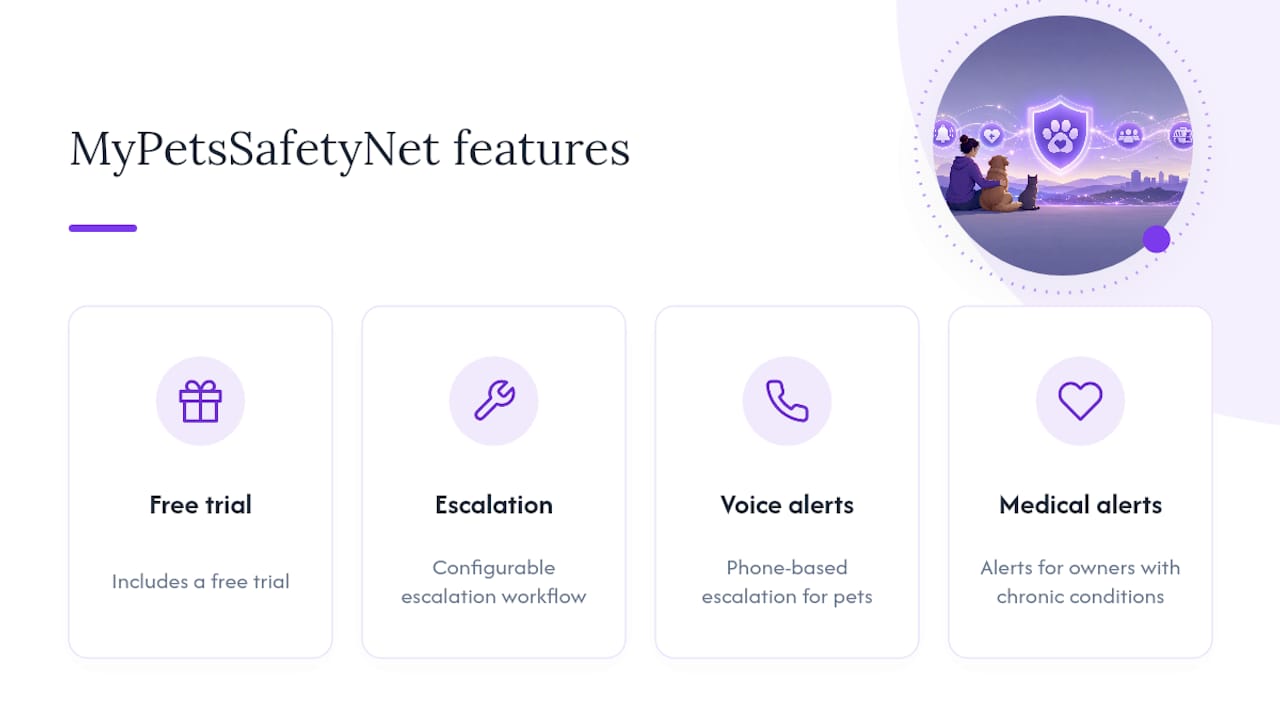
MyPetsSafetyNet built its wellness check-in service specifically for solo pet owners who worry about the same question this guide answers: what happens to your pet if something happens to you. The subscription includes a free trial and a configurable escalation workflow, so you’re not locked into a plan before you’ve tested it against your own routine.
For readers who want the technical detail behind specific features, the blog covers voice pet alerts for phone-based escalation, medical device alerts for owners managing chronic conditions, and a broader look at services that notify others when you can’t care for your pet yourself.
Is the Subscription Worth It for a Tight Budget?
We know budgets are real, especially for anyone living on a fixed income. Start with a trial, not a year-long commitment. Test whether your chosen contact actually responds when the alert fires. A cheap plan that no one answers to is worse than a slightly pricier one that works when it matters. Pick reliability over the lowest number on the page.
— MyPetsSafetyNet
Try MyPetsSafetyNet Before You Commit to a Plan
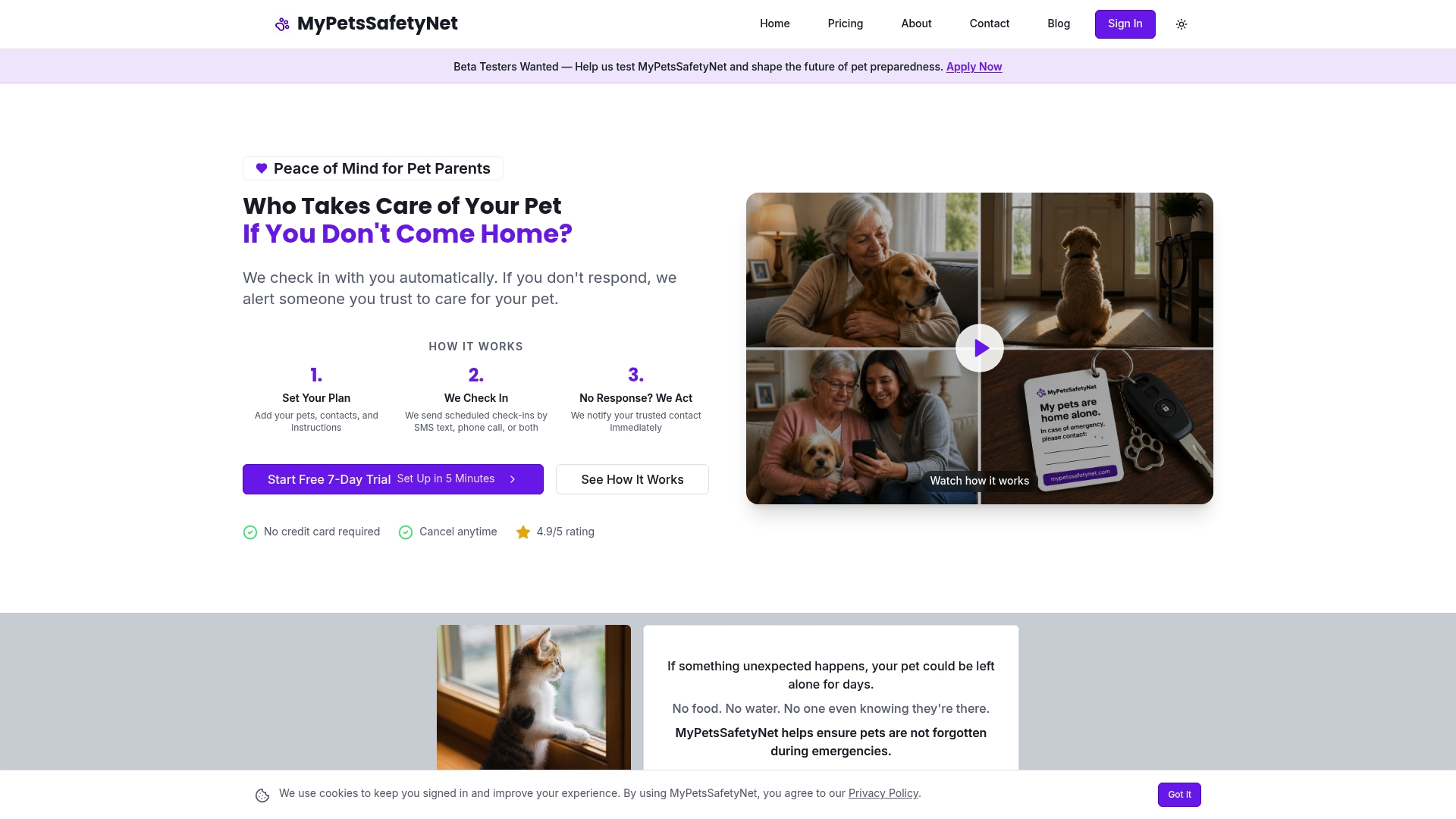
MyPetsSafetyNet is built around one goal: making sure your pets are never left alone if you can’t check in yourself. The subscription covers automated wellness check-ins, an escalation workflow that reaches up to three emergency contacts, and pet care instruction cards that spell out exactly what your pets need, all backed by a free trial so you can test it before paying.
If you also use a physical ID for your pet, a durable option like this amber collar pairs well with a digital safety net, giving whoever finds your pet both a contact point and a paper trail back to you. For the subscription itself, start with the free pet care card and trial signup and run your own escalation test this week, not next month.