Why Pets Need Continuity of Care: A Solo Owner’s Guide

Why continuity of care is the foundation of your pet’s health
Continuity of care means coordinated, uninterrupted management of your pet’s health and daily needs over time. For solo pet owners, it’s the difference between a pet who gets help quickly during a crisis and one who goes days without food, medication, or attention.
Veterinary standards define this as more than just regular checkups. It includes centralized medical records, consistent medication tracking, and behavioral history that lets caregivers detect subtle changes before they become serious problems. When care gaps occur, the risks include medication conflicts, duplicate testing, and missed diagnoses.
For solo owners, the stakes are higher. If you’re hospitalized or incapacitated, your pet has no backup unless you’ve built one. That’s exactly the gap Mypetssafetynet was created to fill.
Key reasons continuity of care matters:
- Prevents medication errors and duplicate treatments
- Allows early detection of behavioral and physical changes
- Reduces stress for pets by maintaining familiar routines
- Protects pets from abandonment or emergency shelter placement
- Gives designated caregivers the information they need to act immediately
What happens to your pet when care breaks down
Without a plan, the risks are real and immediate. When a solo owner is suddenly taken to the hospital, emergency responders often have only enough time to refill a water bowl and secure the property. After 48 hours alone, elderly pets, medicated animals, and cats face serious jeopardy.
The emotional toll compounds the physical risk. Pets pulled abruptly from their home environment and placed in a shelter or veterinary boarding facility experience a sharp drop in quality of life precisely when their stress levels are highest. Research confirms that emergency foster placements in home environments cause significantly less distress than traditional shelter settings.
Common risks when care continuity breaks down:
- Abandonment or unplanned shelter placement
- Delayed or missed medication doses
- Emergency responders unable to locate or access the pet
- Behavioral regression from sudden routine disruption
- Higher euthanasia risk for older or chronically ill animals perceived as unadoptable
Solo owners with chronic illness concerns face an even narrower margin for error.
How you and your vet share responsibility for consistent pet care

Continuity of care is a shared responsibility between you and your veterinary team. Clients expect knowledgeable staff who know their pet’s case, not just the primary vet. Every positive interaction with any team member builds the trust that makes ongoing care work.
Your role as the owner is to communicate fully: feeding schedules, behavioral quirks, medication history, and any changes you’ve noticed at home. Your vet’s role is to keep records accurate, flag concerns proactively, and ensure that chronic condition management stays cohesive rather than fragmented across multiple providers.
Practical ways to strengthen this partnership:
- Share behavioral observations at every visit, not just medical symptoms
- Ask your clinic to flag your file for consistent vet assignment when possible
- Confirm that your pet’s records are fully updated after each visit
- Request written discharge instructions you can pass to an emergency caregiver
Pro Tip: Ask your vet to note your pet’s stress triggers and handling preferences directly in the file. A caregiver stepping in during a crisis will rely on exactly that detail.
How to build an emergency continuity of care plan that actually works
A written plan is the single most effective tool a solo owner has. People who’ve thought through pet logistics before a crisis make better decisions in the first critical minutes of an emergency than those encountering the problem for the first time under stress.
Start with documentation:
- Feeding schedule, portion sizes, and quality nutrition details
- Medication names, doses, and administration instructions
- Veterinary contact information and preferred clinic
- Behavioral notes: stress triggers, handling preferences, likes and dislikes
- Emergency caregiver names and their level of authority to make care decisions
Then address access and supplies. A 30-day reserve of food and chronic-condition medications prevents urgent supply failures during hospitalization. A secured spare key or lockable key safe allows caregivers to enter without forced entry, which reduces property damage and distress for your pet.
For legal authority, wills alone are insufficient because they only take effect after death. A pet trust or relational directive can be activated during your lifetime, granting an appointed trustee immediate authority and funds to care for your pet if you’re incapacitated. Set up a notification system, such as Mypetssafetynet, so your emergency contacts are alerted the moment you can’t provide care yourself.
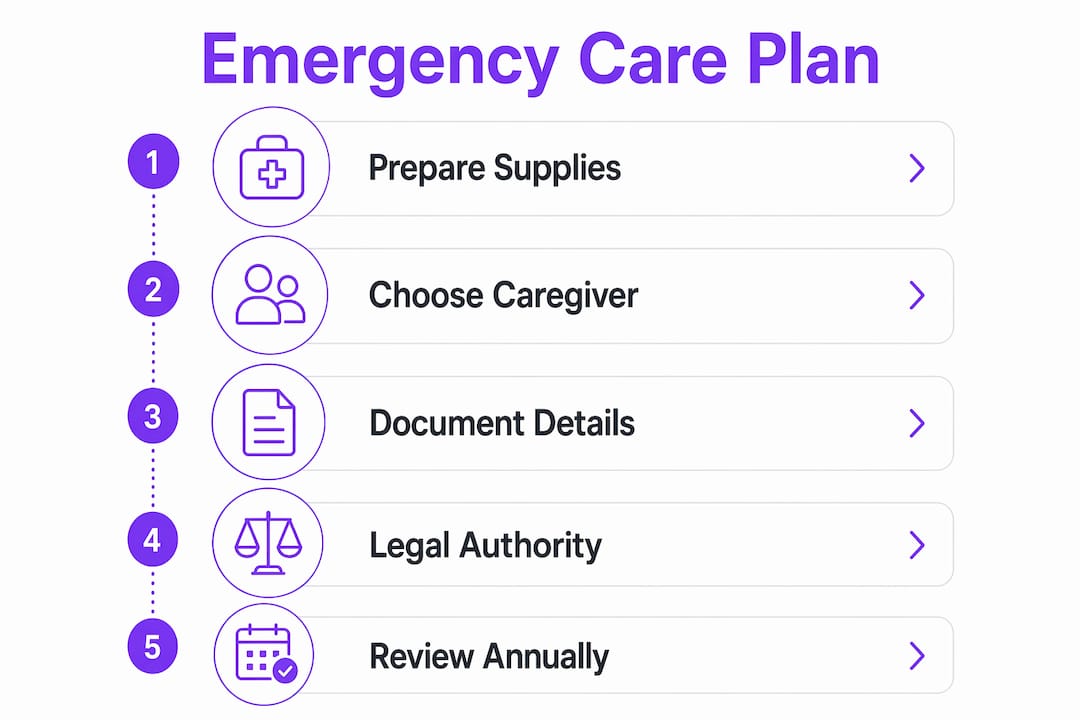
Review and update your plan at least once a year, or whenever your pet’s health or your contact list changes.
How Mypetssafetynet supports you when it matters most
Mypetssafetynet was built specifically for solo pet owners who need a reliable way to alert their emergency contacts when they can’t provide care. The service notifies designated contacts promptly so they can check on both you and your pets without delay.
What Mypetssafetynet provides:
- Prompt notification to your chosen emergency contacts during a crisis
- Support for reducing the risk of abandonment and missed care
- Resources to help you build and document your emergency care plan
- A framework that works alongside your veterinary team and caregiving network
Solo owners who use notification services like Mypetssafetynet close the gap between an emergency happening and someone actually showing up for their pet.
Legal documents that protect your pet when you can’t
Legal documentation turns good intentions into enforceable protection. A pet care agreement formalizes the responsibilities of your designated caregiver, covering feeding, veterinary decisions, and financial authority. Without it, even a willing friend may lack the legal standing to authorize treatment or access funds set aside for your pet’s care.
Key legal tools to consider:
- Pet trust: Activated during your lifetime or after death; funds and instructions transfer to a trustee who manages your pet’s care according to your written wishes
- Relational directive: A written document appointing a specific caregiver with defined authority, usable immediately during incapacitation
- Pet care agreement: A signed agreement between you and your emergency caregiver outlining their specific duties and your pet’s needs
- Veterinary authorization letter: Grants your designated caregiver permission to approve and pay for veterinary treatment
A caretaker agreement paired with a pet trust covers both the immediate crisis and any longer-term care needs that follow. Store copies with your emergency caregiver, your attorney, and your veterinarian.
Mypetssafetynet gives your pets a safety net you can count on
If you live alone with a pet you love, the most responsible thing you can do today is make sure someone gets notified the moment you can’t be there for them.
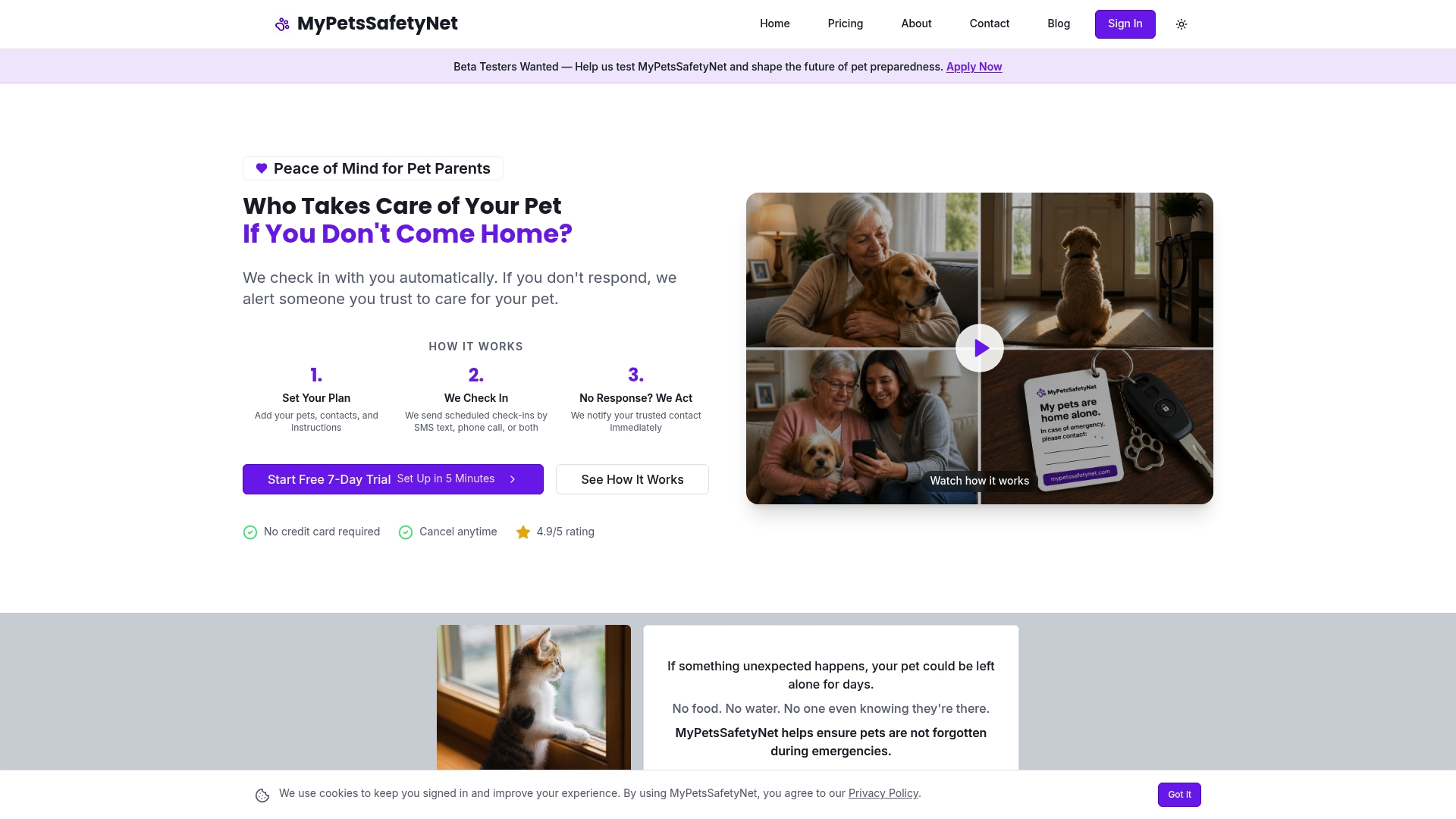
Mypetssafetynet does exactly that. When something happens to you, your emergency contacts are alerted right away so they can step in for both you and your pets. No delays, no guessing, no pet left waiting alone. It’s a straightforward service built for solo pet owners who want real peace of mind, not just a plan they hope works.
Sign up for Mypetssafetynet and give your pets the backup they deserve.
Key Takeaways
Pets depend entirely on their owners for survival, making a documented emergency care plan the most critical step a solo owner can take.
| Point | Details |
|---|---|
| Continuity of care defined | Coordinated, uninterrupted health and welfare management that prevents medication errors and care gaps. |
| Pets face serious harm if left without care for an extended period of time alone. | Elderly, medicated, and chronically ill pets face serious harm after just 48 hours alone without care. |
| Legal tools matter | Pet trusts and relational directives provide immediate authority during incapacitation, unlike wills. |
| Maintaining a reserve of food and medications helps prevent critical supply failures during hospitalization. | Maintaining a 30-day reserve of food and medications prevents critical supply failures during hospitalization. |
| Mypetssafetynet’s role | Mypetssafetynet notifies your emergency contacts promptly so your pets are never left without care. |